

How to Clean Clear Quartz
The practical version — plus why "cleaning" and "cleansing" aren't actually the same question, even though people use them interchangeably.
People searching this usually mean one of two genuinely different things, and it's worth separating them before getting into method. Physically cleaning quartz — removing skin oils, dust, soap residue, whatever's built up from being worn or handled — is a straightforward, entirely practical task with a right and wrong way to do it. Energetically cleansing it, in the sense crystal practitioners mean, is a completely different idea with no single agreed physical method behind it at all. Both are worth covering properly, but they're not the same question, and conflating them is how people end up doing something unnecessarily elaborate for what's really just "wipe it down," or skipping genuinely useful physical care because they were only thinking about the energetic side.
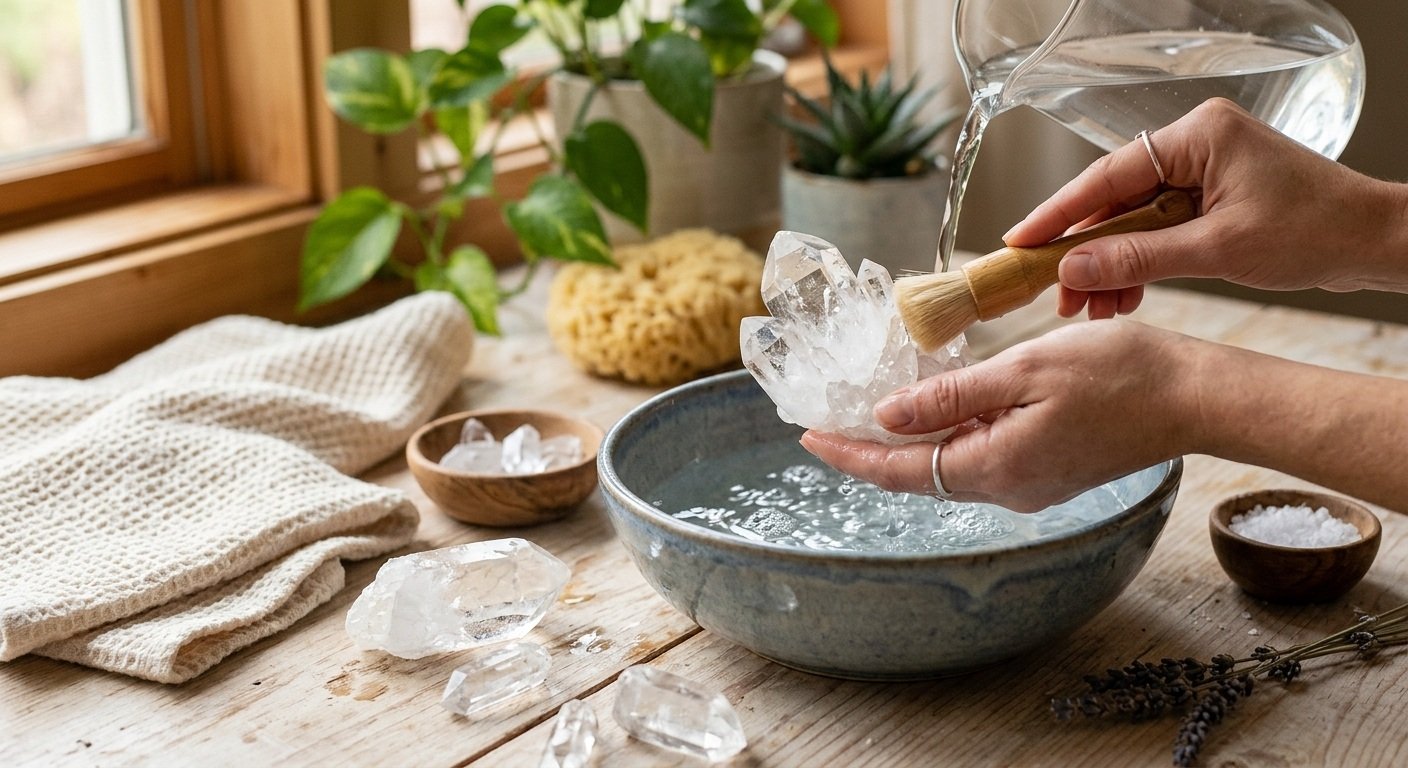
Cleaning vs. Cleansing — Two Different Questions
If your quartz looks a bit dull, has fingerprints on it, or has picked up residue from lotion or perfume, that's a cleaning problem — soap, water, a soft cloth, done. If what you're actually after is resetting the stone's energy after a stressful stretch or before starting a new intention with it, that's cleansing, and it doesn't require any of the physical cleaning steps at all. You can cleanse a perfectly clean stone, and you can physically clean one without doing anything energetic to it whatsoever. Neither replaces the other, and most of the confusion people run into online comes from guides that blend the two together as if they were one process.
This guide covers both, in order — the actual cleaning methods first, since that's usually what people mean when they type "how to clean," followed by a shorter, honest section on cleansing for anyone who wants that too.
Why Clear Quartz Needs Any Care at All
Quartz sits at a 7 on the Mohs hardness scale, which genuinely is hard — hard enough to scratch glass, hard enough to resist most everyday wear and tear without much trouble. That durability leads a lot of people to assume it basically takes care of itself, which is mostly true but not entirely.
What actually causes problems isn't day-to-day wear, it's a handful of specific situations: repeated exposure to oils and product residue building up a film on the surface over months, sudden temperature changes causing internal stress the stone can't always absorb, and physical impact at a natural point or thin edge, which is a genuinely weaker spot structurally than the rest of the stone. None of this makes quartz fragile in any general sense — it just means a little basic knowledge of where the actual risks are saves you from an avoidable mistake.
A Quick Note on Structure
Quartz forms in a crystalline structure with distinct growth planes, and while the finished stone feels solid and uniform in the hand, it isn't perfectly homogeneous at a microscopic level. Natural pieces almost always contain some internal variation — a faint fracture line, a zone where growth paused and resumed slightly differently — left over from the slow, uneven conditions it actually formed under. This is worth knowing mainly because it explains why two seemingly identical pieces can respond slightly differently to the same handling; one piece's particular internal structure might make it marginally more prone to stress at a specific point than another, even though both are equally genuine, equally hard, natural stone.
What You'll Actually Need
Nothing specialized. A bowl of lukewarm water, a small amount of mild dish soap or a gentle hand soap, a soft cloth (an old cotton t-shirt works as well as anything marketed specifically for jewellery), and for pieces with more texture or detail, a soft-bristled toothbrush that's no longer in use for teeth. That's genuinely the full list for routine cleaning of almost anything in this category.
The Basic Clean, Step by Step
- Fill a bowl with lukewarm water and add a small amount of mild soap, swirling gently to mix rather than creating excess suds.
- Submerge the piece and let it sit for a few minutes if it's noticeably dirty, or skip straight to wiping if it just needs a routine refresh.
- Gently wipe the surface with your fingers or a soft cloth, using the toothbrush for any textured areas, facets, or crevices soap alone won't reach.
- Rinse thoroughly under lukewarm running water, making sure no soap residue remains in any small gaps or settings.
- Dry immediately with a soft cloth rather than letting the piece air dry, which tends to leave visible water spots on a polished surface once it evaporates.
For a piece that's picked up something more stubborn — old lotion build-up, oils from being worn daily for months without a clean — a longer soak, closer to ten minutes, before the same wipe-down usually clears it without needing anything abrasive or chemical.
Cleaning Different Formats
The basic method above works as a starting point everywhere, but a few formats need small adjustments.
Bracelets on Elastic Cord
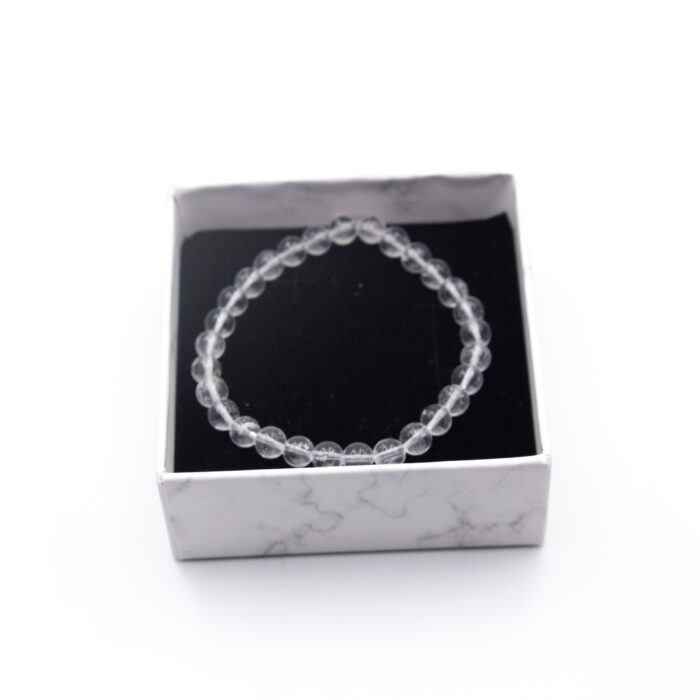
A bracelet like this one is genuinely one of the more common formats people ask about, and it needs a slightly different approach than a full soak. Prolonged water exposure weakens elastic cord over time, so a quick, damp wipe-down rather than submerging the whole bracelet is the safer routine for regular cleaning. If it needs more than that — visible grime built up between beads — a brief dip, no more than a minute or two, followed by immediate thorough drying, is about as far as it's worth pushing it.
Rings and Pendants With Metal Settings
Pieces set in silver, like a ring or a pendant with a bezel or prong setting, can generally handle a proper soak without much risk to the stone, but the metal deserves its own attention afterward. Dry thoroughly, particularly around any bezel setting where moisture can sit trapped against the metal and encourage tarnishing over time. A separate, brief pass with a silver polishing cloth on just the metal — avoiding direct contact with the stone — keeps the setting looking as good as the quartz itself.
Raw Points and Clusters
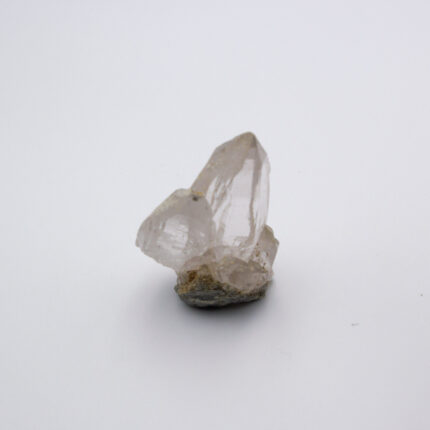
Raw, unpolished quartz is more delicate at its natural points and edges than a rounded, polished bead, so handle it gently during cleaning rather than scrubbing directly at a pointed tip or gripping it tightly by a thin protrusion. A soft brush and lukewarm water works for most raw pieces, and it's worth letting a larger cluster air dry resting on a towel rather than towel-drying by hand, since natural formations often have small crevices between individual points that hold water longer than they appear to.
Pendants and Smaller Cut Pieces
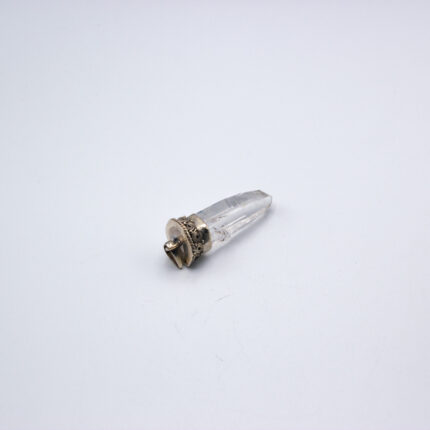
A piece like this combines the raw-stone care above with the metal-setting care covered for rings — gentle handling around the point, and thorough drying specifically around wherever the metal wrap or cap meets the stone, since that junction is where moisture tends to linger longest after a clean.
Tumbled Stones and Large Decorative Pieces
Small tumbled stones are about as low-maintenance as this category gets — a quick rinse and wipe handles them fully, with essentially no risk given their smooth, uniform surface. Larger decorative pieces, like a substantial clear quartz cluster used as a centerpiece, are usually easier to dust with a soft, dry brush on a regular basis rather than fully washing them each time, reserving an actual water clean for less frequent, deeper maintenance.
Bracelets Combining Quartz With Other Stones
Multi-stone pieces — clear quartz paired with citrine, green aventurine, or another variety on the same bracelet — need to be cleaned according to whichever stone in the combination is more delicate, not according to quartz's own fairly forgiving hardness. Softer stones sharing the same piece, such as certain porous or more fracture-prone varieties, may not tolerate the same soak time or water temperature quartz handles easily, so it's worth erring toward the gentler end of the cleaning methods above whenever a bracelet combines quartz with an unfamiliar second stone.
What Actually Damages Clear Quartz
A few things are worth actively avoiding rather than just not bothering with.
Ultrasonic Jewellery Cleaners
These use rapid vibration to shake dirt loose, and they're harder on natural stone than most people assume. Quartz can have internal fractures invisible to the naked eye, remnants of the stress it experienced during formation, and the vibration from an ultrasonic cleaner can worsen these over repeated use, even though the stone looks completely fine immediately afterward. Skip them for anything you actually want to keep long-term, particularly pieces you're fond of or that have some sentimental weight.
Sudden Temperature Changes
This is a genuine risk people don't think about nearly enough. Quartz can crack from thermal shock — going from hot water straight into a cold rinse, for instance, or handling a piece that's been sitting in a hot car with cold, wet hands. It's not common, but it does happen, and it's an easy thing to avoid entirely just by keeping water temperature consistent throughout the entire cleaning process rather than switching between hot and cold at different stages.
Harsh Chemical Cleaners
Anything containing bleach, ammonia, or strong acids can dull the surface over time and, in jewellery specifically, damage the metal component faster than it affects the stone itself. Plain soap and water outperforms all of this for routine cleaning anyway, so there's rarely a genuine reason to reach for anything stronger, regardless of what a specific product claims about being "jewellery safe."
Abrasive Scrubbing
A stiff-bristled brush, steel wool, or anything genuinely abrasive can create fine scratches on a polished surface that dull its shine over time, even though quartz is hard enough to resist most casual contact. Soft materials do the job just as effectively without that risk.
Prolonged Direct Sunlight
This is more of a storage issue than a cleaning one, but it's worth mentioning here since it affects the same overall goal of keeping a piece looking its best. Clear quartz itself is fairly stable under normal light, but if it's part of a mixed-stone piece, other varieties sharing that bracelet or pendant can fade with prolonged, intense sun exposure over months or years. Drying jewellery near a sunny window after cleaning, out of habit, is worth avoiding for exactly this reason — a shaded spot dries pieces just as effectively without the risk.
Restoring Cloudy or Dull Quartz
Sometimes a basic clean doesn't fully restore a piece's clarity, and it's worth knowing why before assuming something's gone wrong. If a soft cloth and soap genuinely don't shift the dullness, the most likely explanation is a buildup of product residue — lotion, soap film from previous cleaning, or oils — that's settled into fine surface texture rather than sitting cleanly on top. A longer soak, fifteen to twenty minutes this time, in slightly warmer (though not hot) soapy water, followed by a more thorough brushing with the soft toothbrush across the entire surface, usually clears this.
If cloudiness persists even after that, it may simply be a natural internal characteristic of the stone rather than surface dirt at all — quartz frequently contains natural inclusions, fine internal fractures, or cloudy zones formed during its original growth, and no amount of surface cleaning will change something that's actually inside the crystal structure. This isn't a flaw so much as a normal feature of genuine, natural stone, and it's a useful thing to recognize so you're not endlessly re-cleaning a piece that was simply never going to be perfectly transparent to begin with.
Telling the Two Apart
A simple way to check which you're dealing with: examine the piece closely under bright, direct light immediately after a thorough clean and full dry. Surface residue tends to look like a slightly greasy, uneven film that catches light differently across the stone depending on the angle you view it from. A genuine internal characteristic, by contrast, stays consistent no matter which angle you view it from, since it's not sitting on the surface at all but embedded within the stone itself. If the cloudiness shifts or seems to fade slightly as you tilt the piece under a light source, it's more likely surface-level and worth another cleaning pass; if it stays exactly the same regardless of angle, that's your answer — it's simply part of the stone.
Drying and Storage After Cleaning
Always dry with a soft cloth immediately after rinsing rather than letting a piece air dry, since evaporating water tends to leave faint mineral spots on a polished surface, particularly if your tap water is on the harder side. For pieces with any metal component, pay specific attention to seams, settings, and any spot where two materials meet, since that's where residual moisture is most likely to sit and cause problems later.
Once dry, store jewellery separately from harder gemstones to avoid scratching, ideally in a soft pouch or a lined compartment rather than loose in a drawer alongside other pieces. Raw specimens and larger decorative pieces do fine simply displayed, provided they're kept somewhere dust doesn't accumulate too heavily between cleanings.
If You Also Want to Cleanse It Energetically
This part is entirely a matter of personal practice rather than something with a physically correct method, so take it as a set of common approaches rather than instructions with a right answer.
Moonlight is probably the most commonly used method — leaving the piece on a windowsill or outdoors overnight, particularly around a full moon, is considered a gentle approach safe for almost any stone, quartz included. Sound cleansing, using a singing bowl or bell near the piece, is another common option that doubles as its own calming practice in the process. Smoke cleansing with sage or palo santo is a third route that doesn't involve water at all, which makes it a safe default regardless of how sensitive a particular stone might be to moisture.
Some guides suggest burying a crystal in salt or salt water for cleansing — worth flagging that this is genuinely a bad idea for quartz specifically, since salt can be abrasive to the surface and, in the case of any piece with a metal setting, can accelerate tarnishing or corrosion. If you want a cleansing method involving salt, keeping the piece near a bowl of salt rather than in direct contact with it avoids that risk entirely.
None of these methods has been shown to do anything measurable to the stone itself, and that's fine — most people doing this aren't expecting a physical change, they're using the ritual as a moment of intention-setting, which is a genuinely useful practice in its own right even without any energetic claim attached to it.
How Often Any of This Actually Needs Doing
Physically, cleaning as needed is really the only rule — when it looks like it needs it, clean it. For jewellery worn daily, that might mean every few weeks; for a raw piece sitting on a shelf, a light dusting every month or so is usually plenty, with a full wash only occasionally. Energetic cleansing, if you do it, tends to follow personal or seasonal rhythm more than a fixed schedule — many people do it monthly, or specifically after a stressful period or before setting a new intention, rather than sticking to any strict timetable.
Common Mistakes Worth Avoiding
A handful of avoidable errors come up repeatedly. Soaking an elastic-cord bracelet for extended periods, rather than a quick wipe, shortens the cord's lifespan faster than most people expect. Letting pieces air dry instead of towel-drying leads to water spots that then get mistaken for a cleaning failure, prompting unnecessary re-cleaning. Reaching for an ultrasonic cleaner because it seems more thorough, when a soft cloth and a few minutes actually does the job more safely. And treating natural internal cloudiness as a cleaning problem to be solved, when it's simply a feature of the specific stone rather than something surface cleaning can ever change.
Questions People Ask
Can I use an ultrasonic cleaner on clear quartz?
It's best avoided. Quartz can have internal fractures invisible to the eye, and the vibration from an ultrasonic cleaner can worsen these over repeated use, even if the stone looks unaffected afterward.
Is it safe to soak a clear quartz bracelet in water?
A quick wipe is safer than a full soak for bracelets on elastic cord, since prolonged water exposure weakens the elastic over time. Rings and pendants with silver settings generally tolerate a soak better, as long as they're dried thoroughly afterward.
What's the difference between cleaning and cleansing a crystal?
Cleaning is the physical removal of dirt, oils, and residue using soap and water. Cleansing refers to resetting a crystal's energy through practices like moonlight or sound, which is a matter of personal belief rather than a physical cleaning method.
Can temperature changes actually crack clear quartz?
Yes, though it's uncommon. Sudden shifts between hot and cold, such as rinsing warm water with cold, can cause thermal shock that cracks the stone. Keeping water temperature consistent during cleaning avoids this.
Why is my clear quartz still cloudy after cleaning?
If a thorough clean doesn't restore clarity, the cloudiness is likely a natural internal characteristic of the stone, such as an inclusion or fine internal fracture, rather than surface dirt. This is a normal feature of genuine natural quartz, not a flaw.
Is salt safe to use when cleansing clear quartz?
Direct contact with salt is best avoided, since it can be abrasive to the surface and may accelerate tarnishing on any metal setting. Keeping the piece near a bowl of salt, rather than burying it directly, avoids this risk.
You can browse our full clear quartz bracelet collection, or read our guide on choosing a genuine clear quartz bracelet if you're still shopping rather than caring for one you already own.