

Crystals for the Evil Eye
Which stones genuinely carry this history, which are recent additions to the list, and how people across cultures actually use them.
Search "crystals for the evil eye" and you'll get a dozen nearly identical lists, most reciting the same five or six stones with almost no explanation of where any of it actually comes from. Some of these associations genuinely do stretch back thousands of years. Others are recent additions, grafted onto an old belief because they happen to fit the general theme of "protection" in the modern crystal-healing world. Both are worth knowing about — but they're not the same thing, and most of what's currently ranking on this topic doesn't bother separating them.
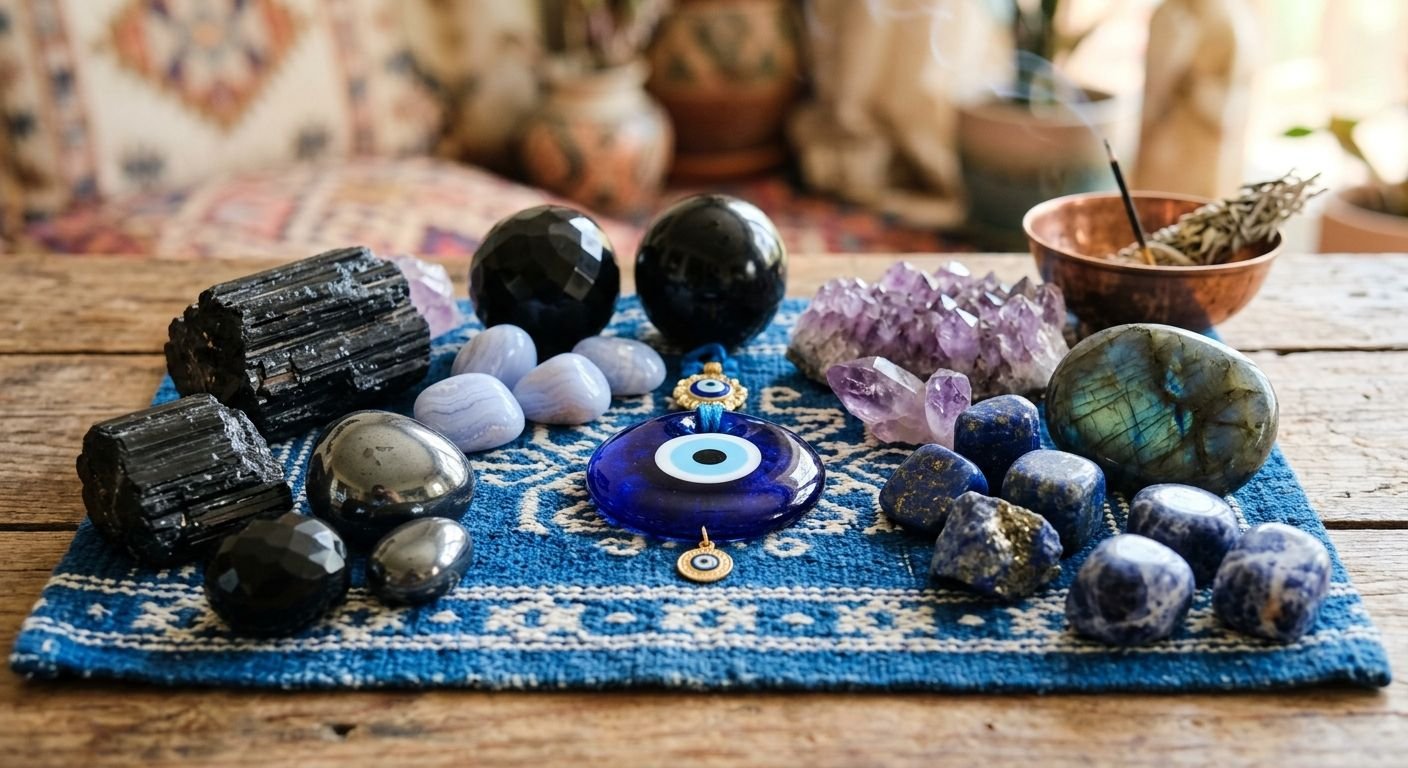
What the "Evil Eye" Belief Actually Is
The idea that an envious or malicious look can bring misfortune to the person it's directed at is one of the oldest and most widespread folk beliefs in the world, appearing independently across Mediterranean, Middle Eastern, South Asian, Central Asian, and Latin American cultures, often with no direct historical contact between the traditions that developed it. Greek and Turkish traditions call it mati and nazar respectively; in Arabic it's referred to as al-ayn; in Hindi and Urdu, nazar or drishti; in Italian, malocchio. Despite the different names and independent origins, the underlying concern is remarkably consistent — that unchecked envy, even unintentional, can cause real harm to the person it's directed at, and that a visible object worn or displayed can help turn that harm aside.
Protective jewellery tied to this belief is genuinely ancient. Archaeological evidence of eye-shaped amulets dates back to ancient Mesopotamia and Egypt, well over three thousand years, predating most of the specific cultural traditions now associated with the belief. The specific blue-and-white glass bead most people picture today, the nazar boncuğu, is a considerably more recent Ottoman-era development, though it draws directly on that much older tradition of protective eye imagery found across the ancient Near East.
Why the Belief Spread So Widely on Its Own
What makes the evil eye genuinely unusual among folk beliefs is how consistently it developed independently across cultures with little to no historical contact. Classical Greek and Roman writers referenced it directly; separate written references appear in early Jewish, Christian, and Islamic sources; South Asian traditions describe strikingly similar practices under entirely different names. Anthropologists studying this pattern generally point to a fairly universal human discomfort with visible envy or excessive attention — a concern about being watched too closely, or admired in a way that feels uneasy — rather than any single point of cultural transmission. That's part of why the belief still resonates broadly today, even among people with no direct connection to the specific cultures where it originated.
A Note Before We Continue
Belief in the evil eye and the specific practice of wearing protective objects against it are treated differently across cultures and, within any single culture, across individuals too. Within Islamic tradition specifically, the concept of al-ayn is acknowledged in hadith, but guidance on protection is generally directed toward specific prayer and seeking refuge in Allah, rather than toward talismans or objects — and views on wearing physical protective items vary considerably among scholars and communities. This guide reflects widespread folk and cultural traditions around crystals and protective stones generally, not religious instruction, and isn't intended to take a position on that specific religious question. If that distinction matters to your own practice, it's worth seeking guidance from a knowledgeable religious source rather than a crystal retailer.
Genuine History vs. Recent Additions
This is the distinction most guides on this topic skip entirely, and it's worth making explicit before going stone by stone. A small number of materials — turquoise and lapis lazuli chief among them — have a documented, centuries-deep connection to protective jewellery specifically in the regions where evil eye belief is strongest: the Middle East, the Mediterranean, and Central Asia. These weren't chosen for this purpose recently; they were already central to regional jewellery-making traditions when the specific protective framing developed alongside them.
A much larger group of stones — black tourmaline, tiger's eye, black onyx, and others — have been folded into "evil eye protection" more recently, largely through the broader modern crystal-healing movement's tendency to treat "protection from negative energy" and "protection from the evil eye" as closely overlapping concerns. That doesn't make the association meaningless or invalid — plenty of people find real personal significance in these stones regardless of how old the specific pairing is — but it's a different kind of claim than turquoise's, and worth knowing the difference before you decide which matters more to your own choice: documented tradition, or a stone's broader modern reputation.
Neither approach is more "correct" than the other, and this isn't an argument for one category of stone over the other. It's simply a distinction almost no competing article on this topic bothers to draw, and one that changes what you're actually buying into — a specific historical practice tied to a specific region and belief system, or a more general, modern protective symbolism that draws loosely on many traditions at once.
Turquoise: The Classic Protection Stone
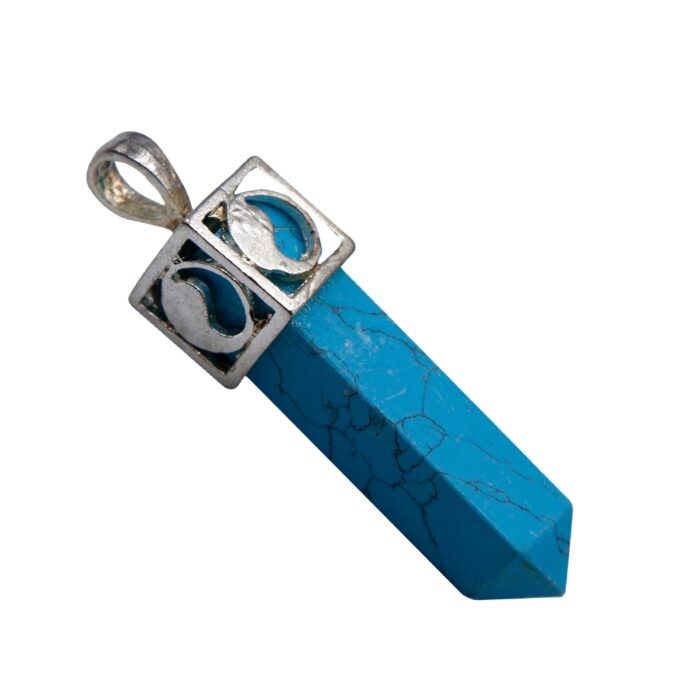
Turquoise has the deepest, most consistent history in this specific category. Its use as a protective stone spans ancient Egyptian, Persian, and Central Asian traditions, worn by rulers and ordinary people alike across several thousand years of continuous use. It remains one of the most recognizable protective stones across the Middle East and Central Asia today, historically believed to change color as a warning when danger was near — a piece of folklore that persisted long before anyone understood that turquoise can genuinely shift appearance slightly with prolonged exposure to oils, light, or changes in the surrounding environment, a real mineralogical property that likely fed the original belief.
We carry a Himalayan Natural Turquoise Pendant in a sterling silver setting, sourced from the Himalayan region — worth checking directly for current stock, since turquoise of genuine quality moves quickly and availability shifts more than most other stones in our range.
Why Color Depth Varies So Much
Turquoise ranges from a pale, almost powdery blue to a deep, saturated blue-green, and the difference comes down to the specific trace minerals present during formation — copper contributes to the bluer end of the spectrum, while iron pulls it toward green. None of these variations make one piece more or less genuine than another; the range itself is part of what makes natural turquoise identifiable, since manufactured imitations tend to settle on a single, consistent shade across an entire batch rather than showing this kind of natural spread.
Lapis Lazuli: Turquoise's Traditional Companion
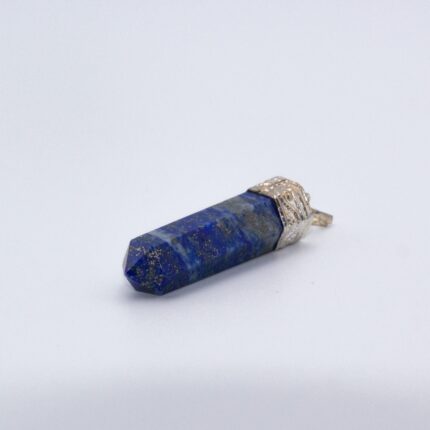
Lapis lazuli is turquoise's near-constant companion in historical Middle Eastern and Central Asian jewellery, the two stones frequently combined in the same pieces going back to antiquity. Deep blue with natural flecks of golden pyrite running through it, lapis carries its own separate reputation tied to wisdom, truth, and protection from psychic or ill intent — a meaning distinct from turquoise's but overlapping enough that the two stones have been paired in protective jewellery for centuries rather than a modern styling coincidence. Our Lapis Lazuli Pendant reflects that same regional tradition, set in the same sterling silver style as our turquoise piece.
Historically, most of the world's fine lapis lazuli came from a single mining region in what's now Afghanistan, a supply chain that stretched back over six thousand years and made the stone one of the most widely traded luxury materials of the ancient world, reaching as far as ancient Egypt through overland trade routes long before any direct contact existed between the two regions. That trade history is part of why lapis shows up so consistently in the protective and ceremonial jewellery of cultures that never directly bordered its original source.
Black Tourmaline: The Modern Go-To

Black tourmaline's association here is more recent than turquoise's or lapis's, tied less to any single ancient regional tradition and more to the broader modern crystal-healing framing of it as an all-purpose absorber of negative energy — a reputation that overlaps naturally with evil eye protection without being historically tied to it in the same documented way. It's become one of the most commonly reached-for stones in this general category regardless, simply because "protection from negative energy" and "protection from the evil eye" get treated as closely related concerns by most people shopping for either, and nearly every competing list on this topic places it at or near the top.
Part of why it's spread so widely in this specific context is practical rather than historical: black tourmaline is relatively affordable and abundant compared to turquoise or lapis, meaning it's an easy stone for a retailer to stock heavily and recommend broadly, regardless of whether the specific evil-eye framing has centuries of documentation behind it the way turquoise does. That's worth knowing without it being a reason to avoid the stone — plenty of genuinely useful, meaningful traditions started more recently than people assume.
We've covered black tourmaline's fuller meaning and benefits in a dedicated guide, including our square-cut bracelet and ring.
Tiger's Eye: Named for a Reason
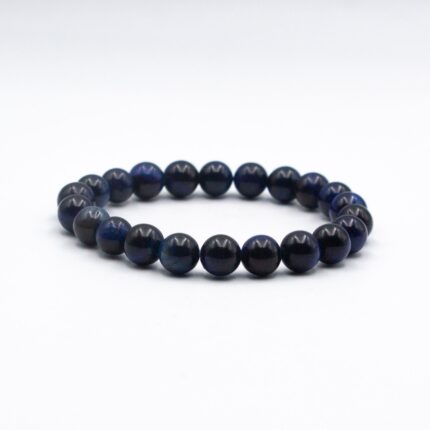
Tiger's eye earns its place here partly through genuine tradition and partly through a fairly literal visual association — the banded, shifting pattern inside the stone resembles an eye, and stones or symbols resembling eyes have been treated as symbolically protective across numerous cultures independent of tiger's eye specifically, on something close to a "fight fire with fire" logic. Beyond the visual connection, it carries its own separate reputation for courage and grounding, which is part of why it shows up so often in general protection-themed jewellery rather than only pieces marketed specifically around the evil eye. Our Tiger's Eye Bracelet is one of our more consistently requested pieces for exactly this reason.
Black Onyx and Other Dark Protective Stones
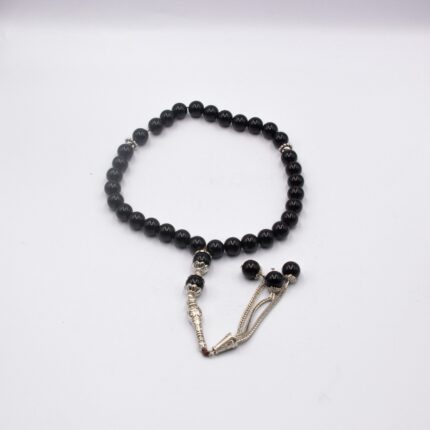
Black onyx is treated similarly to black tourmaline in most modern protection-stone lists — a dense, dark, visually serious stone associated broadly with absorbing negativity and warding off harm. The pattern of dark, opaque stones being treated as protective shows up repeatedly across unrelated traditions, from jet in Mediterranean folk practice to obsidian in Mesoamerican tradition, suggesting the association has more to do with a fairly universal visual and psychological response to dense, dark material than any single point of origin. Our Black Onyx Tasbih incorporates the stone into a devotional piece rather than standalone jewellery, for anyone who'd rather combine this reputation with a daily prayer practice.
Sodalite and the Wider Blue-Stone Family

Sodalite, with its deep blue tone similar to lapis, is a more recent addition to this general category, generally associated with clarity and truth rather than a specific historical evil eye tradition. Its color alone draws in buyers looking for something in that classic blue-protection family without the higher cost that turquoise or lapis can carry, especially for larger pieces. Our Sodalite Bracelet is worth a look specifically for this reason — it gives you the visual and symbolic language of the classic blue-stone tradition at a more accessible entry price.
Stones Other Lists Mention That We Don't Carry
In the interest of being straightforward rather than padding this list to look more comprehensive than our actual catalog: several stones show up constantly on other evil-eye protection lists that we don't currently sell as standalone products. Obsidian, selenite, and standalone hematite pieces are common examples — obsidian for its volcanic-glass intensity, selenite for cleansing and clarity, hematite for grounding. If you've read this from other sources and specifically want one of these, it's worth knowing upfront rather than searching our catalog and coming up empty. Hematite does appear as one component within our multi-stone Lifeflow wellness bracelet, alongside sodalite, brown tourmaline, amethyst, and clear quartz, though that piece is framed around cardiovascular wellness rather than evil eye protection specifically.
Blue Glass Beads vs. Natural Crystal
It's worth being clear about a distinction that gets blurred constantly in this space. The blue-and-white glass bead most people picture when they hear "evil eye" — the nazar boncuğu — is exactly that: manufactured glass, not a natural mineral at all. It's a genuine, historically significant object in its own right, produced through a specific glassmaking tradition rather than mined from the ground, but it's a different category of item from the natural gemstones covered in this guide. We don't carry the glass nazar bead specifically; everything referenced here is natural crystal, chosen for its own separate stone-specific tradition rather than an attempt to replicate the glass amulet's particular symbolism. If the glass bead itself, rather than a natural stone, is specifically what you're after, that's a different product than what a crystal retailer like us is set up to provide.
Wearing an Evil Eye Symbol and Crystals Together
A fair number of people don't treat this as an either-or choice, combining a traditional evil eye symbol — whether the glass bead or an engraved motif — with a separate protective crystal in the same piece or the same layered look. The logic here is fairly simple: the symbol functions as the recognized visual shorthand for the intention, while the stone adds its own separate, personal meaning on top. Someone drawn to black tourmaline's grounding reputation might still want the specific, widely recognized evil eye symbol alongside it, rather than choosing between the two. There's no traditional rule against combining them, and it's become an increasingly common approach in contemporary jewellery design specifically because the two traditions aren't in any real tension with each other — one is a specific protective symbol, the other is a stone with its own separate properties.
In practice, this usually looks like a bracelet stack rather than a single combined piece — a crystal bracelet worn alongside a separate evil eye bracelet on the same or opposite wrist, or a crystal pendant layered with a shorter evil eye necklace. Approaching it this way, rather than seeking out a single piece that fuses both symbols, also makes it easier to source each element from a specialist in that specific tradition rather than settling for whichever combined design happens to be available.
How People Actually Wear or Place These
Jewellery worn at chest height or on the wrist is the most common approach, keeping the stone in regular, visible contact throughout the day. A pendant sitting near the heart is the more traditional placement for stones like turquoise and lapis specifically, following the older pattern of amulets worn close to the body rather than at a distance. Bracelets offer more constant physical contact throughout ordinary daily activity, which some people prefer for exactly that reason.
Beyond wearable pieces, a raw stone or small piece kept near an entryway or workspace is a common non-jewellery approach, treated less as a personal accessory and more as a fixed point meant to look after a specific space rather than a specific person. This mirrors a genuinely old practice — historical accounts describe protective stones and symbols placed at doorways and windows across several of the cultures where evil eye belief is strongest, on the logic that the entry point itself is where protection matters most.
Some people also keep a stone in a car, a workbag, or a wallet — anywhere they spend meaningful time outside the home and around other people, rather than restricting the practice to a single fixed location or a single piece of jewellery. There's no single correct number of pieces to own or places to keep them; this is one of the more flexible parts of the broader tradition, adapted freely to modern daily life.
Gifting and Protecting Children
Some traditions specifically favor pinning or attaching a protective piece to a baby's clothing or crib, reflecting the widespread folk belief across many of the cultures where this tradition is strongest that infants and young children are considered especially vulnerable to the evil eye, often precisely because they attract so much open admiration and attention from others. This is genuinely one of the most consistent threads across otherwise very different regional traditions — from the Mediterranean to South Asia, protective jewellery for infants shows up repeatedly as a distinct category from adult jewellery, often smaller, simpler, and pinned rather than worn as a necklace or bracelet for practical safety reasons.
Beyond the specific practice of pinning a charm, many of these same cultures also share a related, broader custom: deliberately downplaying open praise of a baby or young child, or following a compliment with a specific protective phrase, precisely because excessive open admiration is considered the mechanism through which the evil eye takes hold in the first place. The protective object and the verbal custom tend to travel together, reinforcing the same underlying concern from two different directions.
If this is part of your own family or cultural practice, it's worth approaching thoughtfully and in line with what's actually observed in your specific tradition rather than a generic online recommendation, since specifics — which stone, which placement, which occasion — vary considerably between communities.
Choosing a Genuine Stone
Since turquoise and lapis lazuli specifically are among the more commonly imitated stones on the market — dyed howlite for turquoise, dyed jasper or glass for lapis — the usual authenticity checks apply here with a bit more weight than for a common stone like clear quartz. Genuine turquoise shows natural veining, called matrix, rather than perfectly uniform color, and it should feel cool and dense rather than light. Lapis should show small natural flecks of golden pyrite scattered through the blue rather than a flat, single-tone color — a completely smooth, matte blue with no visible flecks at all is a common sign of dyed imitation rather than genuine stone. Weight is a reliable general check across all of the stones covered here: genuine mineral feels denser for its size than glass, resin, or dyed plastic imitations.
A simple additional test for dyed howlite specifically: a small, inconspicuous drop of acetone or nail polish remover on a hidden part of the stone will often pick up blue dye if the piece has been artificially colored, since howlite itself is naturally white or grey. This isn't something to try on a piece you're not prepared to risk, but it's a genuinely useful check if you already suspect a specific piece and want more certainty before raising the question with a seller.
If you want the fuller breakdown of authenticity checks across stones generally, our guide on choosing an authentic Himalayan crystal covers it in more depth.
Caring for These Pieces
Turquoise and lapis are both softer and more porous than harder stones like tiger's eye or black tourmaline, meaning they're more vulnerable to damage from perfume, lotion, and other chemical exposure, which can dull or discolor the surface over time. Keep these pieces on last when getting ready, after any sprays or creams have been applied, rather than first. All the stones covered here should be kept away from harsh chemical cleaners and ultrasonic jewellery cleaners — a soft, dry cloth handles routine cleaning for the whole category. Silver settings, common across our turquoise and lapis pendants specifically, benefit from an occasional gentle polish with a dedicated silver cloth, kept away from direct contact with the stone itself.
Looking for a specific stone?
Turquoise and lapis stock shifts regularly. Message us to check what's currently available before you order.
Questions People Ask
What is the most traditional crystal for evil eye protection?
Turquoise has the deepest and most consistent history in this category, with use in protective jewellery spanning ancient Egyptian, Persian, and Central Asian traditions across several thousand years.
Is a crystal the same thing as the blue evil eye glass bead?
No. The blue-and-white glass bead, known as nazar boncuğu, is manufactured glass rather than natural stone, a separate tradition from the natural gemstones covered in this guide.
Why is black tourmaline included in evil eye protection lists?
Its association is more recent than turquoise's or lapis's, tied to its broader modern reputation as an absorber of negative energy rather than a specific historical evil eye tradition.
How can I tell if turquoise or lapis lazuli is genuine?
Genuine turquoise shows natural veining called matrix rather than perfectly uniform color. Genuine lapis shows small natural flecks of golden pyrite. Both should feel cool and dense rather than light, unlike dyed imitations.
Can I wear an evil eye symbol and a protective crystal together?
Yes, there's no traditional conflict between the two. Many people combine a recognized evil eye symbol with a separate crystal's meaning in the same piece or layered look.
Does Islam support wearing crystals for protection?
Views vary among scholars and communities. The concept of the evil eye is acknowledged in Islamic tradition, but guidance on protection generally centers on prayer rather than objects. This is a religious question best directed to a knowledgeable religious source.
Do you sell obsidian, selenite, or hematite for protection?
Not as standalone pieces currently. Hematite appears as one component within our multi-stone Lifeflow wellness bracelet, but obsidian and selenite are not currently part of our catalog.