

How to Look After Crystals in UAE Heat: Cars, Balconies and Summer Sun
Most crystal care advice is written for mild climates. Here's what 45°C afternoons, baking car dashboards, dusty balconies and freezing AC actually do to your stones - and how to protect them.
If you've searched for advice on crystals in heat, UAE conditions are rarely what that advice was written for. Most crystal care guides assume a pleasant summer and a sunny windowsill in a temperate country. Here, the summer brings outdoor temperatures regularly above 45°C, car interiors far hotter than that, fierce sun through large windows, fine desert dust, high coastal humidity - and then air conditioning set to 20°C the moment you walk inside. Each of these affects crystals in its own way. This guide explains what actually happens to stones in those conditions, which crystals are most vulnerable, and the handful of simple habits that keep your collection, jewellery, and tasbih looking good through the hottest months.
Crystals in Heat UAE: The Quick Answer
Don't leave crystals in a parked car, on a sunny dashboard, or on a balcony in summer. Keep sun-sensitive stones - amethyst, rose quartz, citrine, smoky quartz, fluorite, and kunzite - out of direct sunlight, including through windows. Let hot stones cool gradually before bringing them into cold air conditioning or rinsing them, because sudden temperature changes can crack them. Blow or rinse desert dust off before wiping, since dry dust can scratch softer stones. Take bracelets off for the beach, pool, and gym, and wipe off sweat after wearing. If you travel for the summer, store crystals in a closed box in an interior cupboard, away from windows.
The Four Real Threats in a UAE Summer
When people talk about crystals in heat, UAE summers are really a combination of four separate problems. It helps to separate "heat" into what's actually doing the damage, because each threat has a different fix.
1. Extreme heat. Most crystals tolerate hot weather perfectly well - quartz, for example, is formed under far higher temperatures than anything a summer can produce. The problem is extreme, concentrated heat, like a closed car or a dark metal surface in direct sun, and what that heat does to settings, glue, elastic cord, dyes, and stones with internal fractures or fluid pockets.
2. Ultraviolet light. Sunlight - not heat - is what fades colour in stones like amethyst and rose quartz. In the UAE, the sun is intense for most of the year, not just in summer, and it passes through window glass and car windows.
3. Rapid temperature change. Moving a hot stone into cold air conditioning, or rinsing it under cold water, puts it under sudden internal stress. This is called thermal shock, and it's one of the few everyday situations that can genuinely crack a crystal.
4. Dust, sweat, and humidity. Desert dust is abrasive, summer sweat carries salt and oils, and coastal humidity affects porous stones, silver, and elastic cord.
Crystals in Cars

The car is the single most dangerous place for crystals in a UAE summer. A parked car in direct sun acts like a greenhouse, and interior temperatures climb far above the outdoor temperature. Dashboards, which sit directly under the windscreen and are usually dark, get hotter still - hot enough to be painful to touch.
What Actually Happens to Crystals in a Hot Car
Cord and thread weaken. Elastic bracelet cord and the thread and tassels on tasbih degrade with heat and UV, becoming brittle and more likely to snap. This is one of the most common reasons bracelets break, as covered in our guide to what to do when a crystal bracelet breaks.
Colours fade. Stones hanging from a mirror or sitting on a dashboard receive hours of direct sun through the windscreen every day. Sun-sensitive stones gradually lose colour.
Glue and settings suffer. Some pendants and rings use adhesive to hold a stone or bail in place. Adhesives can soften or weaken with repeated high heat, loosening the stone over time.
Dyes and treatments can change. Dyed or resin-stabilised stones are more vulnerable to heat and sun than untreated natural stones. Dye can fade, and some resins can discolour.
Stones with inclusions are at risk. Crystals that contain internal fractures or tiny pockets of fluid can be stressed by large temperature swings. Mineral collectors report specimens with fluid inclusions cracking in extreme heat, which is a good reason not to leave prized raw pieces in a car.
What to Do Instead
Take them with you. The simplest rule: if it matters to you, it doesn't stay in a parked car in summer. That includes bracelets you take off while driving.
The glovebox is only a partial fix. It keeps stones out of direct sun, which prevents fading, but it still gets very hot. It's acceptable for short stops, not for leaving crystals all day.
Rethink hanging pieces. A tasbih or crystal hanging from the rear-view mirror is exposed to the most sun in the whole car. If you keep one there, expect the thread and tassel to wear out faster and check it regularly. Many people prefer to keep their tasbih in a pocket or bag instead, and it's worth making sure anything hanging from the mirror doesn't obstruct your view of the road.
Use a sunshade. A windscreen sunshade significantly reduces how much direct sun reaches the dashboard and anything near it.
The Magnifying Glass Problem
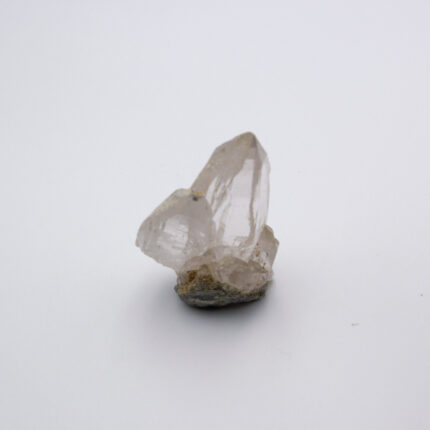
This is a genuinely important safety point that most crystal guides never mention. A clear, rounded stone - especially a crystal sphere, but also a polished clear quartz point, a clear glass-like cluster, or even a clear bead - can focus sunlight the way a magnifying glass does. In strong sun, that concentrated beam can scorch fabric, paper, wood, or car upholstery, and in the worst case start a fire.
The risk is highest with clear spheres and large clear pieces sitting in direct sun near something flammable: on a windowsill near curtains, on a sunny desk near papers, or on a car dashboard. The stone itself isn't harmed - clear quartz tolerates heat very well - but what's behind it can be.
The fix is simple: keep clear spheres and large clear crystals out of direct sunlight, particularly on windowsills, near curtains, and in cars. A shaded shelf is the right home for them.
Thermal Shock: Hot Outside, Freezing Inside
Thermal shock is the most UAE-specific risk in this guide, because few places combine such extreme outdoor heat with such cold indoor air conditioning.
What It Is
When a stone heats or cools unevenly - its surface changing temperature much faster than its core - different parts of it expand or contract at different rates. That creates internal stress. If the stress is large enough, especially along an existing weak point, the stone can crack. The more sudden and extreme the temperature change, the higher the risk.
Common UAE Scenarios
Hot car to cold room. A stone that has been baking in a car is carried straight into a heavily air-conditioned home or office.
Hot stone, cold water. A crystal that's hot from the sun is rinsed under cold tap water to clean or cool it. This is one of the most common ways people accidentally crack stones. Mineral collectors describe clear crystals developing internal cracks after being rinsed with water that was simply cooler than the stone.
AC vent to afternoon sun. A stone sits under an AC vent in the morning and in direct sun through the window in the afternoon, cycling between cold and hot every day.
Which Stones Are Most Vulnerable
Stones with perfect cleavage - natural planes of weakness along which they split - are especially sensitive. Fluorite, moonstone, calcite, kunzite, and selenite all fall into this group. Stones with visible internal fractures, veils, or fluid inclusions are also at higher risk, as are raw specimens with thin, delicate points.
How to Prevent It
Let hot stones cool down gradually at room temperature before handling, rinsing, or placing them somewhere cold. Never rinse a warm stone in cold water - if you need to clean it, wait until it has fully cooled, and use lukewarm water for water-safe stones. Avoid placing crystals directly under AC vents or in spots that swing between cold air and direct sun.
Summer Sun and Fading
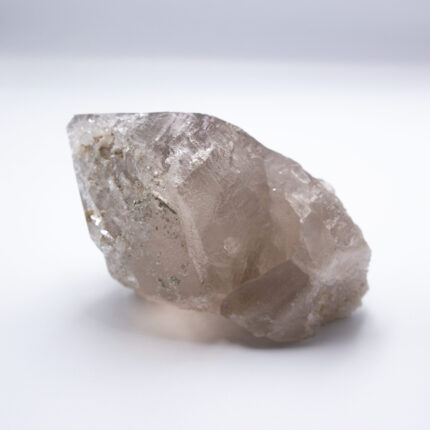
Fading is caused by ultraviolet light breaking down the colour centres or trace elements responsible for a stone's colour. It's slow - you won't notice it in a day - but it's cumulative and often permanent. In the UAE, where strong sun lasts most of the year, a windowsill display can visibly pale over months.
Stones That Fade in Sunlight
Amethyst can pale toward a washed-out lavender. Rose quartz can lose its soft pink. Citrine, especially natural citrine, can fade. Smoky quartz can lighten, as noted in our smoky quartz guide. Fluorite, kunzite, celestite, and aventurine are also known to fade. Turquoise can change colour with sun, heat, and dryness. Dyed stones of any kind are generally more prone to fading than natural colour.
Stones That Handle Sun Well
Opaque and colour-stable stones tolerate sunlight much better: clear quartz, black tourmaline, tiger's eye, obsidian, hematite, carnelian, red jasper, and most agates. These are the right choices if you want crystals in a bright spot.
Glass Doesn't Fully Protect Them
Standard window glass blocks some ultraviolet light but not all of it, and sun through a window still delivers plenty of heat. Don't assume a crystal is safe from fading just because it's indoors.
Balconies, Windowsills and Outdoor Spaces
Balconies combine every threat in this guide: direct sun, extreme heat, dust, sand, wind, humidity, and dew at night. Surfaces like metal railings, dark tiles, and stone ledges can become extremely hot in the afternoon. Crystals shouldn't live on a balcony in summer. Short-term use - such as a moonlight ritual on a dry night, as covered in our guide to charging crystals in moonlight - is fine, as long as they come in well before the morning sun.
Windowsills are only suitable if they don't receive strong direct sun. East-facing sills get intense early sun; west-facing sills get the fierce afternoon sun, which is also the hottest time of day. North-facing sills are usually the safest.
Gardens and plant pots work for hard, colour-stable stones, but avoid dark pots in full sun, which heat up a lot, and remember that watering exposes stones to moisture.
For more on safe spots around the house, see our room-by-room guide to placing crystals in your home.
Desert Dust: The Hidden Scratcher
This is one of the least-known threats, and it's particularly relevant in the UAE. Fine desert dust and sand contain a large proportion of quartz particles. Quartz sits at 7 on the Mohs hardness scale, which means it can scratch anything softer than itself.
So when you wipe a dusty crystal with a dry cloth, you're effectively rubbing tiny quartz grains across its surface. For hard stones like quartz and tourmaline, that's not a big concern. But for softer stones - lapis lazuli, turquoise, malachite, moonstone, fluorite, obsidian, and calcite, all below 7 - repeated dry wiping can gradually dull the polish and leave fine scratches.
How to Dust Crystals Safely
First, remove loose dust without rubbing: blow it off, use a soft brush, or use a gentle puff of air. Then, for water-safe stones, rinse briefly under lukewarm water and pat dry. For water-sensitive stones, use a very soft brush or a slightly damp microfibre cloth with light pressure, lifting dust rather than grinding it in. Displaying delicate pieces in a closed glass cabinet dramatically reduces how much dust settles on them in the first place.
Wearing Crystals in Summer

Crystal jewellery faces a different set of summer challenges, mostly from contact with your skin and the products you use.
Sweat. Sweat contains salt and natural oils. Over time it can dull porous stones, work into elastic cord, and speed up tarnish on silver. Wipe your bracelet or pendant with a soft, slightly damp cloth after a hot day, then let it dry.
Sunscreen, perfume, and oils. Sunscreen, body lotion, perfume, and oud or attar oils can coat stones and break down elastic cord. Apply them first and let them dry or absorb before putting your jewellery on, and avoid spraying perfume near it.
Heat on the skin. A dark bracelet worn in direct sun gets hot. That's harmless for the stone, but it's a good reason to take the bracelet off before spending long periods outdoors.
Choose summer-friendly stones. If you wear a bracelet every day through summer, hard and colour-stable stones like black tourmaline, tiger's eye, and clear quartz are the most forgiving. Softer or porous stones need more attention.
Silver and Settings
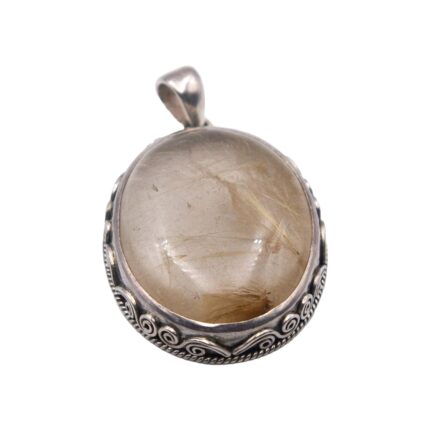
Sterling silver tarnishes faster in humid conditions and with sweat. Store silver-set pieces dry, ideally in a small zip bag or lined box, and wipe them after wearing. Don't leave pendants and rings in a hot car, where heat can also weaken any adhesive in the setting.
Which Stones Are Most at Risk
Use this chart to see where each stone is vulnerable. "Sun" refers to fading, "Thermal Shock" to cracking from sudden temperature change, and "Dust" to scratching from dry wiping.
| Stone | Sun (Fading) | Thermal Shock | Humidity / Sweat | Dust Scratching |
|---|---|---|---|---|
| Clear Quartz | Low | Low–Medium* | Low | Low |
| Black Tourmaline | Low | Low | Low | Low |
| Tiger's Eye | Low | Low | Low | Low |
| Obsidian | Low | Medium | Low | Medium |
| Amethyst | High | Low–Medium* | Low | Low |
| Rose Quartz | High | Low–Medium* | Low | Low |
| Citrine | Medium–High | Low–Medium* | Low | Low |
| Smoky Quartz | Medium–High | Low–Medium* | Low | Low |
| Moonstone | Low | High | Medium | Medium |
| Labradorite | Low | Medium | Low | Medium |
| Fluorite | High | High | Medium | High |
| Lapis Lazuli | Low–Medium | Medium | High | High |
| Turquoise | Medium–High | Medium | High | High |
| Selenite | Low | High | High | High |
*Quartz-family stones tolerate heat well but can crack from sudden temperature changes if they contain internal fractures, veils, or fluid inclusions - common in natural raw specimens.
These ratings are practical guidance based on each stone's hardness, cleavage, porosity, and known sensitivity to light, not laboratory measurements. Individual pieces vary, particularly raw specimens.
Storing Crystals While You're Away for Summer
Many UAE residents travel for part of the summer, often with the air conditioning switched off or turned up. An unoccupied apartment can become very hot and humid, which affects crystals on display, jewellery left out, and anything near windows. A few minutes of preparation before you leave protects your collection.
Before You Travel
Step 1: Move everything away from windows. Take crystals off windowsills and sunny shelves. Weeks of unobstructed sun in an empty home is exactly how displays fade.
Step 2: Clean and dry pieces first. Wipe off dust and any skin oils from jewellery, and make sure everything is completely dry before storing.
Step 3: Wrap delicate pieces individually. Soft cloth or tissue prevents stones scratching each other and cushions fragile points.
Step 4: Use a closed box in an interior cupboard. A lidded box inside a wardrobe or cupboard on an inside wall stays darker and more stable in temperature than anywhere near an exterior wall or window.
Step 5: Store jewellery flat and dry. Lay bracelets flat rather than stretched over a holder, and keep silver in small sealed bags to slow tarnish in humidity. Adding a silica gel sachet to a box of silver or porous stones helps absorb moisture.
Step 6: Take favourites with you. If there's a bracelet or tasbih you'd miss, the simplest option is to bring it along - in your hand luggage, not a checked bag.
When You Get Back
Let stored pieces sit at room temperature for a while if the home was hot, before handling or cleaning them. Check silver for tarnish and elastic for any loss of stretch, and wipe off any dust with the safe method above.
Beach, Pool and Desert Trips
Beach. Salt water, sand, sunscreen, and strong sun all at once. Salt and sand are particularly hard on soft and porous stones and on elastic cord. The easiest approach is to leave crystal jewellery at home or in a closed bag in the shade.
Swimming pool. Chlorine is harsh on elastic, silver, and porous stones. Always remove crystal jewellery before swimming.
Desert trips. Fine sand gets into bead holes and settings and acts as an abrasive with every movement. If you do wear a bracelet on a desert outing, rinse or brush sand out afterward once it has cooled, and check the cord.
Gym and outdoor sport. Sweat, impact, and friction - take bracelets off.
Signs of Heat and Sun Damage
Catching damage early lets you move a stone before it gets worse.
Paler colour than you remember. Compare with an old photo, or with a similar stone kept in a drawer. Fading is usually gradual and even.
New internal cracks or cloudiness. Fine new lines inside a clear stone, especially appearing suddenly, often point to thermal shock.
Dull or hazy polish. Often the result of dry-wiping dust, sweat residue, or chemical contact.
Loose settings. A stone that moves in its setting may have weakened adhesive or a bent prong.
Tired elastic. A bracelet that feels looser, looks thin, or shows gaps between beads needs restringing before it breaks.
Fading from sun is generally permanent. Cracks can't be undone either, but a cracked stone is still genuine and can be kept, repurposed, or retired - it doesn't lose its meaning.
A Simple Summer Care Routine
Looking after crystals in heat in the UAE doesn't need to be complicated. A few habits cover almost everything:
Never leave crystals in a parked car. Take them with you.
Keep coloured stones out of direct sun, including through windows.
Let hot stones cool naturally before cold rooms or water.
Blow or brush dust off before wiping.
Put on perfume and sunscreen first, jewellery second.
Remove jewellery for the beach, pool, and gym.
Wipe off sweat after hot days and let pieces dry.
Store in a closed box when travelling for summer.
Summer-Friendly Crystals
If you want crystals that cope best with UAE conditions, hard and colour-stable stones are the easiest to live with. Our black tourmaline bracelet and tiger's eye bracelet are both excellent everyday summer choices, and our crystal tasbih collection includes tiger's eye pieces that stand up well to daily handling. For display, our raw healing crystals look their best - and last longest - on a shaded shelf.
Worried a crystal has been damaged by heat?
Send us a photo and we'll help you work out what happened and how to care for it.
Questions People Ask
Can I leave crystals in a hot car in the UAE?
It's best not to. Car interiors get far hotter than the outdoor temperature in summer, which weakens elastic cord and tasbih thread, fades sun-sensitive stones, can loosen glued settings, and can stress stones with internal fractures. Take crystals with you when you park.
Which crystals fade in the sun?
Amethyst, rose quartz, citrine, smoky quartz, fluorite, kunzite, celestite, aventurine, and turquoise are all known to fade or change colour with prolonged sunlight. Dyed stones are also prone to fading.
Can heat crack crystals?
Steady heat rarely harms most crystals, but sudden temperature changes can. Moving a hot stone into cold air conditioning or rinsing it under cold water can crack it, especially stones with cleavage or internal fractures like fluorite, moonstone, and calcite.
Is it safe to keep crystals on a balcony in summer?
No. Balconies combine direct sun, extreme heat, dust, sand, humidity, and dew. Short-term use on a dry night is fine, but crystals shouldn't be kept there through summer.
Can a crystal ball start a fire?
A clear crystal sphere or large clear stone can focus sunlight like a magnifying glass and scorch or ignite fabric, paper, or wood behind it. Keep clear spheres out of direct sunlight, especially near curtains and in cars.
How should I clean dust off crystals?
Blow or brush loose dust off first, because desert dust contains hard quartz particles that can scratch softer stones when wiped. Then rinse water-safe stones in lukewarm water, or use a very soft, slightly damp cloth for water-sensitive ones.
Should I take off my crystal bracelet in summer?
Remove it for the beach, pool, gym, and long periods in strong sun. Wipe off sweat after hot days, and apply sunscreen and perfume before putting it on.
How do I store crystals when I travel for summer?
Move them away from windows, clean and dry them, wrap delicate pieces, and store them in a closed box in an interior cupboard. Keep silver in sealed bags, ideally with a silica gel sachet.