

Amethyst Crystal Meaning, Benefits and Healing Properties
Everything you need to know about the amethyst stone — its meaning, color, healing properties, and how to choose an authentic amethyst ring or amethyst bracelet of your own.
Few crystals are as instantly recognizable as the amethyst stone. With its striking violet-to-purple hue, amethyst has been treasured for thousands of years — worn by royalty, carved into ceremonial objects, and used across centuries of spiritual and healing traditions. Today, it remains one of the most popular amethyst crystals in modern jewellery and wellness practices alike, prized as much for its calming reputation as for its natural beauty.
At Alpine Crystals UAE, we carry genuine, natural amethyst across bracelets, rings, and raw crystal pieces. In this guide, we'll cover what amethyst actually is, its traditional meaning and healing properties, what affects amethyst gemstone price, and how to choose the right amethyst ring or amethyst bracelet for yourself.
Whether you're buying your very first piece of amethyst, adding to an existing collection, or simply curious about the meaning behind a stone you already own, this guide covers everything from its geological formation to practical, everyday ways to make the most of it in your own routine.
What Is Amethyst?
Amethyst is a violet variety of quartz, one of the most abundant minerals on Earth. Its distinctive purple color comes from trace amounts of iron within the crystal structure, combined with natural irradiation during its formation deep underground. Amethyst typically forms inside geodes — hollow rock cavities lined with crystal points — which is why raw amethyst is often sold as clusters or points still attached to their natural formation.
Amethyst is found in several regions around the world, including Brazil, Uruguay, Zambia, and parts of South Korea and Russia, each producing slightly different color tones and crystal formations. Historically, the finest, most deeply saturated stones were associated with Russian deposits near the Ural Mountains, which is where the grading term "Deep Siberian" originates, even though much of today's supply comes from Brazil and Africa.
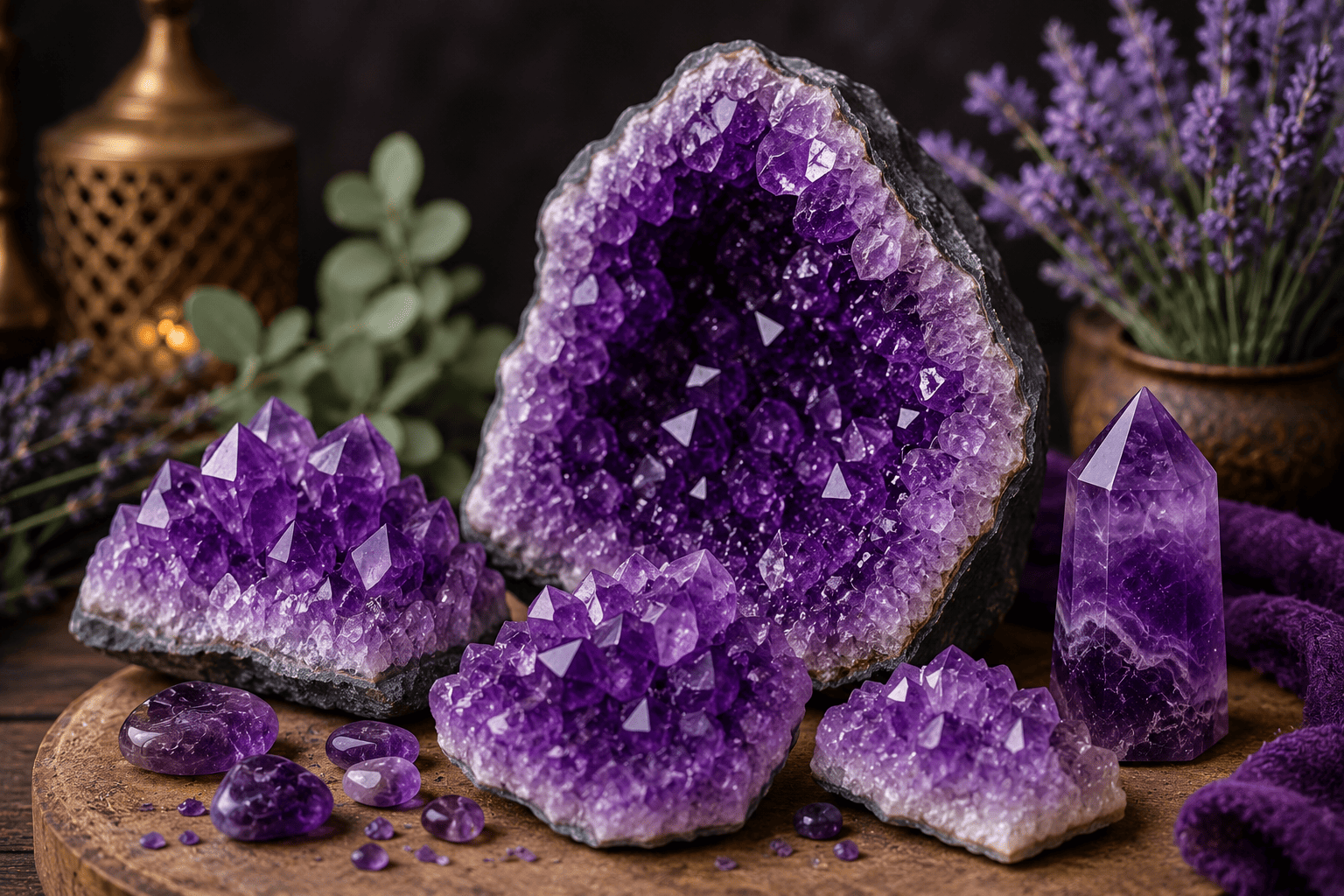
How Amethyst Forms
Amethyst forms over thousands to millions of years as silica-rich fluids slowly cool within cavities in volcanic or sedimentary rock, gradually depositing layers of quartz crystal. As this process unfolds, trace iron impurities become trapped within the crystal lattice. Natural background radiation in the surrounding rock then interacts with this iron, producing the violet color amethyst is known for. This slow, layered growth process is also why so many raw amethyst pieces show visible banding, color zoning, or clusters of multiple crystal points growing from a single base.
A Brief History of Amethyst
Amethyst has been used in jewellery and ceremonial objects for thousands of years, appearing in ancient Egyptian burial jewellery, Greek and Roman rings and amulets, and later in the crowns and regalia of European royalty. For much of history, before large deposits were discovered in South America, amethyst was considered as precious as diamond, ruby, sapphire, and emerald — grouped together as the "Cardinal Gems." The discovery of extensive amethyst deposits in Brazil during the 19th century significantly increased supply, making the stone far more accessible than it had been in earlier centuries, while still preserving its rich cultural and spiritual associations.
Amethyst Color: Why Does It Vary?
One of the first things people notice about amethyst is just how much its amethyst color can vary — from a pale, almost lilac lavender to a deep, near-black violet. This range comes down to a combination of natural factors.
Iron Content
The purple color in amethyst comes from trace iron impurities within the quartz structure. Higher iron content generally produces a deeper, more saturated purple, while lower concentrations result in the paler lilac tones sometimes called "Rose de France."
Natural Irradiation
Amethyst's color also depends on natural background radiation the crystal was exposed to during formation. This is part of why amethyst can fade slightly with prolonged, intense sun exposure — the same process that colored the stone can also be partially reversed by strong UV light over time.
Color Zoning
It's common for a single piece of natural amethyst to show color zoning — bands or patches of deeper and lighter purple within the same stone, sometimes alongside clear or smoky sections. This is a completely natural occurrence and, far from being a flaw, is often considered a hallmark of genuine, untreated amethyst.
Heat-Treated Color Variations
Amethyst is also sometimes heat-treated to alter its color. Applying heat can shift amethyst toward a yellow-orange tone, producing what's sold as citrine, or in some cases create the greenish "prasiolite" variety. This means not every yellow or green quartz-family stone on the market started out that color naturally.
Amethyst Crystal Meaning
The name "amethyst" comes from the Greek word amethystos, meaning "not intoxicated." Ancient Greek tradition held that the stone could protect its wearer from the effects of alcohol, and it was often carved into drinking vessels or worn as jewellery for exactly this purpose.
Throughout history, amethyst has also carried strong associations with royalty, spirituality, and protection. It has appeared in crowns, religious artifacts, and ceremonial jewellery across numerous cultures, and was historically considered one of the "Cardinal Gems" — a group of gemstones once regarded as most precious, alongside diamond, sapphire, ruby, and emerald.
In modern crystal healing traditions, amethyst has retained this reputation as a stone of spiritual protection, calm, and higher consciousness, making it one of the most widely used stones for meditation and energy work today.
Symbolism Across Cultures
Beyond ancient Greece, amethyst carried meaningful symbolism across several other cultures. In medieval Europe, it was associated with piety and clear-headed thinking, and was often worn by clergy members set into rings as a symbol of spiritual devotion. In Tibetan Buddhist tradition, amethyst is one of the stones sometimes used in prayer malas, valued for its association with calm, focused awareness during meditation. This consistent thread — a stone linked to clarity, calm, and spiritual focus across otherwise very different cultures and eras — is part of what makes amethyst's meaning feel so enduring today.
Amethyst Stone Benefits
Beyond its rich history, amethyst carries a wide range of traditional associations. Here are the most commonly recognized amethyst stone benefits.
Calm and Stress Relief
Amethyst's most well-known association is with calm, relaxation, and a quieter, less reactive state of mind, making it popular for easing everyday stress and racing thoughts.
Better Sleep
Many people place amethyst near their bed or under their pillow, believing it supports more restful sleep and calmer, more meaningful dreams throughout the night.
Spiritual Protection
Amethyst has long been regarded as a protective stone, believed to shield its owner from negative energy and support a stronger sense of inner security in difficult environments.
Mental Clarity and Focus
Amethyst is often used to help quiet mental chatter, supporting clearer thinking and a steadier, more focused mindset during demanding or overwhelming periods.
Enhanced Meditation and Intuition
Closely tied to the third eye and crown chakras, amethyst is a popular companion for deepening meditation and supporting intuitive insight and inner wisdom.
Emotional Balance
Amethyst's gentle, calming energy is often used to help ease emotional overwhelm and support a steadier, more balanced mood through life's ups and downs.
Amethyst and the Chakras
Amethyst is most closely associated with the crown chakra (Sahasrara), located at the top of the head and linked to spiritual connection and higher consciousness, as well as the third eye chakra (Ajna), associated with intuition and inner wisdom.
Many practitioners place amethyst on or near the forehead during meditation to support third eye activation, or hold it above the crown of the head to encourage a deeper sense of spiritual connection. If you're building a broader chakra practice, amethyst pairs naturally alongside our Seven Chakra bracelet with clear quartz.
Who Should Wear Amethyst?
Given its broad, calming associations, amethyst suits a wide range of people and situations.
Those Managing Everyday Stress
Amethyst's calming reputation makes it a popular choice for anyone navigating a demanding job, busy household, or generally high-stress lifestyle.
Meditation and Spiritual Practitioners
Its strong ties to the third eye and crown chakras make amethyst a natural fit for those looking to deepen an existing meditation or mindfulness practice.
People Working on Emotional Balance
Amethyst's gentle, steadying energy is often chosen by those navigating emotional transitions, seeking a calmer, more centered daily experience.
Anyone Born in February
As the traditional birthstone for February, amethyst holds particular personal significance for those born in that month, making it a popular birthday gift choice.
Beginners to Crystal Healing
Because amethyst is widely available, relatively affordable, and easy to incorporate into daily life, it's frequently recommended as one of the best starting crystals for those new to the practice.
Amethyst vs. Other Purple Stones
Amethyst isn't the only purple gemstone available, and it's worth understanding how it compares to a few commonly confused alternatives.
Amethyst vs. Purple Fluorite
Purple fluorite is significantly softer than amethyst and more prone to scratching, making amethyst the more durable choice for everyday jewellery like rings and bracelets.
Amethyst vs. Iolite
Iolite has a more blue-violet, sometimes almost sapphire-like tone and is considerably rarer than amethyst, generally making it a more expensive option for those specifically seeking a bluer purple hue.
Amethyst vs. Purple Sapphire
Purple sapphire is a far rarer and more valuable gemstone than amethyst, with significantly higher hardness, making it a premium alternative for fine jewellery, though at a considerably higher price point than the widely available amethyst.
Amethyst vs. Synthetic or Glass Imitations
As with other popular crystals, amethyst is sometimes imitated using dyed glass or synthetic quartz. Genuine amethyst typically shows natural color zoning and feels cool and dense to the touch, while glass imitations often display unnaturally uniform color and trapped air bubbles.
Amethyst Gemstone Price: What Determines Value
Unlike rarer gemstones, amethyst is relatively abundant, which keeps amethyst gemstone price generally accessible compared to stones like ruby or emerald. That said, prices can still vary enormously depending on several factors.
Color Depth
Deeper, more saturated purple stones — particularly the rich violet with red flashes historically called "Deep Siberian" — are typically valued more highly than pale lilac stones, all else being equal.
Clarity
Amethyst with fewer visible inclusions or fractures generally commands a higher price, though natural, minor inclusions are common and don't necessarily indicate lower quality for everyday jewellery or healing use.
Cut and Carat Weight
For faceted amethyst used in fine jewellery, a precise, well-proportioned cut increases value, as does larger carat weight, though amethyst's relative abundance means even sizable stones remain more affordable than comparably sized rare gems.
Natural vs. Treated
Untreated, natural amethyst with good color is generally valued more than heat-treated material, though most commercially available amethyst is simply natural, untreated stone to begin with — unlike citrine, where treatment is far more common.
Raw vs. Finished Pieces
Raw amethyst clusters and points are typically priced by size and formation quality, while finished jewellery pieces — such as rings, bracelets, or pendants — reflect both the stone and the craftsmanship of the setting. As a general reference point, our own Amethyst Crystal Bracelet and Amethyst Crystal Ring both sit in an accessible, everyday price range, reflecting amethyst's status as a widely available, non-precious gemstone.
A General Sense of Price Range
Globally, amethyst prices can range enormously depending on the market and intended use. Small, tumbled polished stones or simple beaded bracelets tend to sit at the more affordable end of the spectrum, while large, deeply colored faceted stones set in fine jewellery can command significantly higher prices, particularly for exceptional color and clarity. Raw clusters and geode sections vary widely in price based on size, with larger, more dramatic formations naturally costing more than smaller specimens. As a general guide, everyday wearable pieces — rings, bracelets, and pendants featuring polished amethyst — tend to represent the most accessible entry point into owning genuine amethyst.
Why Amethyst Remains Affordable
Unlike gemstones such as ruby, sapphire, or emerald, amethyst is not considered rare on a global scale, with substantial deposits found across multiple continents. This abundance is precisely why amethyst has historically shifted from being grouped among the "Cardinal Gems" centuries ago to being one of the most accessible and widely available colored gemstones today, making it a popular entry point for those new to building a gemstone or crystal collection.
Lalique Amethyst: A Different Kind of "Amethyst"
If you've come across the term "Lalique Amethyst" in your search, it's worth clarifying that this refers to something quite different from the natural gemstone covered in this guide. Lalique is a French luxury house, founded by glass artist René Lalique, known for its art glass, crystal sculptures, and perfumery — and "Amethyst" appears in their catalog as a color name used for certain pieces of decorative crystal glassware and fragrance packaging, rather than a natural mineral.
In other words, "Lalique Amethyst" generally refers to purple-toned art glass or a fragrance bottle color, not a natural amethyst gemstone. If you're specifically interested in genuine, natural amethyst — whether as a raw crystal, ring, or bracelet — that's the focus of the rest of this guide, and distinct from Lalique's decorative glass products.
Amethyst Rings
An amethyst ring is one of the most popular ways to wear this stone, combining its rich color with the visibility and everyday presence of a ring worn on the hand.
Choosing an Amethyst Ring
When choosing an amethyst ring, consider the setting (such as sterling silver, which complements amethyst's cool purple tone particularly well), the size and cut of the stone, and whether you prefer a faceted, polished look or a more natural, raw-cut appearance.
Amethyst as a Birthstone
Amethyst is widely recognized as the traditional birthstone for February, making an amethyst ring a popular and meaningful gift for birthdays falling in that month.
Styling an Amethyst Ring
Amethyst's cool purple tone pairs particularly well with silver or white gold settings, which complement the stone's color without competing with it. For those who prefer warmer metals, yellow gold can create a striking, more vintage-inspired contrast against the purple stone. Amethyst rings work equally well as a statement piece worn alone or layered alongside other rings for a more eclectic, stacked look.
Our Authentic Amethyst Natural Crystal Ring with silver linings features a genuine amethyst stone set in silver, with each ring naturally unique due to the stone's individual color and texture. You can also browse our full Crystal Rings collection for more options.
Amethyst Bracelets
An amethyst bracelet is one of the most popular ways to keep this stone in continuous contact with you throughout the day, making it a favorite for those specifically focused on calm, stress relief, and spiritual grounding.
Why Choose an Amethyst Bracelet
Unlike a ring, which sits in one fixed spot, a beaded bracelet distributes multiple small amethyst stones around the wrist, which some practitioners believe creates a broader, more evenly distributed energetic effect throughout the day.
Bead Size and Fit
Amethyst bracelets are commonly available in 6mm to 10mm bead sizes, with smaller beads offering a more delicate look and larger beads creating a bolder, more visible presence on the wrist.
Pairing Amethyst With Other Stones
Amethyst pairs naturally with clear quartz, which is traditionally believed to amplify its calming properties, as well as rose quartz for a gentler, heart-centered combination, or moonstone for those focused on intuition and emotional balance. Many people also stack an amethyst bracelet alongside other single-stone bracelets to combine several intentions on one wrist.
Our Authentic Natural Amethyst Crystal Bracelet (8mm) is designed for comfortable daily wear, with genuine, natural amethyst beads on a durable thread design. Explore our wider Crystal Bracelets collection if you'd like to pair amethyst with complementary stones.
Raw Amethyst Crystals
Beyond jewellery, many people prefer amethyst crystals in their raw, unpolished form — points, clusters, or geode sections — for meditation, chakra work, or simply as a striking piece of natural décor.
Raw amethyst retains its natural crystal structure, including any color zoning or included minerals from its original formation, which many practitioners believe preserves more of the stone's full, unaltered energetic properties compared to a smoothed, tumbled piece. You can explore our full range of natural, ethically sourced pieces in the Raw Healing Crystals collection, or read our companion guide on how to choose an authentic Himalayan crystal for tips on spotting genuine, untreated stone.
Popular Uses for Raw Amethyst
Beyond personal meditation, raw amethyst clusters are commonly placed in bedrooms to support restful sleep, positioned in living spaces to encourage a calm atmosphere, or displayed on a desk to support focus during work. Larger geode sections are sometimes used as a striking centerpiece in a dedicated meditation or wellness corner at home, doubling as both a spiritual tool and a natural decorative object.
How to Use Amethyst Daily
Here are a few simple ways to work amethyst into an everyday routine.
Morning or Evening Meditation
Hold a piece of amethyst, or wear your amethyst bracelet, during a short meditation session to support calm and mental clarity at the start or end of your day.
Bedside Placement
Keep a small amethyst point or cluster on your nightstand as part of a wind-down routine, aligning with its traditional association with restful sleep.
During Stressful Moments
Holding or wearing amethyst during a demanding meeting, a difficult conversation, or any other stressful moment is a simple way to draw on its traditional calming reputation.
As a Meditation or Yoga Companion
Many people place amethyst nearby during yoga or meditation practice, sometimes combining it with a Himalayan singing bowl session for a fuller sound and crystal healing experience.
Caring for Your Amethyst
A little routine care helps keep your amethyst looking and feeling its best for years to come.
Avoid Prolonged Direct Sunlight
Extended UV exposure can gradually fade amethyst's natural color, so it's best to display raw pieces away from a constantly sunny windowsill, and to avoid using intense sunlight as a cleansing method.
Store Separately From Harder Stones
Amethyst sits at a 7 on the Mohs hardness scale, meaning it can be scratched by harder gemstones. Storing it separately, particularly from stones like topaz or sapphire, helps preserve its polished surface.
Clean Gently
A soft, dry cloth is usually enough to keep amethyst looking polished. Avoid harsh chemical cleaners or ultrasonic jewellery cleaners, which can affect the stone's surface over time, particularly around any color zoning.
Remove Before Water Exposure
Removing jewellery before swimming or showering helps protect both the stone and any metal setting or elastic cord from unnecessary wear.
Cleanse Periodically
Many practitioners recommend cleansing amethyst using moonlight or sound roughly once a month, specifically avoiding intense sunlight as a cleansing method given its fading effect on the stone's color over time.
Common Myths and Mistakes
Myth: All Amethyst Looks the Same
As covered earlier, amethyst color naturally ranges from pale lilac to deep violet, with color zoning being common and completely normal in genuine, natural stones.
Myth: Paler Amethyst Is Lower Quality
While deeper color tends to command a higher price, paler amethyst is just as genuine and can be equally valued depending on personal preference and intended use.
Mistake: Leaving Amethyst in Direct Sunlight
Displaying amethyst on a sunny windowsill for extended periods can gradually fade its color over time — a shaded display area is a better choice for long-term color preservation.
Mistake: Assuming All Purple Quartz Is Untreated
While amethyst itself is rarely treated for color, it's worth remembering that quartz can be treated to create other colors, such as citrine or prasiolite, so it's helpful to ask a seller directly if you're specifically seeking untreated, natural stone.
Frequently Asked Questions
What are the main amethyst stone benefits?
Amethyst is traditionally associated with calm and stress relief, better sleep, spiritual protection, mental clarity, and support for meditation and intuition.
Why does amethyst color vary so much?
Amethyst's purple color comes from trace iron content combined with natural irradiation during formation. Higher iron content generally produces deeper purple tones, while lower concentrations create paler lilac shades.
What determines amethyst gemstone price?
Amethyst price is influenced by color depth, clarity, cut and carat weight for faceted stones, and whether the piece is raw or set in finished jewellery. Amethyst is relatively abundant, keeping most pieces accessible compared to rarer gemstones.
Is "Lalique Amethyst" the same as an amethyst gemstone?
No. "Lalique Amethyst" typically refers to a purple color used in art glass or fragrance packaging by the French luxury house Lalique, rather than a natural amethyst mineral.
Which hand should I wear an amethyst bracelet on?
There's no strict rule. Many practitioners suggest the left hand for receiving amethyst's calming energy inward, though comfort and personal preference are equally valid considerations.
Where can I buy authentic amethyst rings and bracelets in the UAE?
You can shop our Amethyst Crystal Ring and Amethyst Crystal Bracelet, made from genuine natural stone, with delivery across Dubai, Abu Dhabi, Sharjah, and the wider UAE.
Is amethyst a durable stone for everyday jewellery?
Yes. Amethyst sits at a 7 on the Mohs hardness scale, making it durable enough for regular use in rings and bracelets, provided it's stored separately from harder gemstones to avoid scratching.
What is the difference between natural and heat-treated amethyst?
Natural amethyst gets its purple color from iron content and natural irradiation, while heat treatment is more commonly used to transform amethyst into citrine or prasiolite rather than to alter amethyst's own color, meaning most amethyst on the market is untreated.
Final Thoughts
From its ancient Greek origins to its modern place in meditation and crystal healing practice, the amethyst stone remains one of the most enduring and versatile crystals available — valued equally for its beauty, its meaning, and its accessible price point compared to rarer gems. Whether you're drawn to a raw cluster, a wearable amethyst ring, or a daily amethyst bracelet, choosing a genuine, natural piece is the best way to connect with everything this stone has represented for thousands of years.
As you build a relationship with your own piece, remember that amethyst's real value comes less from any single dramatic effect and more from the quiet, consistent presence it offers — a calming color to look at during a stressful day, a comforting weight on your wrist during a big decision, or simply a beautiful, meaningful object connecting you to centuries of shared human history and tradition.
Ready to find your amethyst piece? Explore our Crystal Rings and Crystal Bracelets collections, browse our raw healing crystals, or read our guide on crystals and their meanings to explore more stones.