

Crystal Stone Rings: Meaning, Benefits and How to Choose the Perfect Crystal Ring
A complete guide to crystal stone rings — meanings, benefits, styles, and how to choose the right stone, setting, and size for you.
Crystal stone rings sit at an interesting crossroads between jewellery and intention — worn as much for their meaning as their appearance. Whether you're drawn to the deep violet of an amethyst crystal ring, the grounding presence of a men's black tourmaline band, or simply want to understand how natural gemstone rings differ from Swarovski or diamond pieces, this guide covers everything you need before choosing your own.
At Alpine Crystals UAE, our Crystal Rings collection features genuine, natural stone set in silver, handcrafted rather than mass-produced. In this guide, we'll walk through the meaning and benefits of different crystal ring types, how to choose the right stone and setting, and how crystal rings actually compare to other "crystal" jewellery terms you may have come across while researching.
Given how broadly the word "crystal" gets used across the jewellery industry — from natural gemstone to manufactured glass to informal shorthand for diamond — we'll also spend some time clarifying exactly what each of these terms actually means, so you can shop with confidence regardless of which type of "crystal ring" you're ultimately looking for.
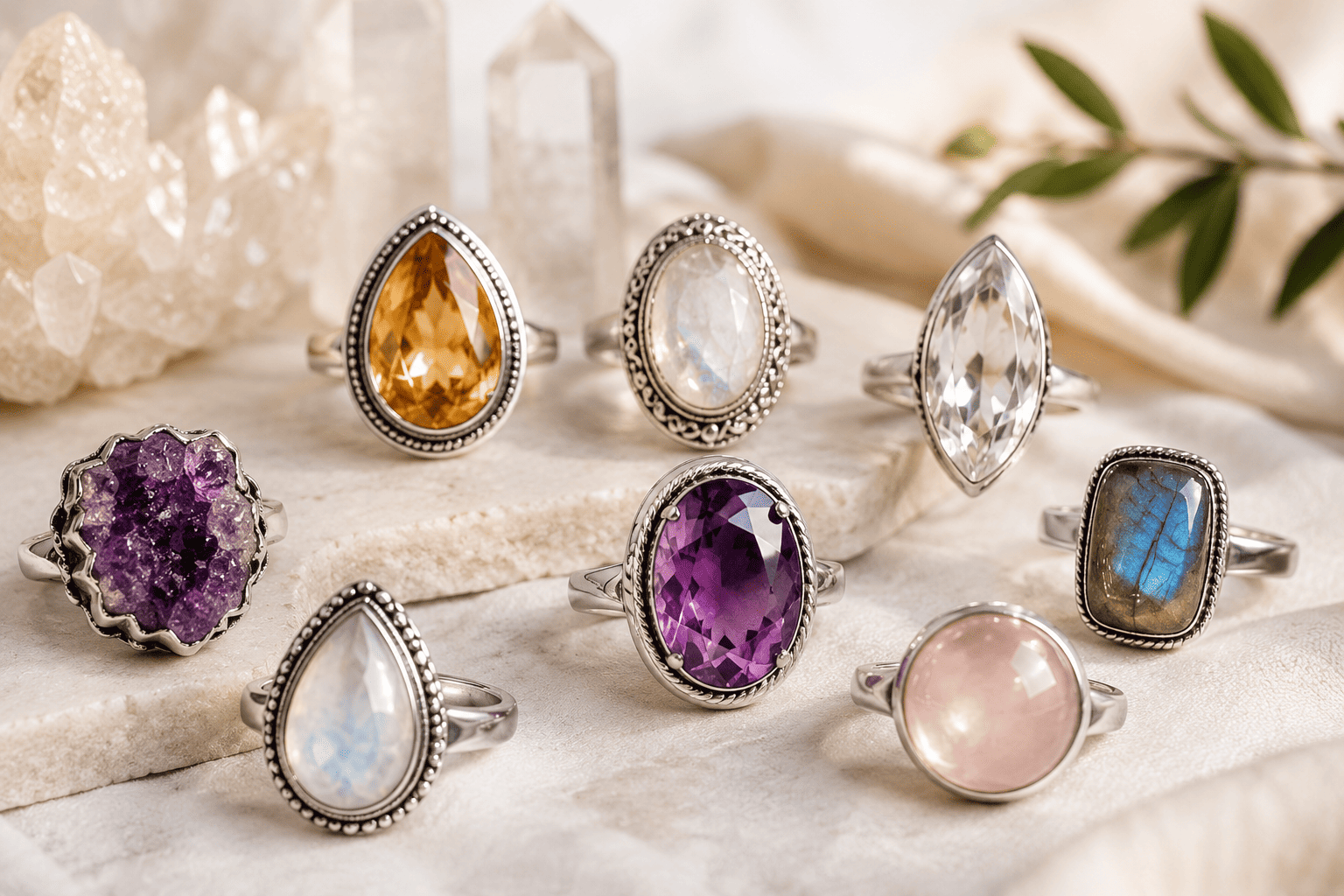
What Are Crystal Stone Rings?
A crystal stone ring is a ring set with a natural, unheated or minimally treated gemstone — chosen as much for its traditional meaning as its appearance. Unlike mass-market fashion rings using glass or synthetic stones, genuine crystal rings feature real mineral material, meaning each piece carries slight natural variation in color, clarity, and pattern.
These rings are worn for a range of reasons: as a meaningful daily accessory, as a tool for meditation or energy work, as a birthstone piece, or simply because the wearer is drawn to a particular stone's color and story. Because "crystal" is used loosely across the jewellery industry — sometimes referring to natural gemstone, sometimes to cut glass, and sometimes informally to diamond — it's worth understanding exactly what you're looking at before you buy, which we'll cover in detail later in this guide.
A Brief History of Crystal Rings
Wearing gemstones set in rings dates back thousands of years, with ancient Egyptian, Greek, and Roman cultures all incorporating stones like amethyst, carnelian, and lapis lazuli into signet and ceremonial rings. Many of these early rings served dual purposes — as personal seals used to stamp documents, and as protective or symbolic pieces believed to carry the stone's traditional properties. This dual role, part decorative and part meaningful, has carried through into how crystal rings are worn and chosen today.
Natural Variation Is Normal
Because genuine crystal rings use real mineral material rather than manufactured glass, it's completely normal to see slight variation in color, clarity, or pattern between individual pieces of the same stone type. Rather than viewing this as inconsistency, most buyers of natural crystal jewellery consider this variation part of the appeal — proof that the stone is authentic, natural material rather than a uniform, mass-produced imitation.
Crystal Ring Meaning and Benefits
Because a ring sits in one fixed, visible spot on the hand, many people choose their stone specifically based on what they want that constant, visible reminder to represent.
A Visible Daily Intention
Unlike a bracelet or necklace, a ring is seen constantly by the wearer, making it a strong, ever-present reminder of whatever intention the stone represents, whether that's calm, confidence, or protection.
Personal and Meaningful Gifting
Crystal rings are popular gifts for birthdays, milestones, and birthstone-based occasions, offering more personal meaning than a generic fashion piece bought without any specific intention behind it.
Everyday Energy Work
For those practicing meditation or chakra work, a ring keeps a chosen stone in continuous contact with the hand throughout the day, rather than only during a dedicated session.
A Natural, One-of-a-Kind Piece
Genuine crystal rings show natural variation from piece to piece, meaning no two rings are ever perfectly identical, unlike mass-manufactured alternatives produced from synthetic material.
Amethyst Crystal Rings
An amethyst crystal ring remains one of the most popular choices in this category, combining amethyst's rich violet color with its long-standing associations with calm, spiritual protection, and clarity. Amethyst is also the traditional birthstone for February, making it a popular and meaningful gift for birthdays falling in that month.
Amethyst's cool purple tone pairs particularly well with silver settings, which complement the stone without competing with its color. The depth of purple can vary from a pale lilac to a deep violet, and both tones are equally genuine — deeper color simply reflects higher natural iron content within the stone during its formation.
Our Authentic Amethyst Natural Crystal Ring with silver linings features a genuine amethyst stone set in silver, with each ring naturally unique due to the stone's individual color and texture.
Mens Crystal Rings
Crystal rings are far from a women-only category — mens crystal rings have grown steadily in popularity, particularly featuring darker, more grounding stones that suit a bolder, understated aesthetic.
Black Tourmaline: A Popular Choice for Men
Black tourmaline is one of the most requested stones for men's crystal rings, thanks to its deep black color, traditional association with protection and grounding, and versatile styling that pairs easily with both casual and formal outfits. Our Natural Black Tourmaline Crystal Ring with silver linings is a genuine, natural stone set in silver, designed for comfortable daily wear.
Other Popular Stones for Men
Beyond black tourmaline, tiger's eye, smoky quartz, and onyx are also commonly chosen for men's crystal rings, each offering a darker, more neutral tone that suits a minimalist or understated style preference.
Why Grounding Stones Suit Men's Styling
Darker, more muted stones tend to read as more versatile and understated in everyday menswear, pairing easily with a range of outfits without drawing excessive attention. Beyond aesthetics, many men are specifically drawn to the traditional meanings of grounding stones like black tourmaline — protection, stability, and emotional resilience — making the choice as much about intention as appearance.
Blue Crystal Rings
A blue crystal ring offers a distinctive, less commonly seen alternative to typical jewellery stones. Within our Crystal Rings collection, blue-toned options have included deep blue lapis lazuli — historically prized for its association with wisdom, truth, and communication — as well as turquoise and blue sunstone pieces from time to time, depending on current stock.
Why Blue Stones Are Often Linked to Communication
Many blue crystals, including lapis lazuli and sodalite, are traditionally associated with the throat chakra, the energy center linked to honest self-expression and clear communication. This is part of why blue crystal rings are sometimes chosen specifically by those preparing for public speaking, difficult conversations, or creative work involving writing or speech.
Because natural blue stones vary in availability, it's worth checking current listings directly or reaching out if you're looking for a specific blue variety, such as lapis lazuli, turquoise, or aquamarine.
Pink Crystal Rings
A pink crystal ring is most commonly set with rose quartz, the stone traditionally associated with unconditional love, emotional healing, and gentle self-compassion. Rose quartz's soft pink tone makes it a popular choice for those seeking a delicate, romantic-leaning piece.
A Popular Choice for Heart-Centered Intentions
Beyond its romantic associations, rose quartz is also chosen by those working through periods of emotional healing, self-forgiveness, or simply looking to bring a gentler, more compassionate energy into daily life. Its soft, muted pink tone tends to suit both delicate, everyday rings and slightly bolder statement pieces equally well.
While rose quartz is currently more widely available in our bracelet collection, pink crystal ring availability varies with stock — reach out directly if you're specifically looking for a rose quartz or other pink-toned ring.
White and Quartz Crystal Rings
A white crystal ring or quartz crystal ring typically features clear quartz — sometimes called rock crystal in gemological terminology — prized for its clarity and traditional reputation as the "master healer" of the crystal world.
What Does "Rock Crystal" Mean?
"Rock crystal" is simply another name for naturally clear, colorless quartz. The term dates back to a time before the mineral's chemical composition was well understood, when the transparent stone was assumed to be a form of permanently frozen ice. Today, it's used somewhat interchangeably with "clear quartz" in both jewellery and mineralogical contexts.
Other White and Pale Crystal Options
Beyond clear quartz, other pale or white-toned crystals sometimes used in rings include howlite, known for its soft white tone and calming associations, and moonstone, prized for its subtle glow and traditional links to intuition and new beginnings. Each offers a slightly different texture and finish compared to the transparency of clear quartz.
While our current ring offerings focus on colored stones like amethyst and black tourmaline, clear quartz is available across other formats, including our Clear Quartz Tower Pendant. If you're specifically after a clear quartz or rock crystal ring, it's worth reaching out to check current or upcoming stock.
Citrine Crystal Rings
A citrine crystal ring combines citrine's warm golden tone with its traditional reputation as the "merchant's stone" — associated with abundance, confidence, and positivity. Citrine's sunny, golden-yellow tone pairs beautifully with both silver and gold settings, though gold tends to enhance its warm undertones particularly well.
While citrine is currently more widely available in our citrine bracelet and citrine tasbih prayer beads, a wearable citrine bracelet remains an excellent way to carry the same meaning day to day if a ring isn't currently in stock. Message us directly if you're specifically looking for citrine set as a ring.
Ring Styles: Ball, Shield and Statement Cuts
Beyond the stone itself, crystal rings come in a range of cuts and settings, each offering a distinct look.
Crystal Ball Rings
A crystal ball ring features the stone cut and polished into a smooth, rounded sphere rather than a faceted or cabochon shape. This softer, orb-like cut is popular for those who prefer a more organic, natural-looking stone presentation, and pairs particularly well with clear or lightly colored crystals where the rounded shape catches light beautifully.
Crystal Ring Shield Styles
A crystal ring shield refers to a wider, flatter-topped ring style — similar in silhouette to a traditional signet or shield ring — that showcases a larger, more prominent stone surface. This bolder design has become particularly popular for statement rings and men's styles, where a larger visible stone area is often preferred over a smaller, more delicate cut.
Cabochon and Faceted Cuts
Most natural crystal rings, including our amethyst and black tourmaline pieces, use a smooth, rounded cabochon cut rather than a faceted diamond-style cut. This is partly practical — cabochon cuts are more forgiving of the natural inclusions commonly found in genuine crystal — and partly aesthetic, offering a softer, more organic look than the sharp geometric faceting typically used for diamonds.
Prong vs. Bezel Settings
Crystal rings are typically set using either a prong setting, where small metal claws hold the stone in place while leaving more of it visible, or a bezel setting, where a metal rim wraps fully around the stone's edge for added security and a smoother, more integrated look. Bezel settings, like those used in our silver-lined amethyst and black tourmaline rings, tend to offer better day-to-day protection for the stone, since less of the edge is exposed to potential knocks.
Crystal Rings vs. Diamond and Swarovski Crystal Rings
One of the most common points of confusion when researching "crystal rings" is the range of very different products the word "crystal" can refer to. It's worth being clear about the distinctions before you buy.
Crystal Diamond Rings
The phrase "crystal diamond ring" is sometimes used loosely to describe a ring featuring a clear, diamond-like stone — which could mean an actual diamond, a clear quartz (rock crystal) stone cut to resemble one, or a synthetic diamond simulant like cubic zirconia. These are three very different materials at very different price points, so it's worth clarifying exactly what a listing refers to before purchasing, particularly if you're comparing prices across sellers.
Swarovski Crystal Rings
Swarovski is an Austrian luxury brand known for precision-cut lead glass, marketed under the name "crystal" despite being a manufactured glass product rather than a natural mineral. Swarovski crystal rings, Swarovski crystal engagement rings, and Swarovski crystal wedding rings all refer to this cut-glass product line, valued for its brilliant sparkle and precise faceting — a different category entirely from the natural gemstone rings covered in this guide.
If you're specifically looking for genuine, natural crystal — like the amethyst and black tourmaline pieces featured here — it's worth confirming a listing refers to natural mineral stone rather than Swarovski's manufactured glass, since both are commonly referred to as "crystal" in casual search terms despite being entirely different materials.
Why Price Varies So Widely Between These Categories
Understanding these distinctions also explains why "crystal ring" prices online can range from under a hundred dirhams to many thousands. A natural gemstone like amethyst or black tourmaline is priced based on the mineral itself and its craftsmanship; Swarovski crystal is priced based on precision manufacturing and brand; and diamond is priced according to the traditional "four Cs" — cut, color, clarity, and carat weight — within an entirely different, far more expensive market. None of these is inherently "better" than the others; they simply serve different purposes and price points, and it's worth knowing which one you're actually buying.
A Quick Note on Crystal Opal Rings
A crystal opal ring refers to opal — a distinct gemstone known for its unique "play-of-color" effect, where flashes of rainbow color shift as the stone catches light. Unlike quartz-family crystals such as amethyst or citrine, opal has a different mineral structure and formation process entirely, and is generally considered a more delicate stone requiring extra care to avoid drying out or cracking over time.
Opal isn't currently part of our ring collection, but if you're researching "crystal opal rings" specifically, it's worth knowing that genuine opal is quite different — both in composition and care requirements — from the quartz and silicate crystals featured throughout the rest of this guide.
Gold vs. Silver Settings
The metal setting you choose can significantly affect how a crystal ring looks and wears day to day.
Silver Settings
Silver — particularly 925 sterling silver — is the most common setting for natural crystal rings, including our amethyst and black tourmaline pieces. Its cool-toned finish complements purple, blue, and clear stones particularly well, and tends to be more affordable than gold settings.
A Gold Crystal Ring
A gold crystal ring offers a warmer contrast, often preferred alongside golden-toned stones like citrine or tiger's eye, or for those who simply prefer gold jewellery generally. While our current collection focuses on silver settings, gold-set pieces are worth inquiring about directly if that's your preferred style.
Mixed Metal and Two-Tone Options
Some crystal rings combine both gold and silver elements in a single setting, offering a versatile option that pairs well with either metal tone in the rest of your jewellery collection. This mixed-metal approach has become increasingly popular for those who don't want to commit to matching every piece they wear to a single metal color.
How to Choose the Right Crystal Ring
With so many stone, style, and setting options, a few factors can help narrow down the right choice.
1. Choose Based on Intention
Start with what you want the ring to represent — calm and protection (amethyst), grounding and strength (black tourmaline), or abundance and warmth (citrine) — and let that guide your stone choice.
2. Consider Your Daily Style
A bold, statement-sized stone suits those who enjoy visible, eye-catching jewellery, while a smaller, more understated cabochon suits those preferring a subtler, everyday piece.
3. Check Ring Size Carefully
Since crystal rings are typically fixed rather than resizable in the same way as plain metal bands, checking your ring size accurately before ordering is especially important.
4. Confirm Authenticity
Look for a seller who clearly states the stone is genuine, natural material, and who can confirm sourcing details rather than using a vague "crystal" label that could refer to glass or synthetic stone.
5. Decide on Metal Setting
Choose between silver's cool, versatile tone or gold's warmer finish based on both your stone choice and personal style preference.
6. Think About How Often You'll Wear It
A ring worn daily, including during handwashing, cooking, and general activity, benefits from a secure bezel setting and a moderately hard stone. A special-occasion piece, worn less frequently, has more flexibility to prioritize appearance over everyday durability.
7. Ask About Return and Exchange Policies
Because natural stone rings can't always be exchanged in the same way as standard fashion jewellery, it's worth understanding a seller's policy on sizing issues or exchanges before committing to a purchase, particularly for a first-time buyer unfamiliar with a specific stone's typical size range.
Caring for and Storing Your Crystal Ring
Because crystal rings combine natural stone with a metal setting, a little care helps preserve both elements over time.
Use a Crystal Ring Holder or Dish
A dedicated crystal ring holder or small dish by your sink or bedside is one of the simplest ways to avoid losing or damaging your ring when removing it for handwashing, cooking, or sleeping. Many crystal ring holders are themselves made from decorative stone or ceramic, doubling as a small display piece for your ring when it's not being worn. Keeping a consistent, dedicated spot for your ring — rather than setting it down randomly on different surfaces throughout the day — significantly reduces the risk of misplacing it.
Avoid Harsh Chemicals
Remove your ring before applying lotions, perfumes, or cleaning products, which can dull the natural surface of the stone over time. This is particularly important for porous or softer stones, which can absorb chemical residue more readily than harder, denser minerals.
Store Separately
Store your crystal ring away from harder gemstones or rough jewellery to avoid scratching, particularly for softer stones lower on the Mohs hardness scale. A soft-lined jewellery box or individual pouch works well for this purpose.
Clean Gently
A soft, dry cloth is usually sufficient for cleaning. Avoid ultrasonic jewellery cleaners, which can be too harsh for certain natural stones, particularly those with natural inclusions or fractures that could be worsened by intense vibration.
Remove Before Water Exposure
Take your ring off before swimming, showering, or washing dishes, both to protect the stone's setting and to avoid it slipping off in water, particularly given that soap can make fingers more slippery than usual.
Periodic Inspection
Every few months, it's worth checking that the setting still holds the stone securely, particularly for rings worn daily. Catching a loose setting early, before the stone falls out entirely, makes any necessary repair far simpler.
Frequently Asked Questions
What is the meaning of an amethyst crystal ring?
An amethyst crystal ring carries the stone's traditional associations with calm, spiritual protection, and clarity, and is also the recognized birthstone for February.
What stones are popular for mens crystal rings?
Black tourmaline is one of the most popular choices for men's crystal rings, alongside tiger's eye, smoky quartz, and onyx, all offering darker, more grounding tones.
What's the difference between a crystal ring and a Swarovski crystal ring?
A natural crystal ring features genuine gemstone, such as amethyst or black tourmaline, while Swarovski crystal rings use precision-cut lead glass manufactured by the Austrian brand Swarovski, rather than a natural mineral.
What does "rock crystal" mean?
Rock crystal is another name for naturally clear, colorless quartz, sometimes used in "white crystal ring" or "quartz crystal ring" listings.
What is a crystal ball ring?
A crystal ball ring features the stone cut into a smooth, rounded sphere rather than a faceted or cabochon shape, offering a softer, more organic look.
How should I store my crystal ring when I'm not wearing it?
A dedicated crystal ring holder or small dish by your sink or bedside helps prevent loss or damage when removing your ring for handwashing, cooking, or sleeping.
Where can I buy an authentic crystal stone ring in the UAE?
You can shop our Crystal Rings collection, including our Amethyst Crystal Ring and Black Tourmaline Crystal Ring, with delivery across Dubai, Abu Dhabi, Sharjah, and the wider UAE.
What is a crystal opal ring?
A crystal opal ring features opal, a distinct gemstone known for its unique play-of-color effect, with a different mineral structure and care requirements compared to quartz-family crystals like amethyst or citrine.
What is the difference between a prong setting and a bezel setting?
A prong setting uses small metal claws to hold a stone in place while leaving more of it visible, while a bezel setting wraps a metal rim fully around the stone's edge for added security and a smoother, more integrated look.
Are natural crystal rings more expensive than Swarovski or diamond rings?
It depends on the stone. Common natural crystals like amethyst and black tourmaline are generally more affordable than fine diamonds, while pricing compared to Swarovski's manufactured glass varies based on craftsmanship, design, and brand.
Final Thoughts
Whether you're drawn to the calming violet of an amethyst crystal ring, the grounded strength of a men's black tourmaline piece, or simply wanted to understand how natural crystal stone rings differ from Swarovski or diamond alternatives, choosing a genuine, well-sourced piece makes all the difference — both in meaning and in longevity. A ring worn daily deserves to be exactly what it claims to be.
With so many overlapping terms in this space — rock crystal, crystal diamond, Swarovski crystal, crystal opal — it's easy to see why shopping for a "crystal ring" online can feel more confusing than it should. Hopefully this guide has made the distinctions clearer, so you can shop for exactly the type of stone, style, and setting you actually want, rather than relying on guesswork.
Ready to find your crystal ring? Explore our full Crystal Rings collection, browse our wider crystal jewellery range, or read our guide on crystals and their meanings to explore more stones.