

How to Choose Genuine Natural Clear Quartz Crystal Bracelets
A practical guide to spotting genuine natural clear quartz — how to tell it apart from glass and synthetic imitations, and how to choose the right clear quartz crystal bracelet for you.
Clear quartz is one of the most popular crystals in the world — and, unfortunately, one of the most commonly imitated. Its transparent, colorless appearance makes it easy to confuse with glass, cubic zirconia, or synthetic quartz, all of which are sold under similar "clear crystal" labeling without necessarily being genuine natural stone. If you're looking for a genuine natural clear quartz crystal bracelet, knowing exactly what to check before buying makes all the difference.
At Alpine Crystals UAE, every clear quartz piece in our crystal bracelet collection is genuine, natural stone sourced with full transparency. In this guide, we'll walk through what clear quartz actually is, the most common ways it's faked, the specific checks you can use to confirm authenticity, and how to choose the right bracelet once you're confident in what you're buying.
Whether you're buying your first crystal bracelet or trying to verify a piece you already own, the checks in this guide apply equally well in person or when evaluating photos and descriptions from an online seller.
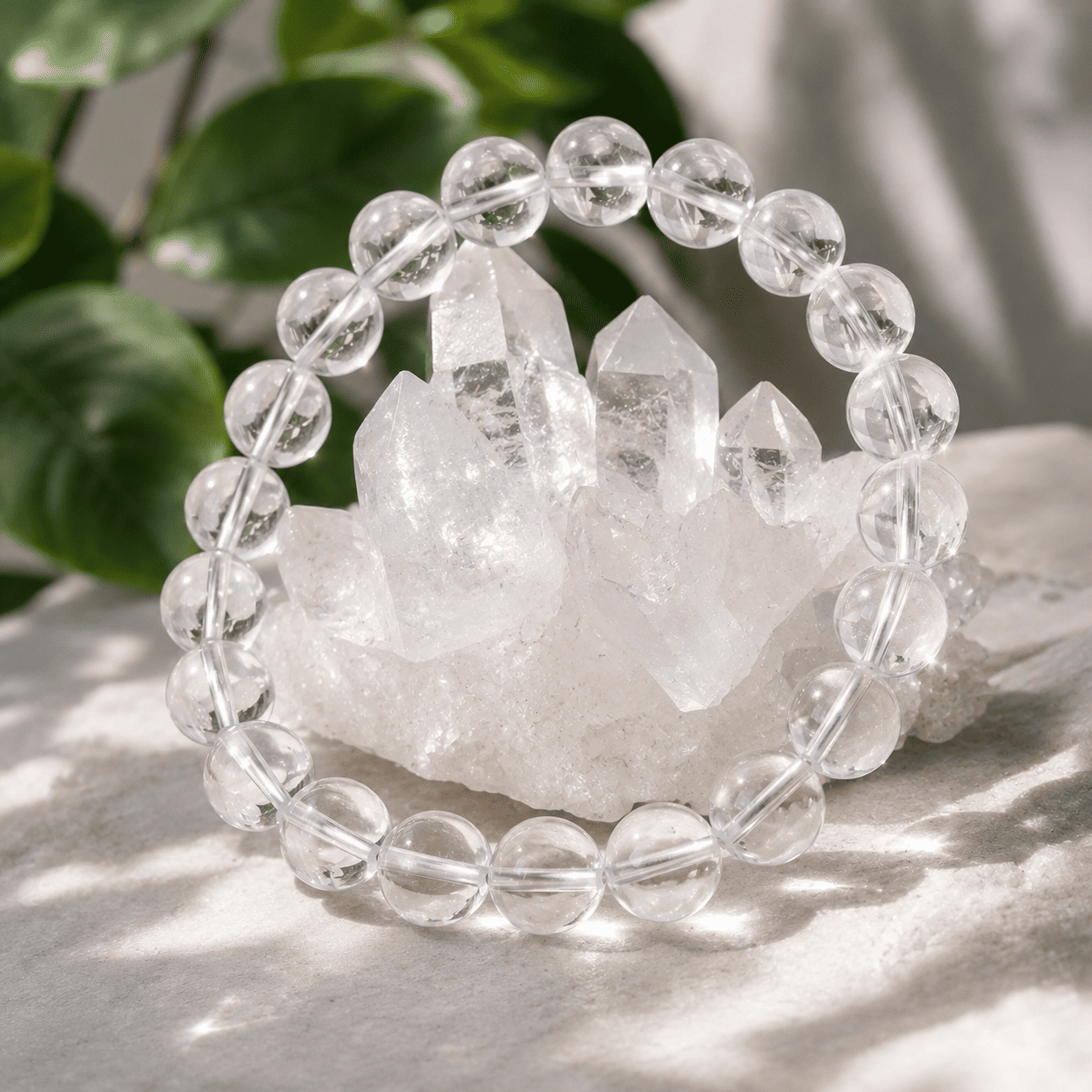
What Is Clear Quartz?
Clear quartz, sometimes called rock crystal, is a colorless, transparent variety of quartz — one of the most abundant minerals on Earth. Chemically, it's silicon dioxide, the same base mineral behind many other quartz varieties like amethyst, citrine, and rose quartz, but without the trace impurities responsible for their color.
Known as the "master healer" in crystal healing traditions, clear quartz is prized for its versatility — traditionally believed to amplify energy and intention, making it one of the most widely used stones across meditation, chakra work, and everyday jewellery. This popularity is precisely why it's also one of the most frequently imitated crystals on the market.
How Clear Quartz Forms
Clear quartz forms over thousands to millions of years as silica-rich fluids slowly cool within cavities in rock, gradually depositing layers of crystal. This slow, natural process is exactly why genuine clear quartz often contains subtle inclusions, faint cloudiness, or fine internal fractures — these are simply the natural byproduct of real geological formation, not defects to avoid.
Why It's Called "Rock Crystal"
Before quartz's chemical composition was well understood, its clear, glass-like appearance led to it being called "rock crystal," based on the mistaken belief that it was a permanently frozen form of ice. The name has stuck in gemological terminology, sometimes used interchangeably with "clear quartz" today.
Why Authenticity Matters More for Clear Quartz
Some crystals are relatively easy to identify by color or pattern alone, but clear quartz presents a unique challenge: it's colorless and transparent, which means it can closely resemble several other materials that are far cheaper to produce.
It Looks Similar to Several Other Materials
Glass, cubic zirconia, and even certain plastics can be manufactured to closely resemble clear quartz at a glance, especially in small, polished bracelet beads where subtle differences in clarity and inclusions are harder to spot.
Energetic Value Depends on Natural Formation
For those using clear quartz specifically for meditation or energy work, the belief is that its natural, unaltered mineral structure is central to its traditional properties. A glass or synthetic imitation, regardless of how similar it looks, doesn't carry the same natural formation history.
Price Without Authenticity Confirmation Is Meaningless
Because clear quartz itself is relatively affordable compared to rarer gemstones, a "cheap" price doesn't automatically indicate authenticity or fakery either way — it's the specific checks covered in this guide, not price alone, that reliably indicate whether a piece is genuine.
The Market Has Grown Alongside Demand
As crystal jewellery has become more mainstream, demand for clear quartz specifically has increased significantly, since it's often recommended as a beginner-friendly, versatile starting stone. This rising demand has, in turn, attracted more sellers offering imitation materials at competitive prices, making the authenticity question more relevant today than it may have been when the crystal market was smaller and more specialized.
Common Fakes: Glass, Cubic Zirconia and Synthetic Quartz
Understanding how these common imitations are made helps you know exactly what to look for.
Glass
Clear glass is the most common imitation, often molded into rounded beads that superficially resemble polished quartz. Glass typically contains small, perfectly round air bubbles — something that never occurs in natural quartz — and tends to feel warmer and lighter than genuine stone. Because glass is far cheaper and faster to produce, it's the most widely available imitation on the market, often sold at prices that should immediately raise questions if marketed as natural crystal.
Cubic Zirconia
Cubic zirconia is a lab-created material known for its exceptional clarity and brilliant sparkle, originally developed as a diamond simulant. While beautiful, it's chemically and structurally distinct from quartz, and its flawless clarity is actually a red flag rather than a reassurance when evaluating a piece marketed as natural crystal. Cubic zirconia is also notably denser than quartz, meaning a bracelet made from it may actually feel unexpectedly heavy in a way that doesn't match typical natural quartz weight either.
Synthetic (Lab-Grown) Quartz
Lab-grown quartz is chemically identical to natural quartz but grown rapidly under controlled laboratory conditions rather than forming over thousands of years underground. It tends to be nearly flawless and perfectly uniform in appearance — again, a sign that should prompt closer inspection rather than reassurance. Because lab-grown quartz shares the same chemical formula as natural quartz, some of the simpler home tests, like the scratch test, won't reliably distinguish it; visual inspection for natural inclusions remains the more useful check in this specific case.
Leaded Crystal Glass
Sometimes marketed simply as "crystal," leaded glass is a manufactured product with added lead oxide for extra brilliance and weight, used widely in glassware and decorative objects. While it can feel deceptively heavy, similar to genuine quartz, its perfect clarity and lack of natural inclusions set it apart on closer inspection.
Acrylic and Plastic
At the lower end of the market, some "clear crystal" bracelets are simply molded acrylic or plastic, designed to superficially resemble polished quartz beads. These are typically the easiest to identify, since they feel notably light, warm quickly in the hand, and often show visible mold seams or an unnaturally glossy, uniform surface under close inspection.
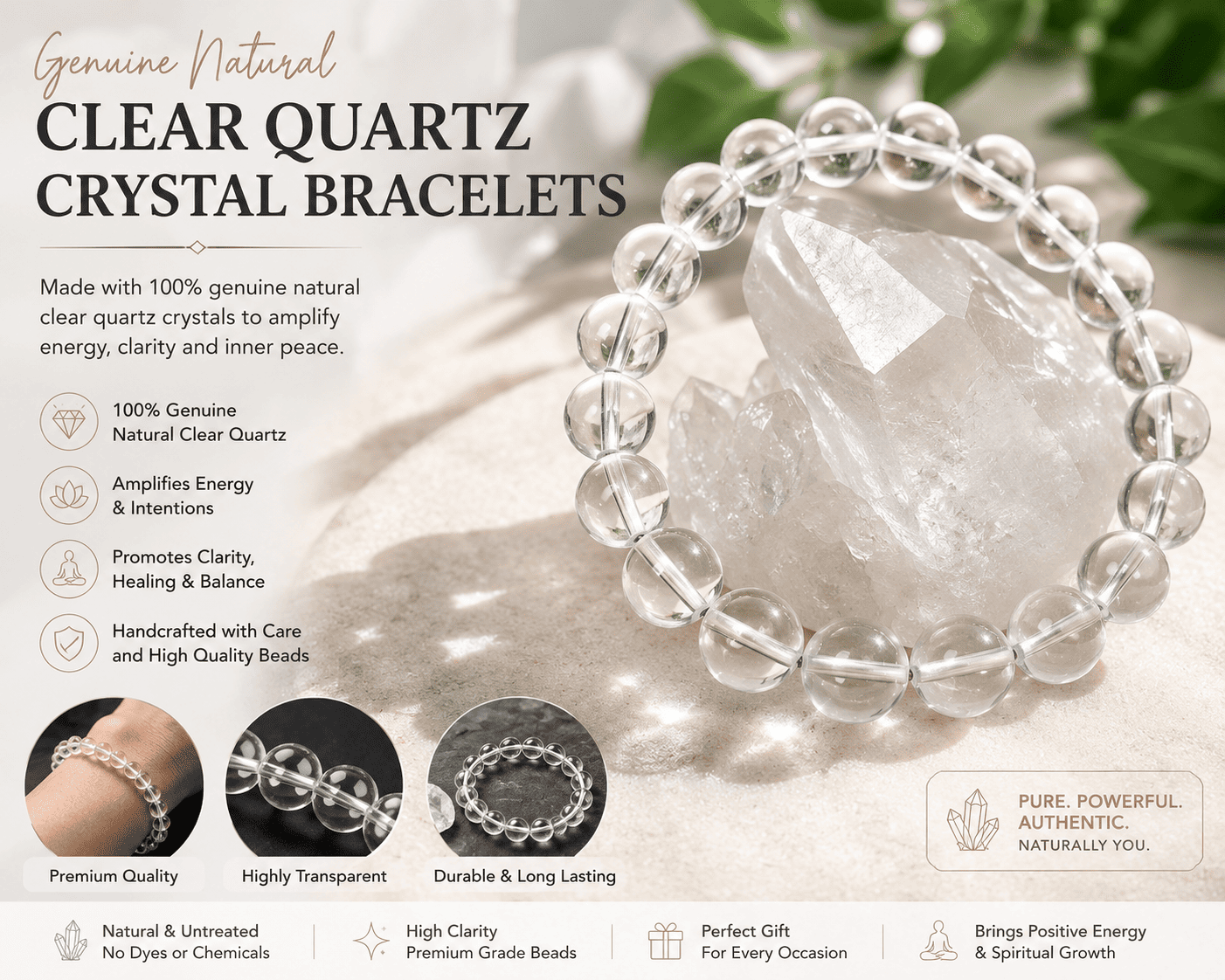
8 Signs of Genuine Clear Quartz
Here's what to actually look for when evaluating whether a piece of clear quartz is genuine.
Natural Inclusions
Genuine clear quartz often contains tiny natural inclusions — faint cloudy patches, fine cracks, or mineral flecks — rather than being perfectly flawless throughout its structure.
No Air Bubbles
Trapped, perfectly round air bubbles are a defining sign of glass. Genuine quartz never forms with rounded air pockets inside it, regardless of how the piece was cut or polished.
Cool to the Touch
Natural quartz conducts heat slowly and feels noticeably cool when first picked up, while glass and plastic warm up almost immediately in your hand within a few seconds.
Weight and Density
Genuine quartz feels heavier and denser than its size suggests, compared to lightweight glass or plastic imitations of a similar overall size and bead count.
Hardness
Quartz sits at a 7 on the Mohs hardness scale and resists scratching from a fingernail or coin, unlike glass and plastic, which scratch far more easily.
Subtle Color Variation
Genuine beads on the same bracelet often show very slight variation in clarity or tone from bead to bead, rather than being perfectly identical throughout the entire strand.
Traceable Origin
A reputable seller should be able to confirm the specific region the quartz was sourced from, rather than offering only a vague "natural crystal" description with no further detail.
Reasonable, Transparent Pricing
While clear quartz is relatively affordable, a price that seems unusually low even for this accessible stone is worth double-checking against the other signs on this list.
Simple At-Home Authenticity Tests
If you already own a piece and want to verify it, here are a few low-risk tests you can try at home.
- The temperature test. Hold the bead in your palm for a few seconds. Genuine quartz stays cool noticeably longer than glass or plastic, which warms almost instantly. This works particularly well when comparing two pieces side by side.
- The weight test. Compare the bracelet's weight to its size. Natural quartz is denser and heavier than it looks, especially next to glass of a similar size, though cubic zirconia can occasionally feel similarly heavy, so this test works best combined with the others.
- The scratch test. Gently try to scratch an inconspicuous bead with a copper coin. Quartz is harder than copper and should resist scratching; glass often won't. Always test in a discreet spot in case the result isn't what you hoped for.
- The bubble check. Examine the beads closely under bright, natural light, ideally with a magnifying glass or your phone's zoom function. Small, perfectly round bubbles suggest glass; irregular, natural inclusions suggest genuine quartz.
- The light test. Hold a bead up to sunlight or a bright lamp. Natural quartz often shows subtle internal fractures or faint cloudy zones, while glass tends to appear unnaturally even and clear throughout.
- The sound test. Gently tap two beads together. Genuine quartz tends to produce a slightly higher-pitched, clearer clink than the duller sound often produced by glass or plastic, though this test takes some practice to interpret reliably.
Note: These tests are helpful indicators, not definitive scientific proof. For a significant purchase, buying from a specialized, transparent seller remains the most reliable way to confirm authenticity.
Choosing the Right Clear Quartz Bracelet
Once you're confident a piece is genuine, a few additional factors can help you choose the right bracelet for your needs.
Bead Size
Clear quartz bracelets are commonly available in 6mm to 10mm bead sizes. Smaller beads sit closer to the wrist for a more delicate look, while larger beads create a bolder, more visible presence.
Single-Stone vs. Mixed Bracelets
Some clear quartz bracelets feature the stone entirely on its own, offering a clean, focused energy, while others combine it with complementary stones — such as green aventurine, citrine, or yellow tourmaline — for a layered, multi-crystal design.
Elastic Cord Quality
Since most crystal bracelets use elastic cord rather than a clasp, checking the thickness and quality of the cord matters for long-term durability, particularly for bracelets worn daily.
Faceted vs. Round Polished Beads
Clear quartz beads are typically finished as smooth, round polished spheres, though faceted cuts — with small flat surfaces that catch and reflect light — are also available for a more sparkling, jewellery-like look. Round beads tend to show natural inclusions more clearly, which can actually make authenticity easier to assess compared to heavily faceted cuts that scatter more light.
Matching Intention to Stone Combination
If you're choosing a mixed-stone bracelet specifically for its traditional meaning, it's worth understanding what each paired stone represents — for example, clear quartz combined with citrine leans toward amplified confidence and abundance, while clear quartz with rose quartz leans more toward amplified emotional warmth and self-compassion.
Real Clear Quartz Bracelet Options
Here are a few genuine clear quartz bracelets from our collection, each offering a different take on this versatile stone.
6mm Natural Clear Quartz Bracelet
A simple, single-stone design featuring smaller 6mm beads, suited to those who prefer a more delicate, understated everyday piece that layers easily alongside other bracelets. See our 6mm Natural Clear Quartz Crystal Bracelet.
Clear Quartz and Green Aventurine Bracelet
A combination piece pairing clear quartz's amplifying properties with green aventurine's traditional association with luck and abundance, offering a slightly more textured, two-tone look on the wrist. See our Clear Quartz and Green Aventurine Bracelet (8mm).
Mount Makalu Multi-Crystal Bracelet
A more elaborate design combining clear quartz with yellow tourmaline and citrine, sourced from the Himalayas of Nepal, suited to those wanting a bolder, statement-style multi-crystal piece. See our Mount Makalu Clear Quartz, Yellow Tourmaline & Citrine Bracelet.
Seven Chakra Bracelet With Clear Quartz
For those building a chakra-focused practice, clear quartz is featured as part of our Seven Chakra bracelet with clear quartz, combining all seven chakra stones with a clear quartz accent bead intended to amplify the overall balancing effect of the piece.
You can browse our full range in the Crystal Bracelets collection, or explore raw, unpolished pieces in our Ganesh Himal Clear Quartz listing.
Clear Quartz Benefits and the Crown Chakra
Clear quartz is closely associated with the crown chakra, linked to spiritual connection and higher consciousness, and its amplifying reputation makes it one of the most versatile stones for meditation, focus, and everyday intention-setting.
Why It's Called the "Master Healer"
Clear quartz's reputation as the master healer comes from its traditional association with amplifying whatever energy or intention it's paired with, rather than carrying one single, narrow meaning of its own. This is part of why it's so frequently combined with other stones in multi-crystal bracelets, rather than only being sold as a standalone piece.
Everyday Uses Beyond Jewellery
Beyond wearable bracelets, clear quartz is also commonly used in raw cluster form for meditation spaces, placed near other crystals to amplify their properties, or held during focused breathing or intention-setting practices.
For a deeper dive into daily benefits specifically from wearing clear quartz, see our guide on the benefits of wearing a Himalayan natural clear quartz crystal bracelet daily.
Caring for Your Clear Quartz Bracelet
A little routine care keeps your bracelet looking and feeling its best.
Avoid Harsh Chemicals and Perfumes
Lotions, perfumes, and cleaning products can gradually dull the natural shine of clear quartz beads, so it's best to apply these before putting your bracelet on rather than after.
Remove Before Water Exposure
Removing your bracelet before swimming or showering helps protect the elastic cord from prolonged water exposure, which can weaken it over time.
Store Thoughtfully
Keeping your bracelet in a soft pouch away from harder jewellery helps prevent scratching, particularly important for maintaining the clarity that makes clear quartz so visually striking.
Clean Gently
A soft, dry cloth is usually enough to keep clear quartz beads looking polished. Avoid abrasive cleaners, which can dull the surface over time.
Cleanse Periodically
Many practitioners recommend cleansing clear quartz using moonlight or sound roughly once a month, keeping its energy feeling fresh, especially if worn daily.
Common Mistakes to Avoid
Assuming "Clear" and "Crystal" Always Mean Genuine Quartz
Both glass and cubic zirconia are frequently marketed using similar language, so the word "crystal" alone in a listing title isn't a reliable guarantee of natural stone.
Prioritizing Flawless Clarity
Perfectly clear, inclusion-free beads are more likely synthetic or glass than natural quartz, which almost always shows at least subtle natural variation upon close inspection.
Skipping the Basic Authenticity Tests
A few seconds of checking weight and temperature can save you from an unknowing purchase of glass or plastic, particularly for online purchases where you can't physically handle the piece beforehand.
Ignoring Seller Transparency
A seller unable or unwilling to confirm sourcing details is a signal worth taking seriously, regardless of how convincing the product photos look.
Choosing Bead Size Without Trying It On
Where possible, check bead size against your own wrist and style preference rather than guessing from photos alone, since bracelet proportions can be difficult to judge accurately from images.
Frequently Asked Questions
How can I tell if my clear quartz bracelet is genuine?
Genuine clear quartz feels cool and heavier than glass, shows natural inclusions rather than perfect clarity, and resists scratching from a coin. A reputable seller should also be able to confirm the stone's origin.
Is clear quartz the same as glass or cubic zirconia?
No. Clear quartz is a natural mineral, while glass and cubic zirconia are manufactured or lab-created materials that can closely resemble quartz in appearance but differ in composition, weight, and how they respond to basic authenticity tests.
Why is flawless clarity actually a warning sign?
Natural clear quartz typically contains subtle inclusions or slight cloudiness from its formation process. A perfectly flawless, uniform piece is more likely to be glass, cubic zirconia, or lab-grown synthetic quartz.
What bead size should I choose for a clear quartz bracelet?
Smaller beads, around 6mm, suit a more delicate, everyday look, while larger 8mm to 10mm beads create a bolder, more visible presence on the wrist.
Can clear quartz be combined with other stones in one bracelet?
Yes. Clear quartz is often paired with stones like green aventurine, citrine, or yellow tourmaline, since it's traditionally believed to amplify the properties of other crystals it's combined with.
Where can I buy a genuine natural clear quartz bracelet in the UAE?
You can shop our full range of genuine clear quartz bracelets, sourced from natural Himalayan stone, with delivery across Dubai, Abu Dhabi, Sharjah, and the wider UAE.
Can lab-grown quartz be considered "real" quartz?
Lab-grown quartz shares the same chemical composition as natural quartz, but it's grown rapidly under controlled conditions rather than forming naturally over thousands of years, meaning it lacks the natural inclusions and formation history that many practitioners consider important for genuine crystal work.
Does cleansing a clear quartz bracelet actually do anything?
Cleansing is a traditional practice believed to reset a crystal's energy after regular wear, though its effects are based on personal and traditional belief rather than scientific measurement. Many people still find the practice a useful, grounding ritual regardless.
Is a more expensive clear quartz bracelet always more authentic?
Not necessarily. While extremely low prices can be a red flag, price alone doesn't guarantee authenticity. Combining price with the specific visual and physical checks covered in this guide gives a far more reliable picture than price alone.
Final Thoughts
Because clear quartz is so easily imitated by glass, cubic zirconia, and lab-grown alternatives, taking a few extra minutes to check for natural inclusions, weight, temperature, and seller transparency is well worth it before buying a genuine natural clear quartz crystal bracelet. Once you're confident in a piece's authenticity, choosing the right bead size and design comes down to personal style and whether you prefer clear quartz on its own or paired with complementary stones.
It's worth remembering that the goal isn't to find a "perfect," flawless-looking stone — quite the opposite. A few subtle inclusions, slight variation between beads, and a cool, dense feel in the hand are exactly the signs that tell you you're holding genuine, naturally formed quartz rather than a convincing imitation.
Ready to find your bracelet? Explore our full Crystal Bracelets collection, read more in our guide on how to choose an authentic Himalayan crystal, or browse our wider guide on how to choose the right crystal bracelet.