

15 Healing Crystals and How to Use Them
A practical, stone-by-stone guide to healing crystals — what each one means, what it’s traditionally used for, and exactly how to work it into your meditation and energy healing practice.
Whether you’re completely new to healing crystals or looking to expand a growing collection, understanding what each stone is traditionally associated with — and how to actually use it — makes all the difference between a crystal that sits on a shelf and one that becomes part of a genuine daily practice. This guide walks through 15 of the most popular and versatile healing crystals, their traditional meanings, and simple, practical ways to incorporate each one into meditation, chakra work, or everyday life.
Every crystal featured here reflects the same natural, unaltered stone found in our raw healing crystals collection at Alpine Crystals UAE, sourced with full transparency so you always know exactly what you’re working with.
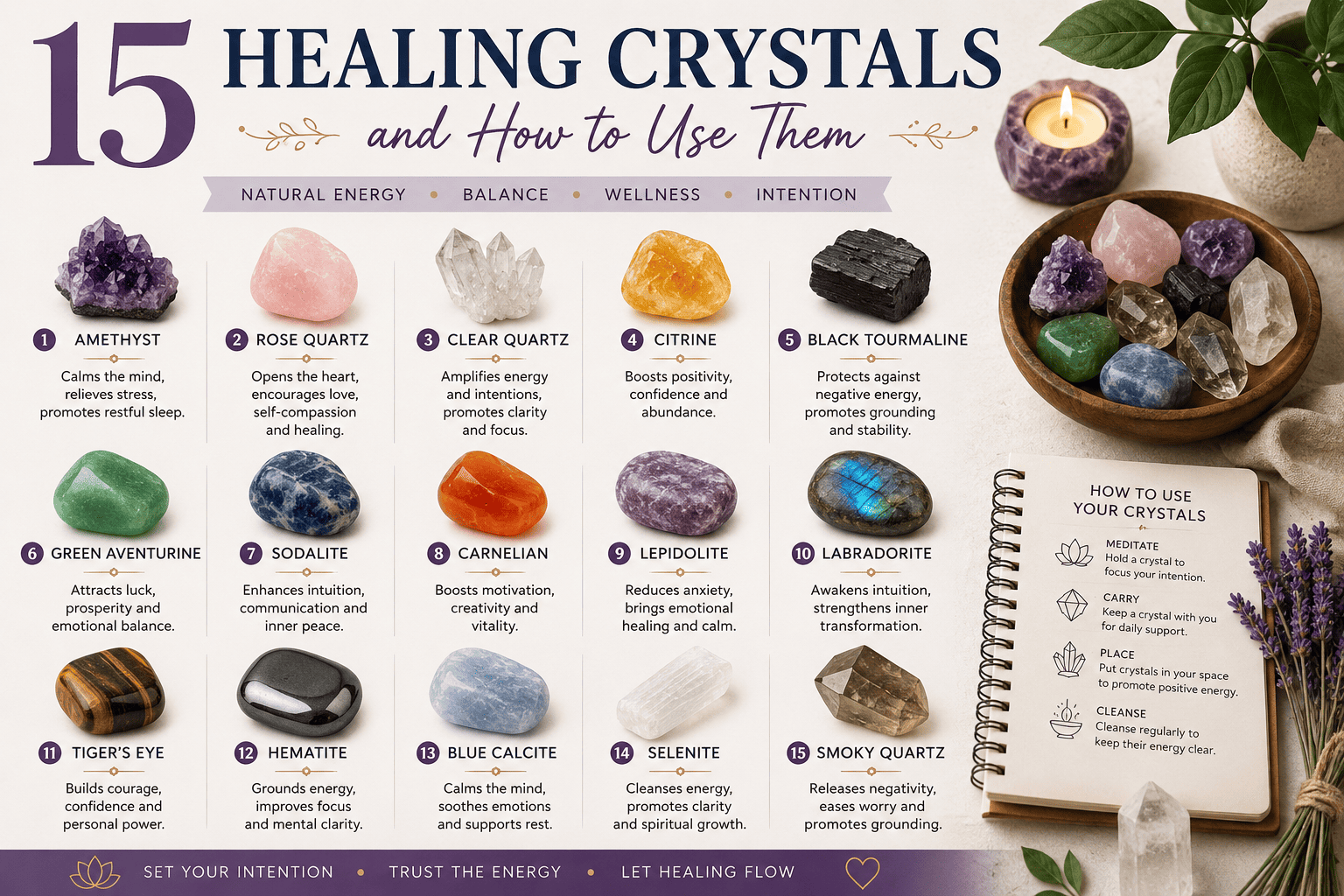
Getting Started With Healing Crystals
Before diving into the individual stones, it helps to understand the basic idea behind crystal healing. Practitioners believe that different crystals carry different natural energetic properties, based on their mineral composition, color, and formation. By keeping a crystal nearby — whether worn, held during meditation, or placed in a specific space — you’re thought to benefit from a subtle, ongoing connection to that stone’s traditional qualities.
You don’t need any special training or belief system to begin. Most people start simply by choosing one or two stones that align with an intention they’re currently focused on, then building a small, consistent practice around them.
It’s also worth understanding that healing crystals are considered a complementary practice rather than a medical treatment. The value many people find in working with crystals tends to come from the intentional pause they create — a moment to breathe, reflect, or reset — as much as from any specific property of the stone itself. Approaching your practice with this in mind tends to make it feel more sustainable and less like a search for a quick fix.
The 15 Crystals
1. Clear Quartz
Meaning: Known as the “master healer,” clear quartz is believed to amplify energy and intention, making it one of the most versatile stones in any collection. Because of this amplifying quality, it’s often used to strengthen the effect of whatever other crystal or practice it’s paired with.
How to use it: Hold a piece during meditation to enhance focus, place it near other crystals to amplify their properties, or wear it as a bracelet for continuous clarity throughout the day. Our Ganesh Himal Clear Quartz is hand-selected directly from the Himalayas of Nepal.
Pairs well with: Almost any other stone, since it’s traditionally used to amplify rather than compete with other crystal energies.
2. Amethyst
Meaning: A deep violet stone associated with calm, spiritual protection, and connection to the crown chakra. It’s one of the most widely recognized healing crystals, prized for centuries across cultures for its striking color and calming reputation.
How to use it: Place amethyst on your nightstand to support restful sleep, hold it during meditation to quiet a busy mind, or keep a small piece in your workspace to ease everyday stress.
Pairs well with: Clear quartz, for a combined focus on calm and clarity during meditation.
3. Rose Quartz
Meaning: Known as the stone of unconditional love, rose quartz supports self-compassion, emotional healing, and gentle openness to connection. Its soft pink tone has made it one of the most popular stones for heart-centered work.
How to use it: Hold rose quartz over the heart during meditation, place it in your bedroom to support emotional calm, or carry a small piece with you during periods of heartbreak or emotional transition.
Pairs well with: Moonstone, for a gentle combination of emotional healing and intuitive support.
4. Citrine
Meaning: A warm, golden stone associated with abundance, confidence, and personal motivation. Unlike many calming crystals, citrine carries an energizing, uplifting reputation, making it popular for goal-focused work.
How to use it: Keep citrine on your desk during a career transition, hold it while setting intentions for a new project, or wear it as jewellery to carry a sense of quiet confidence through the day.
Pairs well with: Tiger’s eye, for combined confidence and personal motivation.
5. Smoky Quartz
Meaning: A grounding, earthy stone believed to gently absorb negative or overwhelming energy while supporting emotional stability. Its soft brown-grey tone reflects its reputation as one of the more calming, understated members of the quartz family.
How to use it: Hold smoky quartz during moments of stress or overwhelm, place it near the front door to support a calm home environment, or keep it in your bag during high-pressure days.
Pairs well with: Black tourmaline, for a combined grounding and protective effect.
6. Black Tourmaline
Meaning: Widely regarded as one of the strongest protective stones, associated with shielding against negative energy. Its deep black color and dense structure have long been linked to its grounding, protective reputation.
How to use it: Place black tourmaline near entryways or workspaces, carry a piece during travel or challenging social situations, or use it during meditation focused on grounding and protection.
Pairs well with: Smoky quartz, for enhanced grounding during particularly stressful periods.
7. Tiger’s Eye
Meaning: A warm, shimmering stone associated with courage, willpower, and personal confidence. Its distinctive golden-brown banding is said to reflect its dual reputation for both grounded stability and inner strength.
How to use it: Hold tiger’s eye before a big decision or difficult conversation, keep it visible on your desk during a career change, or wear it as a bracelet for ongoing motivation.
Pairs well with: Citrine, for a combined boost of confidence and abundance-focused intention.
8. Moonstone
Meaning: A soft, luminous stone linked to intuition, emotional balance, and new beginnings. Its shimmering, almost glowing appearance has long connected it to lunar cycles and gentle emotional rhythm.
How to use it: Place moonstone under your pillow to support restful sleep and meaningful dreams, hold it during moments of major life transition, or wear it daily as a subtle emotional anchor. Explore our Moonstone crystal bracelet for everyday wear.
Pairs well with: Rose quartz, for supporting emotional healing alongside intuitive insight.
9. Selenite
Meaning: A pale, translucent stone associated with mental clarity, spiritual connection, and energetic cleansing. Its soft, almost glowing white appearance is part of why it’s so closely linked to purification and clarity.
How to use it: Place a selenite wand or piece near other crystals to help “cleanse” their energy, use it during meditation to support clarity, or keep a piece in your meditation space as a calming visual anchor.
Pairs well with: Amethyst, for a combined focus on spiritual clarity and calm.
10. Lapis Lazuli
Meaning: A deep blue stone historically associated with wisdom, truth, and communication, closely tied to the throat chakra. It has been prized since ancient times, often associated with royalty and spiritual insight.
How to use it: Hold lapis lazuli before an important conversation or presentation, wear it as jewellery to support honest self-expression, or place it near your journal during reflective writing.
Pairs well with: Sodalite, for a combined focus on communication and mental clarity.
11. Carnelian
Meaning: A warm orange-red stone associated with creativity, vitality, and motivation, linked to the sacral chakra. Its vibrant color has long connected it to energy, passion, and creative expression.
How to use it: Keep carnelian nearby during creative work, hold it during a mid-afternoon energy dip, or place it in a creative studio or workspace to support inspiration.
Pairs well with: Citrine, for a combined boost of creative energy and confidence.
12. Green Aventurine
Meaning: Known as a stone of opportunity and good fortune, associated with optimism and new beginnings. Its gentle green tone has made it a popular, approachable choice for those newer to crystal work.
How to use it: Carry green aventurine when starting a new venture, place it near your workspace during a job search, or hold it while setting intentions for growth and opportunity.
Pairs well with: Pyrite, for a combined focus on opportunity and manifestation.
13. Sodalite
Meaning: A calming blue-toned stone associated with logic, rational thought, and clear communication. Its deep blue color, often flecked with white, is closely tied to its reputation for supporting focused, level-headed thinking.
How to use it: Keep sodalite on your desk during focused study or analytical work, hold it before a difficult discussion, or use it during meditation focused on mental clarity.
Pairs well with: Lapis lazuli, for enhanced communication and clear thinking.
14. Pyrite
Meaning: Often called “fool’s gold,” pyrite is associated with abundance, willpower, and manifestation. Its metallic golden shine has long linked it to themes of prosperity and personal ambition.
How to use it: Place pyrite in the wealth corner of your home or office according to feng shui tradition, hold it while setting financial or career intentions, or keep it visible as a daily reminder of personal ambition.
Pairs well with: Citrine, for a combined focus on abundance and confidence.
15. Malachite
Meaning: A rich green stone traditionally associated with transformation, protection, and emotional release. Its distinctive banded pattern is said to reflect the layered, evolving nature of personal growth.
How to use it: Hold malachite during periods of significant change, use it during meditation focused on releasing old patterns, or place it in a space where you do reflective or transformative work.
Pairs well with: Black tourmaline, for combined transformation and protection during periods of change.
How to Choose Which Crystal Fits You Today
With 15 stones to choose from, it can help to start with how you’re actually feeling right now, rather than trying to memorize every property at once.
If you’re feeling anxious or overwhelmed
Reach for amethyst, smoky quartz, or black tourmaline — all three are traditionally associated with calm and grounding during stressful moments.
If you’re lacking motivation or confidence
Citrine, tiger’s eye, and pyrite are commonly used to support willpower, ambition, and a stronger sense of personal confidence.
If you’re processing grief or heartbreak
Rose quartz and moonstone are gentle companions for emotional healing, supporting self-compassion and a calmer emotional state during difficult transitions.
If you’re preparing for a big decision or conversation
Lapis lazuli and sodalite support clear thinking and honest communication, making them useful before presentations, negotiations, or difficult discussions.
If you’re starting something new
Green aventurine and carnelian are associated with fresh starts, opportunity, and creative energy, making them fitting companions for a new job, project, or venture.
If you’re deepening a spiritual or meditation practice
Clear quartz, amethyst, and selenite are frequently used together to support focus, calm, and a stronger sense of spiritual connection during meditation.
Crystals for Specific Life Situations
Beyond daily mood, it can also help to think about the broader season of life you’re currently in.
Starting a New Job
Citrine and green aventurine together support both confidence and openness to new opportunity, making them a natural pairing for a fresh professional chapter.
Moving to a New Home
Black tourmaline near entryways, combined with smoky quartz in main living spaces, is a traditional approach to grounding and protecting a new environment.
Recovering From a Stressful Period
Amethyst for calm, paired with rose quartz for gentle self-compassion, offers a supportive combination during recovery from burnout or an especially demanding season.
Building a Consistent Meditation Habit
Clear quartz and selenite, used together, are popular for supporting focus and mental clarity as you build a new, regular meditation practice.
Quick Reference: Crystals by Chakra
If you’re building a chakra-focused practice, here’s how these 15 stones map to the body’s seven main energy centers.
| Chakra | Crystals |
|---|---|
| Root | Black Tourmaline, Smoky Quartz |
| Sacral | Carnelian, Citrine |
| Solar Plexus | Citrine, Tiger’s Eye, Pyrite |
| Heart | Rose Quartz, Green Aventurine, Malachite |
| Throat | Lapis Lazuli, Sodalite |
| Third Eye | Amethyst, Lapis Lazuli |
| Crown | Clear Quartz, Amethyst, Selenite |
For a full chakra bracelet designed to support all seven centers at once, explore our Seven Chakra bracelet with clear quartz.
General Ways to Use Any Crystal
Beyond the specific suggestions above, here are a few universal methods that work well with almost any healing crystal, regardless of which of the 15 stones you’re working with. These approaches are worth returning to as your collection and practice grow, since they apply just as well to a brand-new stone as to one you’ve owned for years.
Hold It During Meditation
Simply holding a crystal in your hand during meditation keeps its energy close and gives your attention a gentle physical anchor.
Wear It as Jewellery
A bracelet or pendant keeps a crystal’s energy with you throughout the day, rather than only during dedicated practice time.
Place It in Your Space
Positioning a crystal in a bedroom, workspace, or meditation corner creates an ongoing, ambient presence in your environment.
Use It in a Chakra Layout
Placing crystals on or near the body, aligned with specific chakras, is a traditional method for more targeted energy work.
Combine It With Sound Healing
Placing a crystal inside or near a Himalayan singing bowl while it’s played is a popular way to combine vibrational and crystal energy in one session.
Carry It With You
Keeping a small stone in a pocket or bag is a simple, portable way to stay connected to an intention throughout a busy day.
Set an Intention
Before using any crystal, take a moment to silently or verbally state what you’re hoping to focus on — this simple step helps ground the practice in genuine, personal meaning.
Journal Alongside It
Holding a crystal while journaling can help create a focused, reflective mindset, particularly useful for processing emotions or setting goals.
Combining Crystals Safely
Once you have more than one or two crystals, it’s natural to want to combine them. Here’s how to do that thoughtfully.
Start With a Clear Intention
Rather than combining crystals randomly, choose two or three stones that support a single, clear goal — for example, amethyst and clear quartz for meditation, or citrine and tiger’s eye for confidence and motivation.
Avoid Overloading a Single Session
Using too many crystals at once, especially as a beginner, can make it harder to stay focused on any one intention. Starting with one or two stones and building gradually tends to work better than combining an entire collection at once.
Group by Chakra When Doing Body Layouts
If you’re doing a chakra-focused layout, grouping crystals by their associated energy center — rather than mixing them randomly across the body — creates a more structured, traditional approach to the practice.
Rotate Rather Than Accumulate
As your collection grows, it’s not necessary to use every crystal you own in a single session. Many practitioners prefer to rotate through a small, focused selection based on what they need that week, rather than trying to incorporate an entire collection at once.
Trust Your Own Response
While traditional meanings offer a helpful starting point, many practitioners find that their own intuitive response to a stone — how calm, energized, or drawn to it they feel — is just as important as any general guide, including this one.
However you choose to combine your crystals, the goal is a practice that feels genuinely useful and sustainable for you, not a rigid set of rules to follow perfectly. Give yourself room to experiment as you get to know each stone’s properties firsthand.
Cleansing and Charging Your Crystals
Since crystals are believed to absorb energy over time, many practitioners recommend cleansing them regularly, especially after intensive use or an emotionally difficult period.
Moonlight Cleansing
Place your crystals on a windowsill or outdoors overnight, ideally during a full moon. This is considered one of the gentlest cleansing methods and is safe for almost every crystal, including more delicate stones.
Sound Cleansing
Playing a Himalayan singing bowl near your crystals is a popular way to clear their energy field with vibration, and doubles as a calming practice in its own right.
Smoke Cleansing
Passing a crystal through the smoke of sage, palo santo, or incense is a traditional cleansing method that works well for most stones and doesn’t require water or direct sunlight.
Earth Burial
Burying a crystal in soil for 24 hours allows the earth to naturally reset its energy — a slower method, but one many practitioners find particularly grounding for stones associated with protection or stability.
Note: Avoid water cleansing for softer or water-sensitive stones like selenite and malachite, as prolonged moisture exposure can damage their surface. When in doubt, moonlight or smoke cleansing is the safer choice for most crystals.
How Often Should You Cleanse?
There’s no strict rule, but many practitioners cleanse their most frequently used crystals — particularly bracelets and pocket stones — roughly once a month. Crystals used specifically for absorbing negative energy, like black tourmaline or smoky quartz, are sometimes cleansed more often, especially after an unusually stressful period.
After cleansing, many practitioners like to “charge” a crystal by holding it and setting a clear intention for how they’d like to use it moving forward.
Buying Authentic Crystals
With crystal popularity growing rapidly, dyed, heat-treated, and synthetic imitations have become increasingly common. A few quick checks can help you buy with confidence:
- Genuine crystal feels cool to the touch and noticeably heavier than glass or resin of a similar size.
- Natural stones often show slight imperfections, cloudiness, or color variation, rather than being perfectly uniform.
- A reputable seller should be able to confirm the specific origin of the crystal.
- Unusually low prices are one of the clearest warning signs of a fake or synthetic piece.
For a full breakdown of how to spot genuine stone before you buy, see our complete guide on how to choose an authentic Himalayan crystal. If you’re specifically shopping for wearable pieces, our guide on how to choose the right crystal bracelet covers sizing, stacking, and stone selection in more depth.
Building Your Collection Over Time
Rather than trying to acquire all 15 stones at once, most practitioners find it more meaningful to build a collection gradually, adding new crystals as new needs or intentions arise in life.
Start With One Versatile Stone
Clear quartz is a common starting point precisely because of how broadly it pairs with other stones and intentions, making it a useful first addition before expanding further.
Add Based on Current Life Circumstances
Rather than following a fixed checklist, many people add new crystals as specific needs arise — a citrine during a career shift, a rose quartz during an emotional season, or a black tourmaline during a particularly stressful period.
Revisit Older Stones as Life Changes
A crystal that felt important during one season of life might sit quietly for months before becoming relevant again during a different period. There’s no need to constantly cycle through every stone you own — returning to a familiar piece when it feels right is just as valid as reaching for something new.
Common Beginner Mistakes
Buying Too Many Crystals at Once
It’s tempting to acquire an entire collection right away, but starting with one or two stones tied to a clear intention tends to build a more meaningful, sustainable practice than a large, unfocused collection acquired all at once.
Choosing Based on Appearance Alone
A stone’s traditional meaning matters more for your practice than how it looks on a shelf. It’s worth taking a moment to check what a crystal is actually associated with before adding it to your collection, rather than choosing purely by color.
Forgetting to Cleanse New Crystals
Crystals often pass through many hands before reaching you — from mining, to processing, to shipping — so an initial cleanse before first use is a good habit to build from the start.
Expecting Instant Results
Like meditation itself, the benefits of a consistent crystal practice tend to build gradually rather than appearing after a single use. Patience and regular use matter more than any one dramatic session.
Overlooking Authenticity
A beautiful, well-priced piece isn’t necessarily genuine. Always check the signs covered in this guide — weight, temperature, natural imperfections, and seller transparency — before adding a new crystal to your collection.
Frequently Asked Questions
What’s the best crystal for beginners to start with?
Clear quartz is widely recommended as a first crystal because of its versatility — it’s associated with amplifying energy and intention, making it a useful companion alongside almost any other stone.
How many crystals should I use at once?
Most practitioners recommend starting with one or two stones tied to a clear, specific intention, rather than combining many crystals at once, which can dilute focus, especially for beginners.
Do I need to cleanse a new crystal before using it?
Yes, many practitioners recommend cleansing a new crystal before first use, since it may have passed through many hands during mining, processing, and shipping.
Can I combine multiple crystals in one meditation session?
Yes, as long as the stones support a related intention. For example, amethyst and clear quartz work well together for meditation, while citrine and tiger’s eye pair naturally for confidence and motivation.
How do I know if a healing crystal is genuine?
Genuine crystals typically feel cool to the touch, are noticeably heavier than glass, and show natural imperfections or color variation. A trustworthy seller should also be able to confirm the crystal’s specific origin.
Where can I buy authentic healing crystals in the UAE?
You can shop our full range of authentic healing crystals, sourced directly from Nepal with transparent origin details, delivered across Dubai, Abu Dhabi, Sharjah, and the wider UAE.
What’s the difference between raw and polished crystals?
Raw crystals are left in their natural, unaltered state, while polished or tumbled crystals have been smoothed and shaped. Many practitioners prefer raw stones for meditation and energy work, while polished pieces are often chosen for jewellery or everyday carrying.
Can I use healing crystals alongside other wellness practices?
Yes. Crystals are commonly combined with meditation, yoga, sound healing, and reiki as a complementary layer, rather than a replacement for any of these practices.
Do crystals lose their properties over time?
Genuine crystals don’t lose their natural composition, but many practitioners believe they can accumulate energy over time, which is why regular cleansing is recommended to keep a crystal feeling fresh and effective.
Final Thoughts
With 15 different healing crystals to choose from, there’s no need to feel overwhelmed about where to start. Begin with one or two stones that genuinely reflect what you’re focused on right now — whether that’s calm, confidence, protection, or emotional healing — and build your practice gradually from there. The relationship between a crystal and its owner tends to deepen with consistency and intention, far more than with the size of the collection itself.
As you grow more familiar with each stone’s properties, you’ll likely find yourself naturally reaching for certain crystals during certain moods or seasons of life — a citrine on your desk during a busy work stretch, a rose quartz on your nightstand during an emotional week, or a piece of clear quartz tucked into your bag before an important meditation session. Over time, this kind of intuitive, responsive use tends to matter far more than memorizing every traditional meaning perfectly.
Ready to start building your collection? Explore our full range of raw healing crystals, browse crystal bracelets for everyday wear, or read our companion guide on crystals and their meanings to go even deeper.