

How to Use Tasbih Prayer Beads: 33 vs 99 Beads Explained
The actual counting mechanics, why both bead counts exist, and which one genuinely suits how you pray.
The 33-versus-99 question comes up constantly, and most explanations either skip the actual mechanics entirely or assume you already know them. Here's the practical version — how counting with tasbih actually works, why both bead counts exist for genuinely different reasons rather than one just being a shorter version of the other, and how to pick between them based on how you actually pray rather than guessing.
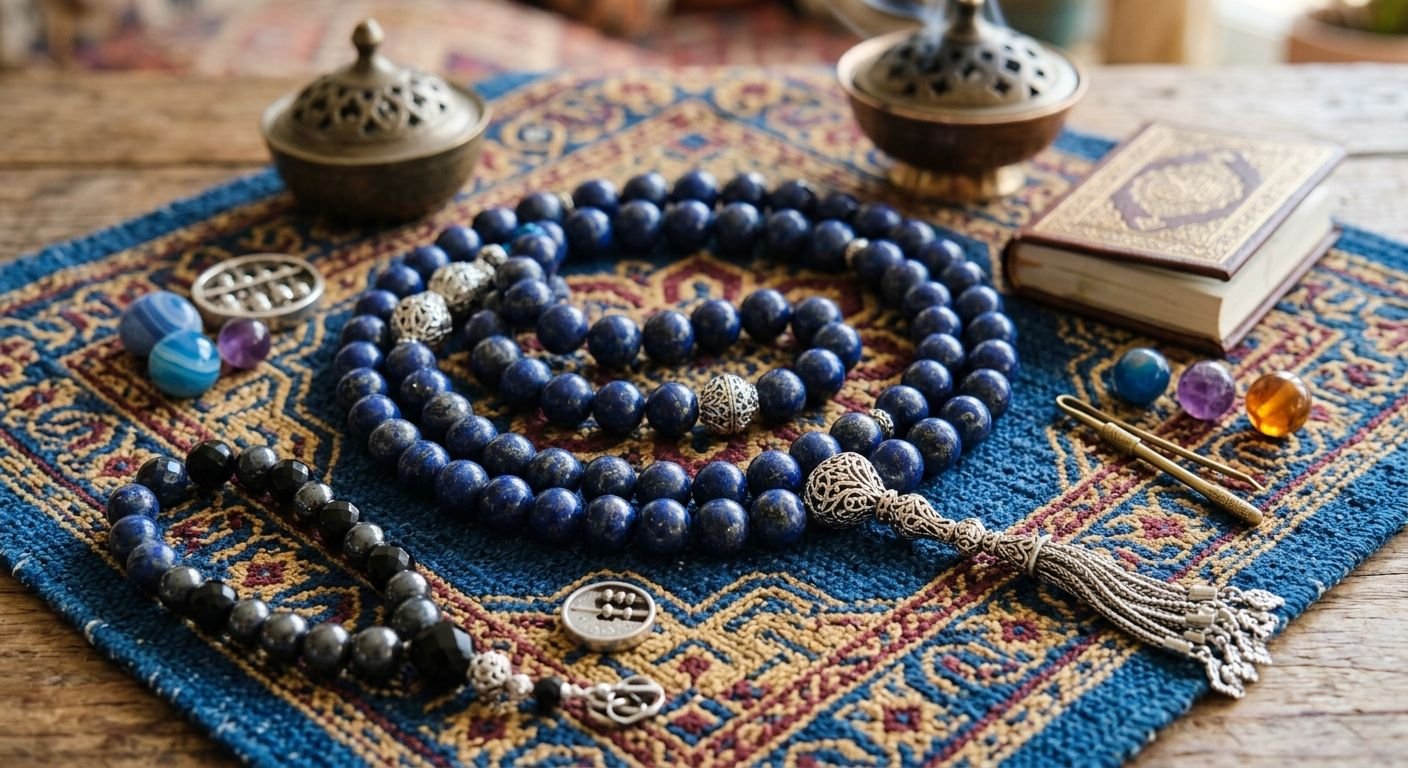
The Basic Mechanics of Counting
Using tasbih is simpler than it looks if you've never done it before. Hold the strand in one hand — traditionally the right — with the beads resting between your thumb and index or middle finger. For each repetition of the phrase you're reciting, use your thumb to push the next bead along, moving through the strand one bead at a time in a single direction. When you reach the end, or a marker bead, you simply turn back or continue depending on the count you're working toward.
That's genuinely the whole mechanical process — the beads exist purely to keep an accurate count without needing to consciously track a number in your head, freeing your attention for the recitation itself rather than the arithmetic.
Why 33 Beads: The Post-Prayer Dhikr
A 33-bead tasbih is built specifically around the traditional dhikr recited after the five daily prayers — reciting SubhanAllah (Glory be to Allah), Alhamdulillah (Praise be to Allah), and Allahu Akbar (Allah is the Greatest) as a set sequence. In the most commonly followed version, each phrase is repeated 33 times, bringing the total to 99, before completing the set with a final phrase to round out 100. A 33-bead strand lets you complete one full phrase — one pass through the beads — before moving to the next, using the physical end of the strand itself as the natural marker for when to switch phrases.
This is really the whole logic behind the 33-bead design: it's not an arbitrary shorter option, it's built around a specific three-part structure where reaching the end of the strand three times over corresponds exactly to completing the traditional count.
Why 99 Beads: A Full Count in One Pass
A 99-bead tasbih serves the same post-prayer dhikr, but lets you complete the entire sequence in a single continuous pass rather than three separate laps through a shorter strand — useful if you'd rather not break rhythm to restart at the beginning each time you switch phrases. The 99-bead count also carries its own separate association with the 99 Names of Allah (Asma ul Husna), and some people specifically use a 99-count strand to move through these names individually, one bead per name, as its own distinct practice separate from the standard post-prayer dhikr.
Both bead counts genuinely serve the same core post-prayer dhikr — the difference is entirely in how the counting is physically structured, not in which one is more correct or complete.
The Imam Bead, and What It's For
Many tasbih, particularly 99-count strands, include a distinct marker bead — sometimes called the imam bead — positioned to separate the strand into equal sections, commonly at the 33 and 66 point. This isn't decorative. It's a physical checkpoint that lets you feel, without looking down or losing count, exactly when you've completed each third of the sequence, which matters more than it sounds like it would when you're reciting with your eyes closed or in low light. On a 33-bead strand, the natural end of the strand itself serves the same function, which is part of why shorter tasbih don't typically need a separate marker bead the way longer ones do.
Which One Actually Suits You
If you want something compact — easy to slip into a pocket, carry while traveling, or keep discreetly on hand throughout the day — a 33-bead tasbih is the more practical choice, and it's genuinely the more common option for exactly this reason. If you'd rather complete a full dhikr cycle without breaking rhythm to restart at the beginning three separate times, or you specifically want to work through the 99 Names of Allah as your own practice, a 99-bead strand is worth the extra size and cost.
Neither is more traditional or more correct than the other — this genuinely comes down to personal preference and how you use it day to day, not a meaningful religious distinction between the two.
Real 33-Bead and 99-Bead Options
Here's a direct look at both formats from our own range, so you can actually see the size difference rather than just reading about it.

Citrine Tasbih (10mm, 33 beads)
AED 160
A standard 33-bead strand — three laps completes the traditional 99-count dhikr, and the compact size makes it easy to carry.
View Product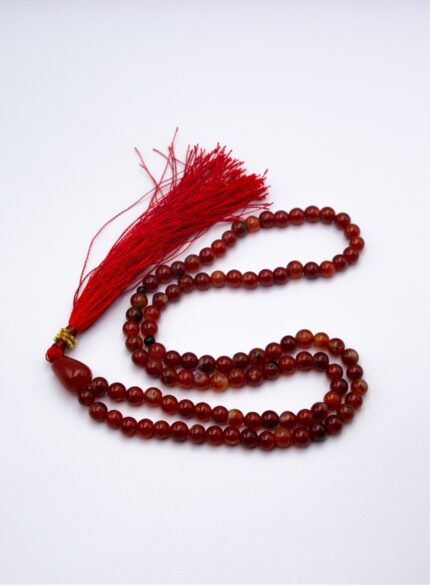
Red Carnelian Tasbih (6mm, 99 beads)
AED 150
A full 99-bead strand in a compact 6mm size, completing the entire dhikr sequence in a single continuous pass.
View Product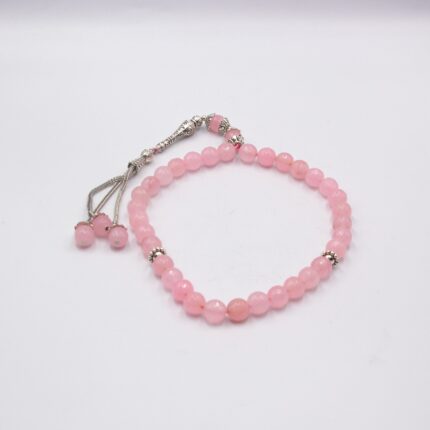
Rose Quartz Tasbih (10mm, 33 beads)
AED 99
Another 33-bead option, for anyone who wants the compact three-lap format in a softer, pale pink stone.
View Product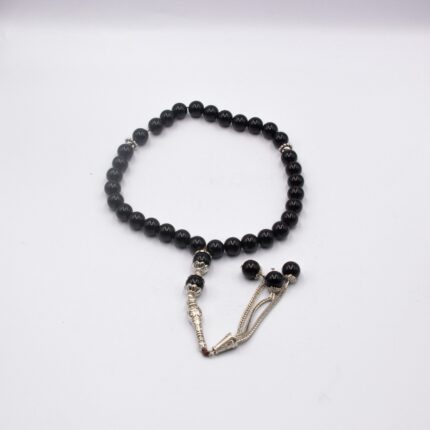
Black Onyx Tasbih (10mm, 33 beads)
AED 150
A third 33-bead option in a dense, dark stone, genuinely popular for its understated, versatile look alongside its traditional count.
View ProductYou can browse the complete range, including additional stones and sizes, in our Tasbih Prayer Beads collection. If you're weighing up which stone to choose rather than just which bead count, our separate crystal tasbih buying guide covers authenticity, sizing, and pricing in more depth.
A Full Cycle, Step by Step
Here's what a complete post-prayer dhikr cycle actually looks like in practice, using either bead count.
- Hold the tasbih in your right hand, with the strand resting between your thumb and fingers, starting from the bead nearest the tassel or imam bead.
- Recite SubhanAllah, moving one bead with each repetition, continuing until you reach the end of a 33-bead strand or the first marker on a 99-bead strand.
- Switch to Alhamdulillah, continuing the same one-bead-per-repetition method for the next 33 count.
- Switch to Allahu Akbar for the final third, completing the count to 99 or 100 depending on the specific tradition you're following.
- Set the tasbih down once complete, rather than continuing to fidget with it — the physical count is finished at this point.
Common Questions About the Counting Method
A few practical points come up regularly once people actually start using tasbih daily.
Which direction should I move the beads? There's no strict universal rule — most people move consistently in one direction throughout a full cycle simply because it's easier to track, rather than any specific direction being required.
What if I lose count partway through? Simply restart that particular third of the sequence rather than the entire cycle. The marker beads and strand ends exist precisely to make this kind of quick recovery easy.
Do I have to use my right hand? Tradition favors the right hand, though this is a matter of common practice rather than something enforced strictly, and left-handed use isn't treated as invalidating the practice.
Can I use tasbih for counting outside of the post-prayer dhikr? Yes — many people use the same physical counting method for other forms of remembrance and supplication throughout the day, not only immediately after prayer.
Not sure which bead count to get?
Tell us how you plan to use it — daily post-prayer dhikr, travel, working through the 99 Names — and we'll point you to the right size.
Questions People Ask
What's the actual difference between a 33-bead and 99-bead tasbih?
Both serve the same traditional post-prayer dhikr. A 33-bead strand requires three passes to complete the full count, using the end of the strand as a natural marker between phrases, while a 99-bead strand completes the same count in a single continuous pass.
What is the imam bead for?
The imam bead is a distinct marker bead, commonly found on 99-count strands, positioned to mark equal sections of the count so you can feel your progress without needing to look down or lose track.
Is a 99-bead tasbih only for reciting the Names of Allah?
No, it serves the standard post-prayer dhikr just as a 33-bead strand does, completing it in one pass rather than three. It's also commonly used for reciting the 99 Names of Allah individually as a separate practice.
What should I do if I lose count while using tasbih?
Simply restart the specific third of the sequence you were on rather than the entire cycle. The strand's structure is designed to make this kind of recovery quick and easy.
Where can I buy genuine crystal tasbih in either bead count?
You can browse both 33-bead and 99-bead options across our tasbih collection, with delivery across Dubai, Abu Dhabi, Sharjah, and the wider UAE.