

Benefits of Raw Amethyst
What the unaltered form actually offers — beyond just "it's more natural."
Raw amethyst gets recommended a lot, often without much explanation beyond "it's more authentic," which isn't wrong exactly but doesn't tell you much either. Here's the fuller version — what the unpolished, unaltered form actually offers that a smoothed, tumbled piece doesn't, separated into what's genuinely a matter of belief and what's a straightforward, practical advantage regardless of what you think about crystal energy.
Why "Raw" Specifically Matters
A raw piece is amethyst exactly as it came out of the ground — a point, a cluster of several points sharing a base, or a rough chunk broken from a larger formation. Nothing's been reshaped, ground down, or smoothed into a uniform bead. What you're holding is the crystal's actual natural growth pattern, edges and all, which is a genuinely different object than a polished stone, not just a less-finished version of one.
The Traditional and Energetic Case
A fair number of practitioners feel that polishing removes something from a crystal's energetic integrity — not the mineral itself, which doesn't change, but some quality tied to the stone's unaltered structure. A raw piece, in this view, carries a fuller or more direct version of whatever amethyst is believed to offer, since nothing's been ground away from its natural form.
It's worth being honest that this is a belief rather than something measurable, and plenty of equally sincere practitioners disagree, treating a polished piece as functionally identical since the mineral composition hasn't actually changed. Neither side is wrong in any factual sense. What's genuinely true is that a lot of people report a stronger, more immediate connection to a raw piece specifically — whether that's because of the energy itself or simply because a dramatic, natural-looking cluster is easier to feel drawn to than a small, uniform bead is a separate question, and one that probably doesn't need a definitive answer to still be worth paying attention to in your own experience.
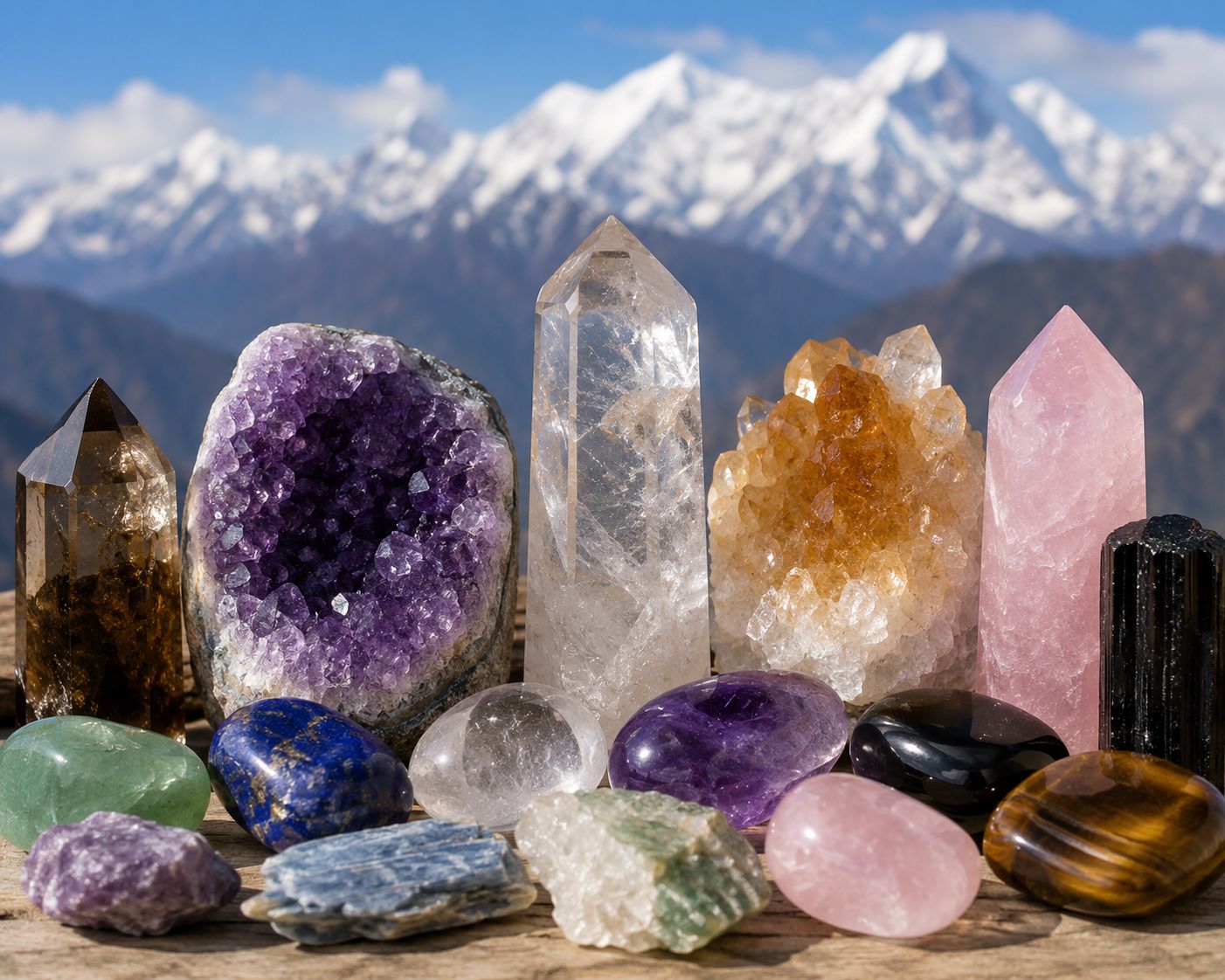
The More Practical Benefits
Setting the energetic question aside, raw amethyst has some straightforwardly practical advantages.
You can actually see how it formed. Raw pieces show natural color zoning — the pale-to-deep gradient bands that build up as the crystal grew — far more clearly than a polished, rounded surface usually allows. If you're at all curious about the geology behind the stone you're holding, raw is the more honest, more visible version of that.
Size and presence. A raw cluster gives you far more visual and physical presence per piece than a polished stone of similar cost, simply because cutting and polishing removes material, and because raw formations are sold closer to their natural size rather than shaped down into a smaller, more uniform product.
Better for a fixed display or altar space. A cluster with several individual points catching light reads as a genuine natural object in a way a smooth sphere doesn't quite manage, which matters if the whole point of the piece is to serve as a visual anchor for a meditation corner or altar.
More comfortable for some hand-holding practices. This one's more personal preference than universal fact, but a lot of people find a broader, flatter raw chunk easier to hold steadily during a longer meditation session than a small, rounded bead, which can feel like it needs constant repositioning in the palm.
Genuine Value for What You're Paying
People often assume raw is the cheaper option since it's "less finished," and that's frequently true for small, unremarkable rough chunks — but it's worth knowing this flips once you're looking at a genuinely well-formed cluster. A large, intact cluster with clearly defined points is harder to source undamaged than smaller rough material destined for tumbling, so a striking raw piece can cost as much as, or more than, a polished piece of similar overall size. The upside is that you're paying for a naturally larger, more visually significant object either way, rather than a small stone with a premium price tag attached simply because it's labeled "raw."
One Less Thing to Worry About
This is a smaller point but genuinely useful: dyeing and other cosmetic treatments are far more common in lower-grade, heavily polished material than in raw specimens, since there's less incentive to artificially enhance a piece that's being sold specifically for its natural, unaltered appearance. That doesn't mean raw material is never treated at all, but the practical reality is that a buyer specifically looking for untouched, natural color has an easier time verifying that in a raw piece, where natural imperfections and zoning are usually still visible, than in a small, uniformly colored polished bead where those same signs have often been ground away entirely.
How People Actually Use It
Most commonly, a raw piece ends up somewhere fixed — a bedside table, a meditation corner, a shelf near a workspace — rather than carried around during the day, which is really the domain of polished jewellery instead. Held during meditation, it works well as a physical anchor for attention, something to focus on or simply keep steady in the hand while breathing slowly. Placed by the bed, it's a common part of a wind-down routine, tied to amethyst's broader reputation for supporting calm and restful sleep. And for anyone working through a chakra-focused practice, a raw piece is often placed directly on or near the body at the third eye or crown, where its natural shape makes it easier to position deliberately than a small, rolling bead would be.
Choosing a Good Piece
Look for a piece that shows genuine natural variation — some color zoning, a few natural inclusions, edges that aren't suspiciously uniform — since a completely flawless, evenly colored specimen is a stronger sign of dye or synthetic material than of quality. Check that any points are intact rather than obviously snapped and reattached, and ask the seller directly about origin if it matters to you specifically. We've gone into this in a lot more depth, including how raw compares to polished for different uses, in our guides on choosing the right raw amethyst for your practice and raw versus polished amethyst specifically, both worth a read if you're still deciding what to buy.
You can browse what's currently available in our raw healing crystals collection, or read our broader piece on amethyst's meaning and healing properties for the fuller background on the stone itself.
Basic Care
Keep raw amethyst out of prolonged, intense sunlight, since extended UV exposure can gradually fade its color — a shaded shelf works better long-term than a sunny windowsill. Dust gently with a soft, dry brush rather than wiping hard, since natural points and edges are more delicate than a smoothed, polished surface. And if you're the type who cleanses crystals periodically, moonlight or sound both work fine on raw pieces without any risk of damaging the natural surface.
Questions People Ask
Is raw amethyst actually better than polished amethyst?
Not objectively better, just different. Raw offers more visible natural formation, often more size and presence for the price, and is favored by those who believe unaltered stone carries fuller energy. Polished suits everyday wear and easier handling.
Why is raw amethyst sometimes more expensive than polished pieces?
Large, intact raw clusters with undamaged points are harder to source than smaller rough material destined for tumbling, which can make well-formed raw specimens cost as much as, or more than, similarly sized polished pieces.
Can I wear raw amethyst as jewellery?
It's not ideal for daily wear, since natural points and edges chip more easily than a polished, rounded surface. Raw amethyst is better suited to display or meditation use rather than being carried or worn regularly.
How do I know if a raw amethyst piece is genuine?
Look for natural color variation and visible imperfections rather than a perfectly uniform, flawless appearance, which is more often a sign of dye or synthetic material. A seller who can confirm the piece's origin is also a good sign.