

How to Choose the Right Raw Amethyst Crystal for Your Energy Practice

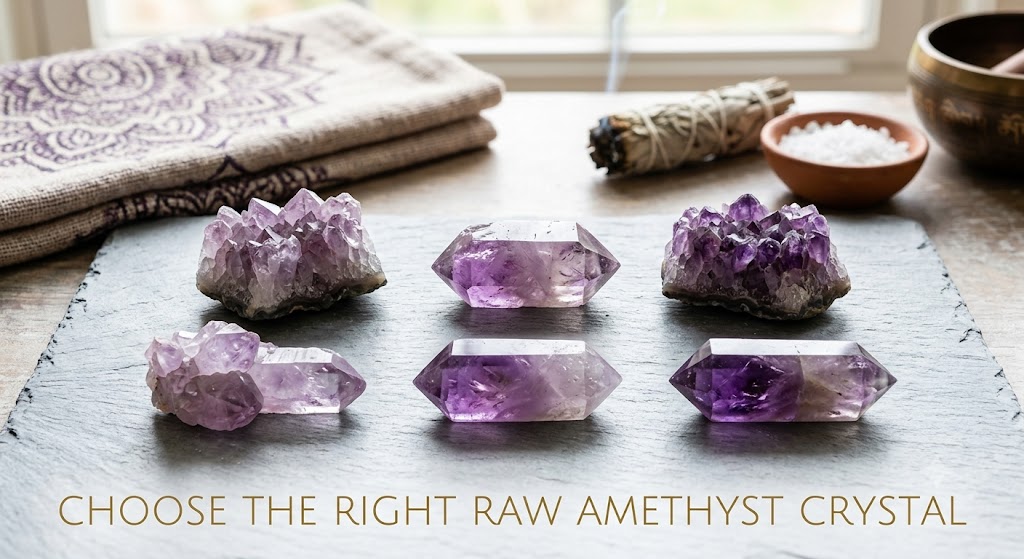
Few crystals hold as much universal appeal as amethyst. With its deep violet hue and gentle, calming energy, amethyst has been treasured for thousands of years — from ancient royalty who wore it as a symbol of protection and wisdom, to modern-day energy practitioners who use it for meditation, chakra work, and emotional healing. But if you’ve ever browsed a crystal shop or online store, you’ve likely noticed that not all amethyst is created equal.
Should you choose a raw, unpolished piece or a smooth, tumbled one? What size is right for your practice? How do you know if you’re getting authentic, high-quality amethyst rather than a dyed or synthetic imitation? These are common questions for anyone building or expanding their crystal collection, especially when it comes to raw amethyst crystals, which are prized in the energy healing community for retaining their natural, unaltered vibrational properties.
In this comprehensive guide, we’ll walk through everything you need to know about choosing the right raw amethyst crystal for your energy practice — from understanding what makes amethyst special, to practical tips on quality, sourcing, size, and how to actually incorporate it into your meditation and healing routine.
What Is Amethyst?
Amethyst is a violet variety of quartz, one of the most abundant minerals on Earth. Its distinctive purple color comes from trace amounts of iron combined with natural irradiation during its formation deep within the earth. Amethyst typically forms inside geodes — hollow rock cavities lined with crystal points — which is why raw amethyst is often sold as clusters or points still attached to their natural formation.
Amethyst ranges in color from pale lilac to deep, almost black-purple, with the most prized specimens displaying a rich, saturated violet tone. It’s found in several locations around the world, including Brazil, Uruguay, Zambia, and parts of Africa, each region producing slightly different color variations and crystal formations.
Amethyst in History and Culture
The name “amethyst” comes from the Greek word amethystos, meaning “not intoxicated.” Ancient Greeks believed the stone could protect the wearer from the effects of alcohol, and it was often carved into drinking vessels or worn as jewelry for this purpose. Throughout history, amethyst has also been associated with royalty, spirituality, and protection, appearing in crowns, religious artifacts, and ceremonial jewelry across many cultures.
In modern crystal healing practices, amethyst has retained its reputation as a stone of spiritual protection, calm, and higher consciousness, making it one of the most popular crystals for meditation and energy work today.
Raw vs. Polished Amethyst: What’s the Difference?
Before diving into how to choose a raw amethyst crystal, it’s important to understand the distinction between raw amethyst and its polished or tumbled counterpart.
Raw Amethyst
Raw amethyst refers to the crystal in its natural, unaltered state — straight from the earth, with no cutting, polishing, or shaping. Raw pieces often retain their original point formations, jagged edges, and natural clusters. Many energy practitioners prefer raw crystals because they believe the stone’s natural structure preserves its full vibrational energy, uninterrupted by the grinding and polishing process.
Raw amethyst typically comes in a few common forms:
- Amethyst Points – Single, naturally terminated crystal points, often used for directing energy.
- Amethyst Clusters – Multiple points growing together from a common base, ideal for cleansing a room or space.
- Amethyst Geodes – A hollow rock formation lined with amethyst crystals, often cut in half to reveal the crystals inside.
- Rough Chunks – Unshaped pieces broken from larger formations, often more affordable and versatile.
Polished or Tumbled Amethyst
Tumbled amethyst has been mechanically smoothed and polished, giving it a glassy, rounded finish. While beautiful and easy to carry, some practitioners feel that the polishing process slightly diminishes the stone’s raw energetic potency, though this is more a matter of personal belief and practice preference than scientific fact.
Which One Should You Choose?
For energy practice purposes — meditation, chakra work, and space clearing — many practitioners lean toward raw amethyst crystals for their unaltered natural energy and striking visual presence. However, tumbled stones are often preferred for carrying in a pocket or wearing as jewelry due to their smooth, comfortable texture. Ultimately, the right choice depends on your intended use and personal connection to the stone.
The Metaphysical Properties of Amethyst
Understanding amethyst’s traditional metaphysical associations can help you choose the right piece for your specific energy practice goals.
Crown Chakra Connection
Amethyst is most commonly associated with the crown chakra (Sahasrara), the energy center located at the top of the head that governs spiritual connection, higher consciousness, and inner wisdom. Practitioners often use amethyst during meditation to help open and activate this chakra, facilitating a deeper sense of spiritual awareness and connection.
Third Eye Chakra Support
Amethyst is also linked to the third eye chakra (Ajna), associated with intuition, insight, and inner knowing. Many meditators place amethyst on or near the forehead during meditation to enhance intuitive awareness and mental clarity.
Calming and Stress-Relieving Properties
One of amethyst’s most well-known associations is its calming energy. It’s often used to help ease anxiety, quiet an overactive mind, and promote a sense of peace and emotional balance — making it a popular choice for those going through stressful life transitions or seeking better emotional regulation.
Protection and Purification
Historically, amethyst has been regarded as a protective stone, believed to shield its owner from negative energy and psychic attack. It’s also commonly used to purify the energy of a space, which is why raw amethyst clusters are frequently placed in homes, offices, or meditation rooms.
Supporting Sleep and Dream Work
Many people place amethyst near their bed or under their pillow, believing it supports restful sleep and vivid, meaningful dreams. This is often attributed to its calming, mind-quieting properties.
How to Choose the Right Raw Amethyst Crystal
Now that you understand what makes amethyst special, let’s walk through the practical factors to consider when choosing the right raw amethyst crystal for your personal energy practice.
1. Determine Your Intended Use
Before anything else, think about how you plan to use your amethyst. Your intended purpose will shape nearly every other decision in the buying process.
- For meditation – A single amethyst point or a palm-sized rough chunk that you can hold comfortably in your hand.
- For chakra work – Smaller points or tumbled pieces that can be placed directly on the body during a healing session.
- For space clearing and cleansing – A larger cluster or geode to fill a room with a calming, purifying presence.
- For your altar or sacred space – A visually striking piece, such as a geode or larger cluster, to serve as a focal point.
- For carrying with you throughout the day – A small tumbled or rough piece that fits easily in a pocket or bag.
2. Assess Color Quality
The depth and richness of an amethyst’s purple color is one of the most important quality indicators. While personal preference plays a role, generally speaking:
- Deep, saturated violet-purple is considered the highest quality and most prized coloration.
- Pale lilac or lavender tones are still beautiful but generally considered lower grade in traditional gemstone quality assessments.
- Color zoning — where the color appears unevenly distributed within the crystal, sometimes with white or clear sections — is common in natural amethyst and doesn’t necessarily indicate lower quality, just natural variation.
Keep in mind that amethyst color can also appear differently depending on lighting conditions, so if purchasing online, look for photos taken in natural light for the most accurate representation.
3. Examine Clarity and Formation
Raw amethyst, by nature, often contains natural inclusions, fractures, or cloudy sections — this is completely normal and doesn’t diminish its energetic value. That said, when choosing a piece, look for:
- Well-defined crystal points with visible natural termination
- Minimal damage such as large chips or breaks (some minor imperfections are expected and add character)
- A formation that feels balanced and pleasing to you personally, as energetic connection is often more important than “perfect” physical appearance
4. Consider Size and Weight
Raw amethyst is available in an enormous range of sizes, from small pocket-sized pieces to large statement clusters and geodes weighing several pounds.
- Small pieces (under 2 inches) – Great for carrying, placing on an altar, or using during body layout chakra work.
- Medium pieces (2–5 inches) – Ideal for meditation, hand-holding during practice, or as a desk/bedside piece.
- Large clusters and geodes (6+ inches) – Best suited for room energy clearing, home décor, or as a centerpiece in a dedicated meditation or healing space.
Consider both the practical use and the physical space you have available when choosing size.
5. Verify Authenticity
Unfortunately, the popularity of crystals has led to an increase in dyed, synthetic, or misrepresented stones on the market. Here’s how to help ensure you’re purchasing genuine natural amethyst:
- Purchase from reputable, specialized sellers who provide clear sourcing information.
- Look for natural color variation — perfectly uniform, saturated purple throughout the entire piece can sometimes indicate dyeing, especially in lower-cost quartz.
- Check for natural inclusions and imperfections, which are typically absent in synthetic or glass imitations.
- Ask about origin – Reputable sellers should be able to tell you where the amethyst was sourced, such as Brazil, Uruguay, or Zambia.
6. Trust Your Intuition
Beyond the practical considerations, many crystal practitioners emphasize the importance of energetic connection when choosing a stone. If you’re shopping in person, take time to hold different pieces and notice which one you feel naturally drawn to. If shopping online, look through several options and pay attention to which piece resonates with you on an intuitive level — many practitioners believe that we are often drawn to the stones our energy field needs most in the moment.
How to Cleanse and Charge Your Raw Amethyst
Once you’ve chosen your raw amethyst crystal, many practitioners recommend cleansing and charging it before beginning regular use, especially since the stone may have passed through many hands during mining, processing, and shipping.
Cleansing Methods
- Moonlight Cleansing – Place your amethyst outside or on a windowsill overnight during a full moon to cleanse and reset its energy.
- Smoke Cleansing – Pass the crystal through the smoke of sage, palo santo, or incense to clear any accumulated energy.
- Sound Cleansing – Use a singing bowl, bell, or other sound tool to cleanse the crystal’s energy field with vibration.
- Earth Burial – Some practitioners bury their amethyst in soil for 24 hours to allow the earth to naturally reset its energy.
Note: Avoid prolonged direct sunlight, as amethyst can fade in color with extended UV exposure. Moonlight is generally the preferred cleansing method for this particular stone.
Charging Your Crystal
After cleansing, many practitioners like to “charge” their amethyst by setting a clear intention for how they’d like to use the stone — whether that’s for meditation support, emotional healing, or spiritual growth. This can be as simple as holding the crystal, closing your eyes, and mentally or verbally stating your intention.
How to Use Raw Amethyst in Your Energy Practice
There are countless ways to incorporate raw amethyst into a daily or occasional energy practice. Here are some of the most popular methods.
1. Meditation
Hold a piece of raw amethyst in your hand during meditation, or place it in front of you as a focal point. Some practitioners like to rest the crystal on their forehead (third eye area) or just above the crown of the head to support deeper meditative states and spiritual connection.
2. Chakra Layouts
During a chakra balancing session, amethyst is typically placed on or near the crown or third eye chakra, either lying down with the stone positioned on the body or held during seated meditation.
3. Space Clearing
Larger amethyst clusters or geodes are often placed in a home, office, or meditation space to promote a calm, purified atmosphere. Many people place amethyst in bedrooms specifically to support restful sleep.
4. Altar and Sacred Space Work
Amethyst is a popular addition to personal altars, often paired with candles, incense, or other meaningful spiritual items as a symbol of protection and higher connection.
5. Journaling and Intention Setting
Some practitioners hold amethyst while journaling, setting intentions, or engaging in reflective practices, believing the stone supports clarity and insight during these moments of introspection.
6. Grid Work
In crystal grid practices, amethyst is often used as a central or supporting stone, particularly in grids designed for spiritual growth, protection, or emotional healing.
Pairing Amethyst With Other Crystals
Amethyst works well in combination with a variety of other crystals, depending on your intention:
- Clear Quartz – Amplifies amethyst’s energy and adds clarity
- Rose Quartz – Combines amethyst’s spiritual calm with heart-centered, loving energy
- Citrine – Balances amethyst’s introspective energy with citrine’s uplifting, joyful qualities
- Black Tourmaline – Pairs amethyst’s protective properties with grounding, energetic shielding
- Selenite – Often used to cleanse and enhance amethyst’s natural energy
Common Mistakes to Avoid When Buying Raw Amethyst
Buying Based on Price Alone
While budget is understandably a factor, extremely low-priced amethyst may indicate lower quality, synthetic material, or unethical sourcing practices. It’s worth investing a little more in a piece from a reputable seller.
Ignoring Sourcing and Ethics
The crystal industry has faced increasing scrutiny regarding ethical mining practices. When possible, choose sellers who are transparent about their sourcing and prioritize fair labor practices.
Choosing Size Over Connection
It can be tempting to choose the largest, most visually impressive piece available, but a smaller stone that you feel genuinely connected to may serve your practice better than an oversized piece that doesn’t resonate with you personally.
Neglecting Proper Care
Forgetting to cleanse a new crystal, or storing it in direct sunlight for extended periods, are common mistakes that can affect both the physical appearance and perceived energetic potency of your amethyst over time.
Caring for Your Raw Amethyst Long-Term
- Avoid prolonged sun exposure, as amethyst can fade over time with excessive UV light.
- Handle raw pieces gently, as natural formations can be more delicate than tumbled stones.
- Store separately from harder stones to prevent scratching, since amethyst is a 7 on the Mohs hardness scale.
- Cleanse regularly, especially after intensive use in healing sessions or after the stone has absorbed significant emotional energy.
- Dust gently with a soft, dry cloth to maintain its natural shine.
Frequently Asked Questions About Raw Amethyst Crystals
What is the difference between raw and natural amethyst?
“Raw” refers to amethyst in its unpolished, unshaped natural state, while “natural” simply means the stone is genuine and not synthetic. A crystal can be both raw and natural, which is the most sought-after combination for energy practitioners.
How can I tell if my amethyst is real?
Genuine amethyst typically displays natural color variation, visible inclusions, and imperfections. Perfectly uniform color, glass-like clarity, or unusually low prices can indicate a synthetic or dyed imitation.
Where does the best quality amethyst come from?
Some of the most prized amethyst comes from Brazil, Uruguay, and parts of Africa, particularly Zambia, each known for producing deep, richly colored specimens.
Can amethyst lose its color over time?
Yes, prolonged exposure to direct sunlight can cause amethyst to fade. It’s best to store and display your crystal away from intense, direct UV light.
How often should I cleanse my raw amethyst?
Many practitioners recommend cleansing amethyst at least once a month, or after any particularly intense energy work, emotional release, or healing session.
Is bigger always better when choosing amethyst?
Not necessarily. While larger clusters can be visually striking and useful for space clearing, smaller pieces that you feel personally connected to can be just as, if not more, effective for individual meditation and energy practice.
Final Thoughts on Choosing Your Raw Amethyst Crystal
Choosing the right raw amethyst crystal for your energy practice is a deeply personal process that combines practical considerations — such as quality, size, and authenticity — with intuitive connection. Whether you’re drawn to a small, unassuming point or a large, dramatic cluster, the most important factor is how the stone resonates with you and supports your unique spiritual and wellness journey.
As you incorporate amethyst into your meditation, chakra work, or daily energy practice, remember that consistency and intention often matter just as much as the crystal itself. With proper care and mindful use, a quality raw amethyst crystal can become a cherished companion in your ongoing path toward balance, clarity, and inner peace.