

Citrine Stone Benefits: Meaning, Bracelet Benefits & Wearing Guide
Everything you need to know about citrine stone benefits, citrine bracelet meaning, and exactly how to wear and care for your own citrine bracelet.
Few crystals carry a reputation quite as sunny as citrine. Known for centuries as the "merchant's stone," this warm, golden gem has long been associated with abundance, confidence, and positive energy. Whether you're drawn to it for its beauty, its traditional meaning, or its reputation for attracting prosperity, understanding the real citrine stone benefits — and how to actually wear and use a citrine bracelet — will help you get far more out of this stone than simply admiring its color.
At Alpine Crystals UAE, our citrine pieces are genuine, natural stone sourced with full transparency. In this guide, we'll cover what citrine actually is, its traditional meaning, the specific benefits associated with wearing it as a bracelet, which hand to wear it on, and exactly how to choose and care for your own piece.
Whether you're buying your first citrine bracelet, replacing an old favorite, or simply curious about the meaning behind a stone you already own, this guide covers everything from its historical background to practical, everyday ways to make the most of it.
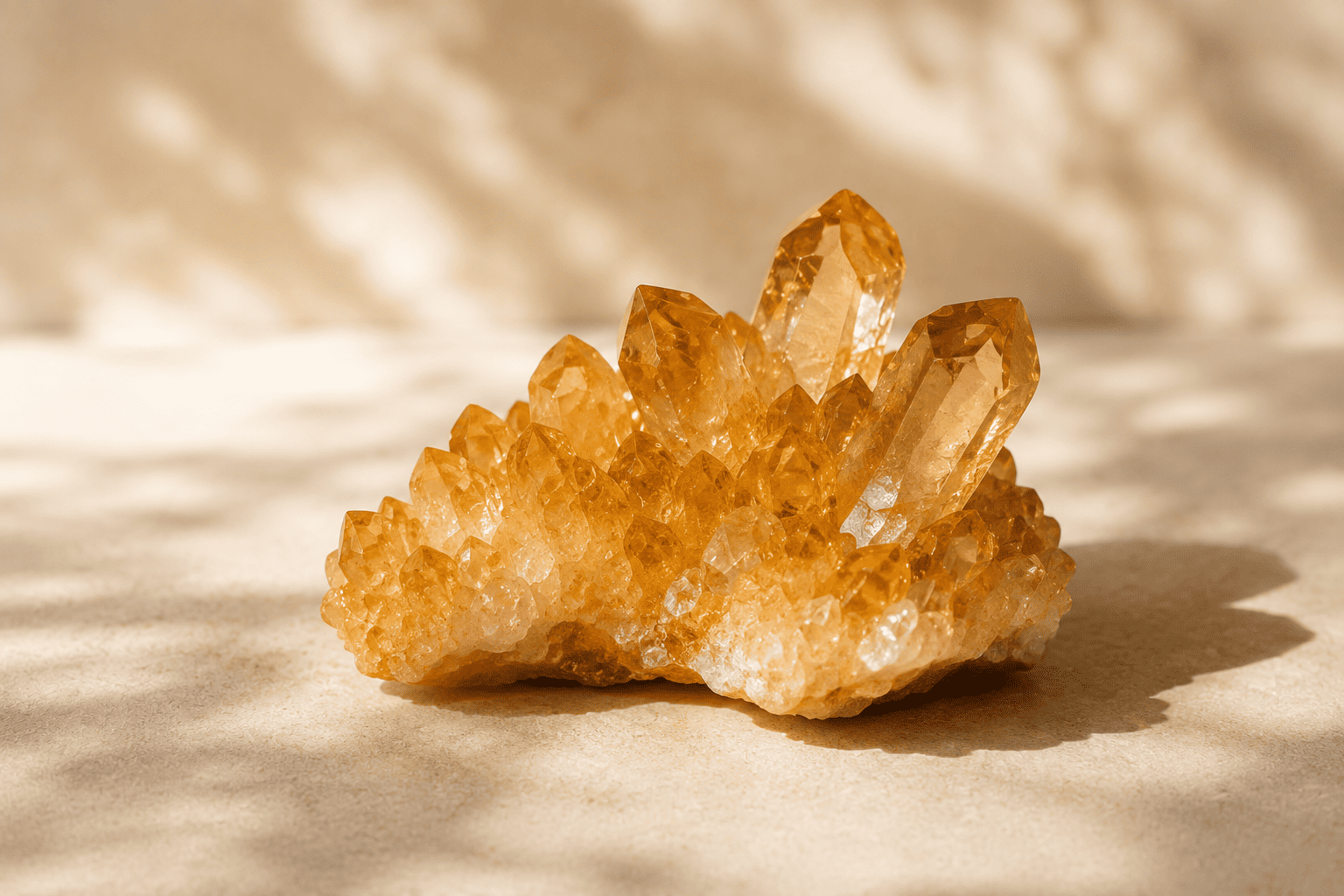
What Is Citrine?
Citrine is a variety of quartz known for its warm yellow to golden-orange color, ranging from a pale lemon tone to a deep, honeyed amber. Its name comes from the French word "citron," meaning lemon, a nod to its bright, sunny appearance. Naturally occurring citrine is relatively rare, and much of the citrine sold commercially today is actually heat-treated amethyst or smoky quartz — a distinction we'll cover in more detail later in this guide.
Citrine has been prized for centuries, particularly among merchants and traders, who often kept citrine stones in their cash boxes or shops in the belief that it could attract wealth and financial success. This is where its enduring nickname — the "Merchant's Stone" — comes from, alongside other traditional names like the "Success Stone" and "Stone of Abundance."
A Brief History of Citrine
Citrine has been used in jewellery and carved objects since ancient times, prized across various cultures for its warm, sun-like color long before its specific metaphysical associations became widely known. Its connection to the sun's energy naturally led to associations with vitality, warmth, and positivity, themes that have carried through into how the stone is understood and used today.
Unlike many crystals associated primarily with calm or protection, citrine has always carried a more energizing, outward-facing reputation — tied to action, ambition, and the pursuit of success, rather than introspection or stillness. This distinctive character is part of why it remains such a popular choice among entrepreneurs, professionals, and anyone pursuing a new goal or venture.
Citrine Stone Benefits
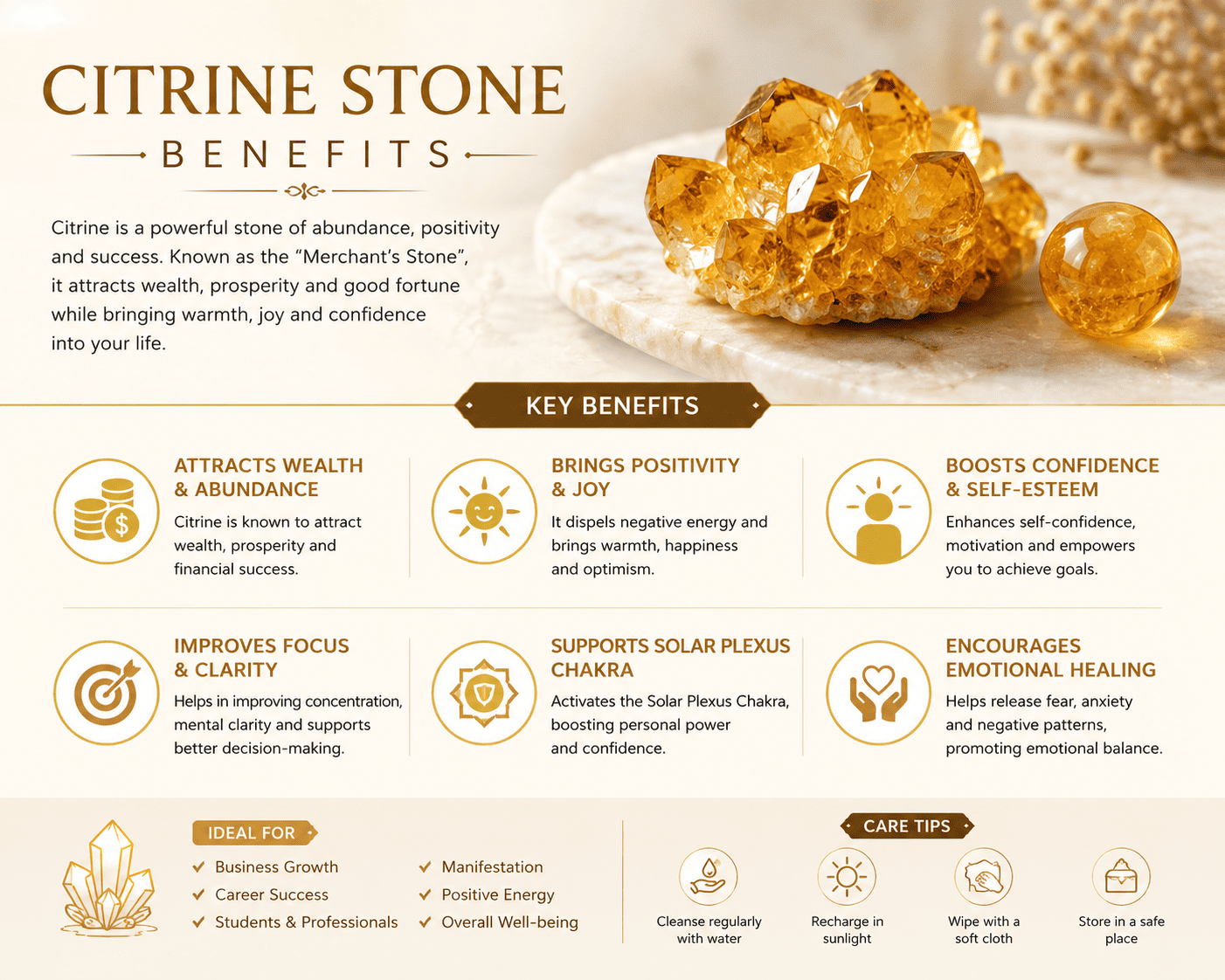
Citrine's traditional associations go well beyond its striking color. Here are the most widely recognized citrine stone benefits.
Attracts Abundance and Prosperity
Citrine's strongest and most well-known association is with wealth, business success, and financial abundance, dating back to its historical use among merchants who kept it near their money and goods.
Boosts Confidence
Citrine is closely tied to personal power and self-esteem, often chosen by those looking to feel more self-assured before interviews, presentations, or other challenging situations.
Encourages Positivity
Unlike stones associated with absorbing negative energy, citrine is traditionally believed to transform negativity into a brighter, more optimistic outlook, rather than simply shielding against it.
Supports Manifestation
Citrine is one of the most popular crystals used for setting and amplifying intentions, particularly around goals, ambitions, and personal growth, making it a common choice for vision boards and goal-setting rituals.
Sparks Creativity and Motivation
Many artists, entrepreneurs, and students turn to citrine for its energizing, idea-generating reputation during creative or high-focus work, particularly when facing a mental block or lack of drive.
Supports Emotional Balance
Citrine's warm, uplifting energy is often used to help ease fear, anxiety, and emotional blockages, encouraging a steadier, more balanced mindset during difficult or uncertain periods.
Citrine Bracelet Meaning
While loose citrine stones are often kept in a home, office, or cash drawer, a citrine bracelet takes that same traditional meaning and keeps it in constant, physical contact with you throughout the day. The citrine bracelet meaning reflects everything the stone itself represents — abundance, confidence, and positivity — but in a wearable, continuous form rather than something used only during a dedicated ritual or kept in a fixed location.
For many people, choosing to wear a citrine bracelet is a quiet, personal statement of intention: a daily reminder to stay confident, optimistic, and open to opportunity, whether that's in business, creative work, or everyday life.
This is part of why citrine bracelets are so often chosen to mark a specific transition or milestone — starting a new job, launching a business, beginning a course of study, or simply committing to a more positive outlook going forward. The bracelet becomes a small, tangible symbol of that intention, worn visibly rather than tucked away.
Citrine Bracelet Benefits
Wearing citrine specifically as a bracelet — rather than simply keeping a loose stone nearby — offers its own set of practical advantages, alongside the traditional meaning of the stone itself.
Constant, Ongoing Energy
Unlike a crystal kept on a shelf or desk, a bracelet stays in continuous contact with your skin throughout the day, offering what many describe as a steady, ongoing connection to citrine's traditional properties.
A Physical Reminder of Intention
Glancing down at a citrine bracelet during a stressful meeting, a big decision, or a moment of self-doubt can serve as a small, grounding reminder to stay confident and optimistic.
Effortless, Everyday Wear
Unlike more elaborate rituals, a bracelet requires no extra time or effort — you simply wear it, making it one of the most accessible ways to incorporate citrine into a busy daily routine.
A Meaningful Accessory
Beyond its traditional meaning, a well-made citrine bracelet is simply a beautiful, warm-toned piece of jewellery, suitable for both men and women and easy to pair with a wide range of styles.
A Popular Choice for Gifting
Because of its strong association with prosperity and new beginnings, a citrine bracelet is a popular gift for milestones such as a new job, a business launch, a graduation, or simply as an encouraging gesture during a challenging season.
Easy to Combine With Other Intentions
A citrine bracelet pairs comfortably with other crystal jewellery, allowing you to combine its confidence-focused energy with complementary stones — such as clear quartz for amplified clarity, or rose quartz for a touch of emotional warmth alongside its more assertive properties.
Which Hand to Wear a Citrine Bracelet
One of the most common questions people ask when starting to wear crystal jewellery is which hand to wear a citrine bracelet on. While there's no single universally enforced rule, a widely followed tradition in crystal healing offers some general guidance.
Right Hand: For Projecting Energy
The right hand is traditionally associated with giving out or projecting energy into the world. Many people choose to wear citrine on the right hand specifically to support confidence, action, and outward manifestation — fitting given citrine's strong association with success and abundance.
Left Hand: For Receiving Energy
The left hand is traditionally associated with receiving energy. Some prefer wearing citrine on the left hand to absorb its positive, uplifting qualities inwardly, particularly during periods of self-doubt or emotional low points.
Does It Really Matter?
Ultimately, this distinction is rooted in tradition and personal belief rather than a strict, universally agreed rule. Many people simply choose whichever wrist feels most comfortable, and some feel it makes little practical difference either way. If you're drawn specifically to the idea of "projecting" citrine's confident, abundant energy outward, the right hand is the more commonly recommended choice — but wearing it on the left is equally valid.
What Most Practitioners Actually Recommend
In practice, many crystal practitioners suggest simply staying consistent once you've chosen a wrist, rather than switching back and forth frequently. The idea is that a steady, intentional relationship with the stone — on whichever hand you choose — tends to matter more than the specific hand itself. If you're also wearing other crystal bracelets, some people prefer to dedicate one wrist to abundance and confidence-focused stones like citrine, and the other to calming or protective stones, as a simple way to keep different intentions organized.
Citrine and the Solar Plexus Chakra
Citrine is strongly associated with the Solar Plexus Chakra, the energy center linked to confidence, motivation, self-esteem, and personal power. When this chakra is considered balanced, many describe feeling more confident, focused, emotionally steady, and empowered in their decision-making.
Many energy practitioners use citrine specifically to help activate and strengthen the Solar Plexus Chakra, often holding a piece over the upper abdomen during meditation or chakra-focused body layouts. If you're building a broader chakra practice, citrine pairs naturally alongside our Seven Chakra bracelet with clear quartz.
Signs of a Balanced Solar Plexus Chakra
When this energy center is considered balanced, people often describe feeling more decisive, self-assured, and capable of pursuing their goals without excessive self-doubt. Conversely, an imbalance is sometimes associated with low confidence, indecision, or a general sense of feeling stuck. Citrine's warm, energizing reputation is part of why it's so frequently recommended specifically for this chakra, rather than the calmer, more receptive chakras often paired with cooler-toned stones like amethyst or blue lace agate.
A Simple Solar Plexus Practice With Citrine
A simple practice involves lying down comfortably, placing a piece of citrine on or near the upper abdomen, and breathing slowly while focusing your attention on that area for several minutes. Some practitioners combine this with a simple affirmation focused on confidence or personal power, though the practice works just as well as a quiet, wordless moment of focused breathing.
Natural vs. Heat-Treated Citrine
This is one of the most important things to understand before buying a citrine stone bracelet. Naturally occurring citrine is genuinely rare, with a pale, subtle yellow tone. The large majority of citrine sold commercially — including much of the vivid, deep orange citrine seen in jewellery — is actually heat-treated amethyst or smoky quartz, which turns a citrine-like color under high temperatures.
This doesn't necessarily make a stone "fake" — heat-treated citrine is still genuine quartz, just altered in color through a common, widely accepted process in the gemstone industry. However, it's a meaningful difference for those who specifically want naturally formed citrine, and it's worth asking a seller directly whether a piece is natural or heat-treated before purchasing, particularly for larger, more vividly colored stones.
Buying tip: Naturally occurring citrine tends to have a paler, more subtle yellow tone with visible color zoning, while heat-treated citrine is often a much more uniform, deep orange throughout. If a stone's color looks unusually vivid and perfectly even, it's worth asking whether it's been heat-treated.
How to Tell the Difference
Beyond color, natural citrine often shows subtle inclusions or slight cloudiness, similar to other naturally formed quartz varieties, while heat-treated stones can sometimes appear unusually clear and glassy in addition to their more saturated color. Neither option is inherently better — some people specifically prefer the deeper, richer look of heat-treated citrine for jewellery, while others place more importance on natural formation. What matters most is buying from a seller who is transparent about which type you're purchasing, rather than one who simply markets every golden stone as "natural citrine" without clarification.
Does Heat Treatment Change the Meaning?
From a metaphysical standpoint, most practitioners don't draw a hard distinction between natural and heat-treated citrine when it comes to traditional meaning — both are still considered citrine, carrying the same broad associations with abundance and confidence. The difference tends to matter more to those specifically interested in mineralogy or natural formation, or those who prefer to know precisely how their stone was created before wearing it daily.
How to Choose the Right Citrine Bracelet
With several options available, a few factors can help you choose the right citrine stone bracelet for your needs.
1. Bead Size
Smaller beads (8mm) offer a more delicate, understated look and tend to sit comfortably on smaller wrists, while larger beads (10mm+) create a bolder, more visible presence.
2. Color Tone
Decide whether you prefer a paler, more subtle yellow (often associated with natural citrine) or a deeper, richer golden-orange tone (more commonly associated with heat-treated citrine).
3. Single Stone vs. Multi-Crystal Design
Some bracelets combine citrine with complementary stones like clear quartz or yellow tourmaline for a layered, multi-crystal effect, while others feature citrine on its own for a more focused energy.
4. Authenticity
Look for a seller who can confirm whether a piece is natural or heat-treated citrine, and who provides clear, honest photos of the actual bracelet rather than generic stock imagery.
5. Comfort and Fit
As with any crystal bracelet, checking your wrist size before ordering helps ensure a comfortable, secure fit rather than one that's too tight or prone to slipping off.
Who Should Wear Citrine?
Citrine's broad, uplifting associations make it a fitting choice for a wide range of people and situations.
Entrepreneurs and Business Owners
Given its historical nickname as the "merchant's stone," citrine remains a popular choice among those building a business or navigating a competitive professional environment.
Students and Career Changers
Those preparing for exams, interviews, or a significant career shift often turn to citrine for its traditional association with confidence and motivation during high-pressure periods.
Creative Professionals
Artists, writers, and designers frequently choose citrine to support creative energy and help push through mental blocks during demanding project work.
Anyone Seeking a More Positive Outlook
Beyond specific professional or academic goals, citrine's general reputation for optimism makes it a fitting choice for anyone simply looking to shift toward a brighter, more hopeful daily mindset.
Citrine vs. Other Abundance Crystals
Citrine is often grouped alongside other stones associated with prosperity and success, though each carries its own distinct character.
Citrine vs. Pyrite
While both are associated with wealth and abundance, pyrite's metallic, golden appearance is more closely tied to manifestation and willpower, whereas citrine's warmer, more translucent quality leans toward optimism and confidence alongside prosperity.
Citrine vs. Green Aventurine
Green aventurine is often described as a gentler, more approachable "luck" stone, while citrine carries a more assertive, energizing reputation tied specifically to personal confidence and financial success.
Citrine vs. Tiger's Eye
Tiger's eye leans more toward grounded courage and protection, while citrine's energy is generally considered brighter and more overtly optimistic, making the two a popular pairing for those wanting both confidence and stability.
Shop Our Citrine Bracelets
Here are three genuine citrine pieces from our collection, each offering a slightly different take on this warm, golden stone. From a bold, statement-sized bracelet to a more delicate everyday piece, and a rare multi-crystal design combining citrine with clear quartz and yellow tourmaline, there's an option here whether you're buying your first citrine piece or adding to an existing collection.
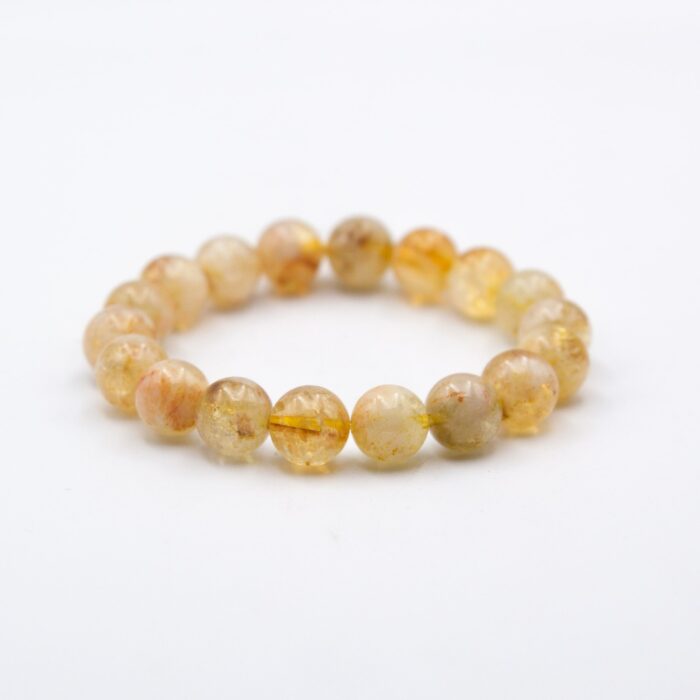
Authentic Himalayan Natural Citrine Bracelet (10mm)
AED 120
Bold 10mm polished citrine beads on a durable elastic cord — a striking everyday piece for abundance and confidence.
 Out of Stock
Mount Makalu Clear Quartz, Yellow Tourmaline & Citrine Bracelet
AED 350
A rare multi-crystal piece combining clear quartz, yellow tourmaline, and citrine, hand-sourced from the Makalu region of Nepal.

Authentic Natural Citrine Crystal Bracelet (8mm)
AED 100
A more delicate 8mm citrine bracelet, comfortable for daily wear and easy to stack alongside other crystal bracelets.
You can browse our complete range in the Crystal Bracelets collection, or explore other stone meanings in our guide to crystals and their meanings.
How to Use Citrine Daily
Beyond simply wearing your bracelet, here are a few simple ways to incorporate citrine into a daily routine.
Morning Intention Setting
Hold your citrine bracelet for a moment each morning while setting a clear intention for the day — whether that's confidence in a meeting, focus on a project, or general positivity.
Manifestation Practice
Many people hold their citrine bracelet during a short visualization exercise, focusing on specific goals or desired outcomes while picturing them as already achieved.
Before High-Pressure Moments
Wearing or holding citrine before a big presentation, negotiation, or interview is a common way to draw on its traditional association with confidence and success.
As a Desk or Workspace Companion
Alongside wearing a bracelet, keeping a small piece of citrine on your desk is a traditional way to invite a similar sense of abundance and focus into your workspace.
During Journaling or Goal Review
Some people hold their citrine bracelet while reviewing personal or professional goals in a journal, using the stone as a physical focal point to stay connected to their ambitions during quiet reflection.
Paired With Affirmations
Repeating a simple affirmation — such as "I welcome abundance and opportunity" — while holding citrine is a common practice among those combining crystal work with more structured manifestation techniques.
Caring for Your Citrine Bracelet
A little routine care keeps your citrine bracelet looking and feeling its best for years of daily wear.
Avoid Harsh Chemicals and Perfumes
Lotions, perfumes, and cleaning products can gradually dull the natural shine of citrine beads, so it's best to apply these before putting your bracelet on, rather than after.
Remove Before Swimming or Showering
Prolonged water exposure can weaken the elastic cord over time, so it's a good habit to remove your bracelet before swimming, bathing, or intense exercise.
Store Thoughtfully
Keeping your bracelet in a soft pouch when not in use protects it from scratches, particularly if it's stored alongside other jewellery with harder or sharper edges.
Clean Gently
A soft, dry cloth is usually enough to keep citrine beads looking polished. Avoid abrasive cleaners or ultrasonic jewellery cleaners, which can affect the surface over time.
Cleanse Periodically
Many practitioners recommend cleansing citrine using moonlight, sound, or smoke roughly once a month, or more often during particularly demanding or stressful periods, to help keep its energy feeling fresh.
Common Mistakes and Myths
Myth: All Citrine Is Naturally Yellow
As covered earlier, much commercial citrine is actually heat-treated amethyst or smoky quartz. This doesn't make it fake, but it's worth knowing the difference, especially if natural, untreated citrine matters to you specifically.
Myth: The Wrist You Wear It On Is a Strict Rule
While there's a general tradition around left and right hand meanings, this is a matter of personal belief rather than a fixed rule. Comfort and personal preference are just as valid a deciding factor.
Mistake: Choosing Based on Color Alone
A deeper, more vivid orange doesn't necessarily mean a "better" stone — it's simply more likely to indicate heat treatment. Paler, natural citrine is equally genuine and valuable in its own right.
Mistake: Forgetting to Check Authenticity
As with any crystal purchase, checking weight, temperature, and natural variation — or simply asking your seller directly — helps ensure you're getting genuine quartz rather than dyed glass or resin.
Mistake: Expecting Results Without Consistent Use
Like most crystal practices, the value many people find in wearing citrine tends to build gradually through consistent, intentional use, rather than appearing instantly after putting on a bracelet for the first time. Treating it as a daily reminder rather than a one-time fix tends to lead to a more meaningful, lasting practice.
Frequently Asked Questions
What are the main citrine stone benefits?
Citrine is traditionally associated with attracting abundance and prosperity, boosting confidence, encouraging positivity, supporting manifestation, and promoting emotional balance.
What does a citrine bracelet mean?
A citrine bracelet carries the same traditional meaning as the stone itself — abundance, confidence, and positivity — but in a wearable form that stays in continuous contact with you throughout the day.
Which hand should I wear a citrine bracelet on?
Tradition suggests the right hand for projecting confidence and abundance outward, and the left hand for receiving citrine's positive energy inwardly. Many people simply choose whichever wrist feels more comfortable.
Is all citrine natural, or is it heat-treated?
Naturally occurring citrine is genuinely rare and typically has a paler yellow tone. Much of the citrine sold commercially, particularly deeper orange stones, is actually heat-treated amethyst or smoky quartz.
Which chakra is citrine associated with?
Citrine is strongly associated with the Solar Plexus Chakra, linked to confidence, motivation, self-esteem, and personal power.
Where can I buy an authentic citrine bracelet in the UAE?
You can shop our full range of authentic citrine bracelets, made from genuine Himalayan stone, with delivery across Dubai, Abu Dhabi, Sharjah, and the wider UAE.
Can I wear a citrine bracelet every day?
Yes, citrine bracelets are designed for comfortable everyday wear. Many people specifically choose to wear theirs daily to maintain a consistent, ongoing connection to its traditional properties.
Can citrine be combined with other crystals?
Yes. Citrine is often paired with clear quartz for amplified energy, or worn alongside stones like tiger's eye or green aventurine for a broader focus on confidence, luck, and abundance.
Does citrine need to be cleansed regularly?
Many practitioners recommend cleansing citrine roughly once a month using moonlight, sound, or smoke, or more frequently during especially demanding or stressful periods.
Final Thoughts
From its long-standing reputation as the "merchant's stone" to its modern role as a wearable daily reminder of confidence and abundance, citrine remains one of the most popular and approachable healing crystals available. Whether you're drawn to a natural, pale-toned piece or a deeper, heat-treated golden stone, choosing a genuine citrine bracelet — and wearing it with real intention — is far more valuable than following any single rule about which hand, size, or shade is "correct."
As with most crystal practices, the real benefit tends to come less from the stone itself and more from the consistent, intentional habit you build around it — a quiet daily reminder to stay confident, optimistic, and open to opportunity, whatever that looks like in your own life and work.
Ready to find your citrine bracelet? Browse our full crystal bracelet collection, explore our wider range of raw healing crystals, or read our guide on crystals and their meanings to explore more stones.