

Where to Place Crystals in Your Home: A Room-by-Room Guide
The right stone for each room, the right spot within it - and the places in a UAE home that quietly damage crystals without you noticing.
Working out where to place crystals in your home is where collecting stones starts to feel personal. A crystal on a shelf is decoration; the same crystal placed deliberately - by the door you walk through every morning, beside the bed where you wind down, on the desk where you work - becomes a small daily reminder of what you want that space to feel like. This guide goes room by room, from the entrance to the bedroom to the majlis, with the stones traditionally chosen for each space and exactly where to put them. It also covers something most crystal placement guides ignore: the spots in a typical UAE apartment or villa - sunny windowsills, humid bathrooms, hot balconies - that slowly fade, crack, or damage the very stones you're displaying.
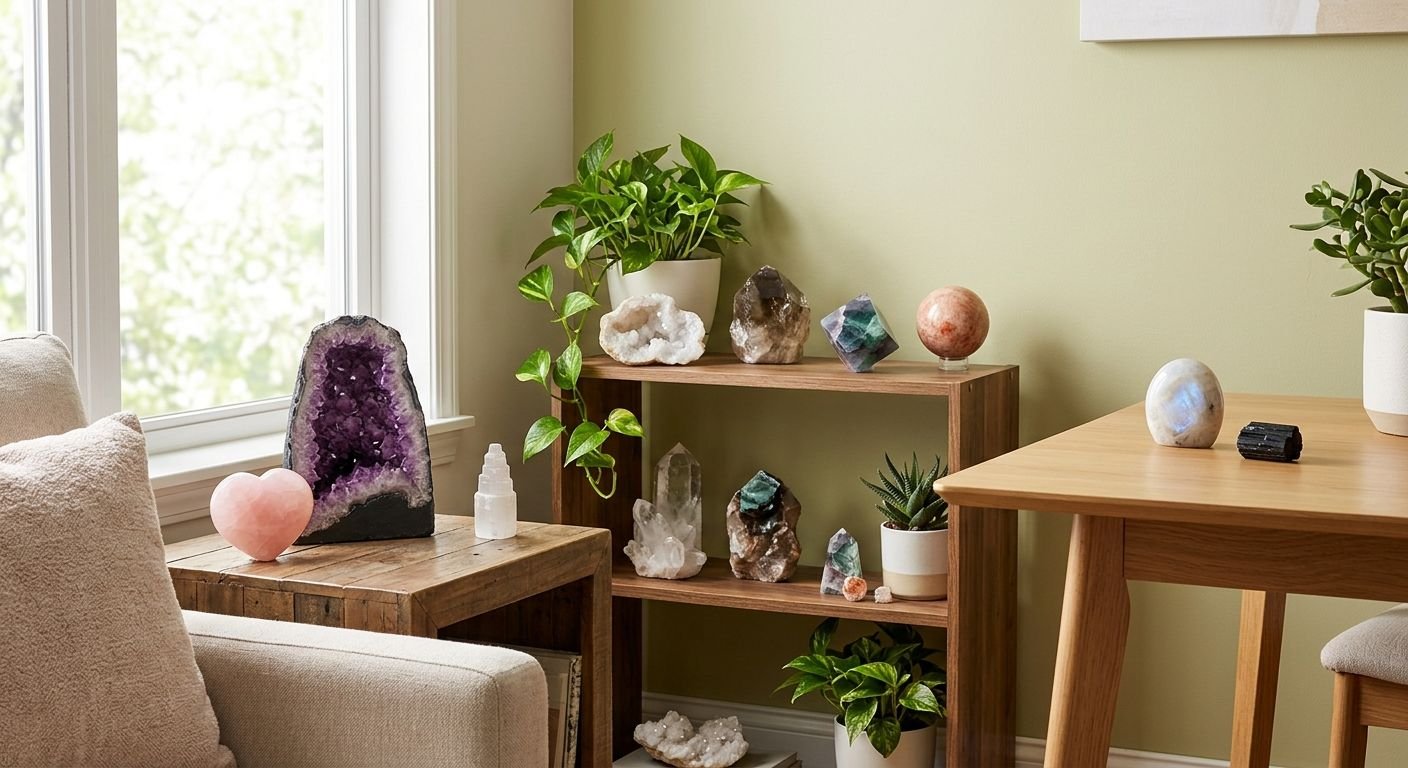
Where to Place Crystals in Your Home: The Quick Answer
Match the stone to the purpose of the room, then place it where you'll actually see it. The most common pairings are protective, grounding stones like black tourmaline and smoky quartz near the entrance; calming stones like amethyst, moonstone, and rose quartz in the bedroom; warm, welcoming stones like citrine and green aventurine in the living room or majlis; and focus stones like clear quartz, fluorite, and tiger's eye on a desk. Keep sun-sensitive stones off bright windowsills, keep water-sensitive stones out of bathrooms, and keep small or fragile pieces out of reach of young children and pets. One to three stones per room is plenty.
Four Principles Before You Place Anything
Before deciding where to place crystals in your home room by room, it helps to understand the logic behind crystal placement, because it makes every decision easier - including for stones and rooms this guide doesn't specifically cover.
1. Start With What the Room Is For
Every room has a job: rest, work, gathering, cooking, welcoming guests. Crystal placement traditions consistently pair a room's purpose with a stone whose traditional meaning matches it. A bedroom calls for calm; an office calls for focus; an entrance calls for protection. If you know what you want a room to feel like, you already know roughly which stone to choose.
2. Place It Where You'll See It
A crystal tucked inside a drawer or behind a pile of books doesn't do much as a reminder. Most practitioners place stones where they'll be noticed during the moments that matter - on the nightstand you look at before sleep, beside the keyboard you use all day, on the console table by the door. Visibility is part of what makes placement intentional rather than decorative.
3. Protect the Stone From Its Environment
Every home has spots that are hard on crystals: direct sun, steam, heat, grease, and high-traffic ledges where things get knocked. Knowing which of your stones are sensitive to light, moisture, or impact matters as much as knowing what they mean. A beautiful amethyst on a sunny windowsill will slowly lose its colour.
4. Keep It Honest and Personal
Crystal placement comes from tradition and belief - drawing on practices like feng shui and modern crystal traditions - rather than from science. Its value for most people lies in intention, attention, and the calm of a thoughtfully arranged space. There's no wrong answer if a placement feels right to you, and no need to follow any system rigidly.
Crystal Placement Chart for Every Room
Use this chart as a quick reference. Each room is covered in more detail below.
| Room | Traditional Purpose | Stones Often Chosen | Where to Put Them | Watch Out For |
|---|---|---|---|---|
| Entrance | Protection, grounding | Black tourmaline, smoky quartz, obsidian | Console table, shoe cabinet, beside the door | Knocks from bags and doors |
| Living room / majlis | Warmth, harmony, welcome | Citrine, green aventurine, clear quartz, amethyst | Coffee table, side table, shelf at eye level | Strong sun through large windows |
| Bedroom | Rest, calm, love | Amethyst, moonstone, rose quartz, smoky quartz | Nightstand, dresser | Energising stones too close to the bed |
| Home office | Focus, clarity, confidence | Clear quartz, fluorite, tiger's eye, black tourmaline | Desk corner, beside the screen | Coffee spills, desk clutter |
| Kitchen / dining | Warmth, abundance, togetherness | Citrine, carnelian, green aventurine | Dining table, open shelf away from stove | Heat, steam, grease |
| Bathroom | Refresh, calm | Clear quartz, amethyst, rose quartz (hard stones only) | High shelf away from shower spray | Steam, water, cleaning sprays |
| Children's room | Calm, comfort | Large rose quartz or amethyst pieces | High shelf out of reach | Small stones, choking risk |
| Quiet corner | Reflection, stillness | Clear quartz, amethyst, moonstone, labradorite | Low table or tray beside a cushion | Clutter |
Entrance and Front Door
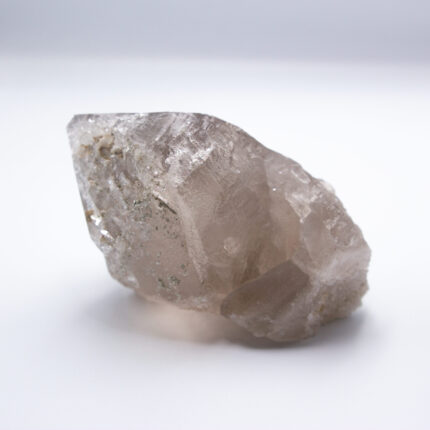
The entrance is traditionally the most important placement in the home, because it's the threshold between the outside world and your private space. Almost every crystal tradition treats it as the natural spot for protective and grounding stones - a kind of symbolic filter for what comes in with you after a long day.
Stones Often Chosen
Black tourmaline is the classic entrance stone, traditionally regarded as the strongest protective crystal. Smoky quartz offers a gentler, grounding alternative. Obsidian is also used here, though its traditional character is more intense - we compare the two in detail in obsidian vs black tourmaline.
Where Exactly
A console table, shoe cabinet, or shelf just inside the door works best - somewhere you pass every time you come home. Some people place a stone on each side of the door, or in the corners of the entry area. In apartment buildings, where the entrance opens onto a shared corridor, the inside of the door is the natural choice.
Practical Tip
Entrances are high-traffic zones where bags swing, keys drop, and doors open fast. Choose sturdy, hard stones rather than fragile clusters, and set them back from the edge. Raw smoky quartz and tourmaline are both tough enough for this spot.
Living Room and Majlis
The living room - and in many UAE homes, the majlis where guests are received - is the social heart of the home. The traditional aim here is warmth, harmony, and a welcoming atmosphere rather than protection or stillness.
Stones Often Chosen
Citrine is associated with warmth and positivity. Green aventurine is associated with harmony and an easy, open atmosphere. A clear quartz cluster or point is a popular centrepiece, traditionally treated as an uplifting "amplifier" for the whole room. Amethyst works well if you want the space to feel calmer and more restful.
Where Exactly
A coffee table, side table, or bookshelf at roughly eye level. Larger statement pieces - a quartz point, a raw specimen, a geode - suit a sideboard or display shelf where they can be admired by guests. In a majlis, a single well-chosen piece on a side table often looks more considered than several small stones scattered around.
Pairing With Décor
Crystals sit naturally alongside handcrafted pieces - brass, carved wood, and metalwork. A singing bowl on a low table beside a quartz point makes a calm, grounded display. If you're styling a room around handcrafted objects, our guide to handcrafted Nepali décor covers pieces that pair well with crystals.
Practical Tip
Living rooms in UAE homes often have large windows and strong afternoon sun. Keep sun-sensitive stones - amethyst, rose quartz, citrine, and smoky quartz - out of the direct beam, or they will gradually fade.
Bedroom
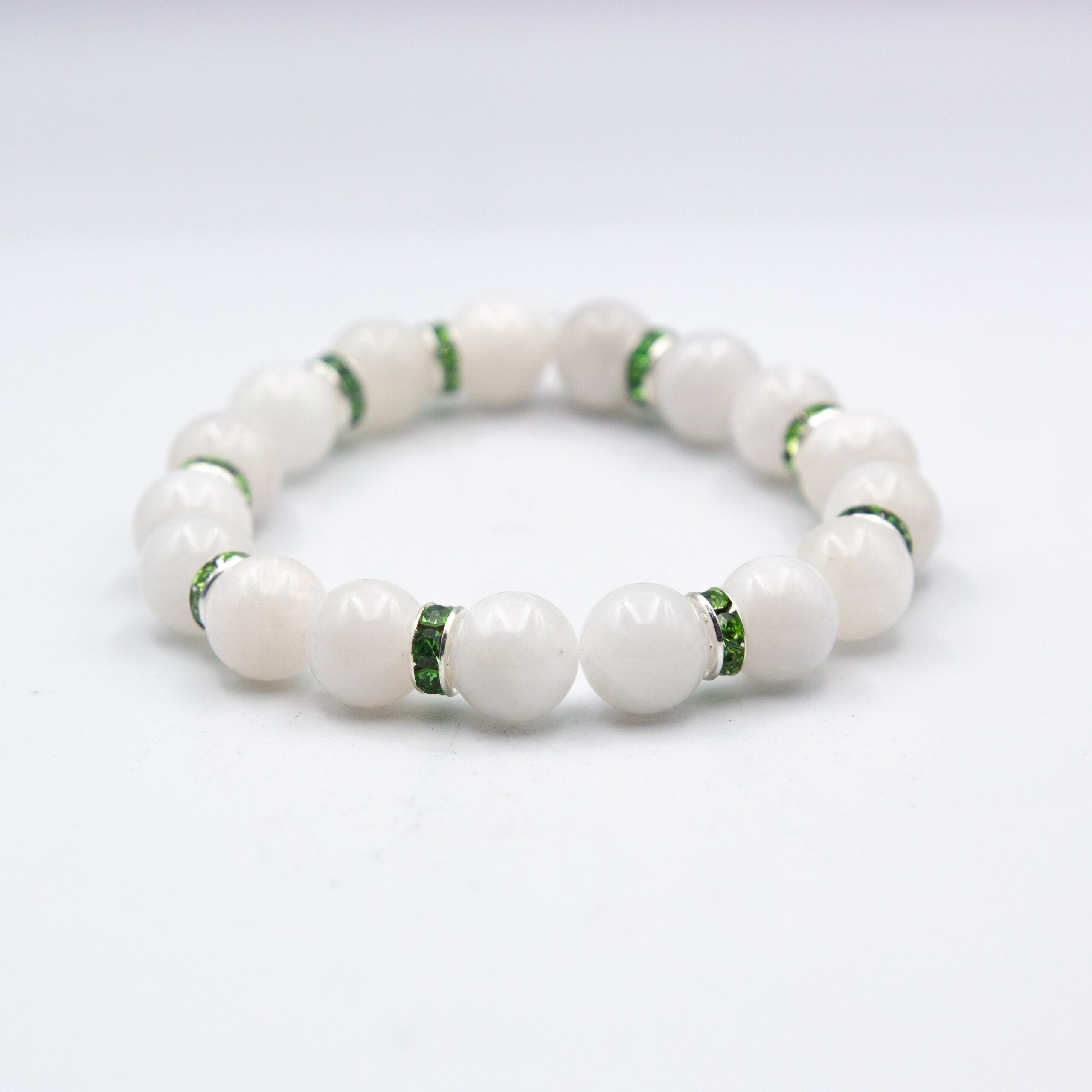
The bedroom is where placement matters most for many people, because it's tied to rest. The traditional aim is calm, comfort, and - in shared bedrooms - connection.
Stones Often Chosen
Amethyst is the most widely recommended bedroom stone, traditionally associated with calm and restful sleep. Moonstone is associated with calm and emotional balance, as covered in our moonstone guide. Rose quartz is associated with love and comfort, and is often placed in pairs in shared bedrooms. Smoky quartz is a quieter, grounding option.
Where Exactly
The nightstand is the classic spot - close enough to see as you wind down. A dresser or bedroom shelf also works. Some people keep a small, smooth tumbled stone under the pillow, though a nightstand is more comfortable and there's no risk of it ending up on the floor.
What to Keep Out
Traditions commonly suggest keeping energising stones - clear quartz, citrine, carnelian, tiger's eye - away from the bed if you find they leave you feeling switched on. This is a matter of personal feel rather than any rule; if a stone helps you feel settled, it belongs there.
An Honest Note on Sleep
Crystals can be part of a calming bedtime routine, but they aren't a treatment for sleep problems. If you're struggling with sleep over a long period, it's worth talking to a doctor alongside anything else that helps you relax.
Home Office and Study
With more people working from home, the desk has become one of the most popular spots for crystals. The traditional aim is focus, clarity, confidence, and steady energy through long working hours.
Stones Often Chosen
Clear quartz is associated with mental clarity and amplifying focus. Fluorite is traditionally linked to concentration and organised thinking. Tiger's eye is associated with confidence and motivation - useful before calls or presentations. Black tourmaline is commonly placed beside computers and routers, a tradition linked to its genuine piezoelectric properties.
Where Exactly
A corner of the desk within your line of sight, beside the monitor, or next to the notebook you plan with. A small stone you can pick up and hold during a difficult call is also popular - many people keep a tumbled stone or bracelet on the desk for this reason.
Practical Tip
Desks mean coffee cups, water bottles, and elbows. Keep crystals away from drink zones and the edge of the desk. Porous stones in particular don't recover well from a coffee spill.
Kitchen and Dining Area
The kitchen is often overlooked, but traditionally it's associated with nourishment, abundance, and family - especially where meals are shared.
Stones Often Chosen
Citrine is associated with abundance and warmth. Carnelian is associated with energy and vitality. Green aventurine is associated with harmony and growth, and is often placed near herbs or plants.
Where Exactly
The dining table is usually the best spot - a single stone in a small dish as a centrepiece. In the kitchen itself, an open shelf or windowsill away from the hob works well.
Practical Tip
Kitchens are harsh on crystals. Heat from the stove and oven, steam from cooking, and airborne grease all build up on surfaces over time. Keep stones well away from the hob and sink, and never place crystals in food, drinking water, or cooking utensils - some minerals shouldn't be ingested, and many stones are treated or dyed.
Bathroom
A bathroom can be a lovely place for a calming stone, turning an everyday routine into a small moment of rest. But it's also the most hostile room in the house for crystals, because of steam, water, and cleaning products.
Stones That Can Handle It
Only hard, non-porous stones belong in a bathroom: clear quartz, amethyst, and rose quartz are the usual choices. Keep even these away from direct shower spray.
Stones to Keep Out
Selenite, halite, malachite, lapis lazuli, turquoise, pyrite, and angelite should never go in a bathroom. Humidity and splashes can dull, pit, tarnish, or even dissolve them. Crystal jewellery - elastic bracelets and silver pendants - shouldn't be stored there either, as steam weakens elastic and tarnishes silver.
Where Exactly
A high shelf or the back of a vanity counter, away from the shower and basin splash zone, and away from where cleaning sprays are used.
Children's Rooms
Many parents like to place a calming stone in a child's room, and that can be a gentle, comforting touch - with safety firmly first.
Choose large pieces, not small ones. Small tumbled stones and loose beads are a genuine choking hazard for babies and toddlers. A single larger piece - a palm-sized rose quartz or amethyst - is much safer than a scattering of small stones.
Place them out of reach. A high shelf is better than a bedside table for young children.
Avoid fragile and mineral-sensitive stones. Clusters with sharp points, and minerals like malachite that shouldn't be handled heavily or put in mouths, belong in adult spaces only.
The same caution applies to pets: curious cats knock things off shelves, and dogs chew small objects. Keep crystals where animals can't reach them.
Meditation or Quiet Corner
If you have a spot for meditation, reflection, or simply sitting quietly with a cup of tea, it's the ideal place to group crystals more deliberately.
Stones Often Chosen
Clear quartz as a centrepiece, amethyst for calm, moonstone for intuition, and labradorite for reflection. Many people rotate stones here depending on what they're focusing on.
Where Exactly
A low table or tray beside a floor cushion or chair, with stones arranged neatly rather than crowded. A Himalayan singing bowl fits naturally here too - many people use it to begin and end a quiet session, and to cleanse their stones with sound.
Keep It Simple
A quiet corner works because it's uncluttered. Two or three stones, a cushion, and perhaps a bowl or candle are usually enough. Crowding the space tends to undo the calm you're creating.
A Note on Prayer Spaces

Many homes in the UAE have a dedicated prayer area or a corner kept for prayer. It's worth approaching this space differently from the rest of the home. Many Muslims prefer to keep the prayer area simple and free of decorative objects so that nothing distracts from prayer, and views on the use of stones or charms for protection vary among scholars. If this matters to you, a trusted religious scholar is the right person to ask.
In practice, the item most people keep here is a tasbih for dhikr - used as prayer beads rather than as a crystal display. If you have a crystal tasbih, a clean shelf or small box in the prayer area is a natural place for it. Our guide on how to use tasbih prayer beads covers the 33 and 99 bead formats.
Balcony, Garden and Windowsills
These spots look inviting - light catches crystals beautifully - but in the UAE they're the most likely places for stones to be damaged.
Windowsills. Direct sun through glass gradually fades amethyst, rose quartz, citrine, smoky quartz, fluorite, and several other stones. A windowsill that gets no direct sun, or only brief morning light, is fine. Hard, colour-stable stones like clear quartz, black tourmaline, and tiger's eye tolerate sunny sills much better.
Balconies. Heat, direct sun, dust, sand, and humidity make balconies a poor permanent home for most crystals. A balcony can be used briefly - for example, for a moonlight ritual on a dry night, as covered in our guide to charging crystals in moonlight - but stones shouldn't live there.
Garden and plant pots. Hard stones placed in plant pots are a popular touch, and many people bury chipped or retired crystals in the soil. Avoid soluble or soft stones, which will break down with watering.
Feng Shui Placement, Briefly
Many crystal placement guides draw on feng shui, the Chinese tradition of arranging spaces to support the flow of energy, or chi. Its best-known tool is the bagua map, which divides a home into nine areas, each linked to a part of life. Standing at the main door looking in, the far-left area is traditionally associated with wealth, the far-right with love and relationships, and the centre with health and balance.
Using that map, people commonly place citrine or green aventurine in the wealth corner, a pair of rose quartz stones in the relationship corner, and grounding stones like smoky quartz near the centre. Indian vastu shastra offers a different directional system with its own recommendations. If a system like this appeals to you, it can add a satisfying structure to your placements. If not, matching stones to each room's purpose - as this guide does - works perfectly well on its own.
Places to Avoid in a UAE Home

These are the spots that most often damage crystals in local homes:
Direct sun through windows. The strongest source of fading. Afternoon sun through large west-facing windows is especially intense.
On top of or next to AC vents. Constant airflow brings dust, and some units drip condensation. Cold air blowing directly on a stone that also gets afternoon sun puts it through repeated temperature swings.
Near the stove, oven, or kettle. Heat and steam, plus grease that settles on stones and is hard to clean off porous surfaces.
In the bathroom or laundry area. Humidity, water, and cleaning products.
On a balcony or outdoor ledge. Heat, sun, sand, dust, and wind.
On the edges of shelves in high-traffic areas. Doors, bags, children, and pets all knock things off. Set stones back from the edge, especially fragile clusters.
In reach of babies, toddlers, and pets. Small stones are a choking hazard.
How Many Crystals Per Room?
When thinking about where to place crystals in your home, it's tempting to fill every surface. There's no fixed rule, but one to three stones per room is a sensible guide. A single, well-placed piece is often more effective - visually and as a reminder - than a crowded collection. If you have a large collection, rotate stones between rooms rather than displaying everything at once; it keeps each piece noticeable and gives you a natural moment to cleanse them.
If you do combine several stones in one space, choose stones that support the same purpose rather than a mix of competing intentions - something we explain in our guide to crystal combinations.
Keeping Placed Crystals Fresh
Crystals on display gather dust, especially in the UAE. Wipe them gently with a soft, dry cloth every week or two. Many people also cleanse their stones periodically - with sound, smoke, or by resting them on a larger quartz piece - particularly stones placed in busy areas like the entrance.
Crystals for Your Home
If you're choosing stones for specific rooms, our raw healing crystals are well suited to shelves, tables, and entrances - including our raw Ganesh Himal smoky quartz, a durable choice for an entryway. For desks and nightstands, a bracelet can double as a placed stone when you're not wearing it, such as our black tourmaline or moonstone bracelets. For prayer areas, browse our crystal tasbih collection.
Not sure which stone suits which room?
Tell us about the room and what you want it to feel like, and we'll suggest a stone that fits.
Questions People Ask
Where should I place crystals in my home?
Match each stone to the room's purpose and place it where you'll see it: protective stones like black tourmaline by the entrance, calming stones like amethyst and moonstone in the bedroom, warm stones like citrine in the living room, and focus stones like clear quartz on a desk.
What crystal should I put by my front door?
Black tourmaline is the most traditional choice for protection. Smoky quartz is a gentler grounding option, and obsidian is also used. Choose a sturdy stone and set it back from the edge of the table.
Which crystals are best for the bedroom?
Amethyst, moonstone, rose quartz, and smoky quartz are traditionally chosen for calm and rest. Some people keep energising stones like clear quartz and citrine out of the bedroom if they find them stimulating.
Can I put crystals in the bathroom?
Only hard, non-porous stones such as clear quartz, amethyst, and rose quartz, placed away from shower spray. Keep selenite, halite, malachite, lapis lazuli, turquoise, and pyrite out, as moisture can damage them.
Is it okay to put crystals on a windowsill?
Only if it doesn't get strong direct sun, or if the stones are colour-stable like clear quartz and black tourmaline. Amethyst, rose quartz, citrine, smoky quartz, and fluorite can fade in direct sunlight.
How many crystals should I have in one room?
One to three is a sensible guide. A single well-placed stone is often more meaningful than a crowded display, and rotating stones between rooms keeps each one noticeable.
Are crystals safe around children and pets?
Small stones and loose beads are a choking hazard, so choose larger pieces and place them out of reach. Avoid fragile clusters and minerals like malachite in children's rooms.
Do I need to follow feng shui to place crystals?
No. Feng shui and vastu offer structured systems some people enjoy, but simply matching stones to each room's purpose and placing them where you'll see them works well on its own.