

Crystals for Sleep: What Helps, and Where to Actually Put Them
An honest guide to the stones people keep by the bed, what genuinely helps you sleep, and exactly where to place crystals in your bedroom, including where not to.
Many people keep a crystal by the bed: an amethyst on the nightstand, a smooth moonstone in the hand, a rose quartz on the windowsill. If you've searched for crystals for sleep, you've probably found long lists of stones that promise to "cure insomnia" or "banish nightmares". This guide is different. We'll be honest about what crystals can and can't do, share the habits that genuinely help people sleep, and then get practical: which stones are traditionally chosen for rest, exactly where to put them in your bedroom, where not to put them, and how to keep children and your stones safe. Think of it as a calmer bedroom, not a miracle cure.
Crystals for Sleep: The Short Answer
The stones most often used for sleep are amethyst, moonstone, rose quartz, smoky quartz, sodalite and selenite, all traditionally associated with calm and rest. The best place for them is on your nightstand or bedside shelf, within sight and reach but not in your bed. Only small, smooth tumbled stones should ever go under a pillow, and never in a child's bed. In crystal traditions, energising stones such as citrine, carnelian and pyrite are usually kept out of the bedroom. Crystals aren't a proven sleep treatment, but many people find that a calm bedtime routine built around a favourite stone helps them wind down. If you have ongoing trouble sleeping, it's worth speaking to a doctor.
An Honest Word: What Crystals Can and Can't Do
There's no scientific evidence that crystals change sleep on their own. No stone sends out a signal that makes you drowsy, and none can treat insomnia, sleep apnoea, anxiety or any other condition.
So why do so many people keep them by the bed? Because routines and cues matter for sleep. Doing the same calming thing each night, like dimming the lights, putting the phone away and holding a smooth, cool stone while you slow your breathing, tells your mind the day is over. A crystal can become a pleasant, physical part of that wind-down. Many people also simply find a beautiful stone on the nightstand makes the bedroom feel calmer. That's a genuine benefit, and it's an honest one.
The traditional meanings in this guide are beliefs held in crystal practice, not medical claims. If sleep problems last more than a few weeks, you snore loudly or wake gasping, or tiredness affects your day, please see a doctor.
What Actually Helps You Sleep
Before choosing a stone, it's worth getting the basics right. These everyday habits make the biggest difference for most people:
- A regular schedule: going to bed and waking up at roughly the same time every day, including weekends.
- A cool, dark, quiet room: set the AC to a comfortable cool temperature, use blackout curtains, and keep noise down.
- Screens away: put the phone down and away from the bed for the last half hour or so before sleep.
- Watch late caffeine: coffee, karak, strong tea and energy drinks in the afternoon or evening can keep you awake.
- Lighter late meals: a heavy dinner close to bedtime can make it harder to settle.
- Daylight and movement: morning light and some activity during the day help your body clock.
- A wind-down routine: the same calm steps every night, which is where crystals can play a part.
The Best Crystals for Sleep, Traditionally
These are the stones most commonly chosen for the bedroom in crystal traditions, with what people associate them with, and one practical note each.
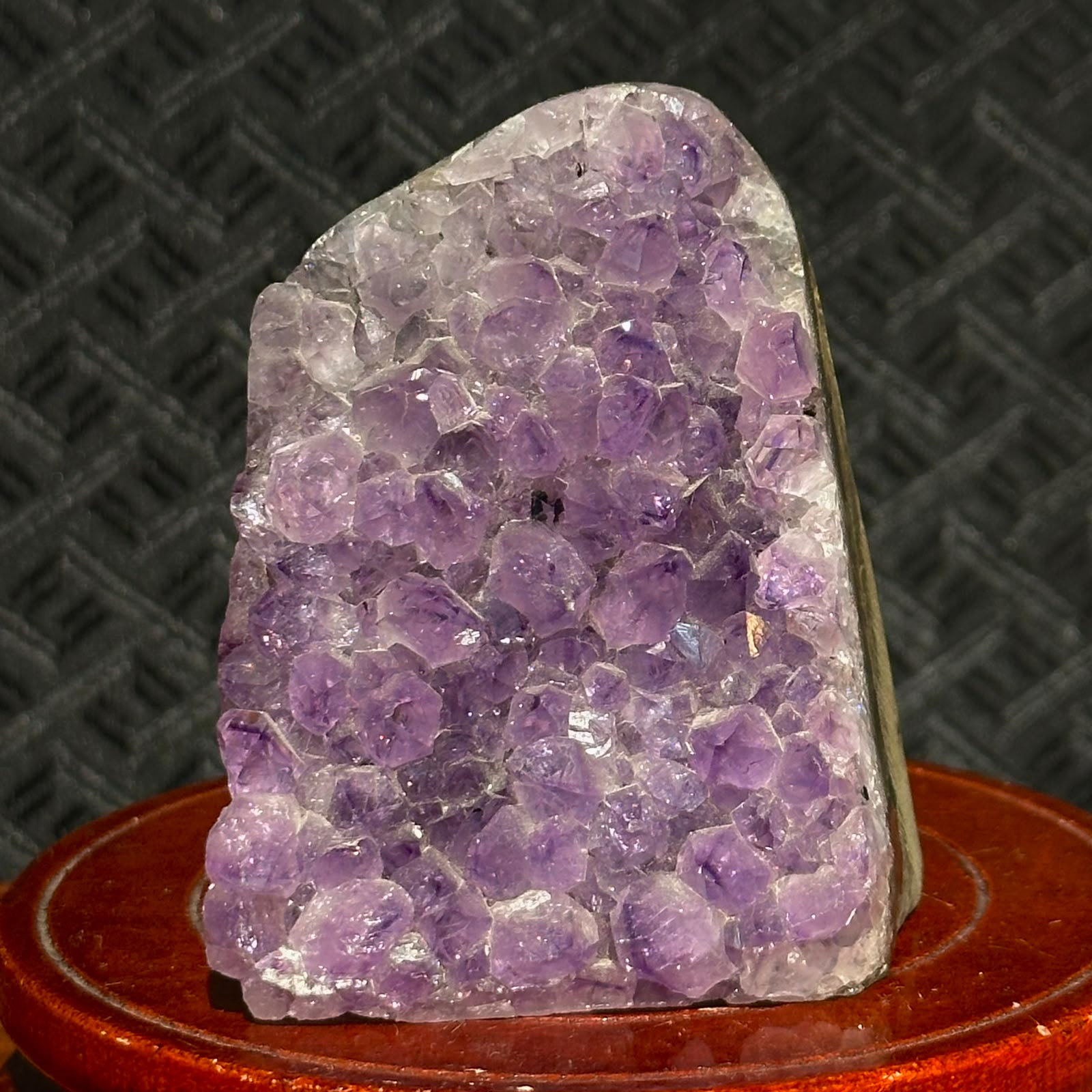
1. Amethyst
The most popular crystal for sleep. Amethyst is traditionally associated with calm, quiet thoughts and peaceful rest, and its soft purple is naturally soothing to look at. A small cluster or raw piece on the nightstand is the classic choice. Practical note: amethyst can fade in strong sunlight, so keep it away from sunny windows. Read more in our amethyst meaning and benefits guide.
2. Moonstone
Linked with the moon, night-time and gentle cycles, moonstone is often chosen by people who want a softer, more peaceful evening routine. Its milky glow suits a bedside dish. See our moonstone guide.
3. Rose quartz
Associated with comfort, warmth and emotional calm, rose quartz is a favourite for shared bedrooms and couples. Like amethyst, it can fade in strong sun. Our rose quartz guide has more.
4. Smoky quartz
Traditionally described as grounding, smoky quartz is often chosen by people whose minds race at night. It's tough and easy to care for. See our smoky quartz guide.
5. Sodalite
A deep blue stone associated with calm thinking and quieting mental chatter. It's a good choice for a bedside dish or as a stone to hold during slow breathing.
6. Selenite
Selenite is traditionally associated with peace and "clearing" a space, and a selenite tower or slab looks lovely on a bedside shelf. One firm rule: selenite dissolves in water, so keep it well away from drinks, humidifiers and AC condensation. Our selenite guide explains why.
Also popular: lepidolite and howlite
Lepidolite, a lilac mica, and howlite, a white stone with grey veins, are also widely used for calm and rest. Lepidolite contains lithium in its mineral structure, but holding it doesn't release lithium into the body, and it has no medicinal effect.
Stones to Keep Out of the Bedroom
In crystal traditions, some stones are considered "energising" and are usually kept in living areas or offices rather than by the bed:
- Citrine: associated with energy, motivation and drive.
- Carnelian: traditionally a stone of action and vitality.
- Pyrite: linked with ambition and willpower; better on a desk.
- Large clear quartz clusters: often described as amplifying energy, so many people prefer them in a living room or meditation corner.
- Tiger's eye: associated with confidence and alertness.
If you love one of these stones and it makes you feel calm, you don't need to remove it. These are traditions, not rules. For other rooms, see our room-by-room crystal placement guide.
Where to Put Crystals in Your Bedroom

Here's every common spot, ranked from best to least practical.
1. The nightstand or bedside table (best)
This is the ideal spot: close enough to see as you wind down and to hold if you like, but not in the bed. A small cluster, a raw piece or a dish of tumbled stones all work. Keep it a little away from the edge so it can't be knocked onto the floor at night.
2. A bedside shelf or headboard ledge
Good for slightly larger pieces or a selenite tower. Make sure anything above the bed is stable and can't fall.
3. The dresser or a shelf facing the bed
A larger display piece, such as an amethyst cluster or crystal tree, looks lovely where you can see it from bed. This is also the best place for bigger or heavier stones.
4. Under the bed
Some traditions place a grounding stone, such as smoky quartz, under the bed or at its corners. It's harmless, but stones under beds tend to get forgotten, dusty and kicked. If you do this, put it in a small box or pouch.
5. Near the door
In crystal practice, a protective stone by the bedroom door, such as black tourmaline or smoky quartz, is sometimes used to "guard" the room. Keep it off the floor where people walk.
6. The windowsill (with caution)
A windowsill is pretty, but in the UAE, strong sun can fade amethyst and rose quartz, and AC condensation on glass can damage selenite, lapis and pyrite. If you use a windowsill, choose a north-facing or shaded one, or a sun-tolerant stone like smoky quartz.
Should You Put a Crystal Under Your Pillow?
It's a popular idea, but it comes with practical downsides. If you'd like to try it:
- Only use small, smooth, tumbled stones, never raw pieces, points or clusters, which can be sharp and uncomfortable.
- Put it inside the pillowcase, or in a small pouch, so it doesn't end up under your cheek or on the floor.
- Avoid fragile or water-sensitive stones such as selenite, which can scratch or flake.
- Never in a child's bed or cot: small stones are a choking hazard.
Honestly, most people find the nightstand works just as well and is far more comfortable.
How Many Crystals?
Fewer is better in a bedroom. One to three stones is plenty: for example an amethyst on the nightstand, and perhaps a rose quartz or moonstone on the dresser. A crowded bedroom full of crystals can look cluttered, which works against the calm you're aiming for.
A 5-Minute Bedtime Ritual
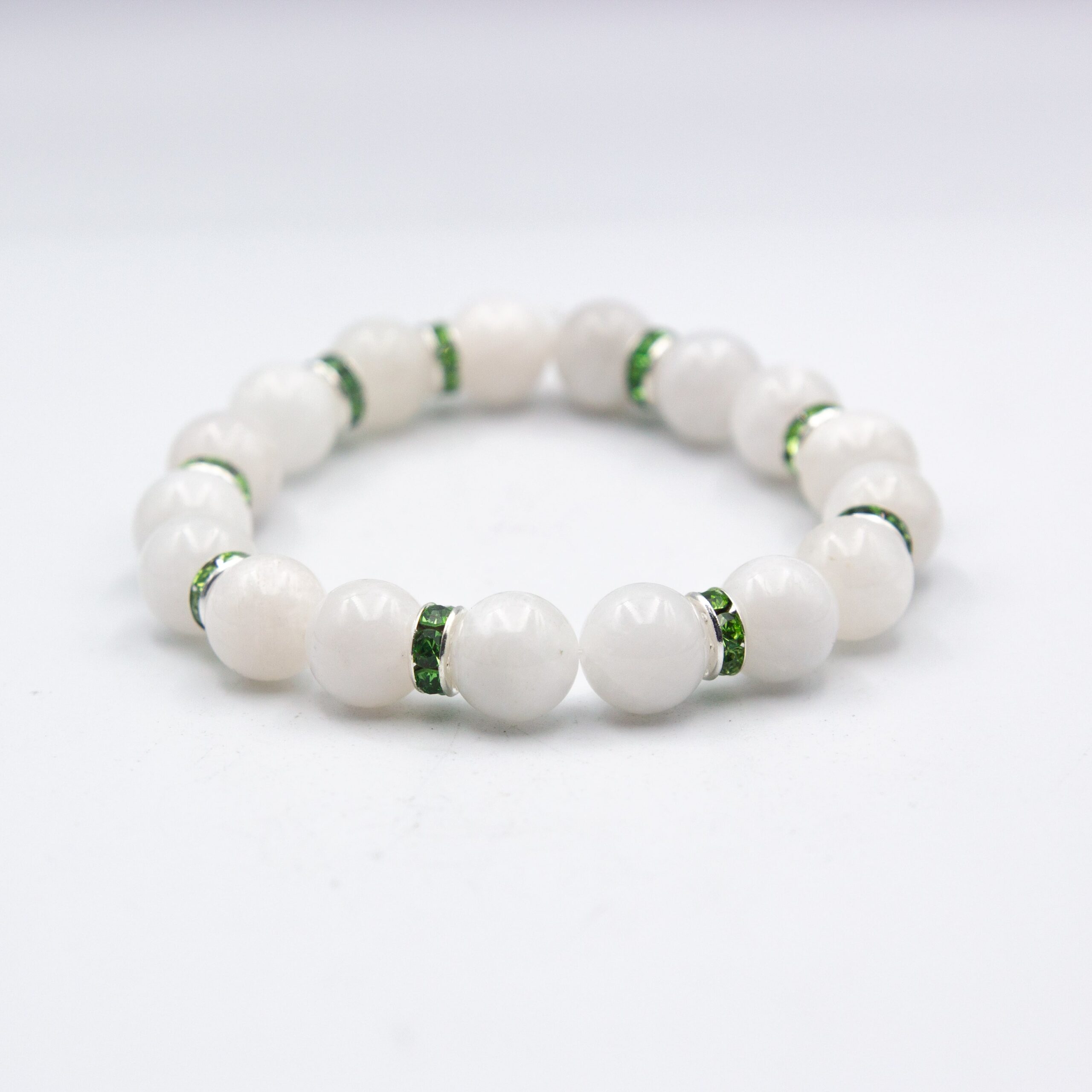
This simple routine combines good sleep habits with a crystal. Adapt it to suit you.
- Dim the lights and put the phone away, face down, out of reach.
- Take off your jewellery and place your crystal bracelet or pendant on the nightstand.
- Sit on the edge of the bed and hold your stone. Notice its weight and coolness.
- Breathe slowly: in through the nose for a count of four, out slowly for a count of six. Repeat about ten times.
- Think of one thing from the day you're grateful for, or say a short prayer or dhikr if that's part of your night.
- Place the stone on the nightstand and lie down.
Some people also play a singing bowl gently for a minute or two as part of winding down; our singing bowl beginner's guide shows how.
Safety: Children, Pets and Jewellery
- Children: keep tumbled stones and small pieces out of reach of young children, and never put stones in cots or children's beds. They're a choking hazard.
- Pets: cats and dogs can knock stones off shelves or try to chew them; place them securely.
- Necklaces: take pendants and necklaces off before sleeping, as cords and chains can tangle around the neck.
- Bracelets: sleeping in an elastic bracelet stretches the cord faster; it's best to take it off.
- No crystal water by the bed: don't drink water that has had stones in it. Some minerals aren't safe in water, and some dissolve or release substances.
- Raw and sharp pieces: keep points and raw clusters where you won't knock a hand or foot on them in the dark.
UAE Bedrooms: Sun, AC and Humidity

- Sunny windows: amethyst and rose quartz can fade in strong, direct sun. Keep them on nightstands, not sunny sills.
- AC condensation: water forming on cold glass or near vents can damage selenite, pyrite and lapis lazuli. Keep these stones on dry surfaces.
- Dust: AC circulates dust, so wipe your stones with a soft, dry cloth every week or two.
- Humidity: in coastal cities, store water-sensitive stones with a silica gel sachet during humid months.
Our crystals in UAE heat guide covers this in detail.
Calming Stones at Alpine Crystals
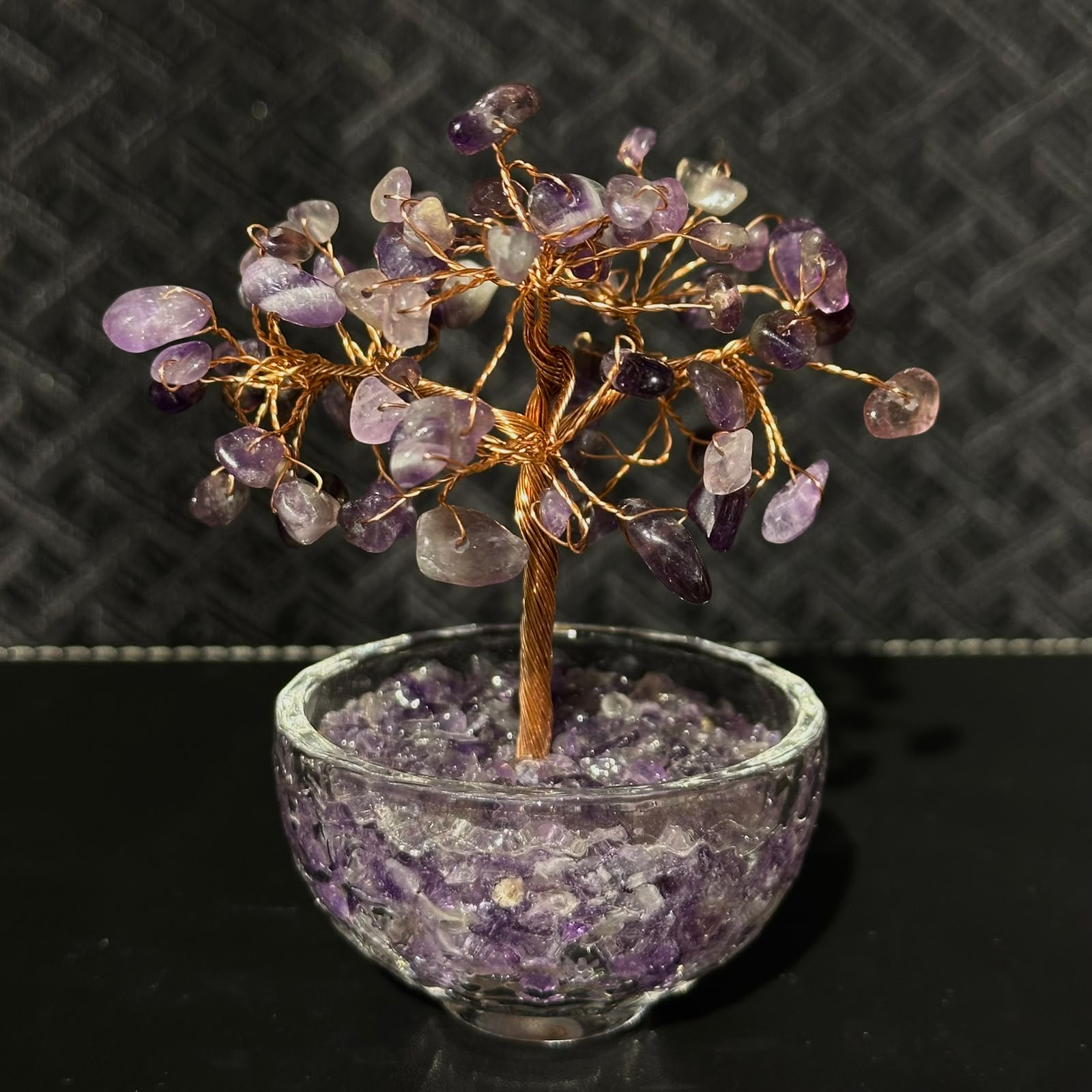
- For the nightstand: the Natural Raw Amethyst Crystal Stone and the Natural Lavender Amethyst Cluster.
- For the dresser: the Amethyst Crystal Tree and the Ganesh Himal Natural Smoky Quartz (486g).
- To wear in the evening (and take off at bedtime): the Natural Moonstone Bracelet 10mm, the Natural Rose Quartz Bracelet 8mm, the Natural Sodalite Bracelet 10mm, and the Amethyst and Rose Quartz Bracelet 8mm.
Browse our raw crystals and natural stones and crystals collection. Stock changes, so check each product page for availability. Orders over AED 150 ship free within the UAE, usually in 1–2 days.
Choosing a stone for your bedroom?
Tell us about your space, a nightstand, a shelf or a shared room, and we'll suggest a calm piece in the right size.
Bringing It Together
Crystals won't fix sleep on their own, but they can be a lovely part of a calmer bedroom and a steady bedtime routine. Start with the habits that matter most: a regular schedule, a cool, dark room, and screens away. Then choose one to three calming stones, such as amethyst, moonstone, rose quartz or smoky quartz, and place them on your nightstand or dresser rather than in your bed. Keep small stones away from children, take your jewellery off at night, and protect sun- and water-sensitive stones from UAE sunlight and AC condensation. And if sleep problems persist, talk to a doctor.
Questions People Ask
What is the best crystal for sleep?
Amethyst is the most popular choice, followed by moonstone, rose quartz, smoky quartz, sodalite and selenite. These are traditionally associated with calm and rest; there's no scientific evidence that any crystal improves sleep on its own.
Where should I put crystals in my bedroom?
The nightstand is the best spot: visible and within reach, but not in the bed. A dresser or stable shelf suits larger pieces. Avoid sunny windowsills for amethyst and rose quartz, and damp spots for selenite and pyrite.
Can I sleep with a crystal under my pillow?
Only small, smooth tumbled stones, ideally in a pouch inside the pillowcase. Never use raw or pointed pieces, and never put stones in a child's bed, because they're a choking hazard.
Which crystals should not be in the bedroom?
In crystal traditions, energising stones such as citrine, carnelian, pyrite, tiger's eye and large clear quartz clusters are usually kept in living areas or offices. These are traditions, not rules.
Do crystals really help you sleep?
There's no scientific evidence that crystals affect sleep directly. Many people find a crystal helpful as part of a calming bedtime routine, which can help them wind down. Ongoing sleep problems should be checked by a doctor.
Should I sleep wearing a crystal bracelet or necklace?
It's better to take them off. Necklaces can tangle around the neck, and sleeping in elastic bracelets stretches the cord. Place them on your nightstand instead.
Is amethyst safe in a bedroom?
Yes. Just keep it out of strong direct sun, which can fade its colour, and keep raw or pointed pieces where they won't be knocked in the dark.
How many crystals should I keep in my bedroom?
One to three is plenty. Fewer stones keep the room calm and uncluttered.