

Hematite: Meaning, Benefits and How to Spot Magnetic Imitations
Silver-black and mirror-bright, with a secret red streak. Here's what hematite really is, what people believe it does, and why the strongly magnetic "hematite" sold everywhere usually isn't hematite at all.
Hematite is one of the most recognisable stones in crystal jewellery: heavy, silver-grey to black, and polished to a mirror shine. It's especially popular in men's bracelets and is widely described as a grounding, protective stone. But there's a catch most buyers never hear about. Many of the shiny "hematite" beads sold in markets and online snap together like fridge magnets, and real hematite doesn't do that. This guide explains what hematite actually is, the surprising red colour hidden inside it, its meaning and the benefits people traditionally associate with it, and five simple tests to tell natural hematite from the magnetic imitations that dominate the market.
Hematite Meaning and Benefits: The Short Answer
Hematite is natural iron oxide (Fe2O3), the main ore of iron and the mineral that makes Mars look red. Polished, it's metallic silver-black, but when scratched or powdered it's rusty red, which is how it got its name, from the Greek for "blood". In crystal traditions, hematite's meaning centres on grounding, strength, focus and protection. The hematite benefits people describe include feeling steady, practical and less scattered; these are traditional beliefs, not proven effects. Most importantly for buyers: natural hematite is only very weakly magnetic, barely noticeable with an ordinary magnet. Beads that strongly attract magnets or each other are almost always man-made "magnetic hematite" or "hematine", not natural hematite.
What Hematite Actually Is
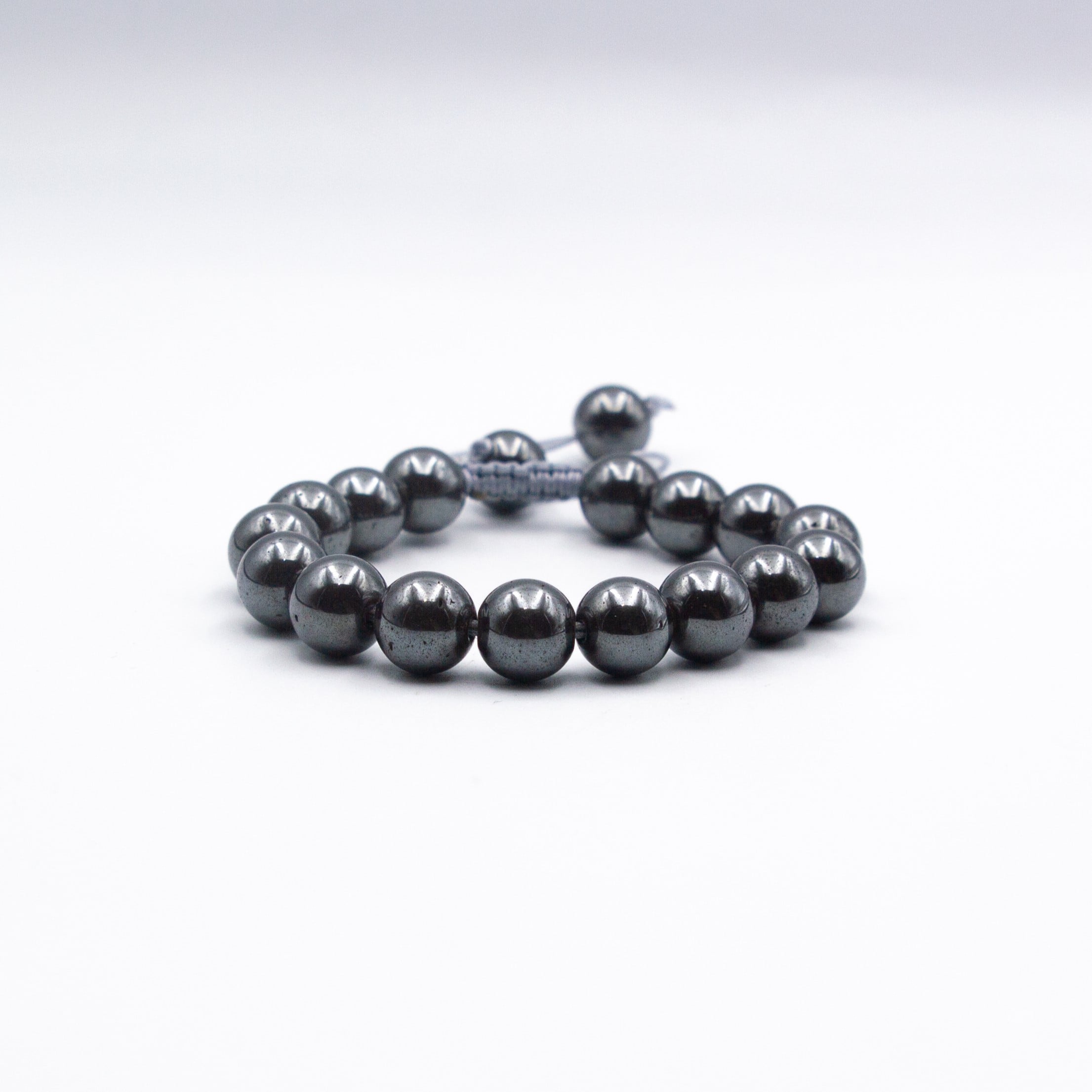
Hematite is one of the most common minerals on Earth and the world's most important source of iron. It forms in many environments: in sedimentary layers, in volcanic rocks, and where iron-rich water has evaporated. It comes in several very different forms, which is why it can look like a mirror-bright gem in one piece and a dull red rock in another.
| Property | Natural hematite |
|---|---|
| Chemistry | Iron oxide, Fe2O3 |
| Hardness (Mohs) | 5.5 to 6.5 |
| Weight (specific gravity) | About 5.3: very heavy for its size |
| Colour | Steel-grey to black when polished; red to reddish-brown in earthy forms |
| Lustre | Metallic to dull |
| Streak | Red to reddish-brown, always |
| Magnetism | Very weak; usually not noticeable with an ordinary magnet |
| Tenacity | Brittle: can crack or chip if dropped |
| Forms | Specular (sparkly), kidney ore (rounded), "iron rose" rosettes, and earthy red ochre |
The different forms of hematite
- Specular hematite: made of tiny mirror-like flakes that sparkle like glitter.
- Kidney ore: rounded, bubbly masses, often cut and polished into the beads used in jewellery.
- Iron rose: flat crystals arranged in a rose-like rosette, much prized by collectors.
- Red ochre: soft, earthy hematite powder, one of humanity's oldest pigments.
The Red Secret: Why It's Called the Blood Stone
Here's the most surprising thing about hematite: however silver-black a polished bead looks, the mineral itself is red. Scratch it, grind it, or rub it across rough unglazed porcelain, and it leaves a rusty red to reddish-brown mark. The name comes from the Greek haima, meaning blood, and polishing workshops that cut hematite traditionally saw their water turn red.
That red streak is the single most useful fact for buyers, because the common imitations don't share it. We'll come back to it in the tests below.
Hematite Through History
Hematite has been used by people for longer than almost any other mineral. Ground into red ochre, it was used in some of the earliest known cave paintings and in prehistoric burials. Ancient Egyptians and Babylonians carved hematite into seals, amulets and beads, and in Roman times it was associated with Mars, the god of war, partly because of its blood-red powder. It has also been used for centuries as a polishing compound, known as jeweller's rouge.
Today, hematite is still the world's most important iron ore, so in a sense it's in the steel of buildings, cars and tools all around us. It's also the reason the planet Mars is red: its surface dust is rich in iron oxides, including hematite.
Is Hematite Magnetic?
This is the question that matters most, and the answer surprises many people: natural hematite is only very weakly magnetic. Because of the way its iron atoms are arranged, their magnetic effects almost cancel out. In everyday terms, a fridge magnet won't stick to a natural hematite bead, and the beads won't snap together. Some natural pieces contain small amounts of magnetite, a strongly magnetic iron mineral, so you may feel a slight pull, but never a strong snap.
So what is "magnetic hematite"?
The strongly magnetic beads sold as "magnetic hematite", "hematine", "hemalyke" or simply "hematite" are usually man-made. They're typically made from powdered iron oxides and other metals, such as barium or strontium ferrite, pressed into shape, fired like a ceramic, polished, and then magnetised. They look very similar to polished hematite, which is why they're so often sold under its name.
That doesn't make them worthless: they're inexpensive and popular as fashion jewellery. But they aren't natural stone, and they should be sold honestly as synthetic or magnetic beads, not as natural hematite.
5 Tests to Spot Magnetic Imitations
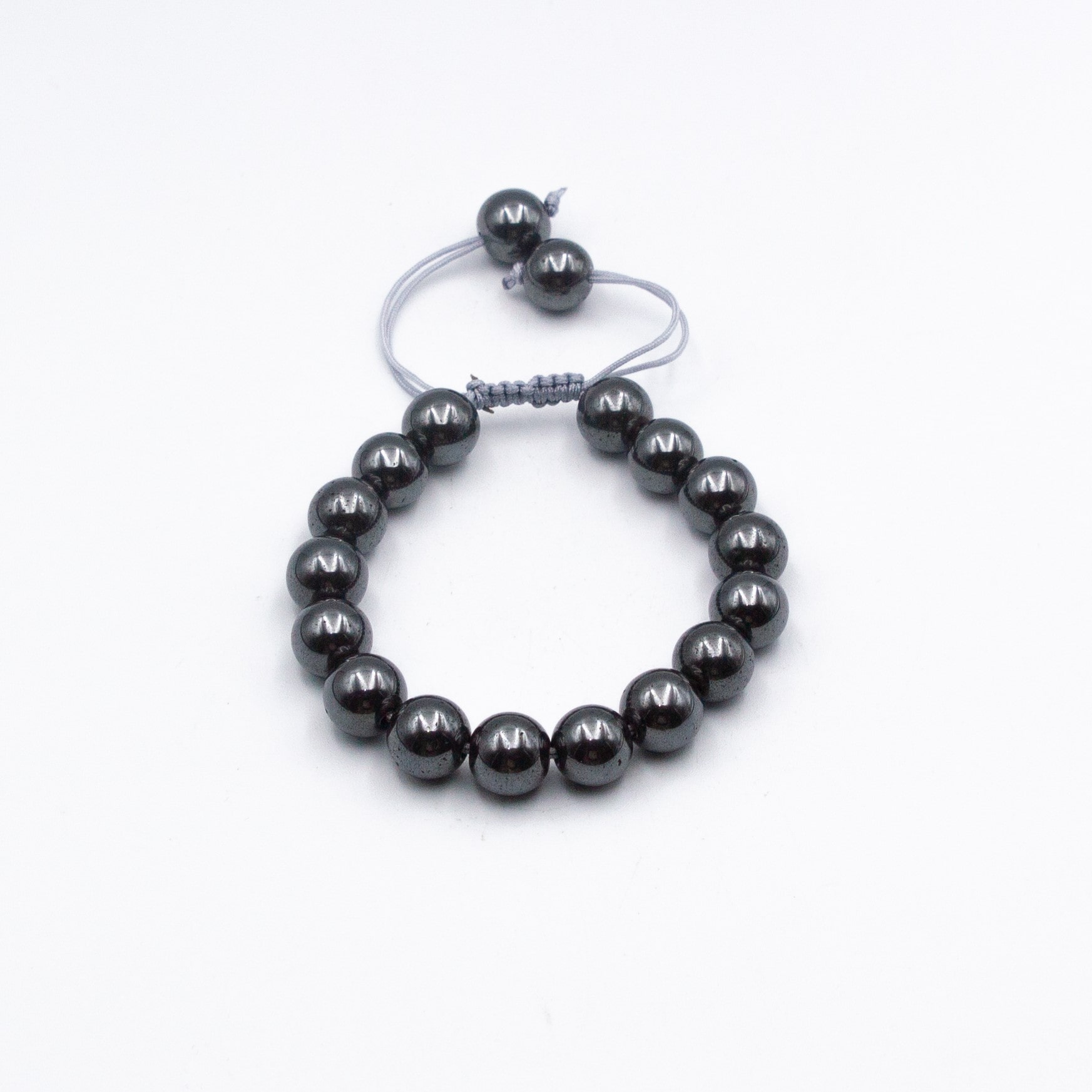
| Test | Natural hematite | Magnetic imitation ("hematine") |
|---|---|---|
| 1. Magnet | No noticeable pull, or only a very slight one | Strongly attracts magnets, keys and paper clips |
| 2. Beads together | Loose beads don't stick to each other | Beads snap together and form chains |
| 3. Streak | Red to reddish-brown on unglazed tile | Usually grey to black |
| 4. Chips and wear | Chips show the same dark grey material; scratches look reddish | Chips may show a different-looking core or a coating wearing off |
| 5. Price and description | Described as natural hematite; priced as a stone | Often very cheap, or sold as "magnetic therapy" jewellery |
The magnet test
Hold a fridge magnet or a small strong magnet against the bracelet. If the beads jump to the magnet or the magnet sticks firmly, you're almost certainly holding a magnetic imitation.
The streak test
Find the rough, unglazed ring on the bottom of a ceramic mug or the back of a white tile, and rub a bead firmly across it in an inconspicuous spot. A red or reddish-brown line means natural hematite. A grey or black line suggests an imitation. This is the most reliable home test, though it can leave a tiny mark on the bead, so try it on a spare bead or a hidden area.
Check the description
Be cautious of any "hematite" jewellery that is sold mainly for its magnetism, especially with health promises. Natural hematite isn't significantly magnetic, so a product sold as both "natural hematite" and "strongly magnetic" has a contradiction built in.
Hematite Meaning Today
In modern crystal traditions, hematite meaning centres on a few themes, many of them linked to its heaviness and its iron content:
- Grounding: its weight and dark colour make it one of the classic "grounding" stones, associated with feeling steady and present.
- Strength and courage: its ancient link with iron, blood and Mars connects it with determination and resilience.
- Focus and practicality: associated with clear, organised thinking and getting things done.
- Protection: its mirror-like polish is traditionally said to reflect away negativity.
Hematite is most often linked with the root chakra, and in Western crystal astrology with Aries and Aquarius. Some people believe that a hematite bead breaking means it has "absorbed" negative energy; in practical terms, hematite is brittle and breaks if it's dropped or knocked. As always, these associations vary between traditions.
Hematite Benefits: Traditional Beliefs
The hematite benefits below are what people traditionally associate with the stone. They're beliefs and personal experiences, not scientifically proven effects, and hematite is not a substitute for medical or professional advice. Claims that hematite or magnetic jewellery improves blood, circulation or pain are not supported by good evidence.
1. Feeling grounded
The most common reason people wear hematite is to feel more steady and "down to earth", especially during busy, scattered or stressful periods.
2. Focus and getting organised
Hematite is linked with practical, clear thinking. Some people wear it while studying, working through a demanding project or making important decisions.
3. Strength and determination
Its ancient link with iron and Mars makes it a symbol of resilience, popular with people facing challenges or working towards demanding goals.
4. Protection
In crystal traditions, hematite is often grouped with black tourmaline, obsidian and onyx as a protective stone. Our obsidian vs black tourmaline guide compares two of its closest companions.
Who Hematite Suits
- People who feel scattered or overstretched and are drawn to its grounding symbolism.
- Students and professionals who want a focus stone to wear during busy periods.
- Men and minimalists: its metallic, gunmetal look is one of the most masculine crystal styles there is.
- People who like weight: hematite's heaviness feels substantial on the wrist.
- Collectors interested in a mineral with a remarkable history, from cave paintings to Mars.
Hematite is less ideal if you want a light, delicate bracelet, or one you'll never take off; it's heavy and brittle, so it needs a little care. If you want a sturdier black stone for daily wear, black onyx or black tourmaline are tougher choices.
Magnetic Jewellery: Safety Notes
Natural hematite isn't strongly magnetic, but if you own magnetic imitation jewellery, keep these points in mind:
- Medical devices: people with pacemakers, implanted defibrillators, insulin pumps or other implanted devices should check with their doctor before wearing magnetic jewellery, and keep strong magnets away from the device.
- Children: keep magnetic beads well away from young children. Swallowing more than one magnet can cause serious internal injury, and it's a medical emergency.
- Cards and electronics: keep strong magnetic jewellery away from bank cards, hotel key cards and mechanical watches.
- Health claims: claims that magnetic bracelets treat pain, arthritis or circulation are not supported by good scientific evidence.
How to Wear Hematite
As a bracelet
A hematite bead bracelet is the most popular way to wear it. It pairs well with tiger's eye, black onyx, lava stone and clear quartz. Our crystal bracelet combinations guide has more ideas, and our bracelet size guide helps you get the fit right; heavier beads need a comfortable, not tight, fit.
As a ring
Hematite rings are popular, but avoid solid hematite bands for daily wear: they're brittle and can crack if knocked, and they can't be resized. A hematite stone set in metal is more practical.
On a desk
A polished hematite piece makes a heavy, satisfying "worry stone" or paperweight for a work desk.
Caring for Hematite
- Avoid drops and knocks: hematite is brittle and can crack or split, especially on tiled and marble floors.
- Keep it dry: wipe with a soft, dry cloth. Brief contact with water is fine, but don't soak it, and dry it straight away. Long exposure to moisture and salt water can dull its polish over time.
- No harsh chemicals: avoid household cleaners, chlorine and ultrasonic cleaners.
- Perfume and attar: apply them before your jewellery to protect the polish.
- Storage: keep it in a soft pouch, away from harder stones that could scratch its mirror finish.
- Heat: don't leave bracelets in a hot car, where cords and elastic weaken. Our crystals in UAE heat guide explains more.
Hematite and Alternatives at Alpine Crystals
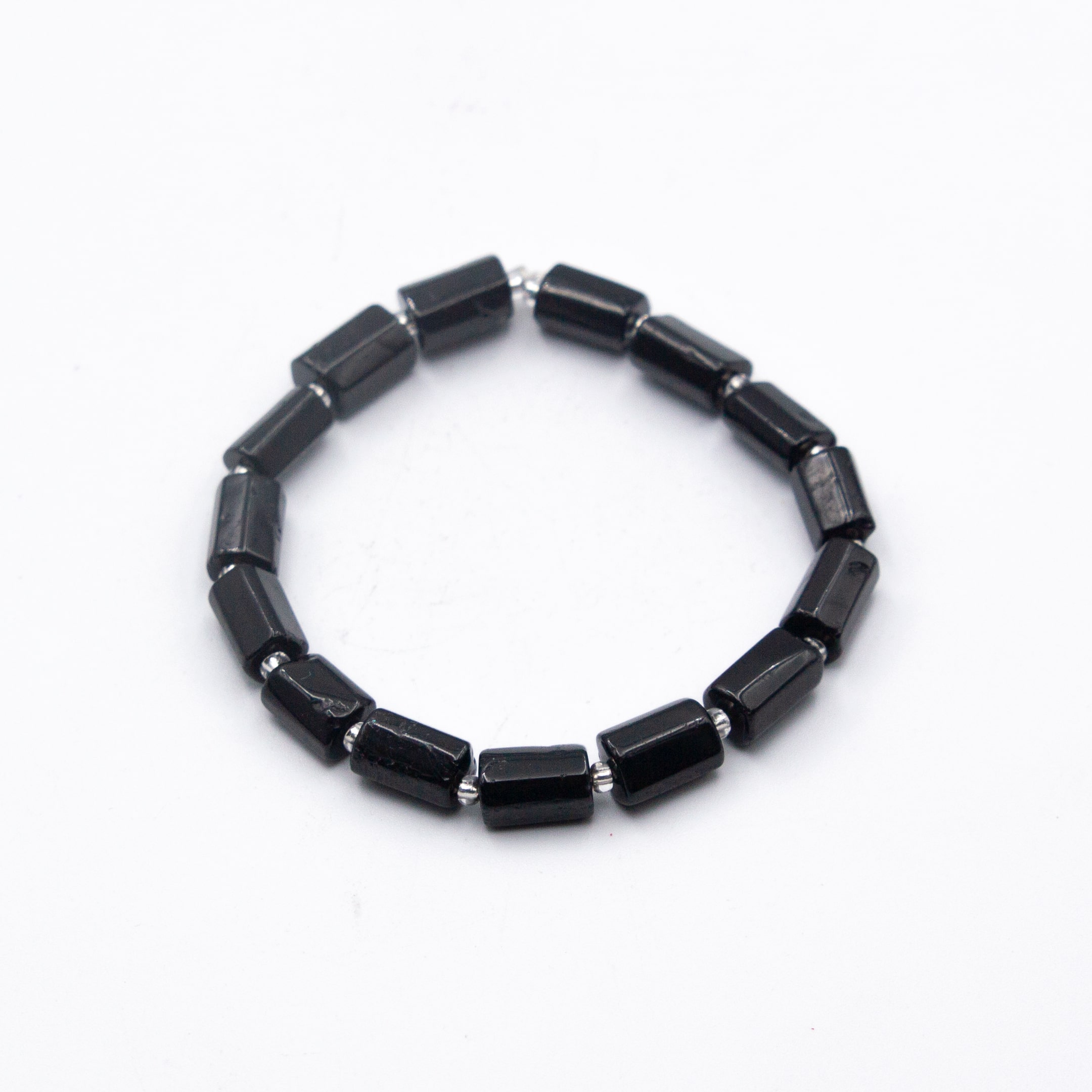
Our Natural Hematite Crystal Bracelet (10mm) sells out quickly, so check the product page for current stock, or message us on WhatsApp and we'll tell you when it's available. These stones share hematite's dark, grounding character:
- Black Tourmaline Square Bead Bracelet 8mm: the classic natural grounding and protection stone. Read our black tourmaline guide.
- Black Tourmaline and Green Aventurine Bracelet 8mm: grounding with a touch of green.
- Black Obsidian Tasbih and Black Onyx Tasbih (10mm, 33 beads): deep, glossy black prayer beads.
Browse more in our crystal bracelets. Delivery across the UAE usually takes 1–2 days: free on orders of AED 150 and above, AED 20 below, with cash on delivery available.
Test it yourself at our Dubai store
Prefer to see and handle a stone before you buy? Visit our store at BurJuman Mall, 2nd Floor, Mankhool, Dubai. Black stones like hematite, onyx and tourmaline look very similar in photos, and in person you can feel the weight and compare them side by side.
Looking for natural hematite?
Message us to check current stock, or tell us what you like about hematite and we'll suggest the closest natural alternative.
The Bottom Line
Hematite is natural iron oxide: silver-black when polished, blood-red when powdered, and one of the oldest minerals people have ever used. In crystal traditions, its meaning centres on grounding, strength, focus and protection, and many people wear it to feel steadier during busy times. The key thing to remember when buying is that real hematite is barely magnetic and leaves a red streak. Strongly magnetic "hematite" is almost always a man-made imitation. That's fine as inexpensive fashion jewellery, as long as it's sold honestly, but if you want the natural stone, test before you trust.
Questions People Ask
Is real hematite magnetic?
Only very weakly. An ordinary magnet usually won't stick to natural hematite, and the beads won't snap together. Strongly magnetic "hematite" is almost always a man-made imitation, often called hematine or magnetic hematite.
What is the meaning of hematite?
In crystal traditions, hematite represents grounding, strength, focus and protection. These meanings are traditional beliefs rather than proven effects.
What are the benefits of hematite?
People traditionally associate hematite with feeling grounded, focused, determined and protected. There's no scientific evidence for these benefits, and claims that hematite or magnetic jewellery improves blood, circulation or pain aren't supported by good evidence.
How can I tell if hematite is real?
Use a magnet: real hematite has little or no pull. Then rub it on unglazed porcelain: real hematite leaves a red to reddish-brown streak, while imitations usually leave a grey or black one.
Why did my hematite bracelet break?
Hematite is brittle and can crack or split if it's dropped or knocked, especially on hard floors. Some people believe a breaking stone has absorbed negative energy; physically, it's a knock or impact.
Can hematite get wet?
Brief contact is fine, but don't soak it, and dry it straight away. Long exposure to moisture and salt water can dull the polish.
Is magnetic jewellery safe?
For most people, yes, but anyone with a pacemaker, defibrillator, insulin pump or other implanted device should check with their doctor first. Keep magnetic beads away from young children, because swallowing more than one magnet is dangerous.
Why is hematite called the blood stone?
Its name comes from the Greek word for blood, because the mineral is red when powdered or scratched, even though polished hematite looks silver-black.