

What Are the Benefits of Himalayan Singing Bowls?
Everything you need to know about Himalayan singing bowls — how they work, the science and tradition behind them, and how to bring authentic sound healing into your daily life in the UAE.
In today’s fast-paced UAE lifestyle — from Dubai traffic to back-to-back meetings in Abu Dhabi — more people are searching for natural, non-invasive ways to reset their minds and bodies. One of the oldest and most effective tools for this is the Himalayan singing bowl. Used for centuries in meditation, prayer, and healing practices across Nepal and Tibet, these hand-hammered metal bowls produce a deep, resonant tone that calms the nervous system almost instantly.
At Alpine Crystals UAE, we source our authentic handcrafted singing bowls directly from artisans in Nepal, so every bowl carries the same tradition and craftsmanship used for generations. In this guide, we’ll walk through exactly what a singing bowl is, the real, tangible benefits of Himalayan singing bowls, and how to start using one in your own meditation or sound healing practice — whether you’re a complete beginner or looking to deepen an existing practice.
We’ll also cover how singing bowls compare to other instruments like the Himalayan gong, how to choose an authentic, well-crafted bowl, and simple daily rituals you can start using right away — so by the end of this guide, you’ll have everything you need to bring this centuries-old practice into your own home.
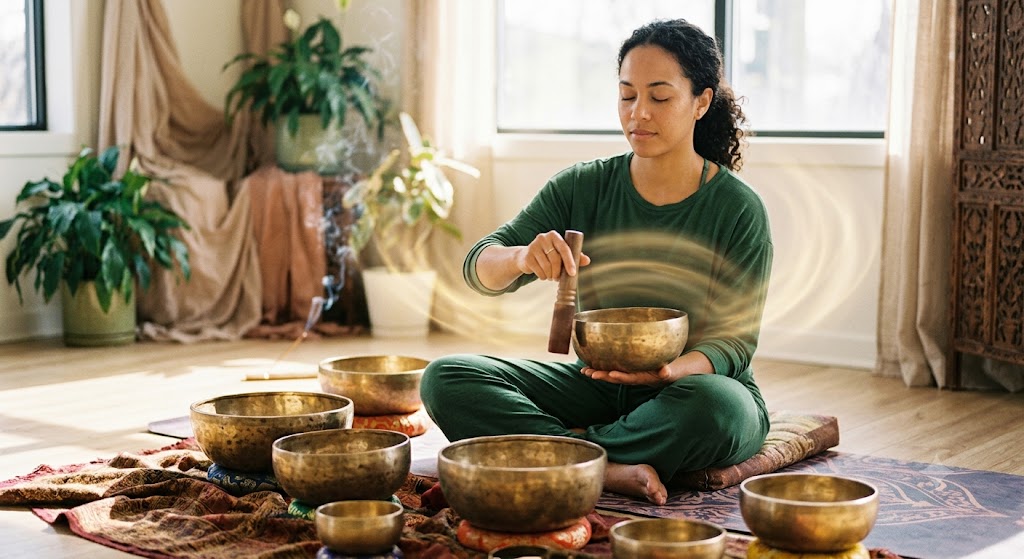
What Is a Himalayan Singing Bowl?
A Himalayan singing bowl is a type of standing bell — meaning it sits with its rim facing upward rather than hanging like a typical bell. When struck or circled with a wooden mallet, it produces a rich, sustained tone made up of several overlapping frequencies at once. This layered hum is what gives singing bowls their name and their unmistakable, meditative sound.
Traditional bowls are handcrafted using a blend of metals — often referred to as the seven sacred metals — including copper, tin, iron, zinc, and small traces of precious metals such as gold and silver. Each bowl is hand-hammered by skilled Nepalese artisans, which means no two bowls sound exactly alike. This individuality is part of what makes an authentic, handmade singing bowl so different from a mass-produced, machine-stamped alternative — the imperfections in hammering are exactly what create the bowl’s complex, layered voice.
Did you know? A genuine handcrafted singing bowl will almost never produce a single flat note. Instead, striking or circling the rim reveals multiple overtones at once — this is the “singing” effect that gives the instrument its name.
The History and Origin of Singing Bowls
The use of metal bowls for ceremonial and healing purposes stretches back centuries across the Himalayan region, particularly in Nepal, Tibet, and parts of Northern India. In monasteries, bowls were — and still are — used to mark the beginning and end of meditation sessions, to accompany chanting, and to create a sacred atmosphere during prayer and ritual.
Beyond monastic life, bowls also played a role in traditional healing practices, where sound and vibration were understood as tools for restoring balance within the body. This concept lines up closely with what practitioners today refer to as energy healing and chakra balancing — the belief that specific frequencies can help clear blockages and restore harmony to the body’s subtle energy systems.
Today, that same tradition continues through artisans in the Himalayan foothills who still hand-hammer each bowl using techniques passed down through generations — the same process behind every bowl in our Himalayan singing bowl collection.
How a Singing Bowl Is Traditionally Made
The process of making an authentic Himalayan singing bowl is slow and deliberate, often taking a skilled artisan several days from start to finish. It typically follows these stages:
- Metal blending. The chosen metals are melted and combined in careful proportions to achieve the desired tonal character.
- Casting. The molten alloy is poured and shaped into a rough disc.
- Hand-hammering. The disc is heated and hammered repeatedly — sometimes thousands of times — to slowly form the bowl shape while developing its unique surface texture.
- Tuning by ear. Rather than using digital tuning equipment, artisans listen carefully as they adjust the thickness of the metal until the bowl “sings” the way they intend.
- Finishing. The bowl is cleaned, polished, and sometimes engraved with symbolic designs such as mandalas, Buddha figures, or the endless knot.
This hands-on process is exactly why two bowls of a similar size can still sound noticeably different from one another — and why collectors and practitioners often describe finding “their” bowl as something that feels more like a discovery than a purchase.
The Science Behind Singing Bowl Sound Healing
While singing bowls have ancient spiritual roots, modern wellness research has started to explore why their sound has such a noticeable effect on the body and mind.
Sound, Vibration, and the Human Body
The human body is composed largely of water, which conducts vibration extremely well. When a singing bowl is played, the sound waves it produces are absorbed physically as well as heard — many people describe “feeling” the sound rather than simply hearing it. This full-body sensation is central to what practitioners call vibrational sound therapy.
Brainwave Entrainment
Brainwave entrainment refers to the way external rhythmic stimuli — like sound — can influence the brain’s electrical activity to gradually match that rhythm. The slow, layered tones of a singing bowl are particularly effective at guiding the brain from a busy, alert state (beta waves) into a calmer, more meditative state (alpha and theta waves), which is why sessions often feel deeply relaxing within just a few minutes.
The Nervous System Response
Our autonomic nervous system has two main branches: the sympathetic system (“fight or flight”) and the parasympathetic system (“rest and digest”). Chronic stress — a common reality for many professionals across Dubai and Abu Dhabi — keeps the body locked in sympathetic dominance, which can affect sleep, digestion, and overall mood. The steady, low-frequency vibration of a singing bowl is thought to help activate the parasympathetic response, effectively signaling the body that it’s safe to relax.
Why Overtones Matter
Unlike a single musical note, a singing bowl produces a spread of overtones — higher frequencies layered on top of the fundamental tone. Sound therapists often point to this complexity as part of what makes gong and singing bowl sound so immersive compared to simpler, single-frequency tools. Rather than asking the brain to track one repetitive sound, the layered overtones give the mind a rich, shifting texture to settle into, which many people find easier to stay present with during longer meditation sessions.
A Complementary, Not Clinical, Practice
It’s worth being clear that sound healing with singing bowls is considered a complementary wellness practice rather than a medical treatment. The relaxation response it supports is well documented in general stress-reduction research, but singing bowl sessions themselves are not a substitute for medical or psychological care. Most practitioners recommend using singing bowl practice alongside — not instead of — any treatment plan recommended by a healthcare provider.
12 Benefits of Himalayan Singing Bowls
Here’s a detailed look at the most commonly reported benefits of Himalayan singing bowls, drawn from both traditional practice and the growing body of modern sound therapy work.
Deep Stress and Anxiety Relief
The slow, sustained vibrations help quiet mental chatter almost immediately, making singing bowls one of the simplest tools for managing everyday stress and anxious thinking.
Better Sleep Quality
A short session before bed helps shift the body out of an alert state, making it a popular addition to nightly wind-down routines for those struggling with restless sleep.
Deeper, Easier Meditation
For beginners who find silent meditation difficult, the bowl’s tone gives the mind something gentle to focus on, making it easier to stay present without forcing the mind blank.
Chakra and Energy Balancing
Different bowl sizes and tones are traditionally associated with different energy centers in the body, supporting a more targeted approach to chakra work.
Emotional Release
Sound often bypasses the analytical mind in a way words can’t. It’s common to experience an unexpected wave of calm — or even tears — during a session, seen as a healthy emotional release.
Improved Focus and Mental Clarity
A short session before work or study can act as a mental reset, clearing clutter and improving concentration for the task ahead.
Muscle Relaxation and Physical Ease
The vibration is thought to help ease physical tension, which is why some practitioners incorporate singing bowls into massage, reiki, or bodywork sessions.
Supports Yoga and Breathwork
Many yoga instructors use a singing bowl to mark the start or end of class, helping students transition smoothly between movement and stillness.
Lower Blood Pressure and Heart Rate
As the body shifts into a more relaxed, parasympathetic state, many people notice a natural easing in heart rate and overall physical tension during a session.
A Calming Ritual for Daily Life
Beyond active healing sessions, simply playing a bowl for a few minutes each morning or evening becomes a grounding ritual that anchors the day.
Group Connection and Shared Calm
Singing bowl and sound bath sessions are often practiced in groups, creating a shared sense of relaxation, connection, and collective calm.
A Meaningful, Beautiful Object
Beyond sound, a handcrafted bowl is a piece of art in its own right — a beautiful addition to a meditation corner, altar, or living space.
Singing Bowls and Chakra Balancing
One of the most popular uses of singing bowls is in chakra healing. According to yogic and Ayurvedic tradition, the body has seven main energy centers, each linked to different physical, emotional, and spiritual functions. Practitioners believe that specific tones can help support and rebalance each one.
| Chakra | Location | Associated With |
|---|---|---|
| Root (Muladhara) | Base of spine | Grounding, safety, stability |
| Sacral (Svadhisthana) | Lower abdomen | Creativity, emotion, flow |
| Solar Plexus (Manipura) | Upper abdomen | Confidence, willpower |
| Heart (Anahata) | Center of chest | Love, compassion, connection |
| Throat (Vishuddha) | Throat | Communication, self-expression |
| Third Eye (Ajna) | Between eyebrows | Intuition, inner wisdom |
| Crown (Sahasrara) | Top of head | Spiritual connection |
During a chakra-focused session, a singing bowl may be placed on or near the body, working from the root chakra upward, or played while the practitioner focuses attention on each energy center in turn. If you’d like to deepen a chakra practice further, many people pair their bowl with seven chakra crystal jewellery for a complete energy-balancing ritual.
A Simple Chakra Sound Sequence
If you’d like to try a basic chakra-balancing session at home, one simple approach is to work upward through the body, spending a minute or two at each point:
- Sit or lie down comfortably, with the bowl resting nearby.
- Play the bowl gently while bringing your attention to the base of your spine (root chakra), breathing slowly.
- Move your attention upward — lower abdomen, upper abdomen, chest, throat, forehead, and finally the crown of the head — playing the bowl softly at each stage.
- Finish with a longer, sustained tone at the crown, then sit quietly for a few minutes to let the whole sequence settle.
There’s no strict rule for timing — the goal is simply to bring calm, focused attention to each part of the body as the sound moves through the space around you.
How to Choose the Right Singing Bowl
Not all singing bowls are made equal, and choosing the right one depends on a few key factors.
1. Size and Tone
Larger bowls generally produce deeper, longer-sustaining tones, while smaller bowls have a brighter, quicker sound. If you’re new to sound healing, a mid-sized bowl (around 300–500 grams) is a versatile place to start — similar in size to our Himalayan Bodhisattva singing bowl.
2. Craftsmanship
Look for visible hand-hammered texture on the surface. This isn’t just decorative — it’s a strong sign the bowl was genuinely handcrafted rather than machine-pressed, and it directly affects the richness of the tone.
3. Sound Quality
A high-quality bowl should produce a rich, layered “singing” tone when circled with the mallet, not a flat, single note. If you’re buying in person, always test the bowl before purchasing.
4. Intended Use
Think about how you’ll use it — personal meditation, chakra work, yoga classes, or space clearing — as this will guide the ideal size and design. Our Endless Knot singing bowl, for example, comes complete with a wooden striker and silk cushion, making it ready to use straight out of the box.
5. Authenticity
Purchase from a trusted, specialized seller who can confirm the bowl’s origin. Every bowl in our singing bowl collection is handcrafted in Nepal and hand-inspected for sound quality before it ships to you anywhere in the UAE.
6. Metal Composition
Traditional bowls are usually made from bronze — a blend of copper and tin — sometimes combined with small amounts of other metals for a fuller tone. Bronze bowls tend to produce a warmer, richer sound with longer sustain, which is why they remain the most sought-after option for serious meditation and sound healing work, compared to simpler brass alternatives that can sound thinner or more metallic.
7. Included Accessories
Most quality singing bowl sets include a wooden mallet (striker) and, in many cases, a silk or cotton cushion. Check exactly what’s included before buying — the right mallet size can make a noticeable difference in how easily you’re able to produce a full, sustained tone, especially as a beginner.
Buying tip: If you’re unsure where to start, a mid-weight bronze bowl with a wooden striker and cushion included — like our Endless Knot singing bowl set — gives you everything you need to begin practicing the same day it arrives.
How to Use a Himalayan Singing Bowl
You don’t need any formal training to start using a singing bowl at home. Here’s a simple step-by-step approach.
- Find a quiet space. A yoga mat, prayer corner, or bedroom works well. Sit comfortably with the bowl resting on a cushion, or flat on your open, non-dominant palm.
- Warm up the bowl. Gently tap the outer rim with the mallet to “wake” the bowl and produce the first tone.
- Begin circling. Before the vibration fades, place the mallet near the rim and circle it slowly and steadily to build the sustained “singing” tone.
- Breathe slowly. Let the sound fill the space around you for several minutes, keeping your attention on the vibration rather than your thoughts.
- Close in silence. Let the final tone fade naturally, then sit quietly for a minute or two before returning to your day.
Quick tip: A gentle rim tap alone (without circling) is perfect for a quick burst of energy clearing — ideal at the start or end of a yoga class, work session, or prayer.
Singing Bowl vs. Gong vs. Crystal Bowl
Singing bowls are often used alongside — or compared to — other sound healing instruments. Understanding the difference can help you decide what best fits your practice.
| Instrument | Sound Character | Best For |
|---|---|---|
| Himalayan Singing Bowl | Layered, sustained hum with multiple overtones | Personal meditation, chakra work, portable use |
| Himalayan Gong | Full-spectrum, immersive wall of sound | Group sound baths, deep full-body immersion |
| Crystal Singing Bowl | Clear, ethereal, higher-pitched tone | Targeted frequency work, higher chakra focus |
Himalayan gongs, by contrast to singing bowls, tend to produce a much larger, more immersive wall of sound — ideal for group healing sessions rather than quiet, personal practice. If you’re curious about incorporating both instruments into your routine, our guide on gongs as powerful sound healing instruments from Nepal explains how the two can complement each other beautifully.
Pairing Singing Bowls With Healing Crystals
Many practitioners enhance their singing bowl sessions by placing crystals directly inside the bowl while it’s played, allowing the sound vibrations and the crystal’s natural energy to work together.
- Clear Quartz — known as the “master healer,” often used to amplify the bowl’s vibrations. Try our Ganesh Himal Clear Quartz, hand-picked from the Himalayas of Nepal.
- Amethyst — pairs naturally with crown and third-eye chakra work during meditation.
- Moonstone — supports emotional balance and intuition; explore our Moonstone crystal bracelet as a wearable companion to your practice.
- Seven Chakra Crystals — ideal for full-body chakra balancing sessions alongside your bowl.
If you’re building out a full home sound and energy healing setup, it’s worth browsing our complete range of raw healing crystals and crystal bracelets, or read more about how each stone works in our post on crystals and their meanings.
Caring for Your Himalayan Singing Bowl
Proper care keeps your bowl sounding rich and beautiful for years, or even generations.
- Handle with clean, dry hands — oils and moisture can dull the metal surface over time.
- Store in a dry place away from high humidity to prevent tarnishing.
- Clean gently with a soft, dry cloth — avoid harsh chemical cleaners.
- Use the included cushion when storing or displaying your bowl to protect the base from scratches.
- Play it regularly — many practitioners believe a bowl’s tone actually deepens and improves the more consistently it’s used.
Who Can Benefit From Singing Bowl Therapy?
Himalayan singing bowl sound healing is accessible to almost anyone, including:
- Meditation practitioners looking to deepen focus and stay present for longer sessions.
- Yoga instructors and studios across Dubai and Abu Dhabi wanting to add a sensory anchor to the start or end of class.
- Busy professionals managing everyday stress, long commutes, or high-pressure work environments.
- Those looking to improve sleep quality through a calming evening wind-down ritual.
- Reiki practitioners and holistic healers wanting to complement existing energy work modalities.
- Parents and caregivers looking for a quiet, screen-free moment of calm during a demanding day.
- Anyone curious about natural, complementary wellness practices, even without prior meditation experience.
As with any complementary wellness tool, singing bowl therapy is generally considered supportive rather than a replacement for medical care. If you have concerns about sound sensitivity or specific health conditions, it’s worth checking with a healthcare provider before intensive sessions.
Singing Bowls in the Modern UAE Wellness Scene
Across Dubai, Abu Dhabi, and Sharjah, sound healing has moved from niche wellness studios into mainstream self-care routines. It’s increasingly common to find singing bowl sessions offered at yoga studios, spas, and wellness retreats throughout the UAE, often alongside other holistic practices like reiki, breathwork, and crystal healing. For residents with busy, high-pressure lifestyles, a few minutes with a singing bowl at home offers a simple, accessible way to bring some of that same calm into daily life without needing to book a studio session every time.
Common Myths About Singing Bowls
As singing bowls have grown in popularity, a few misconceptions have grown alongside them. Here’s a quick, honest look at some of the most common ones.
Myth: A Louder Bowl Is a Better Bowl
Volume has very little to do with quality. What matters far more is the richness and layering of the tone — a smaller, quieter bowl with a complex, multi-layered “singing” sound is generally considered higher quality than a loud but flat-sounding one.
Myth: Older Bowls Are Always More Authentic
While antique bowls certainly have their own charm and history, age alone doesn’t guarantee authenticity or sound quality. A newly handcrafted bowl made using traditional techniques by a skilled Nepalese artisan can be just as authentic — and often easier to source with a verified, ethical origin — as a vintage piece of uncertain history.
Myth: You Need Years of Training to Use One
This is one of the biggest misconceptions. While professional sound healers do pursue specialized training for facilitating group sessions, using a singing bowl for your own personal meditation or relaxation practice requires no formal training at all — just a few minutes of practice to get comfortable with the basic technique.
Myth: Every Bowl Is Tuned to a Specific Chakra
While many sellers market bowls as being tuned to a particular chakra, this is more of a general guideline than an exact science — pitch alone doesn’t precisely map to a specific chakra in any standardized way. What matters more in practice is how the bowl’s tone feels to you and how you choose to use it during meditation or chakra work.
Myth: Singing Bowls Only Work in a Formal Ceremony or Studio
It’s easy to assume you need a dedicated healing space, a trained facilitator, or a group setting to benefit from a singing bowl. In reality, most of the reported benefits — reduced stress, better focus, easier sleep — come from short, simple, personal sessions at home. A quiet bedroom corner or a yoga mat on the living room floor is more than enough to get started.
Simple Daily Rituals With Your Singing Bowl
One of the best things about a Himalayan singing bowl is how easily it fits into everyday life. Here are a few simple rituals to try, depending on the time of day.
Morning: A Gentle Wake-Up Ritual
Before checking your phone or starting your day, sit for two or three minutes and play the bowl slowly. This can help set a calmer, more intentional tone for the day ahead, especially on busy mornings before work or the school run.
Midday: A Quick Focus Reset
If you work from home or have a desk job, a short one-minute singing bowl break between tasks can help clear mental fatigue and refresh concentration — particularly useful during long stretches of screen time.
Evening: A Wind-Down Practice
In the thirty minutes before bed, dim the lights, sit or lie down comfortably, and play the bowl slowly for five to ten minutes. This simple ritual signals to your body that the day is winding down, which many people find helpful for falling asleep more easily.
Weekly: A Deeper Sound Bath at Home
Once a week, set aside twenty to thirty minutes for a longer session. Combine your singing bowl with a favorite crystal, some quiet breathing, and a comfortable space to lie down — a simple way to recreate the feeling of a professional sound bath in your own home.
Mistakes to Avoid as a Beginner
If you’re just starting out with a singing bowl, a few common mistakes can make the practice feel harder than it needs to be.
- Pressing too hard with the mallet. A light, steady touch produces a better tone than forceful pressure, which can actually dampen the sound.
- Moving the mallet too quickly. Slow, even circles around the rim allow the tone to build gradually rather than sounding rushed or uneven.
- Expecting instant results. Like meditation itself, the calming effects of a singing bowl practice tend to deepen with consistency rather than a single session.
- Buying based on looks alone. A beautifully engraved bowl is a lovely bonus, but sound quality and craftsmanship should always come first.
- Skipping the warm-up tap. Circling the mallet immediately, without first “waking” the bowl with a gentle tap, often produces a weaker, less resonant tone.
Frequently Asked Questions
What are the main benefits of Himalayan singing bowls?
Himalayan singing bowls are widely used for stress relief, better sleep, deeper meditation, chakra balancing, improved focus, and emotional release, thanks to the calming effect of their layered sound vibrations on the nervous system.
How long should I play a singing bowl for?
Most sessions last between 5 and 20 minutes. Even a short 2–3 minute practice before meditation, work, or sleep can be beneficial.
Can I use a singing bowl every day?
Yes. Many people incorporate a short daily singing bowl practice into their morning or evening routine as part of meditation, prayer, or simple wind-down time.
How do I know if a singing bowl is authentic?
Authentic, handcrafted Himalayan singing bowls typically show visible hammer marks and produce a rich, multi-layered “singing” tone rather than a flat, single note. Buying from a trusted, specialized seller with clear sourcing information is the best way to ensure authenticity.
What’s the difference between a singing bowl and a gong?
A singing bowl produces a focused, sustained hum ideal for personal meditation and chakra work, while a gong produces a much larger, immersive wall of sound better suited to group sound bath sessions. Read more in our guide to Himalayan gongs.
Can singing bowls help with chakra balancing?
Yes. Different bowl sizes and tones are traditionally associated with different chakras, and practitioners often use a bowl during meditation or body layouts to support energy balancing from the root to the crown chakra.
Do I need any training to use a singing bowl?
No formal training is required to begin. While professional sound healers often pursue certification, anyone can start a simple singing bowl practice at home with a little patience.
Where can I buy an authentic Himalayan singing bowl in the UAE?
You can shop our full range of handmade, authentic Himalayan singing bowls, sourced directly from artisans in Nepal, with delivery across Dubai, Abu Dhabi, Sharjah, and the wider UAE.
Final Thoughts
Whether you’re looking to ease everyday stress, sleep better, deepen a meditation practice, or simply bring a moment of stillness into a busy day, the benefits of Himalayan singing bowls make them one of the simplest and most rewarding wellness tools you can own. Rooted in centuries of tradition and backed by a growing understanding of how sound affects the nervous system, a genuine handcrafted bowl is as much a spiritual companion as it is a healing instrument.
Ready to start your own sound healing journey? Explore our full collection of authentic Himalayan singing bowls, pair your practice with raw healing crystals, or read our related guide on the healing power of Himalayan gongs to build out a complete home sound therapy practice.
However you choose to begin, remember that consistency matters far more than perfection. A few honest minutes with your bowl each day will teach you more about its rhythm, tone, and effect on your own body than any guide ever could — including this one. Start small, stay curious, and let the sound do the rest.