

How to Clean a Tibetan Singing Bowl Without Ruining Its Sound
The safe method, the mistakes that actually change how a bowl sounds, and why less cleaning is usually the right amount.
Searching how to clean a singing bowl usually means you've noticed dust, fingerprints, or a bit of tarnish building up and want it gone — reasonable enough. The part most cleaning guides skip is the actual risk involved: the same surface texture and metal composition that gives a hand-hammered singing bowl its rich, layered tone can be genuinely altered by the wrong cleaning method. This guide covers the safe way to clean a singing bowl, exactly what to avoid, and why doing less is usually the better choice.

Why You Actually Need to Be Careful Cleaning a Singing Bowl
A genuine hand-hammered singing bowl isn't a smooth, uniform object the way a stainless steel bowl in your kitchen is. Its surface carries the actual physical record of the hammering process that shaped it — countless tiny overlapping strikes, each one leaving a microscopic variation in thickness and texture across the metal. Those variations are exactly what allow the bowl to vibrate at several slightly different frequencies at once, which is the physical basis for the layered, "singing" tone the whole category is named for.
This means cleaning a singing bowl isn't quite like cleaning ordinary metal cookware. Anything that removes material from the surface — aggressive polishing, abrasive scrubbing, harsh chemical treatments — has the potential to smooth away some of that hammered texture, and with it, some of the tonal complexity that makes the bowl worth having in the first place. Understanding this is really the whole point of this guide: know what's actually at risk before you reach for a cleaning product.
What Makes This Different From Cleaning Regular Metal Objects
Most cleaning advice you'll find online for brass, copper, or bronze objects is written with decorative items or cookware in mind — things where the only real consideration is appearance. A singing bowl is a musical instrument first, and its function depends directly on the physical condition of its surface, not just how it looks. This is the key distinction worth keeping in mind throughout this entire guide: every cleaning decision should be weighed against whether it risks the bowl's sound, not just whether it makes the bowl shinier.
How Machine-Made Bowls Differ in This Regard
It's worth a brief mention that this concern applies specifically to genuinely hand-hammered bowls. Machine-stamped bowls, being manufactured to a much more uniform thickness and surface finish from the start, are somewhat less sensitive to this particular risk, simply because there's less fine surface texture to lose in the first place. That said, the safe cleaning method in this guide works well for either type, and it's the more cautious approach regardless of which kind of bowl you own. We've covered the broader differences between the two production methods in our handmade versus machine-made comparison, if you're not sure which type your own bowl is.
What Not to Do When Cleaning a Singing Bowl
Before the safe method, it's worth being direct about what to avoid, since these mistakes are the ones people actually regret.
Avoid Harsh Metal Polishes and Chemical Dips
Commercial silver or brass polish, and especially chemical "instant" tarnish-removing dips, are formulated to strip away tarnish aggressively and quickly. On a singing bowl, this can also strip away some of the natural surface patina and fine texture built up over years of use, changing both the look and, in some cases, the subtle tonal character of the bowl. What looks like a quick fix can permanently alter something that took years to develop. Many of these products are also formulated with fairly strong chemicals designed for flat, uniform surfaces like flatware or picture frames, not the deliberately irregular, textured surface of a hand-hammered instrument.
Avoid Abrasive Scrubbing
Steel wool, stiff wire brushes, or any genuinely abrasive scouring pad can physically smooth out the fine hammer marks on the surface. Since those marks are directly tied to the bowl's layered tone, aggressive scrubbing is one of the more direct ways to actually change how a bowl sounds, not just how it looks. Even seemingly mild abrasives, like a rough sponge intended for kitchen use, are harder on this kind of surface than they'd be on ordinary cookware, precisely because the fine texture being removed is functional rather than purely cosmetic.
Avoid Ultrasonic Jewellery Cleaners
These use rapid vibration to shake dirt loose, which sounds convenient but is genuinely risky for a hand-hammered piece. The intense, sustained vibration can worsen tiny existing stress points in the metal from the original hammering process, something that isn't visible immediately but can affect the bowl's structural integrity and tone over repeated use. This risk is specific to genuinely hand-worked metal — the same equipment is often perfectly fine for solid, uniformly cast jewellery, which doesn't carry the same internal stress pattern.
Avoid Fully Submerging or Soaking the Bowl
Unlike a piece of jewellery, a singing bowl doesn't benefit from a long soak. Prolonged water exposure can encourage tarnish to develop unevenly once the bowl dries, and water trapped in any seams, especially on bowls with additional decorative elements, can cause problems that aren't obvious until much later. If a bowl includes any wood, fabric, or other non-metal decorative elements, submersion risks damaging those materials too, well beyond whatever happens to the metal itself.
Avoid Sudden Temperature Changes
Cleaning with hot water and then rinsing with cold, or vice versa, creates rapid expansion and contraction in the metal. This is a smaller risk for metal than it would be for a stone or crystal object, but it's still worth avoiding as a matter of general good practice, particularly for larger, heavier bowls. Simply using lukewarm water consistently throughout any cleaning process, rather than switching temperatures partway through, avoids this risk entirely without any real inconvenience.
Avoid Cleaning Immediately Before an Important Session
This is a smaller, more practical point: if you're planning to use your bowl for a particularly important session — a class you're teaching, a significant personal practice — avoid cleaning it, even with the safe method, immediately beforehand. Give the bowl time to fully dry and settle after any cleaning, ideally at least a day, rather than playing it while any residual dampness might still be present in seams or textured areas.
How to Clean a Singing Bowl Safely, Step by Step
Here's the actual safe method, and it's genuinely simpler than most of what gets recommended online. This is the process worth following for the vast majority of cleaning needs, and it applies whether you're maintaining a bowl you play daily or simply dusting one kept mostly on display.
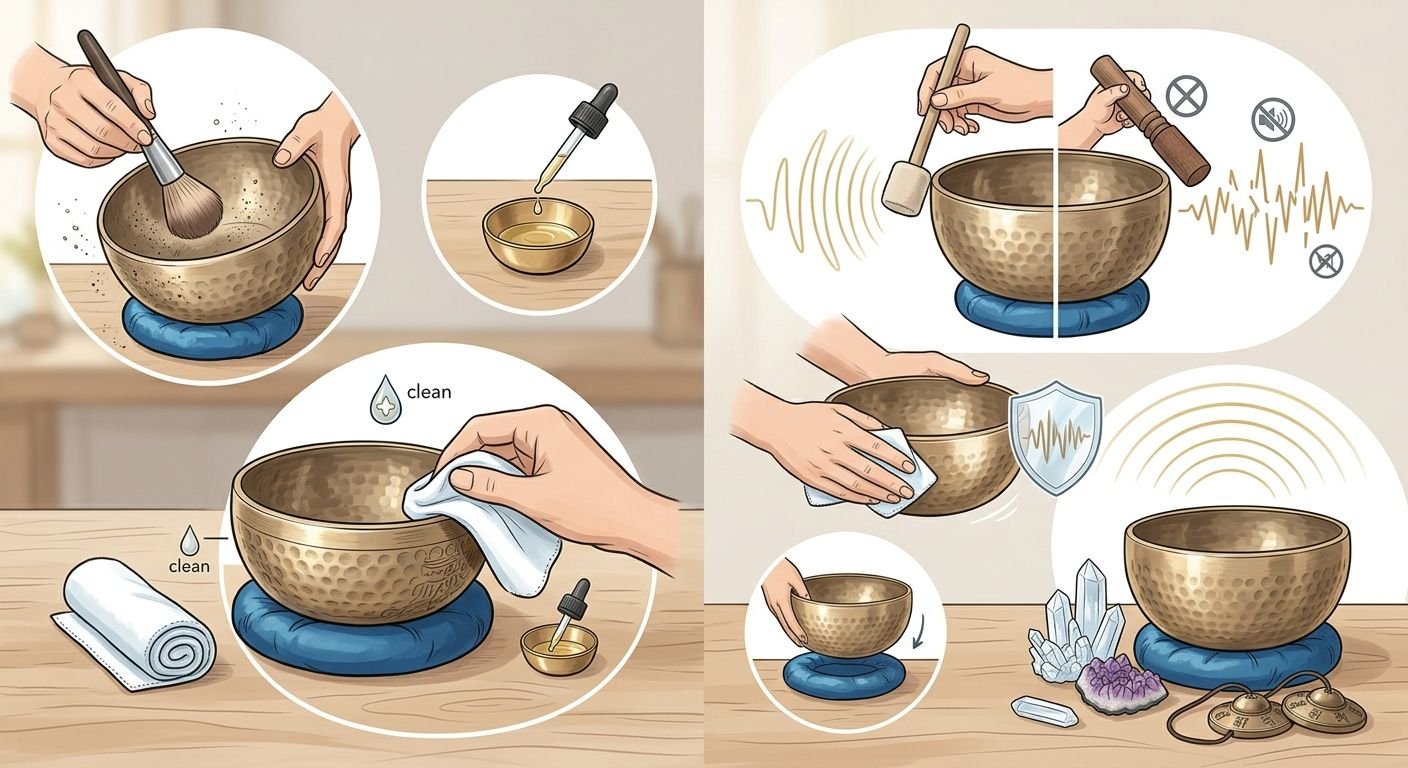
- Start with a completely dry, soft cloth. A microfiber cloth or an old, clean cotton t-shirt works well. Wipe the entire surface gently, inside and out, to remove dust and light fingerprints. This alone handles the vast majority of routine cleaning needs.
- If dry wiping isn't enough, slightly dampen the cloth with plain water — not soaked, just lightly moist — and wipe again, following the same gentle motion.
- For a small amount of stubborn residue, add the smallest amount of mild, unscented soap to the damp cloth rather than applying it directly to the bowl.
- Rinse the cloth and wipe again with clean, plain water to remove any soap residue, since leftover soap can actually attract more dust over time.
- Dry immediately and thoroughly with a fresh, dry cloth, paying attention to any decorative engraving or textured areas where moisture can linger.
The core principle: dry cleaning first, minimal dampness only when needed, and never anything abrasive or chemical. If a dry cloth handles it, stop there.
Why This Order Matters
Working through these steps in order, rather than jumping straight to soap and water, matters more than it might seem. Starting with the gentlest possible method and only escalating when genuinely necessary means you're never doing more than the situation actually requires. A surprising amount of what looks like a cleaning problem — light dust, faint fingerprints — resolves completely with just the first, dry-cloth step, and most people are pleasantly surprised by how effective it is on its own.
Cleaning the Inside vs. the Outside
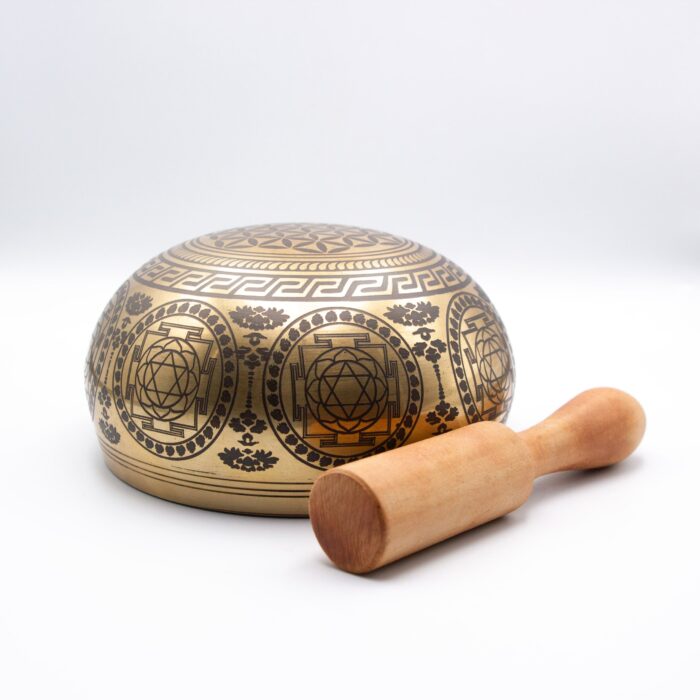
The inside of a singing bowl tends to collect more dust than the outside simply because it's a shallow, open bowl shape facing upward. If your bowl has a hand-painted interior design — a Buddha, Ganesh, or similar motif — this area needs the gentlest possible treatment, since the paint sits on the surface of the metal rather than being fused into it, and can wear away with anything beyond a soft, dry cloth.
The outside and the rim generally tolerate slightly more handling, since this is where the striker makes contact during regular use anyway. Even so, the same dry-cloth-first principle applies here too.
Tarnish and Patina: Should You Even Remove It?

This is worth pausing on, because it's a genuine question rather than an obvious answer. Tarnish is a natural result of metal reacting with air over time, and on a singing bowl, it often develops into a darker, warmer patina rather than the dull, unattractive tarnish you might picture on cheap costume jewellery. Many long-term owners and collectors specifically value this aged look, treating it as a visible sign of a bowl's history and regular use rather than something to remove.
If you do want to address tarnish, the safest approach is a very gentle silver or brass polishing cloth — not a liquid dip — used sparingly and only on areas that genuinely bother you, rather than attempting to restore the entire bowl to a brand-new shine. Partial, careful polishing that leaves some natural patina intact is a reasonable middle ground if a fully tarnished look isn't to your taste, but a fully mirror-polished bowl.
How Patina Actually Forms
Understanding the process helps explain why so many owners choose to leave it alone. As the metal surface reacts gradually with oxygen and moisture in the air, a thin oxide layer forms, subtly darkening and enriching the color of the underlying alloy. This process happens unevenly across the bowl's surface, following the exact contours and texture created by the original hammering, which is part of why a well-aged bowl often looks more visually interesting than a brand-new one — the patina genuinely highlights the handcrafted texture rather than hiding it.
A Middle-Ground Approach Worth Considering
If you're torn between preserving the patina entirely and wanting a cleaner look, consider polishing only the outer rim and high points that naturally catch the most handling and light, while leaving the recessed areas and interior largely untouched. This selective approach brightens the bowl's overall appearance without erasing the deeper texture and history built into the more protected parts of the surface.
If You Need a Deeper Clean
Occasionally a bowl picks up something more stubborn than routine dust — old incense residue, a sticky mark, or built-up grime from being handled with lotion-covered hands. For this, extend the basic safe method slightly rather than reaching for something stronger.
- Mix a small amount of mild soap into lukewarm water in a separate bowl, rather than applying anything directly to the singing bowl itself.
- Dip a soft cloth into the solution and wring it out well, so it's damp rather than wet.
- Wipe the affected area gently, using light pressure and small circular motions rather than hard scrubbing.
- Wipe again with a clean, water-only damp cloth to remove any soap residue.
- Dry immediately and completely with a fresh cloth, checking that no dampness remains in any textured or engraved areas.
If a mark genuinely won't come out with this method, it's worth leaving it rather than escalating to anything abrasive or chemical. A cosmetic mark is a much smaller loss than altered tone or structural damage from an overly aggressive cleaning attempt.
What Kind of Residue Actually Needs This Level of Cleaning
It's worth being specific about when this deeper method is genuinely necessary, since it's easy to over-apply it out of an abundance of caution. Incense ash, cooking residue from a nearby kitchen, or the kind of grime that builds up on any object handled regularly with unwashed hands are reasonable candidates. Simple dust, light fingerprints, or the ordinary look of a bowl that's simply been sitting out for a while almost always respond fully to the basic dry-cloth method alone, without needing to progress any further.
Testing the Sound Before and After
A genuinely useful habit, and one most guides never mention: play your bowl briefly before you clean it, paying attention to the tone, and play it again afterward. This takes only a few seconds and gives you a direct, practical way to confirm that your cleaning method hasn't changed anything, rather than assuming it's fine. If you ever do notice a difference in tone after cleaning, it's a clear signal to be more conservative next time, and to stick strictly to the dry-cloth method going forward.
Cleaning the Striker and Cushion Too
The wooden striker and cushion that usually accompany a bowl need their own, separate care, and they're often forgotten in cleaning routines focused entirely on the bowl itself. Wipe the striker with a dry cloth after use to remove any residue from handling, and avoid submerging it in water, since a wooden striker can swell, crack, or warp with prolonged moisture exposure. If the striker's padded or leather-wrapped end starts to wear down or lose its shape after extended use, it's generally more sensible to replace it than to repair it, since a worn striker won't produce as clean a tone regardless of how well the bowl itself is maintained.
Cushions typically just need an occasional shake-out to remove dust, and a light vacuum if the fabric allows it. Spot-clean any marks with a barely damp cloth rather than washing the whole cushion, since some fabrics and fillings don't hold up well to full washing.
Why the Striker Matters More Than People Assume
It's easy to focus entirely on the bowl and treat the striker as an afterthought, but the striker's condition genuinely affects the tone you actually hear just as much as the bowl's own condition does. A worn, splintering, or misshapen striker head can introduce an inconsistent or muted tone even from a perfectly maintained bowl, which is why it's worth periodically checking the striker specifically when troubleshooting any change in sound, rather than assuming the bowl itself is always the cause.
How Often to Actually Clean It
For a bowl used daily, a quick dry-cloth wipe every week or two is plenty for routine maintenance. For a bowl displayed more than played, a light dusting once a month is generally sufficient. There's no need for a deep clean on any regular schedule — reserve the fuller method covered above for when it's genuinely needed, rather than as routine upkeep. Over-cleaning, even with the safe method, is simply unnecessary handling that doesn't add any real benefit.
Signs Your Bowl Actually Needs Attention
Rather than cleaning on a fixed schedule, it's more useful to clean in response to what you actually observe. Visible dust buildup, a noticeable dulling of the surface color, or fingerprints that have started to feel slightly tacky are all reasonable triggers for a cleaning session. A bowl that still looks and sounds the way it did the last time you checked doesn't need attention simply because time has passed.
What to Do If You Think Cleaning Already Changed the Sound
If you've cleaned a bowl and suspect the tone sounds different afterward, the first step is simply confirming it rather than assuming. Play the bowl a few times over a couple of days, since a bowl can sometimes sound subtly different simply due to temperature, humidity, or even your own attention on a given day, rather than any real physical change. If the difference persists and feels genuinely consistent, review what you actually used to clean it — most cases of altered tone trace back to one of the specific mistakes covered earlier in this guide, most commonly an abrasive cleaner or overly aggressive polishing.
In most cases, especially with lighter cleaning mistakes, the change is subtle rather than dramatic, and the bowl remains entirely usable even if it doesn't sound quite identical to before. For a more significant, unmistakable change, it's worth having the bowl assessed by someone experienced with these instruments specifically, rather than continuing to experiment with further cleaning attempts that could compound the issue.
Real Bowls Worth Seeing Up Close
If you're shopping for a new bowl rather than caring for one you already own, it's worth seeing the actual surface texture and design detail that this guide has been discussing throughout.
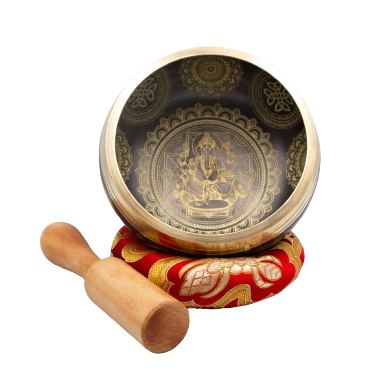
Ganesh Singing Bowl (325g)
AED 399
A detailed hand-painted interior — exactly the kind of surface that needs the gentlest care covered in this guide.
View Product
Buddha Singing Bowl, Golden Bronze (482g)
AED 350
A warmer bronze finish that develops a genuinely attractive patina over years of regular, gentle care.
View Product
Hand-Painted Black Singing Bowl
AED 185
A distinctive matte black finish where visible hammer texture is part of the intended look, not something to polish away.
View Product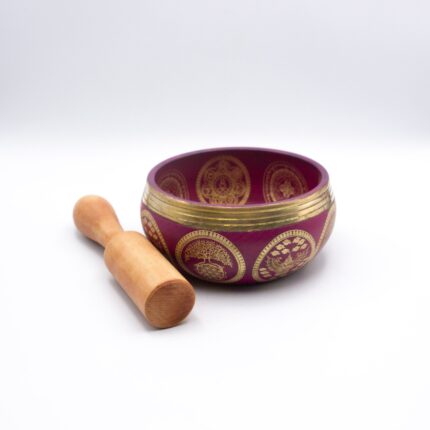
Five Buddha Bowl, Magenta & Gold (350g)
AED 85
A genuinely affordable entry point, with a striking painted design worth caring for properly from the very first day.
View ProductBrowse the complete range in our singing bowl collection. If you're new to using one, our beginner's guide covers the actual playing technique, and our complete buying guide is worth reading if you're still deciding on size and design.
Not sure if your bowl needs professional care?
If a bowl has significant tarnish, damage, or you're simply unsure what's safe, message us before trying anything beyond a dry cloth.
Questions People Ask
What is the safest way to clean a singing bowl?
A soft, dry cloth handles most routine cleaning. If more is needed, a lightly damp cloth with a small amount of mild soap, followed by a thorough dry, is the safest deeper method without risking the bowl's surface or tone.
Can cleaning actually change how a singing bowl sounds?
Yes, if the cleaning method removes material from the surface. The fine hammer marks on a hand-hammered bowl contribute to its layered tone, so abrasive scrubbing or harsh chemical polishes can genuinely alter the sound over time.
Should I remove tarnish from my singing bowl?
Not necessarily. Many owners consider the natural patina that develops over time part of the bowl's character. If you do want to address it, use a gentle polishing cloth sparingly rather than a chemical dip or aggressive polish.
Can I use an ultrasonic cleaner on a singing bowl?
It's best avoided. The intense vibration can worsen small existing stress points in the hammered metal, potentially affecting the bowl's structural integrity and tone over repeated use.
How often should a singing bowl be cleaned?
A quick dry-cloth wipe every week or two is sufficient for a bowl used daily, while a bowl mainly on display needs only occasional dusting. A deeper clean should only be done when genuinely needed, not on a routine schedule.
Is it safe to wash a singing bowl with water?
A lightly damp cloth is safe, but fully submerging or soaking the bowl is not recommended, since trapped moisture can encourage uneven tarnish and cause other issues that aren't immediately visible.
What should I do if my singing bowl sounds different after cleaning?
Play it a few times over several days to confirm the change is genuine rather than a one-off impression. If it persists, review your cleaning method for anything abrasive or chemical, and consider having the bowl assessed by someone experienced with these instruments for a more significant change.
Does the striker need cleaning too?
Yes. Wipe the wooden striker with a dry cloth after use and avoid submerging it in water, since prolonged moisture can cause it to swell, crack, or warp. A worn striker can also affect tone quality independent of how well the bowl itself is maintained.