
Labradorite: Meaning, Benefits and What Causes That Blue Flash
A grey stone that suddenly lights up electric blue when you tilt it. Here's what labradorite means, what people believe it does, and the real science behind its famous flash.
Pick up a piece of labradorite and at first it looks rather ordinary: a dark, smoky grey stone. Then you turn it slightly and a sheet of blue light sweeps across the surface, sometimes joined by green, gold or even violet, before vanishing again as you tilt it back. Few stones surprise people the way labradorite does. Most guides explain that flash with a single word, "magic", and move straight to a list of benefits. This guide does it the other way round. First, what labradorite actually is and what physically causes that blue flash. Then the meaning and benefits people traditionally associate with it, who it suits, how to wear it, how to tell real labradorite from the many imitations, and how to look after it in the UAE.
Labradorite Meaning and Benefits: The Short Answer
Labradorite is a natural feldspar mineral, the same family as moonstone. Its famous blue flash, called labradorescence, isn't a pigment: it's light bouncing between extremely thin layers inside the stone, the same way colour appears on a soap bubble. In modern crystal traditions, labradorite's meaning centres on transformation, intuition and protection, and it's often called a "stone of magic" because of the way its colour appears and disappears. The labradorite benefits people describe include clearer intuition, support through change, and a sense of protection; these are traditional beliefs, not proven effects. Practically, labradorite has a hardness of 6–6.5 and cleaves easily, so it's best in pendants, earrings and protected ring settings, and it should be kept away from knocks, harsh chemicals and perfume.
What Labradorite Actually Is
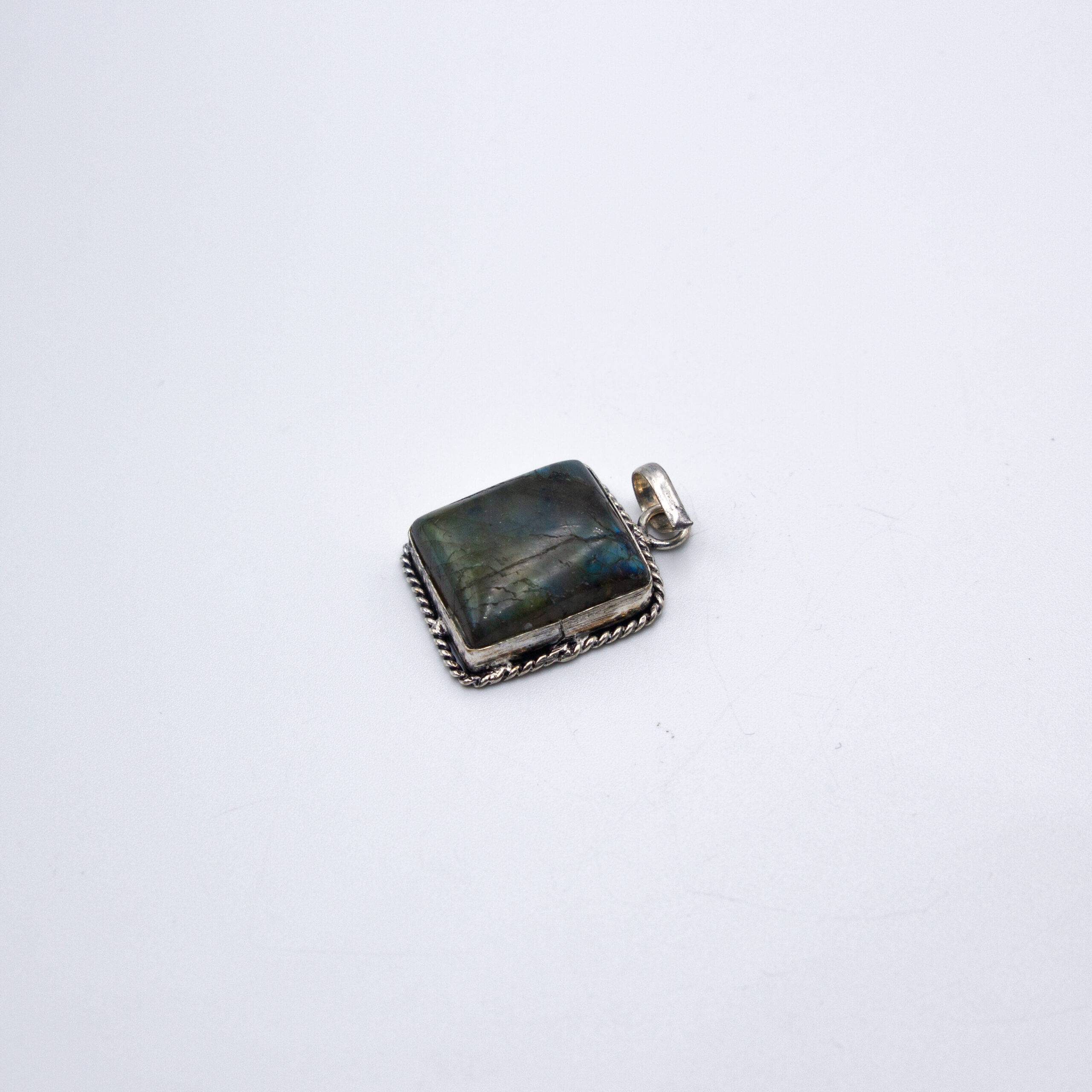
Labradorite belongs to the plagioclase feldspar group, one of the most common groups of minerals in the Earth's crust. Plagioclase is a series that runs from sodium-rich albite to calcium-rich anorthite, and labradorite sits towards the calcium-rich middle of that range. Most feldspar is unremarkable to look at. Labradorite is the exception.
| Property | Labradorite |
|---|---|
| Mineral family | Plagioclase feldspar (a sodium–calcium aluminium silicate) |
| Hardness (Mohs) | 6 to 6.5: harder than glass, softer than quartz |
| Cleavage | Good in two directions, so it can split or chip if knocked |
| Body colour | Usually dark grey to grey-green; sometimes nearly colourless |
| Optical effect | Labradorescence: a metallic flash of blue, green, gold, orange or violet |
| Main sources | Canada (Labrador), Finland, Madagascar, Norway, Russia and others |
| Close relatives | Moonstone and sunstone, also feldspars with light effects |
Labradorite and moonstone: cousins
Labradorite and moonstone are both feldspars, and both get their glow from light interacting with fine internal layers. In fact, the stone sold as "rainbow moonstone" is usually a transparent, almost colourless form of labradorite with a blue-to-rainbow sheen. If you love moonstone's soft glow, labradorite is its bolder, darker relative. Our moonstone meaning and benefits guide covers the gentler side of the family.
Spectrolite
You may also see the name spectrolite. This is a trade name for labradorite from Finland, which is known for an especially dark body colour and a wide range of flash colours. It is still labradorite.
What Causes the Blue Flash
This is the question most people actually want answered, and the real explanation is more interesting than "magic".
It starts deep underground
Labradorite forms in igneous rocks such as gabbro, anorthosite and basalt, from molten rock that cools very slowly over long periods. At high temperatures, the sodium and calcium in the crystal are evenly mixed. As the crystal cools slowly, that mixture becomes unstable and separates into extremely thin, alternating layers of two slightly different compositions, one a little richer in calcium and one a little richer in sodium. Mineralogists call these exsolution lamellae.
The layers are thinner than a wavelength of light
Each layer is only around a hundred to a few hundred nanometres thick, roughly the same scale as the wavelength of visible light. When light enters the stone, a little of it reflects off each boundary between layers. Those reflections overlap. For one particular colour, the reflected waves line up and reinforce each other; for other colours, they cancel out. The result is that the stone reflects one strong colour back at you. Physicists call this thin-film interference, and it is the same effect that puts colours on soap bubbles, oil on water and the wings of some butterflies.
Why it only appears at certain angles
The layers inside a labradorite crystal all lie in the same direction, like pages in a book. The flash only reaches your eye when light hits those layers and bounces straight back towards you. Tilt the stone a few degrees and the reflection is directed somewhere else, so the colour switches off and you see the plain grey body again. This is why a good labradorite is cut with the surface lined up with the internal layers, and why the same stone can look dull in one photo and dazzling in another.
Why the background is dark
Many labradorites contain tiny dark inclusions, often of iron-rich minerals such as magnetite. They give the stone its smoky grey body colour, and that dark background makes the flash look far more intense, in the same way a projector image looks brighter on a dark screen.
Why Some Labradorite Flashes Blue and Others Gold
The colour of the flash depends on the thickness of those internal layers. Thinner layers reinforce shorter wavelengths, giving blue and violet. Slightly thicker layers give green, and thicker still give yellow, gold and orange. Because layer thickness can change from one part of a crystal to another, a single piece of labradorite often shows patches of different colours, with sharp borders where one zone meets the next.
- Blue: the most common and most recognisable labradorite flash.
- Green and teal: very common, often alongside blue.
- Gold, copper and orange: less common and often prized.
- Violet, pink and full spectrum: the rarest; "spectrolite" from Finland is known for these.
None of these colours is "better" in a spiritual sense; it comes down to which one you're drawn to. In terms of value, collectors generally look for strong, even flash across the whole surface, and multiple colours in one stone.
Where the Name and Legends Come From
Labradorite takes its name from the Labrador region of eastern Canada, where it was documented by Moravian missionaries in the 1770s on the coast near Nain. Large deposits there are still known today, and the stone soon became popular in Europe for jewellery and decorative objects.
There's a well-known legend about the stone, often attributed to the Inuit people of the region. In the story, the northern lights were once trapped in the rocks along the coast. A warrior struck the rocks with his spear and freed most of the lights into the sky, but some remained locked in the stone, which is why labradorite still flashes like the aurora. It's a beautiful story, and it captures exactly what labradorite looks like, though, as with many crystal legends, the version you read online has been retold many times.
In Finland, labradorite was found in quantity in the 1940s, and the name spectrolite was coined there for the vividly coloured local material.
Labradorite Meaning Today
In modern crystal traditions, labradorite meaning centres on a few themes, most of which grow directly out of how the stone looks:
- Transformation: a plain grey stone that reveals hidden colour is a natural symbol for change and for discovering something new in yourself.
- Intuition and insight: because its colour appears only when you look at it "from the right angle", labradorite is linked with seeing things differently and trusting your instincts.
- Protection: it's often described as a protective stone, a shield against negativity, especially during periods of change.
- Mystery and "magic": its nickname, the stone of magic, comes from the sudden, almost theatrical way its flash appears.
In chakra-based practice, labradorite is most often associated with the throat and third-eye chakras. In Western crystal astrology it's commonly linked with Leo, Scorpio and Sagittarius. As always, these associations vary between sources and traditions.
Labradorite Benefits: Traditional Beliefs
The labradorite benefits below are what people traditionally associate with the stone. They're beliefs and personal experiences, not scientifically proven effects, and labradorite is not a substitute for medical or professional advice.
1. Support through change
The most common reason people choose labradorite is a period of transition: a new job, a move to a new country, the end of one chapter and the start of another. Many people wear it as a reminder that change can reveal something good, just as the stone's colour is hidden until you look at it from a new angle.
2. Intuition and clearer thinking
Labradorite is traditionally linked with intuition and insight. Some people keep a piece nearby when journaling, meditating or making decisions, as a focus point for slowing down and listening to their instincts.
3. Protection
In crystal traditions, labradorite is often described as a protective stone that helps keep other people's negativity at a distance. If protection is your main focus, it's often compared with black tourmaline and obsidian; our obsidian vs black tourmaline guide explains how those two differ.
4. Creativity and imagination
Its shifting colours make labradorite popular with artists, designers and writers, who see it as a symbol of imagination and of finding unexpected ideas.
5. A personal talisman
Because no two pieces flash in exactly the same way, many people treat a labradorite pendant or ring as a very personal piece: something they chose because its particular flash caught their eye.
Who Labradorite Suits
Labradorite tends to suit:
- People going through a change and looking for a meaningful reminder to wear through it.
- Anyone who prefers subtle jewellery: at a glance it's a dark grey stone, so it looks understated at work, with the colour showing only when it catches the light.
- Men looking for a crystal that doesn't look "pretty": its dark, metallic look works very well in men's pendants and rings.
- Creatives drawn to its themes of imagination and insight.
- Gift buyers who want something with a story; the northern lights legend and the science behind the flash make it an easy stone to talk about.
It's less ideal for people who work with their hands and want a stone they never have to think about. For a tough everyday bracelet, quartz-family stones such as tiger's eye or carnelian are more forgiving. If you're choosing a stone for a particular intention, our guide to the best crystals for wealth, love, protection and success can help you compare.
How to Wear Labradorite
As a pendant
A pendant is the best way to wear labradorite. It sits away from desks, door handles and other knocks, and it moves as you move, so it keeps catching the light. Polished cabochons and points both show labradorescence well.
As a ring
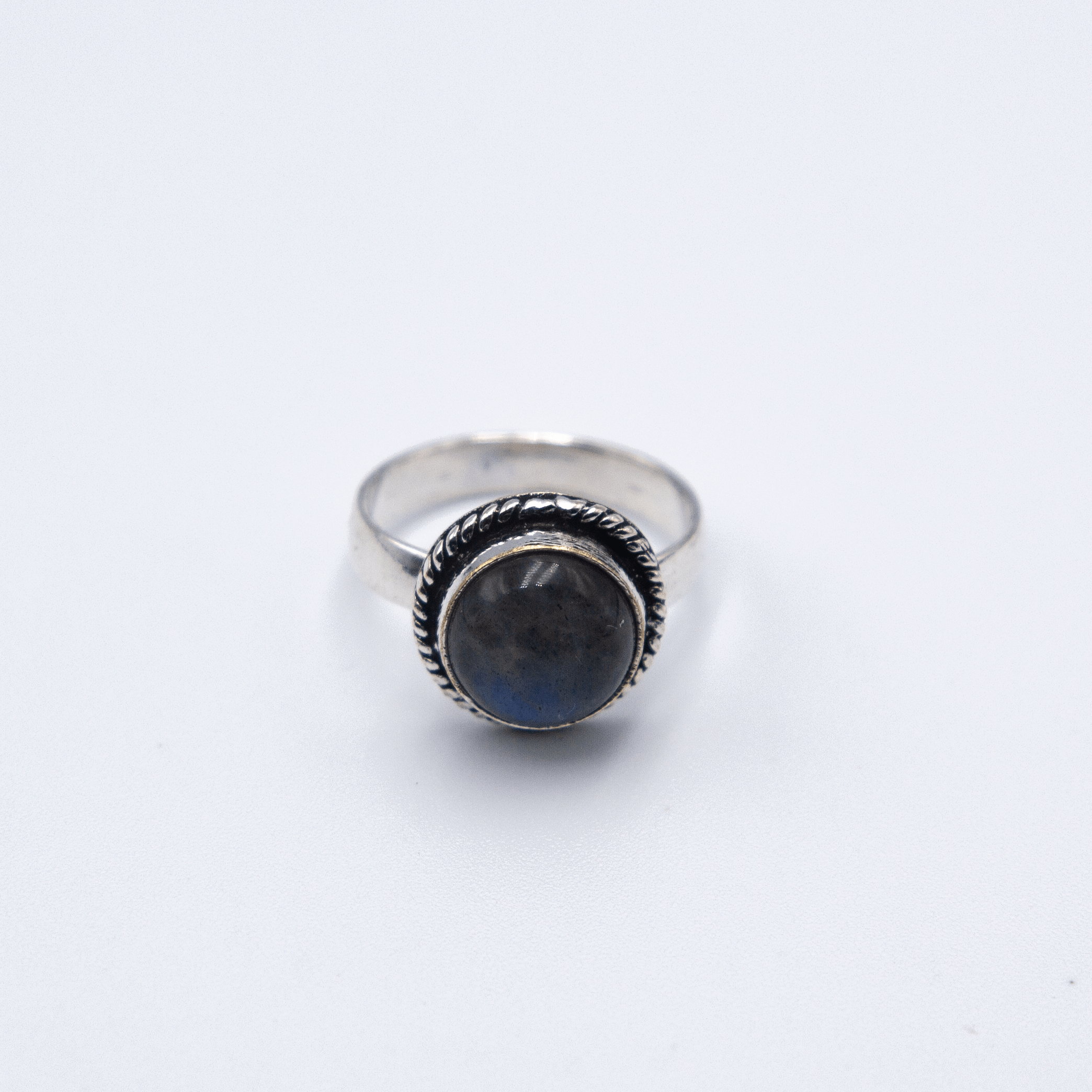
Labradorite rings are beautiful but need a little care. Choose a setting that surrounds and protects the edges of the stone, and take the ring off for the gym, cleaning or heavy work. Our guide to choosing a crystal ring explains settings and sizing.
As a bracelet
Labradorite bead bracelets are popular, but beads knock against each other and against surfaces, so expect some wear over time. Rotate the beads now and then so the flash faces outwards.

On a desk or shelf
A polished labradorite piece on a desk or windowsill near indirect light shows off its colour as you walk past. This is also the easiest way to enjoy labradorite with no risk of knocks.
Real vs Fake Labradorite
Labradorite's popularity means imitations are common. The good news is that the flash itself is the best test.
- Real labradorite flashes at specific angles. Tilt it slowly: the colour should appear in patches and switch off as the angle changes. If a stone shows the same colour from every direction, it may be coated glass or plastic.
- Look for a grey body colour. Under the flash, natural labradorite is usually grey, grey-green or smoky. A completely black or perfectly uniform background can be a sign of glass.
- Natural flaws are normal. Real labradorite often shows fine lines, small cleavage cracks, dark inclusions and sharp boundaries between colour zones. Totally flawless, bubble-free "labradorite" with a perfectly even flash is suspicious.
- Watch for bubbles. Round bubbles under the surface point to glass.
- Coatings rub off. Some imitations are glass or quartz with a thin iridescent coating, sometimes sold as "aura" stones. The colour sits on the surface and wears away at the edges over time.
- Temperature: natural stone usually feels cool in the hand at first, while plastic warms almost immediately.
For more general tips, see our guide to choosing an authentic crystal.
Caring for Labradorite in the UAE
Labradorite isn't fragile, but its cleavage means it rewards a little care.
- Avoid knocks: it can chip or split along its cleavage planes if dropped on tiles or banged against hard surfaces.
- Perfume and attar last: put on oud, attar and perfume before your jewellery, and let it dry. Oils and alcohol can dull the polish and build up around settings over time.
- Cleaning: wipe with a soft cloth, or wash briefly in lukewarm water with a drop of mild soap, rinse and dry straight away.
- Avoid: ultrasonic and steam cleaners, bleach, harsh chemicals and chlorinated pool water.
- Heat: avoid sudden temperature changes, such as moving a stone from a hot car straight into cold water. Don't leave jewellery in the car in summer; heat also weakens cords. Our crystals in UAE heat guide covers this in detail.
- Sunlight: because the flash comes from the stone's internal structure rather than a dye, normal light doesn't fade it. Long, hot sun exposure is still best avoided for the reasons above.
- Storage: keep it in a soft pouch, away from harder stones such as quartz that can scratch it.
- Spiritual cleansing: if you follow these practices, gentle methods such as moonlight, sound or smoke suit labradorite best. See how to charge crystals in moonlight.
Labradorite at Alpine Crystals

Our labradorite pieces are chosen for a clear, visible flash:
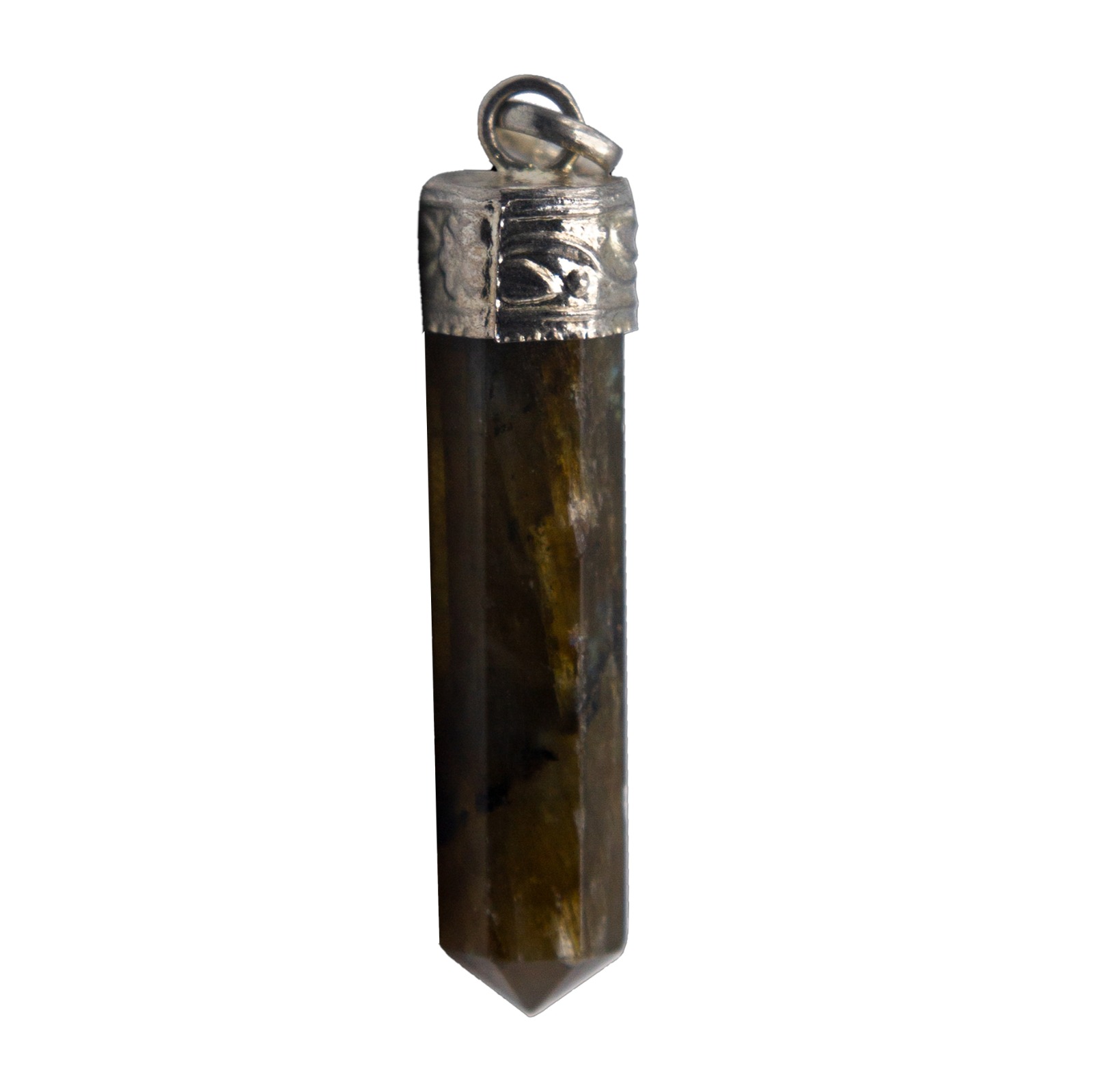
- Pendants: the Natural Labradorite Pendant Necklace (2cm, 8.2g) and the Labradorite Point Pendant on Cord (3.8cm, 5.1g).
- Ring: the Natural Labradorite Ornamental Ring in a silver setting (3.6g, 6cm inner circumference).
Browse more in our crystal pendant collection, our crystal rings, or the full natural stones and crystals collection. Stock changes, so check each product page for availability. Orders of AED 150 and above ship free within the UAE, usually in 1–2 days.
Want to see the flash before you buy?
Message us and we'll send you a short video of the labradorite piece you're interested in, so you can see its colours in real light.
Is Labradorite Right for You?
Labradorite is a rare case where the science is as captivating as the legend. Its blue flash comes from light reflecting between layers thinner than a wavelength of light, formed as molten rock cooled slowly deep underground. Its meaning in crystal traditions, transformation, intuition and protection, grows naturally out of that hidden colour. If you're going through a change, love understated jewellery with a surprise, or simply want a stone with a story, labradorite is a beautiful choice. Wear it as a pendant or in a protected ring setting, keep it away from knocks and perfume, and it will keep flashing for years.
Questions People Ask
What is the meaning of labradorite?
In crystal traditions, labradorite represents transformation, intuition and protection, and it's often called a "stone of magic" because its colour appears and disappears as you move it. These meanings are traditional beliefs rather than proven effects.
What causes the blue flash in labradorite?
The flash, called labradorescence, comes from extremely thin alternating layers inside the crystal that formed as it cooled slowly. Light reflecting off these layers interferes, reinforcing one colour, usually blue. It's the same physics as the colours on a soap bubble.
What are the benefits of labradorite?
People traditionally associate labradorite with support through change, intuition, protection and creativity. There's no scientific evidence for these benefits, and labradorite is not a substitute for medical or professional advice.
Is labradorite the same as moonstone?
No, but they're close relatives. Both are feldspar minerals with light effects. "Rainbow moonstone" is usually a transparent, near-colourless variety of labradorite.
Can labradorite get wet?
A brief rinse in lukewarm water with mild soap is fine, as long as you dry it straight away. Avoid soaking, chlorinated pool water, harsh chemicals and ultrasonic cleaners.
How can I tell if labradorite is real?
Real labradorite flashes only at certain angles, has a grey body colour, and usually shows natural lines, inclusions or sharp borders between colour zones. Colour visible from every angle, round bubbles or a perfectly flawless surface suggest glass or a coated imitation.
Can you wear labradorite every day?
Yes, especially as a pendant. In rings and bracelets it's best to take it off for sport, cleaning and heavy work, because labradorite can chip if knocked.
Which zodiac sign is labradorite good for?
In Western crystal astrology it's most often linked with Leo, Scorpio and Sagittarius. Traditions vary, so follow the system you trust.