

What Is a 7-Metal Singing Bowl? The Truth About Panchdhatu Alloys
Gold, silver, mercury and lead in a singing bowl? Here's what the seven-metal tradition really means, what bowls are actually made of, and how to judge one before you buy.
Shop for a singing bowl for more than a few minutes and you'll see the phrase "seven metals" everywhere: seven sacred metals, seven planetary metals, a panchdhatu alloy containing gold, silver, copper, iron, tin, lead and mercury. It sounds wonderful, and it's part of a genuine tradition. But it also raises obvious questions. Is there really gold in a bowl that costs a few hundred dirhams? Can you even put mercury into bronze? And what does "panchdhatu" mean, when pancha means five, not seven? This guide gives you straight answers. We'll explain where the seven-metal idea comes from, what panchdhatu and panchaloha actually are, what singing bowls are really made of, and how to judge a bowl before you buy, including the bowls we sell.
What Is a 7-Metal Singing Bowl? The Short Answer
A "7-metal singing bowl" is a bowl described as being made from the seven classical metals: gold, silver, mercury, copper, iron, tin and lead, each linked with one of the seven classical planets. It's a traditional and symbolic description. In practice, good traditional singing bowls are made mainly of bronze, an alloy of copper and tin, often around four parts copper to one part tin, with small traces of other metals. Meaningful amounts of gold, silver or mercury are very unlikely in any bowl at an ordinary price. Panchdhatu (or panchaloha) means "five metals" and is a separate tradition, mostly used for statues in Hindu and Jain temples. Many modern decorative bowls are brass (copper and zinc). None of this makes a bowl good or bad: a well-made bronze or brass bowl can sound beautiful. What matters is honest description, the sound, and how it's made.
The Seven Metals and Where the Idea Comes From
Ancient people knew seven metals that could be worked: gold, silver, copper, iron, tin, lead and mercury. Ancient astronomers also knew seven moving bodies in the sky: the Sun, the Moon and five visible planets. Over centuries, especially in medieval and Renaissance alchemy, each metal was paired with one of these bodies, and the pairing spread into many spiritual traditions.
| Metal | Classical body | Symbolic association often given |
|---|---|---|
| Gold | Sun | Vitality, light, the self |
| Silver | Moon | Intuition, reflection, calm |
| Mercury | Mercury | Communication, movement |
| Copper | Venus | Love, harmony, beauty |
| Iron | Mars | Strength, courage |
| Tin | Jupiter | Growth, expansion |
| Lead | Saturn | Structure, grounding |
In singing bowl culture, this list is often connected with the seven chakras and the idea that a bowl made from all seven metals produces a complete, balanced range of tones. You'll also hear that the best bowls were made on the night of a full moon, which is where "full moon singing bowls" get their name. These are traditions and beliefs, and they're a meaningful part of why people value Himalayan bowls. They're just not a laboratory description of the metal inside.
Panchdhatu, Panchaloha and Ashtadhatu
Many sellers use "panchdhatu" and "seven metals" as if they mean the same thing. They don't.
Panchdhatu and panchaloha: five metals
Panchaloha (Sanskrit) and panchdhatu (as it's often written in Hindi and Nepali) both mean "five metals". It's a traditional alloy best known for casting temple statues in Hindu and Jain traditions, particularly in South India and Nepal. The five metals are usually listed as gold, silver, copper, zinc and iron, though the list varies between texts and regions, and tin or lead sometimes appear. Panchaloha also appears in rings and amulets in astrological practice. In many real pieces, the alloy is mostly copper with small or symbolic additions of the precious metals.
Ashtadhatu: eight metals
Ashtadhatu means "eight metals". It's a related tradition, also used for sacred statues, which adds metals such as tin, lead and mercury to the list.
So where do singing bowls fit?
Singing bowls come from the Himalayan metalworking tradition of Nepal, Tibet and northern India, where bell metal has been worked for centuries. The "seven metals" description comes from the planetary tradition above. "Panchdhatu" is borrowed from the statue-casting tradition. When a bowl is called a "panchdhatu singing bowl", it usually just means "a traditional multi-metal bowl", not a specific, tested recipe of five metals.
What Singing Bowls Are Actually Made Of
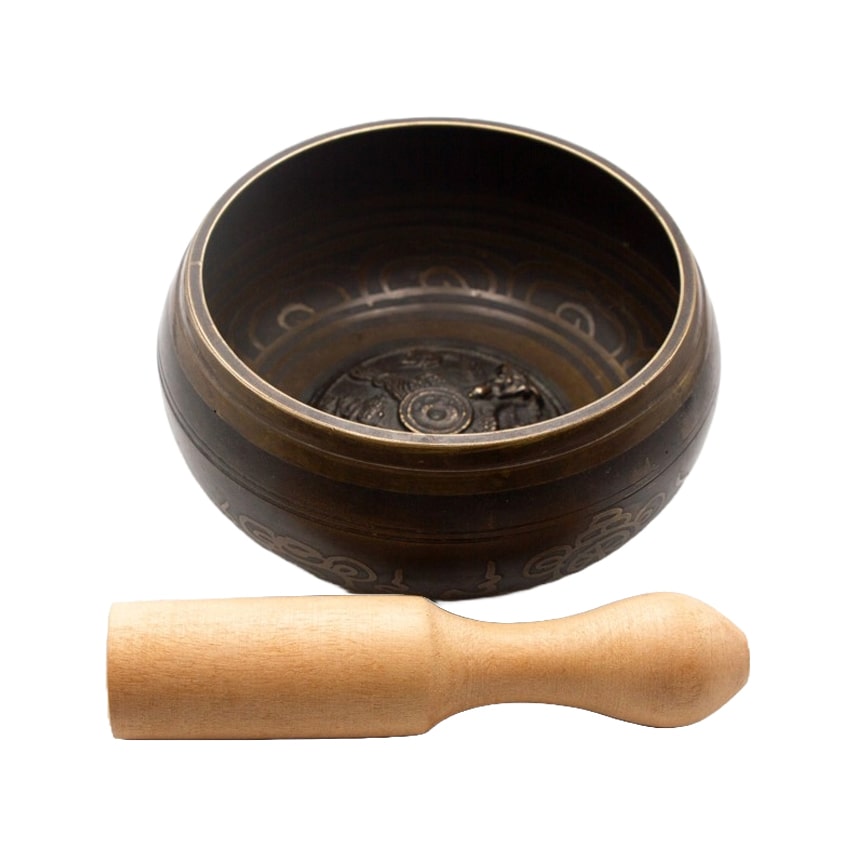
When old and new Himalayan bowls have been examined with metal analysis, such as the X-ray fluorescence (XRF) testers used by jewellers, the results tell a consistent story: the bowls are bronze. Typically that means roughly 75–80% copper and 20–25% tin, a high-tin mix known as bell metal, the same family of alloy used for temple bells and gongs. Small traces of other metals such as iron, zinc, lead or nickel often show up too, usually from the ore and scrap metal used. Gold and silver, when they appear at all, are typically at trace levels.
That isn't a disappointment; it's the reason the bowls work. High-tin bronze is hard and springy, which gives a long, rich ring. It's also difficult to work: cold, it's brittle and can crack, so Himalayan smiths heat the metal and hammer it into shape by hand, reheating it many times. That skill, not a secret mixture of precious metals, is what makes a fine hammered bowl valuable. Our guide to handmade vs machine-made singing bowls explains the making process in more detail.
A Reality Check on Gold, Silver and Mercury
A little simple logic helps when you read seven-metal claims:
- Gold: a 700g bowl with just 1% gold would contain 7g of gold, worth more than most singing bowls cost in total. A bowl priced in the hundreds of dirhams cannot contain a meaningful amount of gold.
- Silver: the same logic applies, at a lower price. Some makers do add a small amount of silver or other metals for tradition, but in tiny quantities.
- Mercury: mercury is a liquid that boils at about 357°C, while bronze melts at roughly 900–1,000°C. Any mercury added to molten bronze would mostly evaporate as toxic vapour. Its place in the seven-metal list is symbolic.
- Lead and iron: these can appear in small amounts, but a lot of either would make a bowl sound dull rather than better.
None of this means a seller describing a bowl as "seven-metal" is necessarily dishonest. In Nepal, it's often a traditional name for a style of bowl, much like "full moon bowl", and makers may add token amounts of other metals as part of the tradition. The problem is when the description is presented as a precise, guaranteed recipe, or used to justify a very high price. A good seller will be happy to tell you what they know and what they don't.
Bronze vs Brass Singing Bowls
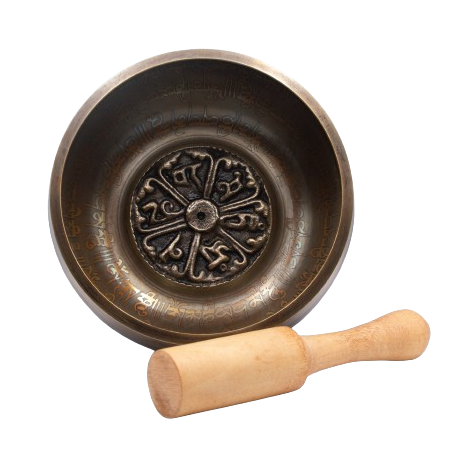
The other big category you'll see is brass, an alloy of copper and zinc rather than copper and tin. Brass is easier to cast, shape and decorate, so many decorative, engraved and painted bowls are brass.
| Bronze (bell metal) | Brass | |
|---|---|---|
| Alloy | Copper + tin (often 20–25% tin) | Copper + zinc |
| Typical making | Hand-hammered from heated metal, or cast and finished | Usually cast or machine-spun, then decorated |
| Colour | Warm golden-brown to dark bronze; often darkened | Brighter yellow-gold |
| Surface | Hammer marks on hand-hammered bowls | Smooth; often engraved or painted |
| Sound (general) | Complex, layered tones with long sustain | Brighter and simpler; often shorter sustain |
| Price | Higher, especially hand-hammered | More affordable |
| Best for | Meditation, sound practice, serious playing | Beginners, gifts, decoration, children |
Both are real, legitimate singing bowls. A well-made brass bowl is a lovely first bowl or gift, and many people play them every day. If you're comparing prices, our singing bowl price guide for the UAE explains what drives the cost.
Does the Metal Change the Sound?
Yes, but it's only one factor, and often not the biggest. The sound of a singing bowl depends on:
- Alloy: high-tin bronze generally gives richer overtones and longer sustain than brass.
- Wall thickness and evenness: uneven walls can cause wobbly, beating tones; even, well-hammered walls sing more cleanly.
- Size and weight: larger, heavier bowls give deeper notes and longer sustain.
- Shape: the curve of the walls and the width of the rim affect which tones you hear and how easily the bowl "sings" when you circle the rim.
- Craftsmanship: how the bowl was hammered, tempered and finished.
- The striker: a wooden or leather-wrapped striker can make the same bowl sound noticeably different.
This is why two bowls described identically can sound very different, and why listening matters more than any label. If you're struggling to get a bowl to sing, our beginner's guide to playing a singing bowl walks through the technique.
How to Judge a Bowl Before You Buy
You can't see an alloy, but you can check a lot:
- Listen first. Ask for a video of the exact bowl being struck and played around the rim. A good bowl rings clearly and fades slowly, without harsh buzzing.
- Look for hammer marks. Small, irregular dimples on the outside usually indicate hand-hammering. Perfectly smooth surfaces with machine lines suggest a cast or spun bowl.
- Check the colour. Bright yellow-gold usually suggests brass. Golden-brown or darkened metal is more typical of bronze, though finishes and patinas can hide the true colour.
- Try a magnet. Bronze and brass aren't magnetic. A bowl that strongly attracts a magnet contains a lot of iron or steel, and that's a warning sign.
- Read the description carefully. "Seven-metal" or "panchdhatu" is a traditional style name. Be cautious if a seller guarantees specific percentages of gold or silver without testing.
- Consider testing for expensive bowls. For a high-priced antique or collector's bowl, some gold-testing shops in the UAE have XRF analysers that read surface metal content. It's worth asking before you pay a premium.
- Ask the seller. An honest seller will tell you what the bowl is made of, as far as they know, and admit what they can't verify.
For a complete buying checklist, see our complete guide to choosing a singing bowl.
Safety: Use It for Sound, Not Food
Because traditional alloys can contain traces of lead and other metals, and because decorative bowls may be painted or lacquered, it's sensible to use a singing bowl only as an instrument. Don't eat or drink from it, and don't use it to store food or drinking water. Some sound practitioners play bowls with a little water inside for the rippling effect; that's fine, as long as the water isn't drunk afterwards. Our guide on how to clean a singing bowl explains how to care for the metal without damaging it.
Which Type Should You Choose?
- First bowl, gift or décor: a decorated brass bowl is affordable, attractive and easy to play.
- Regular meditation or sound practice: a heavier, traditional bronze or "seven-metal" style bowl will usually give a deeper, longer-lasting tone.
- A centrepiece for a meditation space: a large full moon bowl gives the most resonance and presence.
- Group sound sessions: consider adding a gong; our guide to Himalayan gongs explains how they compare.
Whichever you choose, pick the bowl whose sound you love. That matters more than the metal list.
Our Bowls, Honestly Described

We'd rather you buy the right bowl than the most expensive one, so here's how our range breaks down:
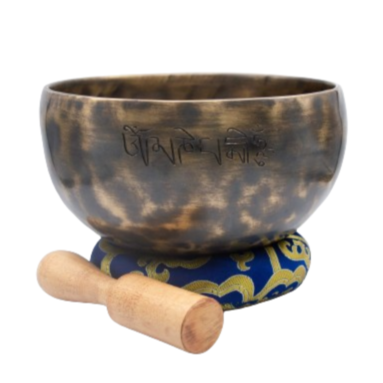
- Traditional seven-metal style: our Himalayan Full Moon Singing Bowl and the larger Full Moon Singing Bowl (15.5cm, 708g, with cushion) are sold as seven-metal bowls in the traditional style. As explained above, that's a traditional description; like every seller, we can't guarantee exact percentages without lab testing.
- Decorated brass bowls: many of our designed bowls, such as the Dharmachakra Singing Bowl (13cm, natural brass), are brass, chosen for their engraved and painted designs. They're ideal first bowls and gifts.
- Gong: our Himalayan Hand-Hammered Gong (40cm, with stand) is also made in the traditional multi-metal style.
Browse the full singing bowls collection. Stock changes, so check each product page for availability. Orders over AED 150 ship free within the UAE, usually in 1–2 days.
Want to hear a bowl before you buy?
Message us and we'll send a short video of the exact bowl being played, so you can judge the sound for yourself.
The Truth, in One Paragraph
"Seven metals" is a beautiful tradition that links seven classical metals with the Sun, Moon and planets. Panchdhatu and panchaloha are a different, five-metal tradition from temple statue-making. Real Himalayan singing bowls are mostly bronze, copper and tin, with traces of other metals, while many decorative bowls are brass. Meaningful gold, silver or mercury in an ordinary bowl isn't realistic. The good news is that none of that is what makes a bowl special. Skilled hammering, good proportions and a sound you love are what count, so listen before you buy, and buy from someone who describes their bowls honestly.
Questions People Ask
What is a 7-metal singing bowl?
It's a singing bowl described as being made from the seven classical metals (gold, silver, mercury, copper, iron, tin and lead), each linked with a planet. It's a traditional description; in practice, traditional bowls are mostly bronze (copper and tin) with traces of other metals.
What does panchdhatu mean?
Panchdhatu, also called panchaloha, means "five metals". It's a traditional alloy used mainly for Hindu and Jain temple statues, usually listed as gold, silver, copper, zinc and iron, though lists vary.
Do singing bowls really contain gold and silver?
Usually only in trace amounts, if at all. Even 1% gold in a 700g bowl would be worth more than most bowls cost, so an ordinarily priced bowl can't contain a meaningful amount.
What are singing bowls made of?
Traditional Himalayan bowls are mainly bronze: roughly 75–80% copper and 20–25% tin, known as bell metal. Many modern decorative bowls are brass, which is copper and zinc.
Is a bronze or brass singing bowl better?
Bronze bowls usually have richer, longer-lasting tones and suit regular meditation. Brass bowls are brighter, more affordable and great as first bowls, gifts or décor. The best choice is the bowl whose sound you like.
How can I tell if a singing bowl is hand-hammered?
Look for small, irregular hammer marks on the outside surface. Cast or machine-spun bowls are usually perfectly smooth, sometimes with fine lathe lines.
Can I drink water from a singing bowl?
No. Traditional alloys can contain traces of lead, and decorative bowls may be painted or lacquered, so use a singing bowl only as an instrument, never for food or drink.
What is a full moon singing bowl?
A full moon bowl is a traditional style of larger, often heavier bowl. Its name comes from the belief that the best bowls were made on the night of a full moon, and it's commonly sold as a seven-metal bowl.