

How Much Does a Singing Bowl Cost? A UAE Buying Guide
Real prices from an actual catalog, what genuinely drives them, and how to spot a price that's too good to be true.
The honest range, before anything else: a genuine hand-hammered Himalayan singing bowl in the UAE typically costs somewhere between AED 75 and AED 450, depending almost entirely on weight and craftsmanship rather than any fixed formula. Below that range, you're very likely looking at a machine-stamped bowl or a smaller decorative piece rather than a full instrument; above it, you're usually paying for size, elaborate hand-painted detail, or both. This guide walks through exactly why that range exists, using real numbers from an actual current catalog rather than the vague generalities most pricing content settles for.
Most pricing guides on this topic stop at a vague "budget, mid-range, premium" breakdown without ever showing real numbers. This one uses actual current catalog data — real weights, real prices, real product photos — so you can see exactly how price and craftsmanship track together rather than guessing.
We'll also get into why two bowls of near-identical weight can sit hundreds of dirhams apart, how the true cost of importing directly from Nepal compares once shipping and customs are actually factored in, and how to spot the specific warning signs of a bowl priced too low to be genuinely hand-hammered.
The Short Answer
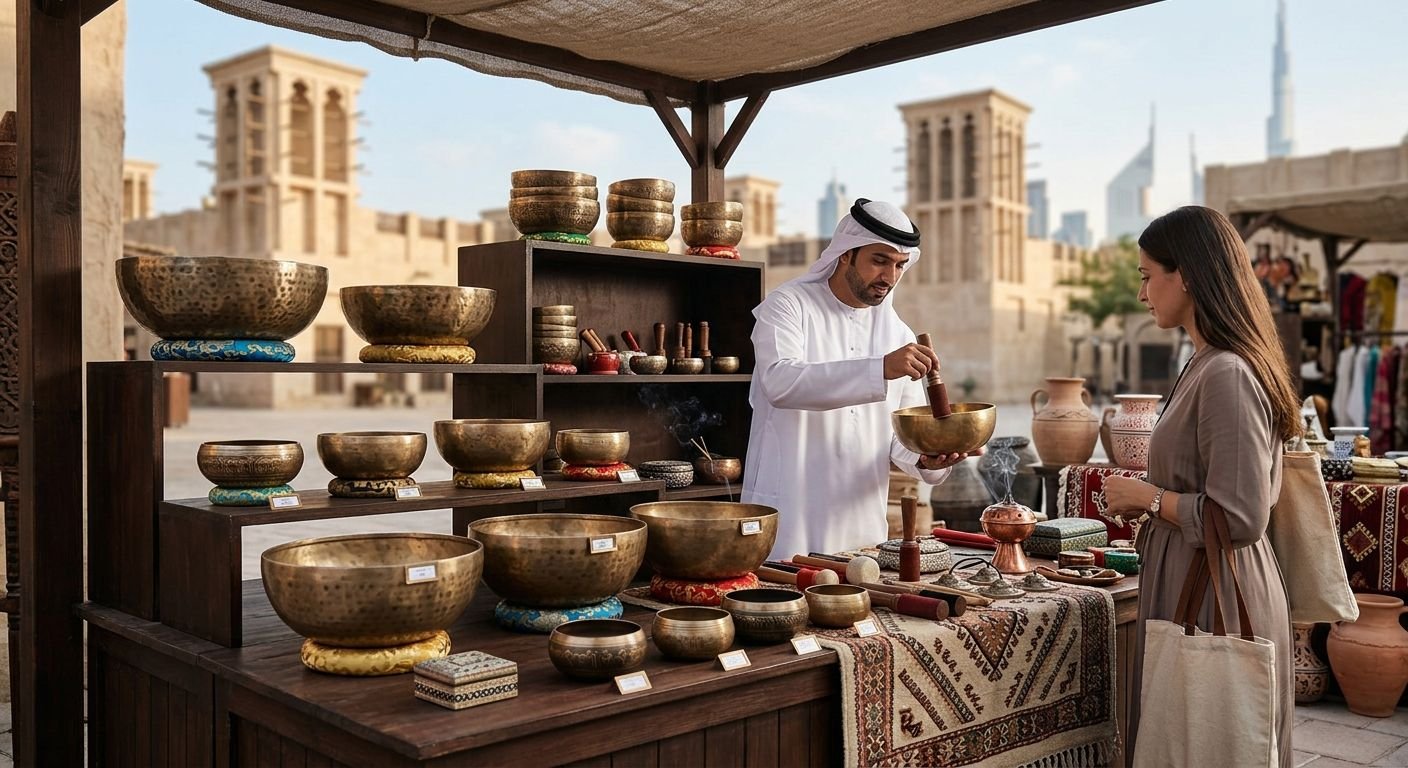
Most single, genuine bowls suitable for regular meditation or sound practice land somewhere in the AED 150 to AED 400 range. Smaller decorative or beginner bowls can go as low as AED 75 to AED 100. Larger, heavier statement pieces with more elaborate detailing climb toward AED 400 and beyond. Weight is the single biggest factor in that range — more metal, more material cost, and more time spent hand-hammering a larger piece.
What Actually Drives the Price
Before getting into specific numbers, it helps to understand the handful of factors that genuinely move price up or down, since these apply across nearly every listing you'll come across, regardless of seller.
Weight and size matter more than anything else. A heavier bowl uses more raw metal and takes an artisan considerably longer to hand-hammer into shape, so price scales fairly directly with weight across most of the market. A bowl roughly double the weight of another isn't simply double the material cost either — larger sheets of metal are harder to control evenly during hammering, which means the labor time scales up faster than the raw weight alone would suggest.
Construction method is the second major factor. Genuinely hand-hammered bowls take hours to days of skilled labor per piece, while machine-stamped alternatives can be produced in minutes — which is exactly why machine-made bowls sell for a fraction of the price of a comparable hand-hammered one, and why an unusually cheap "hand-hammered" bowl deserves a closer look.
Design complexity adds cost on top of weight. A plain, unpainted bowl costs less than one with a detailed hand-painted interior design — a Buddha motif, a Ganesh design, the Five Buddha pattern — since that painting is its own separate skilled craft added after the metalwork is complete. The more colors and the finer the detail in a given design, the longer that finishing stage takes, and the more it adds to the final price independent of the bowl's underlying size.
Metal composition plays a smaller but real role too. Bowls made from a richer blend of traditional metals generally cost more than simpler brass-only alternatives, since both raw material cost and the difficulty of working a more complex alloy factor into the final price. Traditional accounts describe bowls made from a blend of up to seven different metals, though the exact composition used by any individual workshop today varies and isn't always disclosed in full detail.
Included accessories — a proper wooden striker, a cushion — add a small amount to the price but are worth checking for, since a bowl sold without them often needs a separate purchase to actually use it comfortably. A striker alone, bought separately, typically costs a small amount on its own, but it adds up if you're buying several bowls and need a matching set of accessories for each.
Finishing and inspection is the least visible factor but a genuine one. A bowl that's been individually tested for tone quality before sale, rather than simply shipped straight from a production batch, reflects an extra step of quality control that a purely mass-market seller often skips. This step doesn't add much to material cost, but it does add labor time, and a seller who mentions this specifically is usually signaling a more careful sourcing process overall.
The Real Labor Behind a Hand-Hammered Bowl
It's worth actually breaking down why hand-hammering costs what it does, rather than treating "handmade" as a vague premium label. The process starts with a flat metal disc, heated and repeatedly struck by hand to gradually curve it into a bowl shape — a single larger bowl can involve many hundreds or even thousands of individual hammer strikes over the course of the work. Throughout this process, the metal has to be reheated periodically to stay workable, and the artisan is simultaneously shaping the bowl's tone by ear, adjusting thickness and curvature as they go rather than following a fixed mechanical template.
For a larger, more elaborate bowl, this entire process — hammering, shaping, tuning, then a separate finishing and hand-painting stage if the design calls for it — can genuinely take the better part of a day or more of skilled labor. Compare that to a machine press, which can stamp out a bowl of similar size in a matter of minutes, and the price gap between hand-hammered and machine-made bowls stops looking like arbitrary markup and starts looking like a fairly direct reflection of labor time. This is really the core economic reality behind every price discussed in this guide: you are, in a very literal sense, paying for hours of human skill rather than a manufactured commodity.
Years of Training Behind Each Strike
It's also worth remembering that the hammering itself isn't a skill picked up in a weekend. Artisans typically train for years, often starting as teenagers under a more experienced relative or mentor, before they're trusted to shape a bowl destined for sale rather than practice material. The price of a finished bowl reflects not just the hours spent on that specific piece, but a share of the years of accumulated skill that made it possible to produce a bowl with a genuinely rich, layered tone rather than an uneven, poorly balanced one.
Why the Tuning Stage Specifically Adds Cost
The tuning process deserves particular mention, since it's the stage most likely to be skipped or rushed in a lower-cost bowl. An experienced artisan listens closely throughout the hammering process, making small adjustments to thickness in specific areas to shape the bowl's final tone — a skill that takes years to develop and can't be shortcut without a noticeable drop in sound quality. A bowl that's been carefully tuned this way commands a premium not because of any additional material, but because of the additional time and expertise the process demands.
Real Prices by Weight
Rather than vague price tiers, here's actual data pulled from a real current catalog, so you can see how price and weight track together in practice.
| Weight | Typical Price (AED) | What You're Getting |
|---|---|---|
| 190–200g | 75 | Small, simple decorative bowl |
| 325–350g | 85–399 | Compact but genuine full-featured bowl, price varies with design |
| 385–436g | 175–300 | Mid-weight, suited to regular daily practice |
| 480–560g | 350–400+ | Large, deep-toned statement bowl |
Notice the wide range in the second row — a 325–350g bowl can be priced anywhere from AED 85 to AED 399 depending almost entirely on design complexity, which is exactly the point of the next section.
Why Two Bowls the Same Weight Can Cost Differently
This trips a lot of first-time buyers up. Two bowls of near-identical weight can sit AED 200 or more apart in price, and it's rarely a scam — it usually comes down to design and finish. A bowl with a detailed hand-painted interior motif, a two-tone finish, or a more elaborate overall pattern reflects additional skilled labor beyond the basic hammering, and that labor shows up in the price regardless of how similar the raw weight looks on paper.
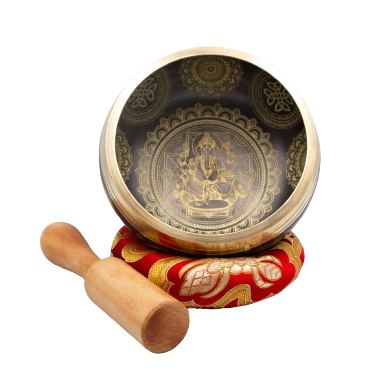
A good example: our 325g Ganesh bowl and our 350g Five Buddha bowls sit almost identically in weight, yet the Ganesh design costs more than four times as much. The difference isn't the metal — it's the detail of the interior artwork and the specific craftsmanship applied after the basic hammering was already complete. When comparing two listings, weight is the starting point for a fair comparison, not the whole story.
How to Actually Compare Two Similar-Looking Listings
When two bowls look broadly similar in photos but carry different prices, it's worth asking the seller directly what accounts for the gap rather than assuming one is simply overpriced. A genuine answer — more detailed interior painting, a more complex metal blend, additional finishing steps — is a reasonable justification. A seller who can't explain the difference beyond "it's a nicer one" is giving you less to actually evaluate, and that vagueness is itself useful information when deciding between two options.
The Machine-Made Price Gap
It's worth being specific about how large the price gap between hand-hammered and machine-made bowls actually is, since this explains a lot of the confusing pricing you'll see across the wider market. A machine-stamped bowl of a given size can often be produced and sold for a third or less of what a genuinely hand-hammered bowl of the same size costs, simply because the production time is a fraction of the labor involved in hand-hammering. This is also why machine-made bowls tend to sound noticeably flatter and simpler — the same manufacturing shortcut that saves time also produces a more uniform, less acoustically complex piece of metal. We've gone into the sound difference specifically in our handmade versus machine-made comparison, but the price implication is simple: if a bowl seems unusually cheap for its stated size, machine production is the most likely explanation, not an unusually good deal on genuine craftsmanship.
Why This Gap Persists Across the Whole Market
You might expect competition to close this price gap over time, but it hasn't, and understanding why helps explain the pricing you'll see today. Hand-hammering requires trained artisans whose skill takes years to develop, and that skilled labor pool simply can't scale the way industrial stamping equipment can. Machine production, once the equipment is in place, can turn out large volumes at a fraction of the marginal cost per unit, while hand-hammering remains fundamentally limited by how many bowls a single skilled person can physically produce in a day. This structural difference is why the price gap between the two categories has remained wide and stable rather than narrowing as the market has grown.
What You Actually Get at Each Price Tier
AED 75–150: Genuine hand-hammered bowls in this range, but smaller and simpler — a solid entry point for trying the practice without a large investment, though don't expect the deepest, most sustained tone here. This tier suits someone testing whether the practice suits them before committing further. Expect a shorter sustain time when the bowl is played, and a lighter, brighter tone rather than a deep hum.
AED 150–300: The sweet spot for most regular practitioners — enough weight for a genuinely satisfying tone, usually including a striker and cushion, without paying a premium for size alone. This is where we'd point most people building a genuine daily habit. Bowls in this range typically offer a noticeably longer sustain and a fuller, more layered tone than the entry tier, while still remaining easy to hold comfortably during a session.
AED 300–450+: Larger, heavier bowls with real depth and sustain, often featuring more elaborate hand-painted designs. Worth it specifically if depth of tone and visual presence both matter to you, less necessary if you're mainly using the bowl for short daily sessions. These bowls also tend to work better in group settings or larger rooms, where a bigger, more resonant tone actually has the space to fill.
Above AED 450: Beyond our own current range, but worth knowing about for context — this tier typically involves either exceptionally large bowls, antique or vintage pieces with genuine age and provenance, or elaborate multi-metal alloys requiring specialized sourcing. Most buyers, including experienced practitioners, never actually need to shop in this range, and it's worth being especially careful about authenticity claims at this price point specifically, since the financial incentive to misrepresent a bowl's age or origin grows alongside the asking price.
A Full Real Price List
Here's the complete picture across our current range, so you can see the full spread in one place rather than piecing it together from separate examples.
| Bowl | Weight | Price (AED) |
|---|---|---|
| Five Buddha, Blue & Gold | 350g | 85 |
| Five Buddha, Magenta & Gold | 350g | 85 |
| Vibrant Blue Design | 385g | 175 |
| Hand-Painted Black | — | 185 |
| Buddha, Golden Blue | 436g | 300 |
| Buddha, Golden Bronze | 482g | 350 |
| Ganesh, Golden Design | 325g | 399 |
| Bodhisattva, Golden Design | 556g | 399 |
Notice this table isn't neatly sorted by weight-to-price ratio — the Ganesh bowl at 325g costs more than the Buddha Golden Bronze at 482g, despite being lighter, purely because of its design complexity. This is the clearest illustration in this entire guide of why weight alone never fully explains price.
It's also worth noting how the entry-level Five Buddha bowls, at AED 85, sit at less than a quarter of the price of the Bodhisattva or Ganesh bowls, despite all being genuinely hand-hammered pieces from the same broader catalog. This spread illustrates just how much design complexity alone can move the price within what's otherwise a fairly narrow weight range — proof that a limited budget doesn't necessarily mean settling for a lesser construction method, just a simpler design.
Buying in the UAE vs. Importing
Ordering directly from Nepal-based sellers can occasionally look cheaper on the listed price alone, but it's worth factoring in international shipping cost and time, potential customs handling, and the difficulty of resolving a problem if a bowl arrives damaged or different from described.
The Real Cost of International Shipping
International shipping for a fragile metal object typically costs considerably more than the free or low-cost local delivery a UAE-based seller can offer, and delivery times stretch from a day or two locally to potentially several weeks internationally. Once you add reasonable international shipping to an overseas listing price, the gap between "cheaper import" and "buy locally" often shrinks or disappears entirely.
Customs and Import Complications
International orders can also mean unexpected customs duties or import paperwork landing on the buyer rather than being clearly disclosed at checkout, something that rarely gets mentioned upfront on an overseas listing. A locally held bowl, already imported and cleared, avoids this entirely.
What Happens If Something Goes Wrong
If a bowl arrives with a dent, a cracked seam, or simply doesn't sound the way it was described, resolving that with a local seller is considerably more straightforward than coordinating an international return, which can cost more in return shipping than the bowl itself is worth. This is a genuinely underrated factor in the true cost comparison — a slightly higher local price often buys real, practical protection against exactly this scenario.
Currency and Payment Considerations
Ordering from an overseas seller also often means paying in a foreign currency, which can add conversion fees and exchange rate uncertainty that don't show up clearly until after the transaction is complete. A local UAE seller pricing directly in dirhams removes this variable entirely, making the final cost genuinely predictable at the point of purchase rather than subject to whatever the exchange rate happens to be on the day the charge is processed. Card networks and banks also frequently apply their own foreign transaction fees on top of the listed price, an extra cost that's easy to overlook when comparing a foreign listing price directly against a local one without adjusting for these add-ons.
Time Value Matters Too
It's easy to focus purely on the dirham cost and forget that waiting several weeks for an international delivery has its own real cost, particularly if you're buying a bowl specifically to start a practice you're motivated to begin now. A slightly higher local price that gets a genuine, tested bowl into your hands within a day or two is often the better overall value once your own time and momentum are factored into the decision, not just the number on the price tag.
When a Price Is Too Good to Be True
A large, heavy bowl priced dramatically below what similar weight and craftsmanship cost elsewhere is the single biggest red flag in this category. Genuine hand-hammering simply takes real time, and that time has to be reflected in the price somewhere. A suspiciously low price on a bowl described as hand-hammered and large is far more likely to be machine-stamped, thinner-walled, or both — worth asking directly about construction method before assuming it's simply a bargain.
Other Warning Signs Worth Knowing
Listings that describe every single bowl in a catalog as "antique" or "extremely rare," regardless of how common the design actually is, tend to be leaning on enthusiasm rather than accuracy. A seller unable to answer a direct question about weight, metal composition, or construction method — deflecting instead to vague spiritual language — is also worth treating with more caution than one who can speak specifically about how a particular bowl was made.
Photos That Look Too Polished
A single, heavily edited studio photograph with no additional angles, no size reference, and no weight listed is a weaker signal than a listing showing the actual bowl from multiple angles alongside its stated weight and dimensions. Genuine sellers working with individual, slightly variable handmade stock tend to photograph the actual item more thoroughly, since each piece really does look and weigh slightly differently from the next.
Unrealistic Claims About Frequency or Tuning
Be cautious of listings claiming a bowl is precisely tuned to a specific musical note or frequency with scientific-sounding precision, unless the seller can back this up with real detail. Genuine hand-hammered bowls are shaped by ear during the tuning process, which produces a rich, complex tone rather than a single pure frequency in the way a manufactured tuning fork would — a claim of laboratory-precise tuning on a hand-hammered bowl doesn't really match how the instrument is actually made.
Hidden Costs Worth Watching For
Check whether a striker and cushion are actually included in the listed price, since some sellers price these as separate add-ons that meaningfully change the real total. If ordering internationally, factor in shipping cost and potential import duties that don't always appear clearly at checkout. And if a return or exchange is ever needed, check the seller's actual policy in advance rather than assuming standard retail rules apply — natural materials and handcrafted goods are frequently treated differently from standard merchandise, with many sellers only accepting returns for misdelivered or clearly defective items rather than a general change of mind.
Insurance and Fragility During Shipping
A metal bowl is more resilient than porcelain, but a large, heavy piece can still dent if handled roughly in transit, and it's worth checking whether a seller offers any protection or compensation for shipping damage before it becomes an issue after the fact. This matters more for larger, more expensive bowls, where a shipping mishap represents a genuinely significant loss rather than a minor inconvenience.
Bundled Extras That Inflate the Comparison
Some listings bundle a bowl with extras — a carrying case, a second smaller striker, instructional material — that can make direct price comparisons between sellers more difficult than they first appear. When comparing two listings, it's worth breaking down what's actually included rather than comparing headline prices alone, since a slightly higher price that includes genuinely useful extras can work out better value than a lower price for the bowl alone.
How to Budget for Your First Bowl
If you're genuinely new to this and unsure how much to spend, a useful approach is to treat your first bowl as a trial of the practice itself rather than a lifetime investment. Something in the AED 85 to AED 175 range gives you a real, hand-hammered instrument capable of a genuinely satisfying tone, without committing a large amount of money to a practice you haven't yet confirmed suits you. If, after a few weeks or months of regular use, you find yourself wanting a deeper tone, a larger size, or simply a second bowl for a different purpose, that's the point to consider stepping up into the AED 300+ range with much more confidence that the investment will actually get used.
This staged approach also has a practical secondary benefit: a smaller first bowl is genuinely useful even after you've bought a larger one, whether for travel, for a quicker daily session, or simply as a second option — it's rarely money wasted even once your practice has grown beyond it.
A Simple Framework If You're Still Undecided
If you're torn between two price points, it can help to ask yourself three questions. First, will you actually use this daily, or is it more of an occasional or exploratory purchase — daily use justifies spending more on tone quality and comfort. Second, do you have a quiet, dedicated space where a larger, deeper-toned bowl would actually be appreciated, or is space limited enough that a smaller bowl makes more practical sense regardless of budget. Third, is this a gift for someone else, in which case a mid-range bowl with genuine visual appeal often makes more sense than either the cheapest or the most expensive option in the range.
Buying More Than One Bowl
Some practitioners eventually build a small collection of two or three bowls in different sizes, using each for a different purpose — a smaller one for quick daily sessions, a larger one for deeper, longer practice. If this is where you eventually see yourself heading, it's often more cost-effective to start with a smaller, less expensive bowl now and add a larger one later, rather than trying to find a single "do everything" bowl that compromises on both ends.
Why Paying More Often Pays Off Over Time
It's worth thinking about cost per year of use rather than only the upfront number. A genuine hand-hammered bowl, properly cared for, can realistically last decades — metal doesn't wear out the way elastic cord or dyed textiles do, and the main risks to a bowl's longevity are physical damage from drops or impacts rather than gradual deterioration from normal use. A machine-made bowl bought purely to save money upfront may need replacing sooner if its thinner walls dent more easily, or may simply never deliver the tone quality that keeps someone motivated to actually use it daily in the first place.
Framed this way, the difference between an AED 150 bowl and an AED 350 bowl, spread across ten or twenty years of regular use, is a genuinely small amount per year — often less than the cost of a single coffee per month. This doesn't mean the more expensive bowl is automatically the right choice for everyone, but it's a useful way to think past the sticker price alone when deciding what actually represents good value for your specific situation.
The Motivation Factor
There's also a less tangible but genuinely important consideration: a bowl that sounds disappointing tends to get used less over time, regardless of how cheap it was. A slightly higher upfront cost that buys a genuinely satisfying tone often pays for itself simply by making the daily practice something you actually look forward to, rather than a chore performed with a mediocre instrument. This is difficult to quantify in a price comparison table, but it's worth weighing seriously alongside the numbers.
Seasonal Pricing and Gifting Timing
Demand for singing bowls tends to rise around specific periods — wellness-focused new year resolutions in January, and gifting occasions throughout the year generally. It's worth knowing that this seasonal demand doesn't typically translate into significantly higher prices for genuine hand-hammered pieces, since the cost is anchored to labor and material rather than fluctuating demand the way, say, flight prices might. What can happen is that popular designs or specific sizes sell out faster during these periods, so if you're buying for a specific gifting occasion, ordering with some lead time is more important than trying to time a lower price, since meaningful discounts on genuinely handcrafted pieces are less common than on mass-produced goods.
If you do see a promotional discount on a genuine hand-hammered bowl, it's usually tied to store-wide sales events rather than the bowl itself being devalued, and it's still worth applying the same authenticity checks covered throughout this guide rather than assuming a discount automatically confirms a good deal.
How This Compares to Crystal Singing Bowl Pricing
It's worth a brief mention for anyone researching singing bowls broadly rather than specifically the hand-hammered metal variety covered throughout this guide: fused quartz crystal singing bowls are priced on an entirely different scale, generally starting considerably higher than even our most expensive metal bowl and climbing steeply with size, given the specialized furnace equipment and precision tuning required to produce them. If you've seen singing bowl prices online that seem dramatically higher than everything discussed in this guide, there's a good chance you were looking at crystal bowls rather than the Himalayan metal tradition this guide focuses on — two genuinely different instruments with two very different cost structures, not a sign that one seller is overcharging relative to another.
A Quick Checklist Before You Buy
Pulling everything in this guide together, here's a short list of questions worth running through before finalizing a purchase, regardless of which seller or price point you're considering.
- Is the bowl's weight listed clearly, and does the price roughly match what similar weights cost elsewhere in this guide?
- Can the seller confirm whether it's hand-hammered or machine-made, with specific detail rather than a generic claim?
- Are a striker and cushion included, or will they need to be purchased separately?
- If ordering internationally, have you factored in shipping cost, delivery time, and potential customs charges into the real total?
- What is the seller's actual return or exchange policy if the bowl arrives damaged or different from described?
Running through these five points takes only a couple of minutes but genuinely protects against the most common regrets buyers report after purchasing a singing bowl based on price alone.
Real Bowls Across the Price Range
Here's an honest spread from our own current range, spanning the tiers covered above, with real photos rather than stock imagery.

Five Buddha Bowl, Blue & Gold (350g)
AED 85
The most affordable full-size hand-hammered option in the range — a genuine entry point rather than a compromise.
View Product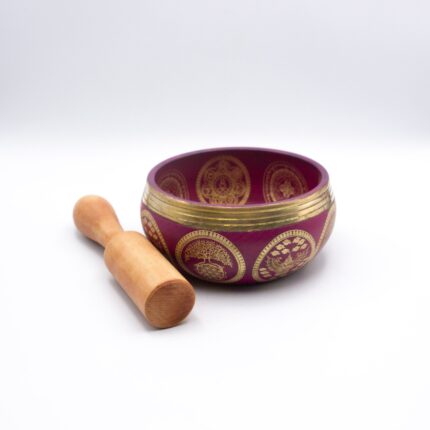
Five Buddha Bowl, Magenta & Gold (350g)
AED 85
Same size and price as the blue version, in a bolder magenta colorway for anyone who wants a more visually striking piece.
View Product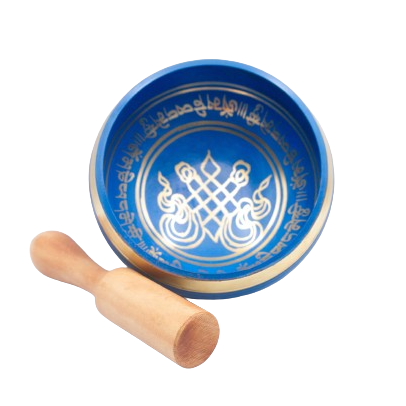
Vibrant Blue Design Bowl (385g)
AED 175
Mid-tier pricing with a genuinely striking pattern — good middle ground between budget and statement pieces.
View Product
Hand-Painted Black Singing Bowl
AED 185
A distinctive matte black finish with hand-painted detailing, priced just above the mid-tier entry point.
View Product
Buddha Singing Bowl, Golden Blue (436g)
AED 300
Heavier and more detailed, sitting right at the boundary between mid-tier and premium pricing.
View Product
Buddha Singing Bowl, Golden Bronze (482g)
AED 350
A warmer bronze finish, heavier still, edging into premium territory for its size and tone depth.
View Product
Ganesh Singing Bowl (325g)
AED 399
Proof that weight isn't everything — lighter than several bowls priced far lower, but priced at the top of the range for its detailed motif.
View Product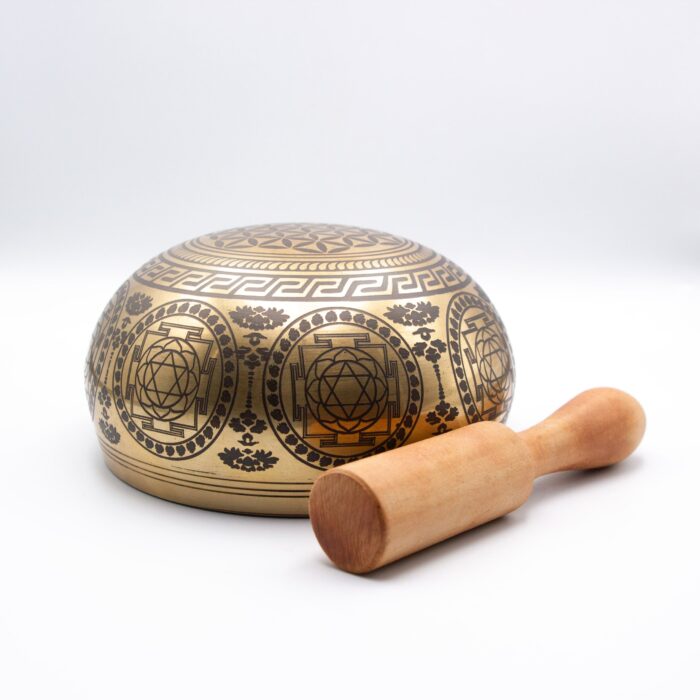
Bodhisattva Singing Bowl (556g)
AED 399
Our largest, heaviest bowl — deep, sustained tone and genuine visual presence for a serious daily practice.
View ProductBrowse the complete, regularly updated range in our singing bowl collection. If you want the fuller picture beyond price — construction, sizing, choosing between designs — our complete singing bowl guide covers that ground in depth, and our beginner's guide to actually using one is worth reading once your bowl arrives.
Whatever budget you're working with, the core advice in this guide holds regardless of the specific number: understand what weight and craftsmanship actually cost to produce, treat unusually low prices on large, elaborate bowls with healthy skepticism, and factor in the real, total cost of buying — shipping, accessories, and the ease of resolving any issue — rather than comparing headline prices alone. A little patience applying these checks before ordering tends to matter far more to how satisfied you end up with a bowl than chasing the absolute lowest number you can find.
Not sure what fits your budget?
Tell us roughly what you want to spend and how you'll use it, and we'll point you to the right size rather than the most expensive option.
Questions People Ask
What's a fair price for a beginner singing bowl?
Somewhere between AED 85 and AED 175 typically gets a genuine, hand-hammered bowl suitable for starting a regular practice, without paying a premium for size you may not need yet.
Why do two bowls of the same weight cost different amounts?
Design complexity, such as detailed hand-painted interior patterns or a two-tone finish, adds skilled labor beyond basic hammering, which affects price independently of weight.
Is it cheaper to import a singing bowl directly from Nepal?
Not necessarily once shipping time, potential customs handling, and the difficulty of resolving issues are factored in. Buying locally in the UAE is often comparable in total cost with faster, more reliable delivery.
How do I know if a cheap singing bowl is actually a good deal?
A large, heavy bowl priced well below comparable listings is more likely machine-stamped than a genuine bargain. Ask directly about construction method before assuming a low price reflects good value.
Does the price include a striker and cushion?
This varies by seller. It's worth checking specifically, since some listings price these as separate add-ons that change the real total cost of actually using the bowl.
How much does hand-hammering actually add to the price compared to a machine-made bowl?
A machine-stamped bowl can often be produced for a third or less of the cost of a comparable hand-hammered piece, since the production process takes minutes rather than the hours or days hand-hammering requires.
Should I buy a cheap bowl first or invest in a bigger one right away?
Starting with a smaller bowl in the AED 85 to AED 175 range is a reasonable way to confirm the practice suits you before investing further, and a smaller bowl typically remains useful even after buying a larger one later.
Do more expensive bowls actually last longer?
Genuine hand-hammered metal bowls generally last decades regardless of price tier, since metal doesn't degrade the way elastic cord or dyed textiles do. The main risk to longevity is physical damage rather than gradual wear.
Why do two bowls that look similar in photos have such different prices?
Photos alone often don't reveal differences in metal composition, finishing steps, or the fine detail of hand-painted work. Asking a seller directly what accounts for a price difference usually reveals more than comparing images alone.