

Kuka Wood vs Gemstone Tasbih: Which Should You Actually Buy?
Light, warm kuka or cool, colourful stone? An honest side-by-side comparison of feel, sound, weight, durability and care, so you can choose the tasbih you'll actually use every day.
Walk through any souk in the UAE and you'll see two very different kinds of tasbih side by side: warm brown kuka beads, often carved and polished to a deep shine, and gemstone tasbih in jade green, carnelian red, lapis blue or glossy black. Both are traditional, both are beautiful, and both are used for dhikr every day by millions of people. But they feel, sound and age completely differently, and the right choice depends on how you use your tasbih. This guide compares kuka and gemstone honestly, point by point, so you can decide which one you'll actually enjoy using. We sell gemstone tasbih and not kuka, so we'll be upfront about where kuka is the better choice.
Kuka vs Gemstone Tasbih: The Short Answer
Choose kuka if you want a light, warm, quiet tasbih that feels soft in the hand, and that slowly darkens and gains a rich shine the more you use it. It's ideal for long dhikr sessions and for people who love traditional, natural materials. Choose a gemstone tasbih if you want colour, a cool and smooth feel, a satisfying weight, a crisp click, and beads that stay the same for decades and are easy to clean. Gemstones also suit people who value the traditional meanings of stones such as aqeeq, jade or onyx. Neither is "better" in any religious sense; both are simply tools for counting dhikr, so choose the one that feels right in your hand.
What Kuka Actually Is
Kuka is often called a wood, but strictly speaking it isn't. Kuka beads (known as kuka in Turkish and كوك, kūk, in Arabic) are usually described as being made from the hard, dense shell of the fruit of the doum palm, a palm that grows in North and East Africa and parts of the Arabian Peninsula. The shell is cut, turned on a lathe, and polished into beads.
Kuka has a long history in the Ottoman and Middle Eastern tasbih tradition, and Turkey in particular is famous for fine kuka craftsmanship. High-end pieces are often hand-carved, and some are decorated with silver inlay worked into the surface of each bead. Because kuka is a natural plant material, every bead has its own subtle grain and colour variation.
What a Gemstone Tasbih Is
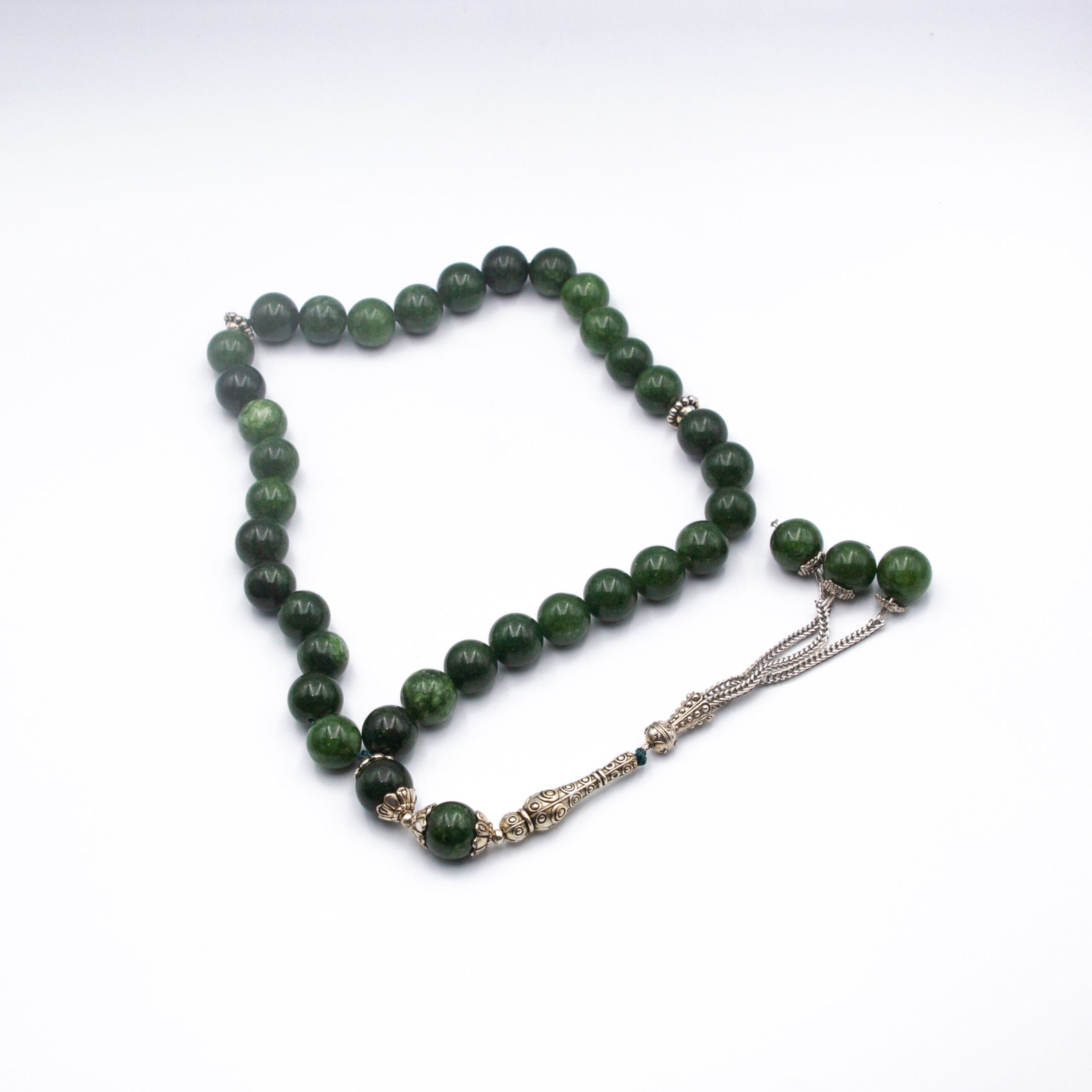
A gemstone tasbih is made from natural stone beads, usually polished into rounds of 6mm to 12mm. Popular stones include carnelian and agate (traditionally known as aqeeq), jade, onyx, tiger's eye, lapis lazuli, amethyst and quartz. Each stone has its own colour, weight and traditional associations, and good gemstone beads stay virtually unchanged for a lifetime. Our crystal tasbih buying guide covers gemstone tasbih in depth.
Kuka vs Gemstone Tasbih: Side by Side
| Kuka | Gemstone | |
|---|---|---|
| Material | Doum palm fruit shell (plant-based) | Natural stone (agate, jade, onyx, quartz and others) |
| Weight | Light | Noticeably heavier |
| Touch | Warm, soft, slightly "alive" | Cool at first, smooth and glassy |
| Sound | Soft, gentle clack | Crisp, clear click |
| Colour | Shades of brown; darkens over time | Wide range of natural colours; stays the same |
| Ageing | Develops a glossy patina with use | Stays as it is; polish may soften slightly over decades |
| Durability | Tough, but can crack with heat, dryness or water | Hard and stable, but can chip if dropped on tiles |
| Water | Keep dry | Most stones can be rinsed briefly |
| Traditional meanings | Valued for tradition and craftsmanship | Each stone carries its own traditional associations |
| Price | From affordable to very expensive for carved or silver-inlaid pieces | Mostly affordable; rarer stones cost more |
Feel, Weight and Sound
This is where most people make up their minds, so it's worth trying both if you can.
Feel
Kuka feels warm almost immediately, slightly softer and more "organic" under the thumb. Gemstone beads feel cool when you first pick them up and warm gradually as you use them. Many people find that coolness calming; others prefer kuka's instant warmth.
Weight
Kuka is light, so even a 99-bead tasbih is comfortable to hold for a long time or to carry in a pocket. A gemstone tasbih has a reassuring weight; many people like how it settles into the hand. For long sessions, lighter beads or smaller stones are easier. Our tasbih bead size guide explains how bead size changes the feel.
Sound
Kuka beads make a soft, muted clack, which is good for quiet places like mosques, offices and late-night dhikr. Gemstone beads give a crisper, brighter click, which some people find helps them keep rhythm.
Durability and Daily Use
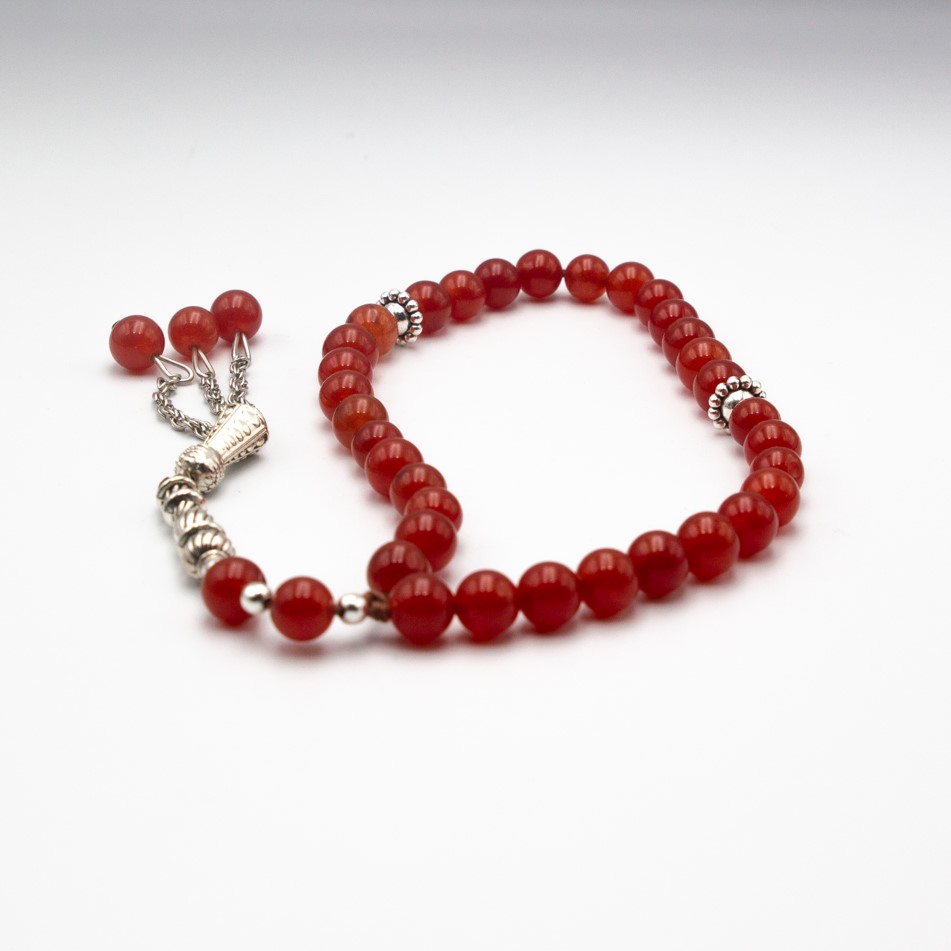
Gemstone beads are hard. Quartz-family stones such as carnelian, agate, onyx and tiger's eye sit at 6.5–7 on the Mohs hardness scale and resist scratches, sweat and daily handling very well. Jade is famously tough. Their weakness is impact: a hard drop onto marble or tiles can chip a bead.
Kuka handles drops better, because it's lighter and slightly less brittle. Its weakness is its environment: like most natural plant materials, it can crack if it dries out too much, gets soaked, or goes through sudden temperature changes.
On both types, the cord is usually the first thing to wear out, so check it every few months and restring when it starts to fray.
Which Handles UAE Life Better?
UAE life puts a tasbih through some specific challenges:
- Heat in the car: a tasbih left on the dashboard in summer can get extremely hot. Gemstones tolerate heat well, though sudden cooling, such as a hot bead going into cold water, can stress some stones. Kuka is more vulnerable: intense heat dries it out and can cause cracks. With either type, the cord suffers most. Our crystals in UAE heat guide explains more.
- Air-conditioning: very dry indoor air can dry out kuka over time. Gemstones aren't affected.
- Wudu: a gemstone tasbih can be rinsed briefly and dried if water splashes on it. Kuka should be kept away from water and dried immediately if it gets wet.
- Perfume and attar: oils from attar can darken kuka faster and unevenly. On gemstones they simply wipe off.
Overall, a gemstone tasbih is the lower-maintenance choice for UAE conditions, while kuka rewards a little extra care.
Looks and How They Age
This is the biggest difference in character between the two.
Kuka changes with you. As you use it, natural oils from your hands slowly darken the beads and build up a deep, glossy patina. Collectors talk about a kuka tasbih "maturing", and an old, well-used kuka can look completely different from a new one. Many people love that their tasbih becomes personal over the years.
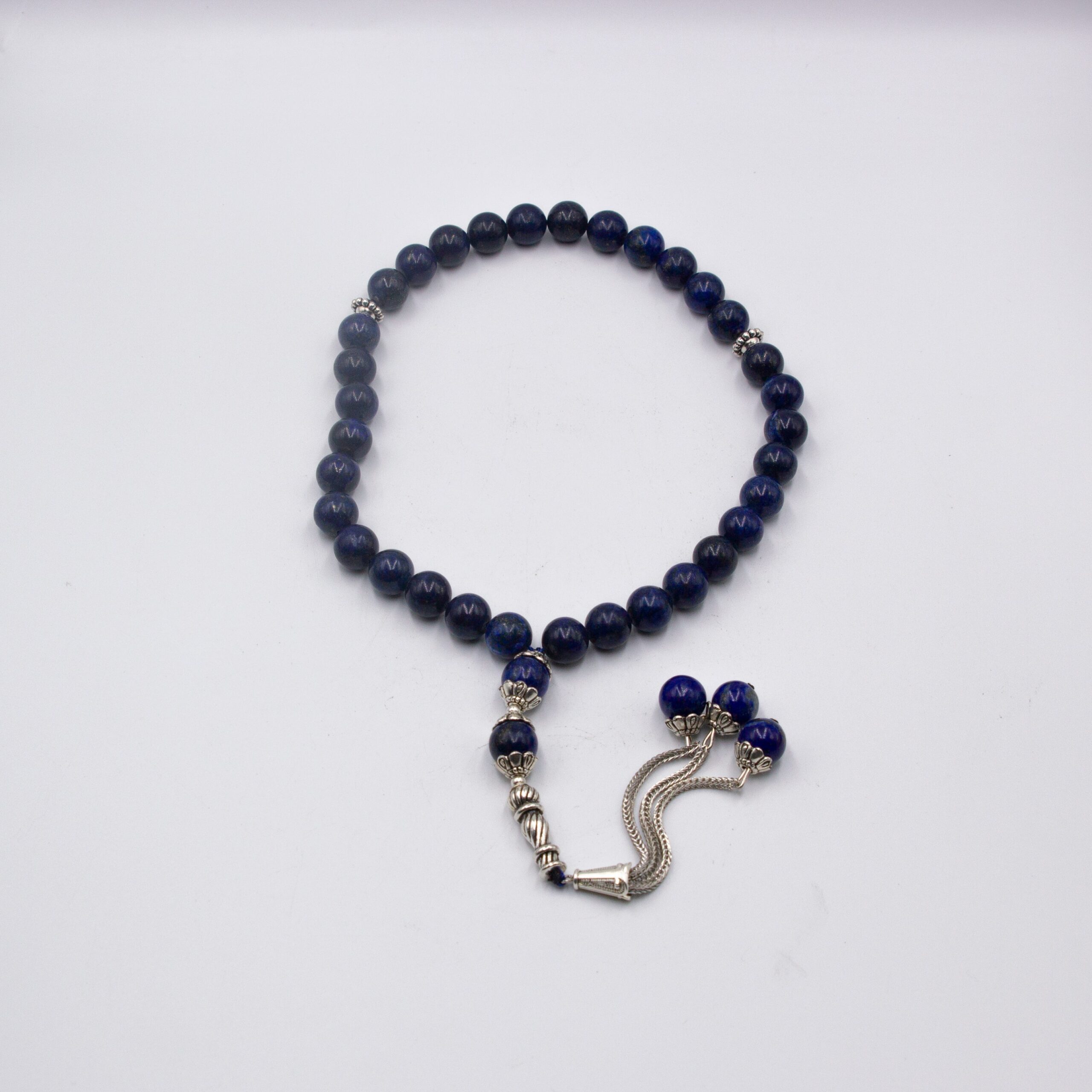
Gemstones stay true. A jade, lapis or carnelian tasbih will look much the same in twenty years as it does today. You choose a colour and it stays that colour. Gemstones also offer far more variety: greens, reds, blues, blacks, golden browns and soft purples.
Spotting Fake Kuka and Fake Gemstones
Fake kuka
- Grain: real kuka shows fine natural lines and slight colour differences between beads. Plastic or resin imitations look perfectly uniform.
- Temperature: both feel warm, but resin often feels slightly sticky or "plasticky" rather than dry and smooth.
- Seams and bubbles: mould lines or tiny bubbles suggest resin.
- Price: finely carved or silver-inlaid kuka is labour-intensive. A very cheap "hand-carved" piece deserves a closer look.
Fake gemstones
- Temperature: real stone feels cool at first; plastic warms almost instantly.
- Bubbles: round bubbles inside a bead point to glass.
- Natural variation: real stones vary slightly from bead to bead; perfectly identical colour on every bead can suggest dye or glass.
- Dye at the drill holes: colour collected around the holes is a sign of dyeing.
For more tips, see our guide to choosing an authentic crystal.
Who Should Choose Which
Kuka is the better choice if you:
- do long dhikr sessions and want the lightest, most comfortable beads
- prefer a soft, quiet sound
- love natural plant materials and traditional Ottoman-style craftsmanship
- like the idea of a tasbih that darkens and becomes personal over the years
- are happy to keep it dry and look after it
A gemstone tasbih is the better choice if you:
- want colour and a choice of stones
- like a cool, smooth feel, a little weight, and a crisp click
- want something low-maintenance that you can rinse after wudu splashes
- value the traditional associations of stones such as aqeeq, jade or onyx
- are buying a gift that will look the same for decades
Many people end up owning both: a light kuka for long evening dhikr, and a gemstone tasbih to carry every day.
If You Choose Gemstone: Which Stone?
- Carnelian (aqeeq): the most traditional choice across the Gulf and South Asia; warm red, very durable.
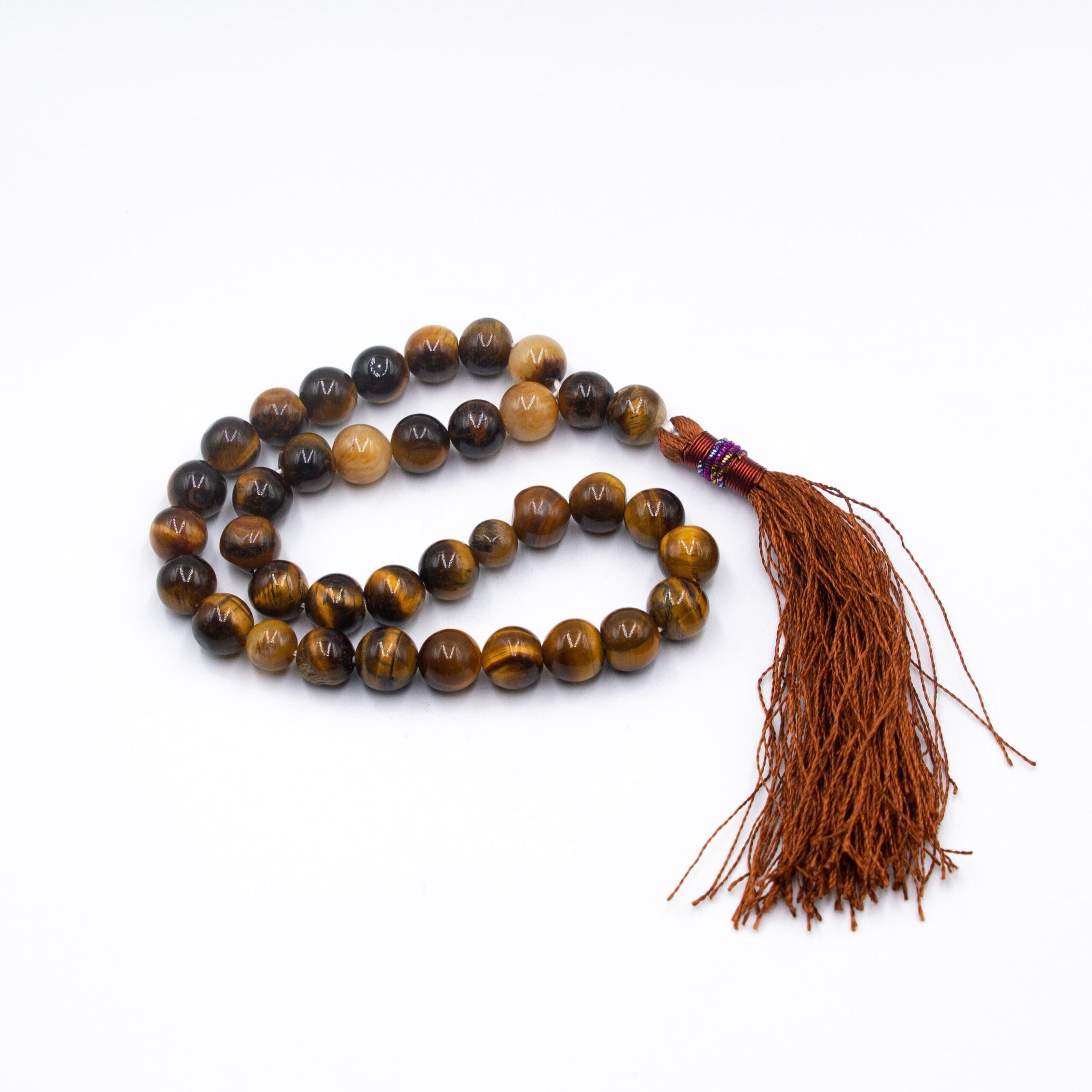
- Tiger's eye: golden-brown with a moving shimmer; the closest in colour to kuka, if you like warm brown tones.
- Black onyx or obsidian: plain, dignified black; very popular with men.
- Nephrite jade: calm green and exceptionally tough.
- Lapis lazuli: deep royal blue with golden flecks; keep it dry.
- Clear quartz or amethyst: light, clean and bright.
Caring for Each Type
Kuka
- Keep it dry; if it gets wet, dry it immediately with a soft cloth.
- Keep it out of hot cars and direct sun, and away from air-conditioning vents.
- Regular handling is the best care; the natural oils from your hands keep it conditioned.
- Avoid perfume, attar and chemicals on the beads.
Gemstone
- Wipe with a soft cloth; most stones can be rinsed briefly in lukewarm water with mild soap, then dried, especially the cord.
- Keep lapis, turquoise, pyrite and malachite dry.
- Store it in a soft pouch so beads don't knock against harder objects.
- See our guide on how to clean a gemstone tasbih for stone-by-stone advice.
Gemstone Tasbih at Alpine Crystals
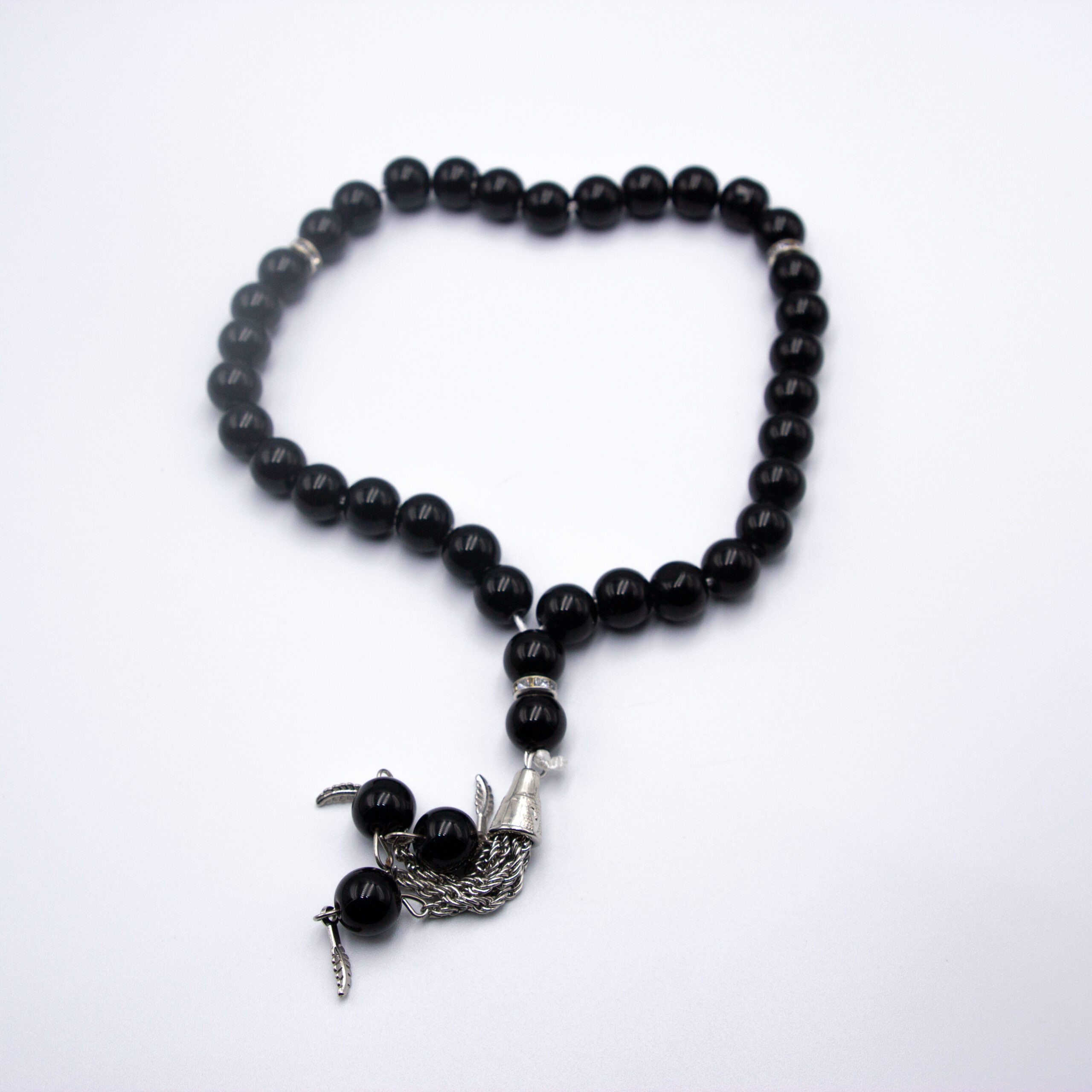
We specialise in natural gemstone tasbih, mostly in 33 beads of 8mm or 10mm. A few favourites:
- Red Carnelian Tasbih (10mm, 33 beads): the classic aqeeq choice.
- Brown Tiger's Eye Tasbih (10mm, 33 beads): warm golden-brown, ideal if you love kuka's tones.
- Nephrite Jade Tasbih (10mm, 33 beads): calm green and very tough.
- Black Obsidian Tasbih (10mm, 33 beads) and Black Onyx Tasbih (10mm, 33 beads): plain, elegant black.
- Lapis Lazuli Tasbih (10mm, 33 beads): deep royal blue.
- Clear Quartz Tasbih (10mm, 33 beads): light and bright.
Browse the full gemstone tasbih collection. Stock changes, so check each product page for availability. Orders over AED 150 ship free within the UAE, usually in 1–2 days.
Not sure which stone suits you?
Tell us what you like about kuka, the colour, the warmth or the weight, and we'll suggest the gemstone tasbih that comes closest.
The Verdict
There's no wrong choice between kuka and gemstone; both have centuries of tradition behind them. Kuka is light, warm and quiet, and it becomes more personal and beautiful with every year of use, but it asks you to keep it dry and away from heat. A gemstone tasbih is cool, colourful, weightier and almost maintenance-free, which suits busy UAE life, and it lets you choose a stone whose colour and traditional meaning you love. If you can, hold both before you decide. Your hand will usually tell you which one you'll reach for every day.
Questions People Ask
What is kuka tasbih made of?
Kuka is usually described as being made from the hard shell of the doum palm fruit, not wood in the strict sense. It's cut, turned and polished into light, warm brown beads.
Is kuka or gemstone tasbih better?
Neither is better overall. Kuka is lighter, warmer and quieter, and develops a patina with use. Gemstone is cooler, heavier, more colourful and lower-maintenance. Choose the one that feels best in your hand.
Why does kuka tasbih get darker?
Natural oils from your hands slowly soak into the surface and build up a glossy patina. Many people value this, because the tasbih becomes darker and more personal with years of use.
Can a kuka tasbih get wet?
It's best kept dry. If it gets wet, for example during wudu, dry it immediately with a soft cloth. Most gemstone tasbih can be rinsed briefly and dried.
How can I tell if kuka is real?
Real kuka shows fine natural grain and small colour differences between beads, and feels dry and smooth. Perfectly uniform beads, mould lines, bubbles or a sticky feel suggest plastic or resin.
Which gemstone tasbih is closest to kuka?
Brown tiger's eye is closest in colour, with warm golden-brown tones. For a lighter feel, choose smaller 8mm beads, which are easier to hold for long sessions.
Is a heavy tasbih uncomfortable for long dhikr?
Some people prefer lighter beads for long sessions. Kuka or smaller gemstone beads, around 6–8mm, are the most comfortable; 10mm stone beads feel more substantial.
Do you sell kuka tasbih?
We specialise in natural gemstone tasbih and don't currently stock kuka. If you'd like a gemstone that comes closest to kuka's look or feel, message us on WhatsApp and we'll help you choose.