

How to Clean and Care for a Gemstone Tasbih
A tasbih is handled more than almost anything else you own. Here's how to clean the beads, the thread and the tassel safely - and keep each stone looking right for years.
Most jewellery is worn. A tasbih is held, turned and counted - sometimes hundreds of times a day. That constant handling is exactly what makes it personal, and it's also why knowing how to clean a tasbih properly matters more than it does for a ring or a bracelet. Skin oils, attar, sweat, dust and the occasional splash after wudu all build up on the beads, work their way into the thread, and slowly dull the tassel. This guide covers everything: a simple daily habit, a safe deep clean, how to treat each type of gemstone differently, how to look after the tassel and thread, and what UAE heat and sun do to prayer beads. Every method here is gentle - nothing that risks scratching a bead, fading a stone or weakening the string.
How to Clean a Tasbih: The Short Answer
Wipe your tasbih with a soft, dry microfibre cloth after use, working along the thread bead by bead. For a deeper clean, use a cloth that is only slightly damp with lukewarm water and a drop of mild, unscented soap, wipe each bead, then go over it with a clean damp cloth and dry it thoroughly. Lay it flat to air-dry for a few hours so the thread dries completely. Never soak a tasbih, never use alcohol, bleach, vinegar, perfume or ultrasonic cleaners, and keep soft or porous stones such as turquoise, lapis lazuli and malachite away from water altogether. Store it in a pouch, out of the sun, and never leave it in a hot car.
Why a Tasbih Needs Different Care
General crystal care guides are written for stones that sit on a shelf or a bracelet that sits on a wrist. A tasbih faces a different set of conditions:
Constant friction. Each bead is pushed against the next, over and over. Softer stones slowly lose polish where beads touch, and the thread rubs against every drill hole.
Skin oils and attar. Fingertips carry natural oils, and many people in the Gulf wear attar or oud. These transfer straight onto the beads and into the thread.
Water nearby. A tasbih is often close at hand around wudu, so damp fingers are common. Small amounts are harmless for most stones; repeated moisture is not good for thread, tassels, or porous stones.
Several materials in one piece. A single tasbih combines gemstone beads, a thread, often metal spacers or caps, the larger imam bead, and a tassel made of silk, cotton or synthetic fibre. Each of those needs slightly different handling, and the most delicate part sets the rules for the whole tasbih.
That last point is the most useful one to remember: clean the tasbih for its weakest part, not its strongest. A quartz bead could survive a rinse; the thread and tassel holding it might not.
The Parts You're Actually Cleaning
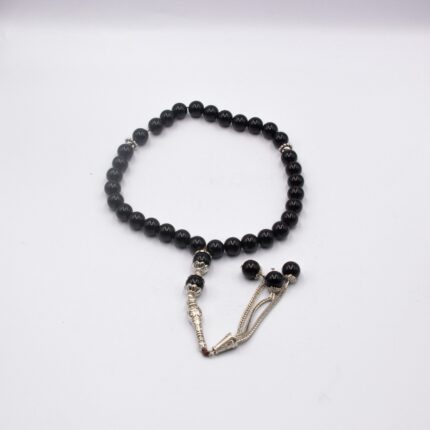
Counting beads. The 33 or 99 main beads. These carry most of the skin oil and dust. If you're unsure of the layout, our guide to 33 vs 99 bead tasbih explains how the beads and markers are arranged.
Divider or marker beads. Smaller or differently shaped beads separating groups of 33. Sometimes metal, sometimes a contrasting stone.
The imam (head) bead. The elongated bead at the end. It's often the largest piece and may have metal caps or decoration.
The thread. Usually a strong nylon, polyester or silk cord. It's the part most likely to wear out, and the part most affected by moisture and oils.
The tassel. The most absorbent part of the tasbih - it collects attar, dust and colour from hands faster than anything else.
Everyday Care: The 30-Second Habit
Most tasbih never need a "deep clean" if they get a quick wipe regularly. A simple habit does most of the work:
- Keep a microfibre cloth with it. The small cloths sold for glasses are ideal - soft, lint-free and easy to keep in the same pouch.
- Wipe bead by bead. Hold the thread taut with one hand and draw the cloth along the strand, pinching each bead lightly as you go. This lifts oils without twisting the thread.
- Give the imam bead and caps a separate wipe. Oils collect in the joins between bead and metal.
- Shake out the tassel gently and smooth it straight with your fingers.
- Return it to its pouch rather than leaving it on a dashboard, windowsill or bathroom shelf.
Doing this every few days - or after any day you've worn attar - keeps the beads bright and stops grime building up in the drill holes, where it's much harder to remove later.
How to Deep Clean a Gemstone Tasbih

Once every month or two, or whenever the beads look dull or feel slightly tacky, give your tasbih a fuller clean. This method suits hard, non-porous stones - the quartz family, onyx, carnelian, agate, tiger's eye and aquamarine. If your tasbih is turquoise, lapis lazuli, malachite, amber or another soft or porous material, skip to the stone-by-stone section first.
What You'll Need
- Two soft, lint-free cloths (microfibre is best)
- A small bowl of lukewarm water - not hot
- One or two drops of mild, unscented liquid soap
- A very soft brush, such as a clean, soft baby toothbrush or makeup brush (optional)
- A dry towel to lay the tasbih on
Step 1: Check the Thread First
Before cleaning, run the strand between your fingers and look closely near the imam bead and any knots. If the thread is fraying, thin, or has stretched so that gaps appear between beads, plan to restring it - cleaning won't fix a tired thread, and a worn one may give way while you're working on it.
Step 2: Lay It Flat
Lay the tasbih on a towel. Work on it flat rather than dangling it, so its weight isn't hanging from the thread while it's damp.
Step 3: Dampen the Cloth, Not the Tasbih
Add a drop of soap to the water, dip a corner of the cloth, and wring it out until it's barely damp. The aim is a cloth that's moist, not wet.
Step 4: Clean Each Bead
Wipe each bead individually, turning it slightly to reach the whole surface. For grime around drill holes or metal caps, use the soft brush with very light pressure. Avoid pushing water into the drill holes, where it soaks into the thread.
Step 5: Remove the Soap
Using the second cloth dampened with plain lukewarm water, wipe every bead again to lift any soap residue. Residue left behind attracts dust and dulls the shine.
Step 6: Dry Thoroughly
Pat each bead dry with a dry cloth, then lay the tasbih flat on a dry towel, out of direct sun, for several hours - ideally overnight - so the thread dries all the way through before you use or store it. Don't use a hairdryer, heater or sunny windowsill to speed it up.
Step 7: Buff
Once completely dry, buff each bead lightly with a clean dry cloth to bring back the polish.
Care by Stone: What Each Tasbih Can Handle
Gemstones differ enormously in hardness, porosity and sensitivity to light. This is the part most tasbih care advice skips, and it's the part that prevents the most damage. Hardness figures are approximate Mohs values; individual stones and treatments vary.
| Stone | Approx. Hardness | Damp Cloth Clean | Sun Sensitivity | Main Care Point |
|---|---|---|---|---|
| Clear quartz | 7 | Yes | Low | Very forgiving |
| Rose quartz | 7 | Yes | High | Can fade in strong sun |
| Citrine | 7 | Yes | Medium–High | Keep out of strong sun |
| Tiger's eye | ~7 | Yes | Low | Durable everyday choice |
| Black onyx | 6.5–7 | Yes | Low | Dyed onyx: avoid soap and chemicals |
| Carnelian / agate | 6.5–7 | Yes | Low | Hard-wearing |
| Aquamarine | 7.5–8 | Yes | Low–Medium | Hard, but handle without knocks |
| Green aventurine | ~6.5 | Yes | Medium | Slightly softer; gentle buffing |
| Turquoise (firoza) | 5–6 | Dry only | Medium–High | Porous: absorbs oils and attar |
| Lapis lazuli | 5–5.5 | Dry only | Low–Medium | Soft and porous; avoid water |
| Malachite | 3.5–4 | Dry only | Low | Very soft; scratches easily |
| Amber | 2–2.5 | Dry only | Medium | Very soft; avoid heat, perfume and alcohol |
Hard Stones: Quartz, Onyx, Carnelian, Tiger's Eye, Aquamarine
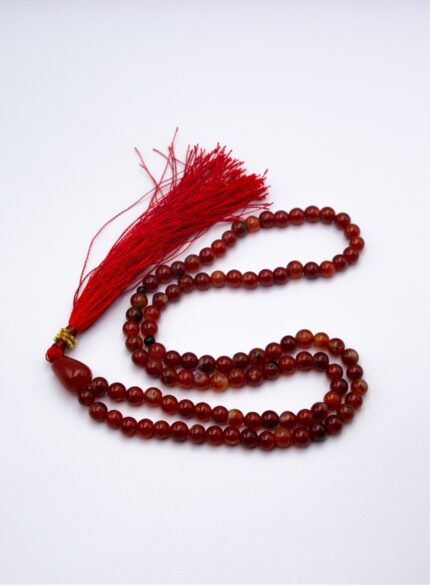
These are the easiest tasbih to look after. They resist scratching from normal handling, hold their polish well and tolerate the damp-cloth method above. The thread and tassel are still the limiting factor, so even here, avoid soaking. Many black onyx beads are dyed to deepen their colour; that's common and normal, but it's a good reason to use only plain water and the gentlest soap, and to skip chemicals entirely.
Colour-Sensitive Stones: Rose Quartz, Citrine, Aventurine
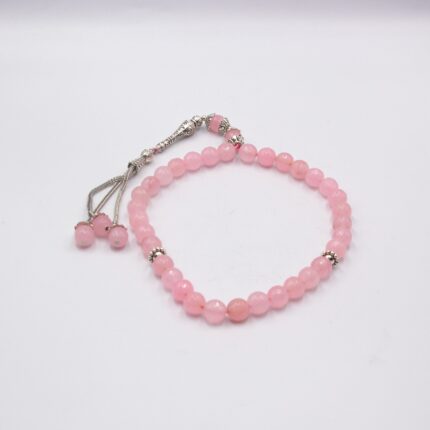
These are physically durable but can lose colour with long exposure to strong sunlight. Clean them like the hard stones, but store them in a pouch or drawer rather than on a sunny windowsill or car dashboard. We cover which stones fade - and why - in our guide to looking after crystals in UAE heat.
Soft and Porous Stones: Turquoise, Lapis Lazuli, Malachite
Treat these with dry care only. A dry microfibre cloth after use is enough. Water, soap, sweat and oils can soak into the surface, dull the polish or change the colour over time - turquoise in particular can shift toward green as it absorbs oils. Keep attar and perfume well away, and store them separately from harder tasbih so they don't get scratched. Our guides to firoza (turquoise) and lapis lazuli go into more detail on each stone.
Amber, Wood and Other Organic Materials
Many traditional misbaha are made from amber, wood, bone or resin rather than gemstone. These are softer still and more sensitive to heat, alcohol and perfume. A dry, soft cloth is the safest option; if you own a valuable amber tasbih, ask the maker or seller for specific care advice before trying anything more.
Cleaning the Tassel
The tassel absorbs more oil and attar than the beads do, and it's usually the first part of a tasbih to look tired.
For light dust: shake it gently and comb the strands straight with your fingers or a clean, wide-toothed comb.
For marks and attar: lightly dab - don't rub - the tassel with a cloth barely dampened with lukewarm water and a trace of mild soap. Keep the water away from the beads and the knot at the top. Blot with a dry cloth, comb the strands straight while damp, and let it dry completely before use.
For silk tassels: use plain water only, as little as possible, and blot rather than wipe. Silk can lose its sheen or shrink with soap and rough handling.
When it's past saving: a frayed, matted or heavily stained tassel can be replaced. Prayer bead makers and jewellery repairers can usually fit a new tassel when the tasbih is restrung.
Thread, Knots and When to Restring

The stones in a tasbih can last a lifetime. The thread won't, and it doesn't need to - restringing is normal maintenance, not a sign of poor quality.
Signs It's Time to Restring
- The thread looks fuzzy, thin or discoloured, especially near the imam bead
- Gaps have opened up between beads that used to sit snugly
- The tasbih feels looser or "floppier" than it did
- A knot near the tassel looks loose or worn
- The thread has been wet repeatedly or stained by attar
Restringing before it breaks is far easier than collecting 33 or 99 beads from the floor. If a tasbih does break, gather every bead, including the dividers, imam bead and caps - our guide on what to do when beads break includes practical tips for finding scattered beads and a section on broken tasbih.
DIY or a Professional?
A tasbih is restrung in a specific order with markers in fixed positions, usually on non-stretch thread with secure knots, so it's more involved than restringing an elastic bracelet. If the tasbih has personal or family significance, a prayer bead maker or jeweller is the safer choice. Take a photo of the bead order before it's taken apart.
What Never to Use
These are common household shortcuts that can permanently damage a gemstone tasbih:
- Alcohol, hand sanitiser and perfume - can dull polish, damage dyed or treated stones, harm amber and resin, and weaken thread.
- Vinegar, lemon juice and other acids - can etch softer and calcium-based materials and damage metal caps.
- Bleach, glass cleaner and household sprays - harsh on dyes, porous stones, thread and tassels.
- Salt soaks - abrasive, leave residue in drill holes, and harm soft stones and metal.
- Ultrasonic and steam cleaners - can crack stones with internal fractures and loosen settings.
- Soaking - saturates the thread and tassel, and can affect porous stones.
- Hot water - sudden temperature change can stress stones, especially after time in the sun.
- Abrasive cloths, scouring pads or toothpaste - scratch polished surfaces.
- Oils on gemstone beads - leave a film, attract dust, and soak into porous stones.
Wudu, Attar and Daily Life
A tasbih is part of daily life, so a few small habits make a big difference:
After wudu, dry your hands first. A few drops on hard stones won't do harm, but repeatedly handling a tasbih with wet hands keeps the thread and tassel damp. A quick pat with a towel before picking it up is enough.
Attar and oud before the tasbih, not after. Apply fragrance, let it settle, then wash or wipe your hands before handling soft or porous beads. Oil-based perfumes are one of the main reasons tassels darken and turquoise changes colour.
Hand cream and sunscreen. The same rule applies - let them absorb first.
Pockets with keys and phones. Metal keys and other hard objects scratch softer beads. A small pouch in your pocket is a simple fix.
Many people also simply prefer to keep their tasbih clean and in a respectful place as a matter of adab. How you handle that is a personal and religious matter; if you have specific questions about ritual purity or handling prayer beads, a trusted scholar is the right person to ask.
Protecting Your Tasbih in UAE Heat

Local conditions are harder on prayer beads than most care guides assume.
The car mirror problem. Hanging a tasbih from the rear-view mirror is very common, but it's the most sun-exposed spot in the car. Summer cabin heat and constant UV dry out thread, fade tassels and can gradually fade colour-sensitive stones like rose quartz and citrine. If you keep one there, check the thread often and expect to restring it sooner. Make sure it doesn't block your view of the road.
Never leave it on the dashboard or seat in summer. Take it with you, or keep it in the glovebox for short stops only.
Let it cool before cleaning. A tasbih that's been in the heat shouldn't go straight under cool water. Sudden temperature changes can stress stones with internal fractures.
Dust. Fine desert dust contains hard quartz particles that can scratch softer beads if you rub them dry. Shake or brush dust off first, then wipe.
Humidity. In humid coastal months, make sure a tasbih is completely dry before it goes into a closed pouch, especially if it has a silk tassel or silver caps.
Storing a Tasbih Respectfully
- A soft pouch or lined box protects beads from scratches and dust. Store tasbih of different stones separately, so harder beads don't scratch softer ones.
- Lay it loosely, with the tassel straight, rather than tightly wound around itself, which kinks the thread.
- Away from sunlight, heat and humidity - a drawer or shelf in your prayer area is ideal.
- Not in the bathroom. Steam and splashes are bad for thread and tassels, and many people prefer to keep prayer items out of the bathroom anyway.
- Silver caps: a small anti-tarnish strip or silica gel sachet in the box slows tarnishing in humid weather.
For ideas on where a tasbih fits in the home, see our room-by-room placement guide, which includes a note on prayer spaces.
Travelling, Umrah and Hajj
Many people take a favourite tasbih on Umrah or Hajj, or simply on every trip. A few practical points:
- Carry it in your hand luggage, in its own pouch, rather than in a checked bag where it could be crushed.
- Keep it separate from keys, zips and chargers.
- Expect heat, crowds and sweat. A quick dry wipe each evening keeps it clean during a busy trip.
- Check the thread before you go. A long trip is the worst time for a worn thread to break.
Fixing Common Problems
| Problem | Likely Cause | What to Do |
|---|---|---|
| Beads feel sticky or tacky | Built-up skin oil, attar, hand cream | Deep clean (hard stones) or repeated dry buffing (soft stones) |
| Beads look dull | Oil film or soap residue | Wipe with plain damp cloth, dry and buff |
| Fine scratches | Dust, keys, contact with harder beads | Brush dust off before wiping; store in a pouch |
| Colour fading | Strong sun, often from a car or windowsill | Usually permanent; move it out of direct sun |
| Turquoise turning greener | Oils, attar or sweat absorbed | Keep dry and away from fragrance |
| Tassel matted or darkened | Attar, oils, moisture | Dab clean and comb, or replace |
| Gaps between beads | Stretched or worn thread | Restring before it breaks |
| Silver caps darkening | Tarnish from humidity and skin contact | Silver cloth on metal only; store dry |
| Musty smell | Stored before thread fully dried | Air out flat for a day; check for restringing |
A Note on "Cleansing" Rituals
Crystal websites often recommend energy "cleansing" methods such as moonlight, salt or smoke. These come from modern crystal traditions, not from Islamic teaching, and many Muslims prefer not to apply them to prayer beads used for dhikr. Practically, this guide is about physical cleanliness: keeping the beads, thread and tassel clean, intact and long-lasting. If you do use other crystal practices with non-prayer stones, our guide to charging crystals in moonlight lists which stones should be kept away from water and sun.
Choosing a Tasbih That's Easy to Care For

If you want a tasbih that's simple to look after for everyday dhikr, choose a hard, colour-stable stone. In our crystal tasbih collection, the easiest options are the black onyx tasbih, red carnelian tasbih, brown tiger's eye tasbih, clear quartz tasbih and aquamarine tasbih. The rose quartz and citrine tasbih are just as durable, but are best kept out of strong sun.
For help comparing stones, bead sizes and 33 or 99 bead formats, see our crystal tasbih buying guide.
Looking After a Tasbih for Years
Good tasbih care comes down to a few habits: a dry wipe after use, a gentle damp clean only for hard stones, dry care only for soft and porous ones, attar before the tasbih rather than after, and keeping it out of the sun and the hot car. Watch the thread, replace the tassel when it's tired, and restring before anything breaks. Looked after this way, the stones in a good gemstone tasbih can stay with you - and be passed on - for a very long time.
Not sure how to clean your tasbih?
Tell us which stone it is, or send a photo, and we'll tell you the safest way to care for it.
Questions People Ask
How do you clean a gemstone tasbih?
Wipe it bead by bead with a soft, dry microfibre cloth after use. For a deeper clean on hard stones, use a barely damp cloth with lukewarm water and a drop of mild soap, wipe again with plain water, then lay it flat to dry for several hours. Soft and porous stones should only be cleaned dry.
Can I wash my tasbih with water?
Don't soak or rinse it. Water soaks into the thread and tassel and can damage porous stones like turquoise, lapis lazuli and malachite. A barely damp cloth is safe for hard stones such as quartz, onyx, carnelian and tiger's eye, as long as the tasbih dries completely afterward.
How often should I clean my tasbih?
A quick dry wipe every few days, or after a day wearing attar, is ideal. A deeper damp clean every month or two is enough for most tasbih used daily.
How do I clean a tasbih tassel?
Shake and comb it for dust. For marks, dab it lightly with a barely damp cloth and a trace of mild soap, keeping water away from the beads and knot, then comb the strands straight and let it dry fully. Silk tassels should be cleaned with plain water only. A badly worn tassel can be replaced.
Can I use alcohol or sanitiser to clean prayer beads?
No. Alcohol and hand sanitiser can dull polish, damage dyed and treated stones, harm amber and resin, and weaken the thread. Mild soap and water on a barely damp cloth is safer for hard stones.
Why has my tasbih become sticky?
Usually from built-up skin oil, attar or hand cream. A gentle damp clean removes it from hard stones; soft stones need repeated dry buffing instead.
When should a tasbih be restrung?
When the thread looks fuzzy or thin, gaps appear between beads, the strand feels loose, or a knot looks worn. Restring before it breaks - a prayer bead maker or jeweller can keep the markers in the correct positions.
Is it okay to keep a tasbih in the car?
Hanging one from the mirror is common, but summer heat and direct sun dry out the thread, fade the tassel and can fade colour-sensitive stones. Check it often and restring sooner, or keep your main tasbih in a pouch with you instead.