

Why Won't My Singing Bowl Sing? 9 Reasons and How to Fix Each One
Rattling, scraping, silence, or a sound that builds and then dies - almost every case comes down to one of nine things, and most take seconds to fix.
If you're asking "why won't my singing bowl sing?", you're in very good company. Almost everyone who picks up a singing bowl for the first time gets the same result: a scraping sound, a rattle, a faint hum that fades away, or nothing at all - while the video they watched made it look effortless. The good news is that it's almost never the bowl. In the vast majority of cases, the problem is one small, fixable detail in speed, pressure, the mallet, or how the bowl is held. This guide walks through all nine reasons a singing bowl won't sing, explains what each one sounds like so you can diagnose your own problem, and gives you a specific fix for each.
Why Won't My Singing Bowl Sing? The Quick Answer
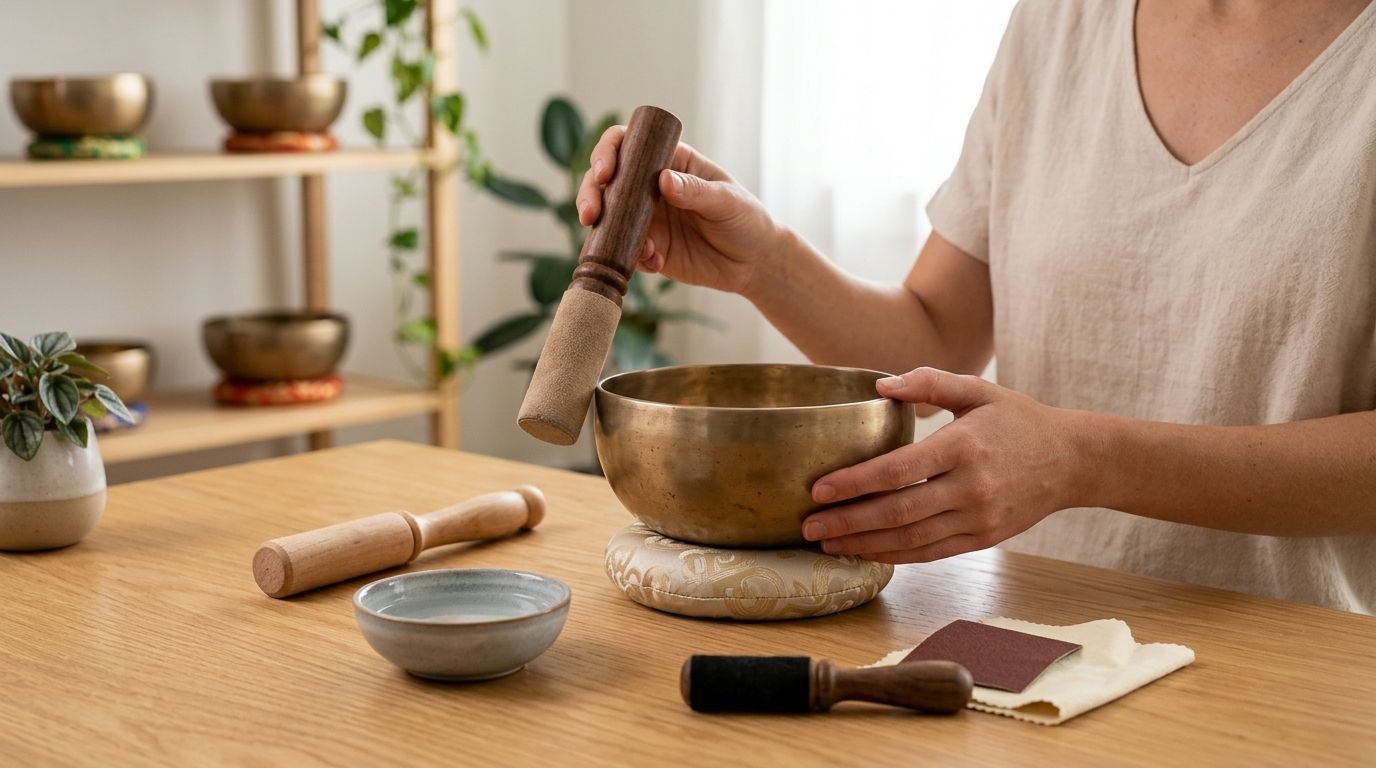
Strike the bowl gently once to start it vibrating, then press the wooden or leather side of the mallet - not the felt or padded end - against the outside of the rim. Hold the mallet fairly upright, keep your fingers off the sides of the bowl, and circle the rim much more slowly than feels natural, with steady, even pressure, moving your whole arm rather than just your wrist. If it rattles, slow down further and keep the mallet in constant contact. If the sound builds and then dies, keep exactly the same speed and pressure rather than changing anything. Most bowls start singing within a few minutes of practising this way.
How a Singing Bowl Actually Sings
Understanding what's physically happening makes every fix in this guide make sense - and makes troubleshooting much faster.
When you run a mallet around the rim, friction between the mallet and the metal makes the mallet grip, slip, grip, and slip again in a rapid, repeating cycle. This is called stick-slip friction - the same principle that makes a violin string sing under a bow, or a wet finger hum around the rim of a wine glass. Each tiny grip-and-release nudges the bowl's wall. When those nudges line up with the bowl's natural vibration, they reinforce it, and the sound builds and builds into a sustained tone.
That gives you the key to almost every problem: the bowl sings when the mallet's grip-slip rhythm matches the bowl's own vibration, and the mallet stays in contact the whole time. Too fast, and the mallet can't keep up with the vibration. Too little friction, and there's no grip to nudge the wall. Too much movement in the bowl or your hand, and the contact breaks. Every one of the nine reasons below is a version of one of these three things.
1. You're Moving Too Fast
This is the most common reason a singing bowl won't sing, by a wide margin. Beginners almost always circle too quickly, as if stirring a pot in a hurry. Speed feels like it should create more energy and more sound. In practice, it does the opposite: a fast mallet can't stay synchronised with the bowl's vibration, so the sound never builds.
What it sounds like: a scraping or hissing sound, a thin hum that never grows, or a rattle as the sound briefly starts and the mallet skips.
The fix: slow down - then slow down again. A useful starting point is roughly one full circle every two to three seconds for a small or medium bowl, and slower still for a large one. Once the tone starts to build, you can experiment with slightly faster speeds, but always start slow. Many experienced players describe the motion as unhurried, like slowly stirring something thick.
2. Your Pressure Is Uneven
Pressure is the second half of the speed-pressure balance, and it's where the famous singing bowl "rattle" comes from.
Too Little Pressure
If the mallet barely touches the rim, there isn't enough friction to grip the metal, so nothing happens - or you get a faint, breathy tone that fades. This is common with people who are worried about scratching or damaging the bowl. A metal singing bowl is designed to be played with real, firm contact.
Uneven or Jumping Pressure
If pressure varies as you go around - firm on one side, light on the other, which happens naturally as your wrist turns - the mallet keeps losing and regaining contact. The sound starts building, then collapses, then starts again.
Why Does My Singing Bowl Rattle?
That buzzing, chattering rattle is the mallet bouncing on and off the rim. Once the bowl is vibrating strongly, its wall literally pushes the mallet away; if the mallet isn't held in steady contact, it starts tapping against the metal many times per second.
You'll find advice online that contradicts itself here - some guides say to press harder, others say to ease off. Both are partly right, because the goal is constant contact, not a particular amount of force. The reliable order of fixes is: first, slow down, because speed is the most common cause of bouncing. Second, make your pressure steadier - often slightly firmer and more even, so the mallet doesn't lift off. Third, if the bowl is singing very loudly and the mallet is being thrown off despite slow, steady movement, ease off slightly and let the bowl settle into a level you can maintain.
The fix: aim for consistent, moderate pressure the whole way round, slow down at the first sign of rattling, and keep your pressure the same once the bowl starts singing rather than pushing harder for more volume.
3. You're Using the Wrong End of the Mallet
Many singing bowl mallets have two surfaces: bare wood, and a padded section wrapped in felt, wool, suede, or leather. They have different jobs, and using the wrong one for rimming is a very common reason a bowl stays silent.
Felt and wool are for striking. They're soft and smooth, which gives a warm, gentle tone when you tap the bowl - but they slide across the rim with almost no friction, so they generally can't make a metal bowl sing by rimming.
Bare wood grips the metal well and produces a brighter tone with more high overtones. It's the most reliable surface for beginners learning to rim.
Leather or suede, where present, also grips well and produces a deeper, softer singing tone. It's also more forgiving of rattling, because the soft surface absorbs some of the bouncing.
The fix: use the wooden side (or the leather side if your mallet has one) for rimming, and save the felt or wool for striking. If you only have a felt-covered striker, it's designed for striking - you'll need a wooden or leather-wrapped mallet to rim.
4. The Mallet Doesn't Suit the Bowl

Even with the right technique, a mallet that's poorly matched to the bowl can make singing much harder.
Mallet Size
As a general rule, larger bowls sing more easily with thicker mallets, and smaller bowls with thinner ones. A very thin mallet on a large bowl doesn't have enough contact area to drive its deeper vibration, while an oversized mallet on a small bowl can be clumsy and hard to keep in steady contact. The striker supplied with a bowl is usually chosen to suit it, so start there.
A New, Glossy Mallet
A brand-new wooden mallet can be very smooth or slightly polished, which reduces friction. Wooden mallets typically "break in" with use - over the first sessions, the contact surface becomes slightly rougher and grips better. If a new mallet keeps sliding without catching, keep practising for several sessions; the improvement can be noticeable. Some players very lightly scuff the wooden contact surface with fine sandpaper to speed this up - if you try this, only ever touch the mallet, never the bowl.
An Oily or Dirty Mallet
Hand cream, body lotion, perfume, or natural skin oils transferred to the mallet's contact surface reduce friction and make it slip. Wipe the mallet's contact area with a dry cloth, and play with clean, dry hands.
The fix: use the striker that came with your bowl first. If it still won't grip, clean it, give it time to break in, and if needed, try a thicker or leather-wrapped mallet for larger bowls.
5. Mallet Angle, Grip and Position
How you hold the mallet - and where it touches the bowl - has a surprisingly big effect.
Angle
Hold the mallet fairly upright, roughly vertical or tilted slightly with the top leaning outward, so the side of the mallet presses against the outer edge of the rim. Holding it at a steep diagonal, or lying it almost flat, reduces contact and makes it skip. Many teachers suggest staying within about 45 degrees of vertical.
Where It Touches
The mallet should rub against the outside of the rim, near the very top edge. Rubbing lower down the wall, or on top of the rim's edge, produces much less sound. If you strike, strike the outer wall near the rim from the side rather than tapping down from above.
Grip and Arm Movement
Hold the mallet like a large pen or a wooden spoon - firmly enough to control it, but not with a white-knuckle grip. Tension in your hand creates jerky, uneven pressure. Most importantly, move your whole arm in a smooth circle rather than twisting your wrist. Wrist-only movement naturally changes the angle and pressure as you go round, which is exactly what breaks the contact. A good image is slowly stirring a large pot of soup with your arm, keeping your wrist fairly still.
The fix: mallet upright, side of the mallet on the outside of the rim, relaxed grip, and a smooth circle driven from the shoulder and elbow.
6. How the Bowl Is Supported
A singing bowl sings with its whole wall. Anything that presses against that wall absorbs the vibration and stops the sound - and this is one of the easiest problems to miss.
Fingers on the Sides
If you're holding the bowl in your hand and your fingers or thumb curl up around the outside, they'll damp the vibration and the bowl will barely sing. Rest the bowl on a flat, open palm or balanced on your fingertips, touching only the bottom. Keep your hand level so the bowl doesn't slide.
A Hard Surface
Placing a bowl directly on a hard table, tiled floor, or glass surface lets it buzz or rattle against the surface as it vibrates, and it may slide around as you rim it. A singing bowl cushion or a folded cloth gives it a stable base without damping it.
An Overly Soft or Deep Cushion
The opposite problem: if the bowl sinks deep into a very soft cushion that presses up around its sides, that cushion absorbs the vibration just like fingers would. The bowl should sit on the cushion, contacting it mainly at the base, not nestle down into it.
An Unstable Bowl
If the bowl wobbles or slides as you play, you can't maintain steady pressure. Small bowls held on the palm are often easier to control; larger bowls usually play best resting on a cushion.
The fix: support the bowl only at its base - on an open palm, fingertips, or a cushion it sits on rather than sinks into - and keep it still while you play.
7. You Skipped the Warm-Up Strike
Starting a bowl from complete silence by rimming alone is much harder than starting it from a gentle vibration. A single soft strike gives the bowl an initial vibration for your rimming to catch and build on.
What it sounds like: you circle and circle, but the sound never really "takes off."
The fix: tap the outer wall gently once with the mallet, then immediately place the mallet against the rim and begin circling slowly while the tone is still ringing. You'll often hear the rimmed tone join the struck tone and grow from there. Once you're more practised, you'll find many bowls start easily without the strike, but it remains a useful tool whenever a bowl is being stubborn.
8. Something on the Rim or in the Bowl
The rim is where all the friction happens, so anything on it changes how the mallet grips.
Oils and residue. Skin oil, lotion, and fingerprints build up on the rim with handling. Polish or cleaning product left behind after cleaning can also leave a slippery film. Both reduce the grip the mallet needs.
Coatings. Some bowls - particularly decorative or painted ones - have lacquer or protective coatings that make the surface smoother, sometimes including near the rim.
Dust and grit. Fine dust on the rim can make the mallet scrape and grind rather than grip and sing - and grit can leave fine marks on the metal over time.
Water in the bowl. A small amount of water is sometimes added deliberately, because it changes the pitch and makes the water's surface ripple. But too much water damps the vibration, and wet hands or a wet mallet reduce friction. If your bowl has water in it and won't sing, empty and dry it first.
The fix: wipe the rim with a soft, dry, lint-free cloth before playing, play with clean dry hands, and if you've recently cleaned the bowl with a product, make sure no residue is left. Our guide to how to clean a singing bowl covers safe methods that won't leave a film.
9. The Bowl Itself
Only after you've worked through the first eight should you suspect the bowl. Genuine bowl problems do exist, but they're far less common than technique issues.
Cracks
A crack - even a hairline one that's hard to see - changes how the bowl vibrates dramatically. A cracked bowl typically gives a buzzing, dead, or short-lived tone when struck, rather than a long, clean ring. Check by striking gently and listening for a clear sustain; then inspect the rim and walls closely under good light, especially near the rim, where cracks often start.
Dents and Warping
A significant dent, particularly near the rim, or a bowl that has been dropped and pushed out of round, can disrupt the even vibration a bowl needs to sing smoothly. You may hear wobbling or "beating" in the tone, or find the mallet catches unevenly at one spot.
Bowl Design and Thickness
Not every bowl is equally easy to rim. Small bowls with thick walls tend to be stiffer and less responsive, needing more precise technique. Some decorative bowls - especially heavily painted, very thick, or poorly finished machine-made ones - are made mainly to look attractive and may produce only a weak sound or no sustained singing at all. Hand-hammered bowls with a well-shaped rim are generally more responsive, which we explain in our guide to handmade vs machine-made singing bowls.
A Bowl That Strikes Well but Rims Poorly
Some bowls simply have a stronger character when struck than when rimmed. That's not necessarily a fault - every bowl is a little different, and some are at their best used for striking in meditation.
The fix: rule out technique first by having someone experienced try it, or by trying a second bowl yourself. If the bowl still won't sing for anyone, and especially if it buzzes or sounds dead when struck, it may be damaged or simply a bowl better suited to striking.
Symptom Chart: What the Sound Is Telling You
Use the sound you're hearing to jump straight to the likely cause.
| What You Hear | Most Likely Cause | First Fix to Try |
|---|---|---|
| Nothing at all | Felt end, too little pressure, too fast | Switch to wood side, slow down, press steadily |
| Scraping or hissing | Moving too fast, dirty rim | Slow down; wipe the rim |
| Rattling or buzzing | Mallet bouncing off the rim | Slow down, steady the pressure |
| Builds, then collapses | Changing speed or pressure | Keep exactly the same pace once it starts |
| Faint hum that fades | Too little pressure, no warm-up | Strike first, then press a little more |
| Dies when held | Fingers touching the walls | Flat palm or cushion |
| Rattles against table | Hard surface | Use a cushion or cloth |
| Mallet slides without catching | Glossy new mallet, oily surface | Wipe mallet, break it in |
| Buzzing, dead tone when struck | Possible crack or damage | Inspect the rim and walls |
Technique Problem or Bowl Problem?
A quick way to tell the difference before you worry:
Strike it gently. If the bowl gives a clear, long, ringing tone that fades slowly, the bowl is almost certainly fine - and the issue is with rimming technique. A healthy bowl that rings well when struck is capable of singing.
If striking gives a short, dull, or buzzing sound, inspect the bowl for cracks or damage, and check that nothing is touching its walls while it rings.
Try a different bowl, or a different person. If you can make another bowl sing but not this one, or someone experienced can make this bowl sing but you can't, you know which side the problem is on.
In our experience helping customers, the overwhelming majority of "my bowl won't sing" questions are solved by slowing down, switching to the wooden side of the mallet, and keeping fingers off the walls.
How to Make a Singing Bowl Sing, Step by Step
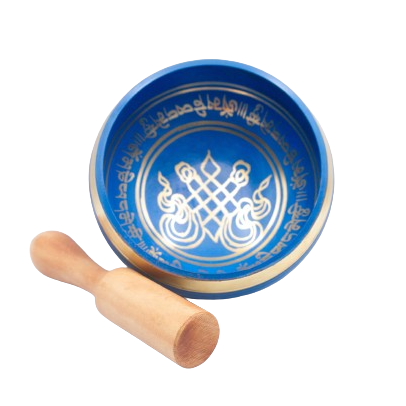
Putting all nine fixes together, here's the complete method. For a fuller introduction to playing, see our beginner's guide to using a Himalayan singing bowl.
Step 1: Prepare the Bowl and Mallet
Wipe the rim and the mallet's wooden surface with a dry cloth. Make sure your hands are clean and dry.
Step 2: Support the Bowl
Rest the bowl on a flat open palm or fingertips, touching only the base - or place it on a cushion so it sits on top rather than sinking in.
Step 3: Hold the Mallet
Hold the mallet like a large pen, fairly upright, with a relaxed but controlled grip. Use the wooden or leather side.
Step 4: Give a Warm-Up Strike
Tap the outer wall gently once near the rim.
Step 5: Press Against the Rim
Immediately place the side of the mallet against the outside of the rim, with steady, moderate pressure.
Step 6: Circle Slowly With Your Whole Arm
Move around the rim slowly and evenly, driving the movement from your arm rather than your wrist, keeping the mallet in constant contact.
Step 7: Listen and Hold Steady
As the tone builds, keep exactly the same speed and pressure. If it starts to rattle, slow down and steady your pressure. To finish, simply lift the mallet away and let the sound fade naturally.
How Long Does It Take to Learn?
Most people get their first sustained singing tone within a few minutes to a few short practice sessions once they slow down and use the right side of the mallet. Getting it to sing reliably every time, at the volume you choose, usually takes a little longer - a week or two of brief daily practice is typical. Every bowl has its own personality too, so even experienced players spend a few minutes getting to know a new bowl's ideal speed and pressure.
A few tips that speed up learning:
Practise in short sessions. Five minutes a day is more useful than one long, frustrating session.
Listen more than you push. The sound tells you what to adjust. When it builds, change nothing.
Stay relaxed. Tension in your shoulders and hand shows up as uneven pressure. Since many people use singing bowls to unwind, it helps to treat learning as part of that practice rather than a test.
Choosing a Bowl That Sings Easily
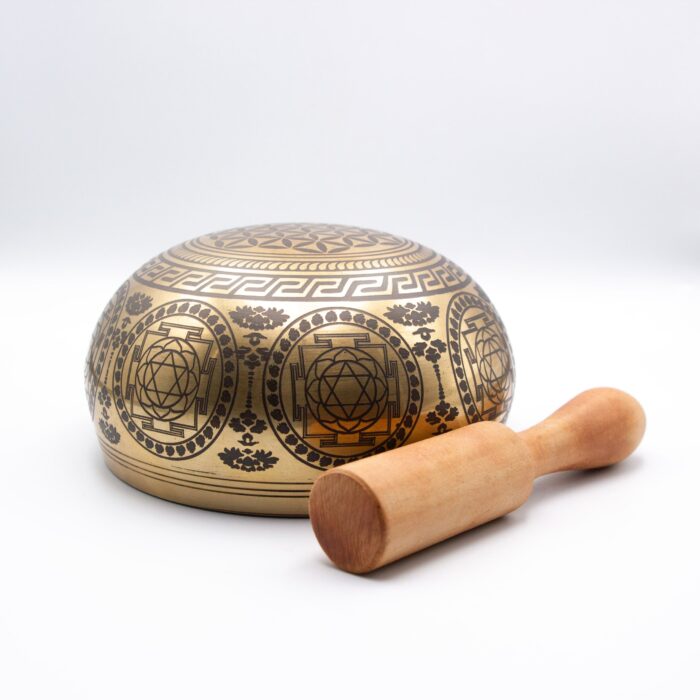
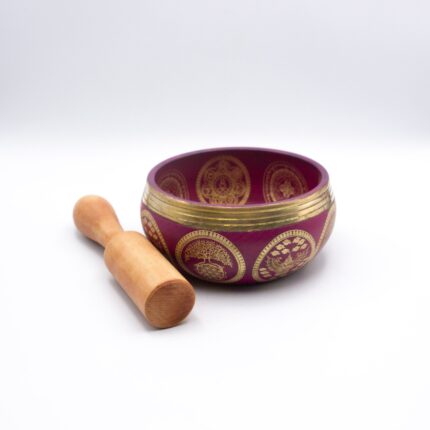
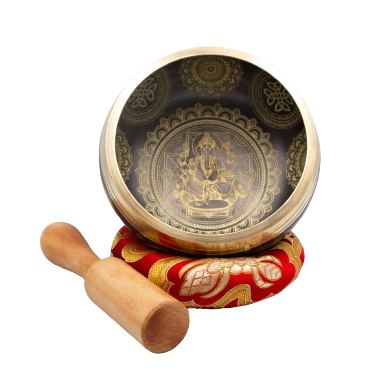
If you're choosing a bowl and want one that's easy to learn on, a hand-hammered bowl in the medium weight range is a forgiving starting point - large enough to sing generously, small enough to hold comfortably. Every bowl in our singing bowl collection is handcrafted in Nepal and comes with a traditional wooden striker, including the Bodhisattva singing bowl, the Buddha singing bowl (436g), and the Ganesh singing bowl. Our guides to choosing the best singing bowl and singing bowl prices in the UAE can help you compare sizes and budgets.
Still can't get your bowl to sing?
Send us a short video of how you're playing it, and we'll tell you what to adjust.
Questions People Ask
Why won't my singing bowl sing?
Usually because you're moving too fast, using too little or uneven pressure, rimming with the felt end of the mallet, or touching the bowl's walls with your fingers. Slow down, use the wooden or leather side of the mallet, support the bowl only at its base, and keep steady pressure.
Why does my singing bowl rattle?
Rattling is the mallet bouncing on and off the rim as the bowl vibrates. Slow down first, then make your pressure steadier so the mallet stays in constant contact. If the bowl is singing very loudly, ease off slightly.
Which side of the mallet do I use to make a bowl sing?
Use the bare wooden side or a leather or suede section for rimming. Felt and wool are for striking - they're too smooth to grip the rim and usually won't make a metal bowl sing.
How fast should I move the mallet around the bowl?
Much slower than most beginners expect. Roughly one circle every two to three seconds is a good starting point for small and medium bowls, and slower for large bowls. Once it sings, keep the same pace.
Why does the sound build and then stop?
Usually because your speed or pressure changed as the sound grew - often by speeding up or pressing harder in excitement. Once the bowl starts singing, keep exactly the same movement.
Can a singing bowl be broken or not work?
Yes, though it's uncommon. Cracks, heavy dents, or warping can stop a bowl ringing cleanly, and some decorative bowls are made mainly for looks. Strike it gently: a long, clear ring means the bowl is fine and the issue is technique.
Do new singing bowl mallets need breaking in?
Often, yes. A new wooden mallet can be smooth and glossy, which reduces friction. Its contact surface usually grips better after a few sessions of play.
Should I hold the bowl or put it on a cushion?
Either works. Small bowls are easy to hold on a flat open palm or fingertips; larger bowls usually play best on a cushion. In both cases, only the base should be supported, with nothing touching the walls.