

Crystals and their meanings


Crystals are minerals that have a specific internal structure and a repetitive arrangement of atoms or molecules. They come in a variety of colours, shapes, and sizes, and for thousands of years people have given them meanings of their own. This guide to crystals and their meanings covers twelve of the most popular stones: what each one traditionally stands for, how people wear or keep it, and what to check before you buy.
Use the quick table if you already know which stone you are curious about, or read on for the background behind each meaning. Throughout, we describe these meanings as what they are: traditions and beliefs that many people find personally meaningful, not proven effects.

Where Crystal Meanings Come From
The use of crystals for spiritual and symbolic purposes dates back thousands of years. Ancient Egyptians set lapis lazuli and carnelian into jewellery and burial pieces, the Greeks named amethyst after the word amethystos, meaning “not intoxicated”, and Romans carried engraved stones as amulets for protection.
Most modern meanings grew from three sources. The first is colour: green stones became linked with growth and luck, pink with affection, deep blue with wisdom and black with protection. The second is the stone’s physical character. Pyrite’s metallic shine suggested wealth, and the hidden flash of labradorite suggested something coming to light. The third is folklore and religious tradition, passed down and reinterpreted over centuries.
Today crystals turn up in meditation, yoga and mindfulness practice, and in jewellery worn simply as a personal reminder of an intention. Each crystal is believed to carry its own energy, and the meanings attached to it can vary from one source to another. The descriptions below reflect the most widely shared associations.
Crystals and Their Meanings at a Glance
| Crystal | Colour | Traditional meaning | Often worn or kept as |
|---|---|---|---|
| Clear Quartz | Colourless | Clarity, focus, the “master healer” | Points, clusters, bracelets |
| Amethyst | Purple | Calm, intuition, spiritual practice | Bracelets, clusters, pendants |
| Rose Quartz | Pink | Love, kindness, self-acceptance | Rings, bracelets, tasbih |
| Citrine | Pale yellow to golden | Abundance, optimism, confidence | Bracelets, raw pieces |
| Black Tourmaline | Black | Protection, grounding | Bracelets, rings |
| Selenite | White | Cleansing, clarity | Wands, slabs, bowls |
| Labradorite | Grey with a blue flash | Intuition, transformation | Pendants, rings |
| Tiger’s Eye | Golden brown | Courage, focus, determination | Bracelets, tasbih |
| Lapis Lazuli | Deep blue with gold flecks | Wisdom, truth, self-expression | Bracelets, pendants |
| Green Aventurine | Green | Luck, opportunity | Bracelets, pocket stones |
| Pyrite | Metallic gold | Prosperity, willpower | Raw specimens, bracelets |
| Moonstone | Milky white with a sheen | Intuition, new beginnings | Bracelets, pendants |
12 Popular Crystals and Their Meanings
Clear Quartz
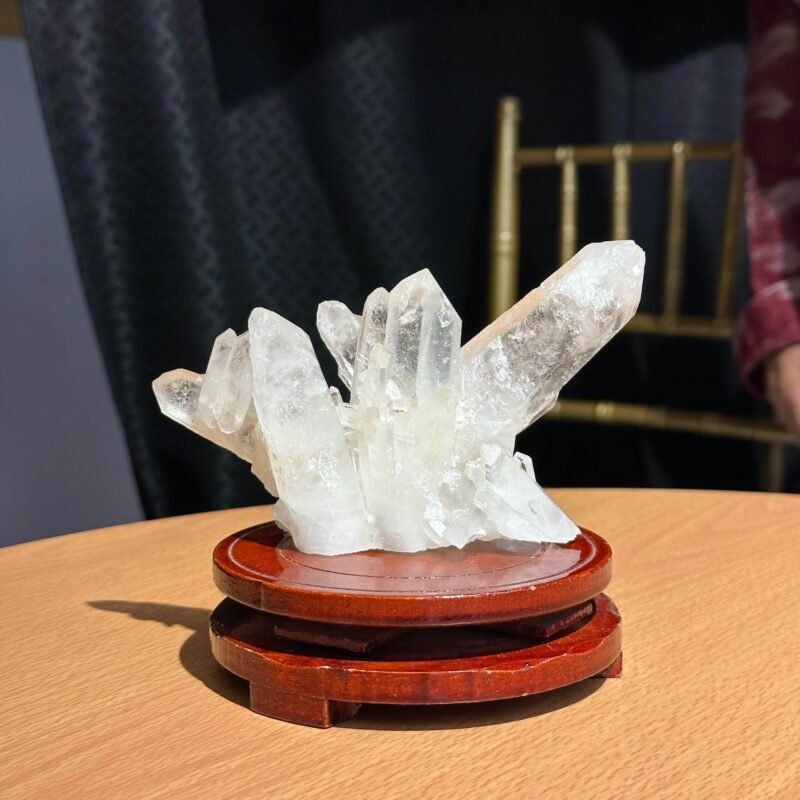
Clear quartz is often called the “master healer” in crystal circles, a nickname that reflects its reputation as an all-purpose stone. It is said to amplify energy and intention, which is why many people pair it with other crystals rather than wearing it alone. Its traditional meaning centres on clarity and focus. Himalayan clear quartz is especially prized for its water-clear points; our Makalu Mountain clear quartz cluster comes from the Makalu range in Nepal.
Amethyst
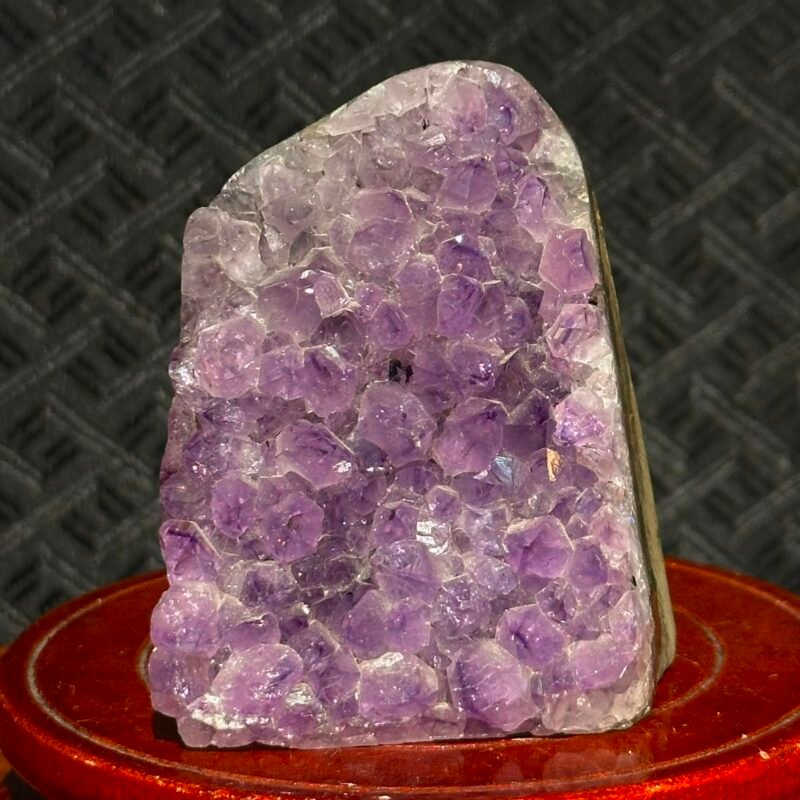
Amethyst is the purple variety of quartz and one of the most recognisable crystals in the world. Traditionally it is associated with calm, balance and spiritual awareness, and many people keep a piece beside the bed or hold one during meditation. Its colour comes from traces of iron and natural radiation in the ground, and it can fade with long exposure to strong sun. The Imperial Amethyst Buddha bracelet is an easy way to wear it every day, and our amethyst guide goes deeper into its history.
Rose Quartz
Rose quartz is the soft pink crystal most closely linked with love. Its traditional meaning covers romantic love but also friendship, kindness and self-acceptance, which makes it a popular gift. The gentle colour comes from microscopic mineral inclusions, so natural rose quartz is rarely completely transparent; very clear, bright pink “rose quartz” is often glass. It is commonly worn close to the skin, for example as a rose quartz ring set in silver.
Citrine
Citrine is a pale yellow to golden quartz associated with abundance, optimism and confidence. It has long been nicknamed the “merchant’s stone”, and some shop owners keep a piece near the till. Natural citrine is fairly rare, and much of the deep orange “citrine” on the market is heat-treated amethyst. If you want the natural stone, look for soft, even yellow tones, like the Himalayan citrine bracelet (10mm) or a raw citrine piece. Our citrine guide explains the difference in detail.

Black Tourmaline
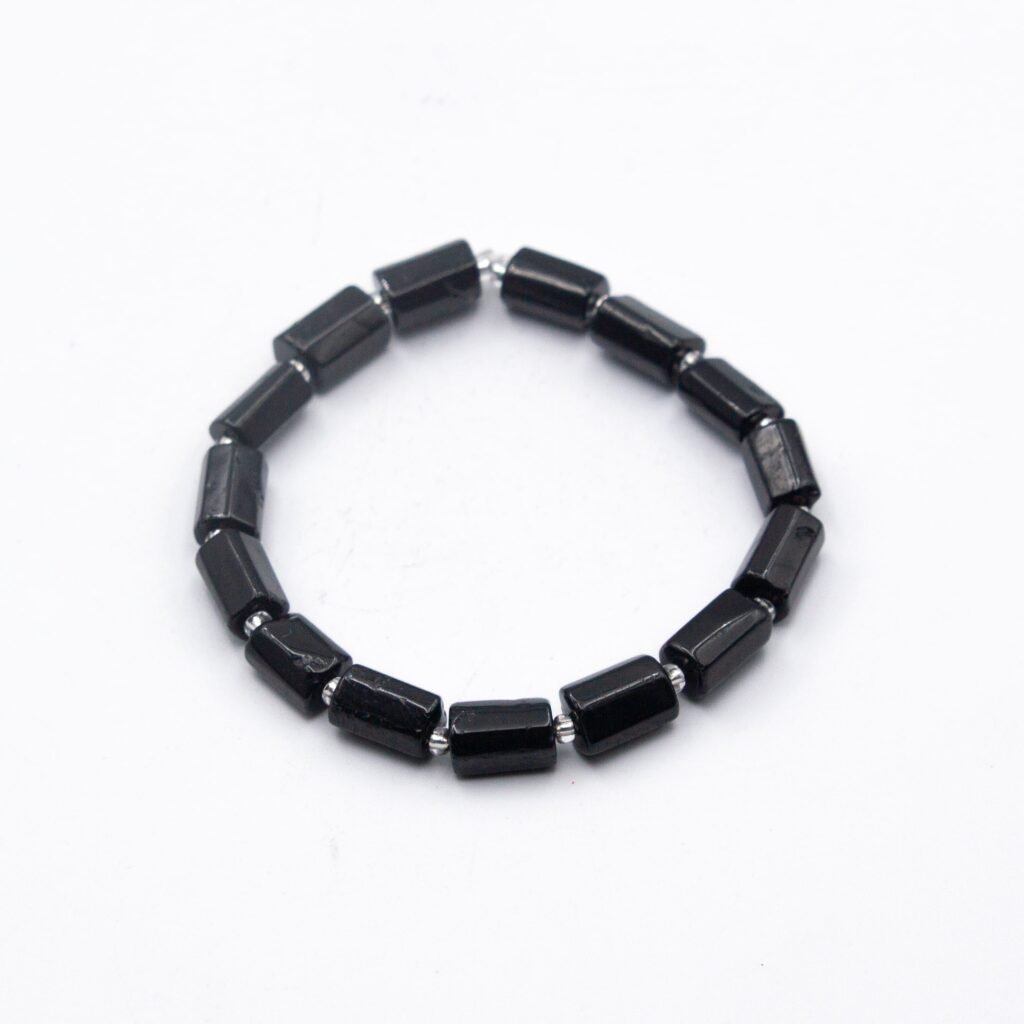
Black tourmaline is one of the most popular protection stones. Traditionally it is believed to shield the wearer from negative energy and to keep them grounded, and people often place a piece near the front door or wear it on busy days. Physically it is a hard, glassy black mineral with fine parallel lines, called striations, running along its crystals. A simple way to carry it is the square bead black tourmaline bracelet.
Selenite
Selenite is a white, silky form of gypsum named after Selene, the Greek goddess of the moon. It is traditionally used to cleanse other crystals and to create a calm, clear space. Unlike quartz, selenite is soft and slowly dissolves in water, so it should never be soaked or left in a humid bathroom. We cover the do’s and don’ts in our selenite guide.
Labradorite
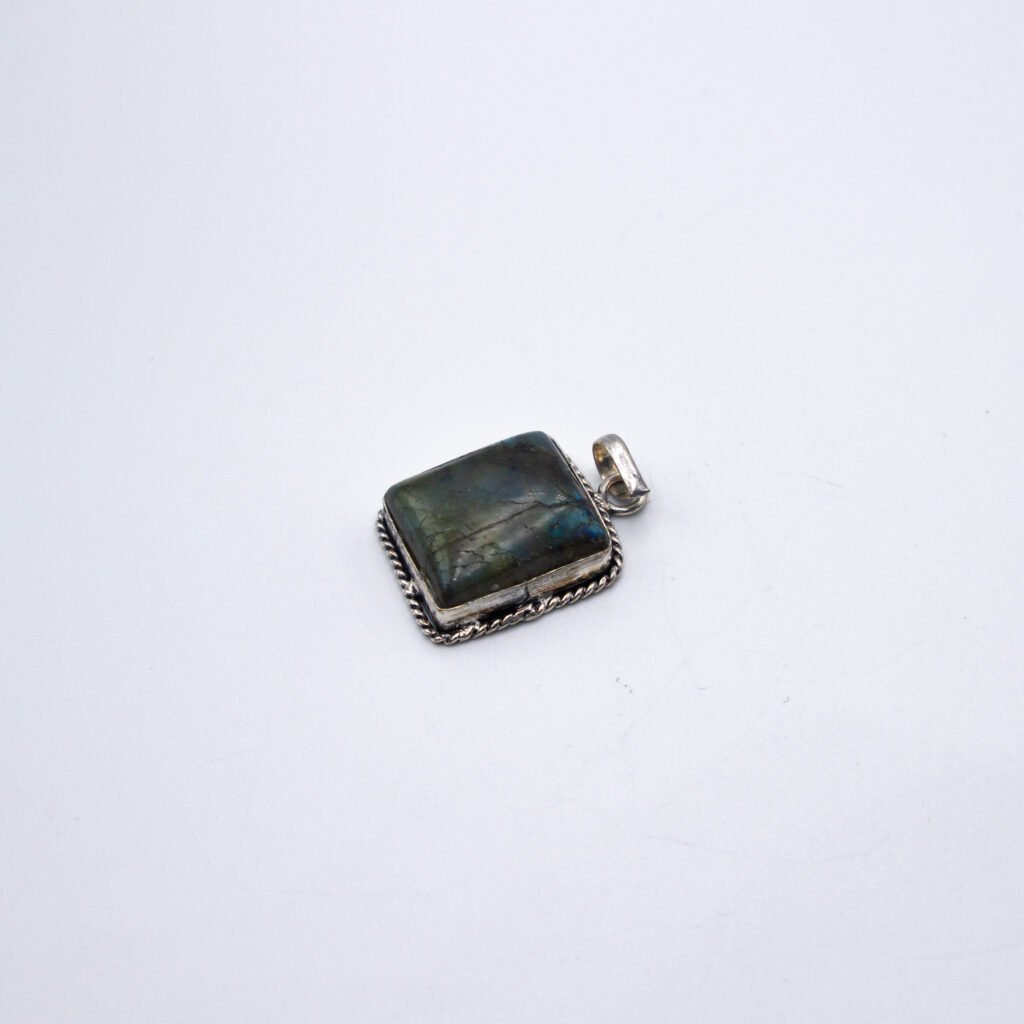
Labradorite looks plain grey until it catches the light, then flashes blue, green or gold. This play of colour, called labradorescence, is the reason it is associated with intuition, mystery and transformation. The stone takes its name from Labrador in Canada, where it was first described. A labradorite pendant shows the flash well because it moves as you do; our labradorite guide explains how to judge a good one.
Tiger’s Eye
Tiger’s eye is a golden-brown stone with a silky band of light that seems to move as you turn it, an effect called chatoyancy. Its traditional meaning centres on courage, focus and determination, and it has a long history as a protective talisman. It is one of the most popular stones for men’s jewellery and for tasbih. The natural tiger’s eye bracelet (10mm) is a classic choice, and our tiger’s eye guide explains which wrist people prefer.
Lapis Lazuli
Lapis lazuli is a deep blue rock flecked with gold-coloured pyrite. It has been valued for more than six thousand years: ancient Egyptians used it in jewellery and ground it into pigment, and it later became the ultramarine blue of Renaissance paintings. Its meaning is linked with wisdom, truth and honest self-expression. Try the lapis lazuli bead bracelet (10mm), and read our lapis lazuli guide to learn how to spot dyed imitations.
Green Aventurine
Green aventurine owes its gentle sparkle to tiny flakes of mica, an effect called aventurescence. It is traditionally known as a stone of luck and opportunity, and some people carry a small tumbled piece in a wallet or keep one on their desk. It pairs naturally with citrine for anyone who wants a prosperity theme. The green aventurine thread bracelet (8mm) is light enough for everyday wear, and our green aventurine guide has more ideas.
Pyrite
Pyrite, often called “fool’s gold”, is an iron sulphide with a bright metallic shine and naturally cube-shaped crystals. Its gold colour gave it a traditional association with prosperity, ambition and willpower. Pyrite does not like moisture and can tarnish, so keep it dry. The natural pyrite bead bracelet (8mm) is a popular way to wear it, and our pyrite guide explains how to tell it from real gold.
Moonstone
Moonstone is a feldspar with a soft, floating sheen, called adularescence, that seems to glide across its surface. Its traditional meanings include intuition, emotional balance and new beginnings, and it has long been connected with the moon and its cycles. Moonstone is softer than quartz, so it is best kept away from knocks. The natural moonstone bracelet (10mm) shows the sheen well; read more in our moonstone guide.
Crystal Meanings by Intention
If you are starting from what you want rather than from a particular stone, these are the crystals most often chosen for each intention:
- Calm and rest: amethyst, moonstone, selenite.
- Love and kindness: rose quartz, moonstone.
- Confidence and abundance: citrine, pyrite, tiger’s eye.
- Protection and grounding: black tourmaline, tiger’s eye.
- Focus and clarity: clear quartz, lapis lazuli.
- Luck and new opportunities: green aventurine, citrine, labradorite.
Many people combine two or three stones with related meanings, such as citrine with pyrite, or amethyst with clear quartz.
How to Choose a Crystal by Its Meaning
There is no single right way to choose a crystal, but a few practical steps make it easier:
- Start with one intention. A clear purpose, such as staying calm at work, narrows the choice far more than trying to cover everything at once.
- Notice which colour you are drawn to. Many collectors trust that first pull, and colour is the basis of most traditional meanings anyway.
- Pick a format that fits your day. Bracelets keep the stone with you; raw pieces and clusters suit a desk, shelf or meditation corner; a tasbih combines the stone with prayer or counting. Browse our crystal bracelets, raw healing crystals and crystal tasbih collections.
- Think about size. 8mm beads are light and discreet; 10mm and larger beads make more of a statement.
- Ask about origin. Natural stones vary in colour and pattern, and a good seller can tell you where a piece comes from.
Natural, Treated or Fake?
A crystal’s meaning is only part of the story; you also want to know the stone itself is genuine. Three swaps are especially common:
- Heat-treated amethyst sold as citrine. Strong orange or reddish-brown “citrine”, often with a white base on clusters, is usually heated amethyst.
- Dyed howlite or magnesite sold as turquoise or lapis lazuli. Look for colour collecting in cracks and veins that look painted on.
- Glass sold as quartz. Glass is often too perfect, may contain round air bubbles and warms up quickly in the hand, while quartz usually shows small natural inclusions.
Our guide to natural vs synthetic crystals and our checklist on how to choose an authentic Himalayan crystal go through these signs step by step.
Caring for Crystals in the UAE Climate
Heat, strong sun and humidity affect some stones more than others. Amethyst, citrine and rose quartz can fade if left in direct sunlight, so avoid sunny windowsills and car dashboards. Selenite and pyrite should be kept dry, and softer stones such as moonstone and selenite scratch more easily than quartz. A soft, dry cloth is enough for most everyday cleaning. For more detail, see our guide to looking after crystals in UAE heat.
Many people also “cleanse” their crystals from time to time with moonlight, sound or incense smoke. This is a spiritual practice rather than a physical cleaning method, and it is entirely a matter of personal belief.
These are just some of the many crystals and their meanings. While many people find crystals meaningful, the associations described here are traditional beliefs, and there is no scientific evidence that crystals have healing effects. Crystals are not a substitute for professional medical care, so if you have a health concern, please speak to a qualified healthcare practitioner.
Explore the full range in our natural crystal collection. Stock changes, so check each product page for availability. Orders of AED 150 and above ship free within the UAE, usually in 1–2 days.
💬
Not sure which crystal suits you?
Tell us what you are hoping for and how you would like to wear it, and we will help you choose the right crystal.