

Pyrite: Meaning, Benefits and How to Tell It From Real Gold
Bright, metallic and famously mistaken for gold. Here's what pyrite really is, what people believe it brings, six simple tests to tell it from gold, and the one care rule every UAE owner needs to know.
Few minerals have fooled as many people as pyrite. Its bright, brassy shine has sent prospectors rushing to stake claims, and its nickname, fool's gold, has become a phrase for anything that looks more valuable than it is. Yet pyrite is a fascinating mineral in its own right. It forms almost perfect metal cubes in nature, it helped start fires and early firearms, and today it's one of the most popular stones for people who keep crystals as reminders of ambition and abundance. This guide covers what pyrite actually is, its meaning and the pyrite stone benefits people traditionally associate with it, six simple ways to tell pyrite from real gold, and the care rule that matters most in the UAE's humid coastal air.
Pyrite Meaning and Benefits: The Short Answer
Pyrite is iron sulfide (FeS2), a common mineral with a bright, pale brass-yellow metallic shine. It's called fool's gold because it's so often mistaken for gold, but it's harder, much lighter, brittle, and leaves a greenish-black streak instead of a gold one. In crystal traditions, pyrite's meaning centres on abundance, confidence, willpower and protection, and it's one of the most popular stones for work, business and money goals. The pyrite stone benefits people describe include motivation, focus on goals and a sense of protection; these are traditional beliefs, not proven effects. The most important practical point: pyrite must be kept dry. Moisture and humidity can make it tarnish and slowly break down, so never cleanse it in water.
What Pyrite Actually Is

Pyrite is a compound of iron and sulfur and the most common sulfide mineral on Earth. It forms in many kinds of rock: in hydrothermal veins, in sedimentary rocks such as shale and coal, and in metamorphic rocks. It's also found as the golden flecks in lapis lazuli; if you own lapis, you already own a little pyrite. Our lapis lazuli guide explains that partnership.
| Property | Pyrite |
|---|---|
| Chemistry | Iron sulfide, FeS2 |
| Hardness (Mohs) | 6 to 6.5: hard enough to scratch glass |
| Weight (specific gravity) | About 5: heavy for a stone, but about a quarter the weight of gold |
| Colour | Pale brass-yellow; can tarnish darker or iridescent |
| Lustre | Strongly metallic |
| Streak | Greenish-black to brownish-black |
| Tenacity | Brittle: it breaks or crumbles rather than bending |
| Crystal shapes | Cubes, 12-sided pyritohedrons, octahedrons, and "sun" discs |
| Water-safe? | No: keep dry |
Interestingly, pyrite and gold sometimes form in the same places, and some pyrite contains microscopic amounts of real gold locked inside it. In certain mines, pyrite is processed as a gold ore. So fool's gold isn't always entirely foolish, though the gold in a pyrite specimen is invisible and far too small to matter to a collector.
Why Pyrite Grows in Perfect Cubes
The most astonishing thing about pyrite is that it can grow into near-perfect cubes, with flat faces and sharp edges, entirely naturally. They can look as if they were machined in a factory. This happens because pyrite's atoms are arranged in a cubic pattern, and under the right conditions the crystal grows evenly in all directions.
Look closely at a pyrite cube and you'll often see fine parallel lines, called striations, across each face, with the lines on neighbouring faces running at right angles. Pyrite also forms twelve-sided crystals called pyritohedrons, octahedrons, sparkling clusters, and flat, radiating discs known as "pyrite suns". Because natural crystals form in so many different ways, every raw pyrite specimen looks different.
Fire Stone and Fool's Gold: A Short History
The name pyrite comes from the Greek pyr, meaning fire, because pyrite throws sparks when struck against steel or hard stone. People used it to start fires for thousands of years, and in the 1500s it was used to make the spark in wheellock firearms.
The nickname fool's gold comes from the many gold rushes in which hopeful prospectors filled their bags with pyrite. Experienced miners learned quick ways to tell the difference, and the same simple tests still work today, as you'll see below.
Pyrite also has a long history in jewellery. The sparkling "marcasite" jewellery popular in Victorian and Art Deco times was, in most cases, actually made with small faceted pieces of pyrite.
Pyrite Meaning Today
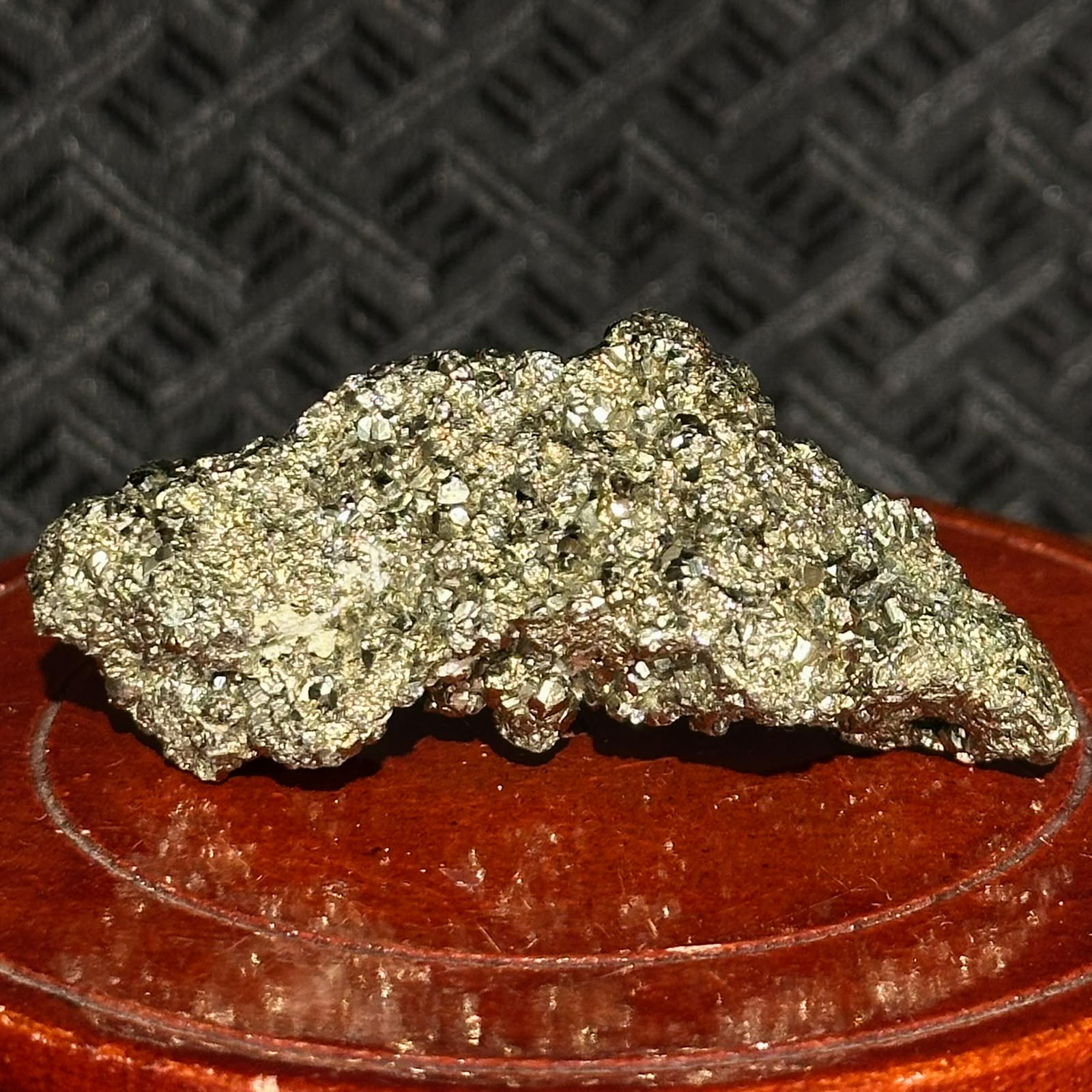
In modern crystal traditions, pyrite's meaning grows directly out of its golden, metallic look and its hardness:
- Abundance and prosperity: its gold-like shine makes it a classic symbol of wealth and opportunity.
- Confidence and willpower: associated with self-belief, drive and taking action.
- Protection: its mirror-like surface is said, in some traditions, to reflect away negativity.
- Focus and clear thinking: often kept on desks for concentration and staying on task.
Pyrite is most often linked with the solar plexus chakra, associated with confidence and personal power, and in Western crystal astrology with Leo. In feng shui-inspired practice, people sometimes place it in the "wealth corner" of a home or office. As always, these associations vary between traditions.
Pyrite Stone Benefits: Traditional Beliefs
The pyrite stone benefits below are what people traditionally associate with it. They're beliefs and personal experiences, not scientifically proven effects, and pyrite is not a substitute for financial, medical or professional advice.
1. A reminder of goals and ambition
The most popular use of pyrite is as a physical reminder of a goal: a business target, a savings plan, a career step. Many people keep a piece on their desk or in their wallet and touch it when they need to refocus.
2. Confidence and motivation
Pyrite is linked with self-belief and drive, which is why it's popular with entrepreneurs, salespeople and anyone preparing for interviews, presentations or negotiations.
3. Abundance and prosperity
In crystal traditions it's one of the classic "money stones", along with citrine and green aventurine. Our guide to citrine stone benefits covers its sunny partner, and our guide to the best crystals for wealth, love, protection and success compares the main choices.
4. Protection
Some traditions describe pyrite as a shielding stone, a "mirror" that reflects negativity back. It's often paired with black tourmaline for this purpose.
5. Focus and productivity
Its bright, solid look makes it a favourite desk stone for people who want a visual cue to stay on task during busy working days.
Who Pyrite Suits
- Business owners and entrepreneurs who like a desk stone as a daily reminder of their goals.
- People in sales, finance and negotiation-heavy roles who are drawn to its themes of confidence and drive.
- Students and job seekers preparing for exams, interviews or a big career step.
- People who like bold, metallic style: polished pyrite beads look striking in men's and women's bracelets.
- Gift buyers looking for a good-luck gift for a new job, new business or shop opening.
Pyrite is less suited to anyone who wants a stone they can wear in the shower, at the pool or at the gym. Because it dislikes moisture, it needs a little more care than quartz-family stones.
How to Tell Pyrite From Real Gold
These six tests are the same ones prospectors have used for generations. Most need nothing more than your hands and a piece of unglazed tile.
| Test | Pyrite (fool's gold) | Real gold |
|---|---|---|
| 1. Colour | Pale brassy yellow; may tarnish darker or iridescent | Rich, warm butter-yellow that never tarnishes |
| 2. Shape | Often sharp cubes or angular crystals with striations | Rounded nuggets, flakes or grains; rarely sharp crystals |
| 3. Streak | Rub on unglazed white tile: greenish-black streak | Rub on unglazed tile: gold-yellow streak |
| 4. Hardness | 6–6.5: scratches glass; a steel knife won't easily scratch it | 2.5–3: very soft; a knife or even a coin marks it |
| 5. Malleability | Brittle: tapped hard, it cracks or crumbles | Malleable: it dents and flattens instead of breaking |
| 6. Weight | Specific gravity about 5 | Specific gravity about 19: nearly four times heavier |
The quickest test: the streak
Turn over a white bathroom or kitchen tile and find the rough, unglazed part on the back. Rub the stone firmly across it. Pyrite leaves a dark greenish-black line; gold leaves a gold-coloured line. This is the most reliable test you can do at home.
How the light catches it
Gold looks yellow from every angle and even in shade. Pyrite's bright shine depends on its flat faces catching the light; turn it out of the light and it looks duller and greyer.
A word of caution in the UAE
The UAE has some of the world's most trusted gold markets, with hallmarked jewellery sold by licensed jewellers. If anyone offers you "raw gold nuggets" or "natural gold stones" informally at a bargain price, be very careful: pyrite is exactly what such stones often turn out to be. Buy gold only from licensed jewellers, and buy pyrite for what it is: a beautiful mineral at a mineral's price.
Other "Fool's Golds": Chalcopyrite and Marcasite
Two other minerals are often confused with pyrite:
- Chalcopyrite is a copper iron sulfide. It's a deeper, brassier yellow than pyrite, softer (3.5–4), and often tarnishes to vivid blues and purples. Brightly coloured "peacock ore" is usually chalcopyrite or bornite, sometimes treated with acid to intensify the colours.
- Marcasite has exactly the same chemistry as pyrite, but a different crystal structure. It's paler, often forms spear-like or cockscomb shapes, and breaks down in humid air even faster than pyrite. As noted above, most "marcasite" jewellery is actually pyrite.
How to Wear and Use Pyrite

As a bracelet
Pyrite bead bracelets are the most popular way to wear it. Polished pyrite beads are bold and metallic, and they pair well with citrine, tiger's eye and green aventurine. See our guide to crystal bracelet combinations for ideas. Take it off before washing your hands, swimming or exercising.
As a ring
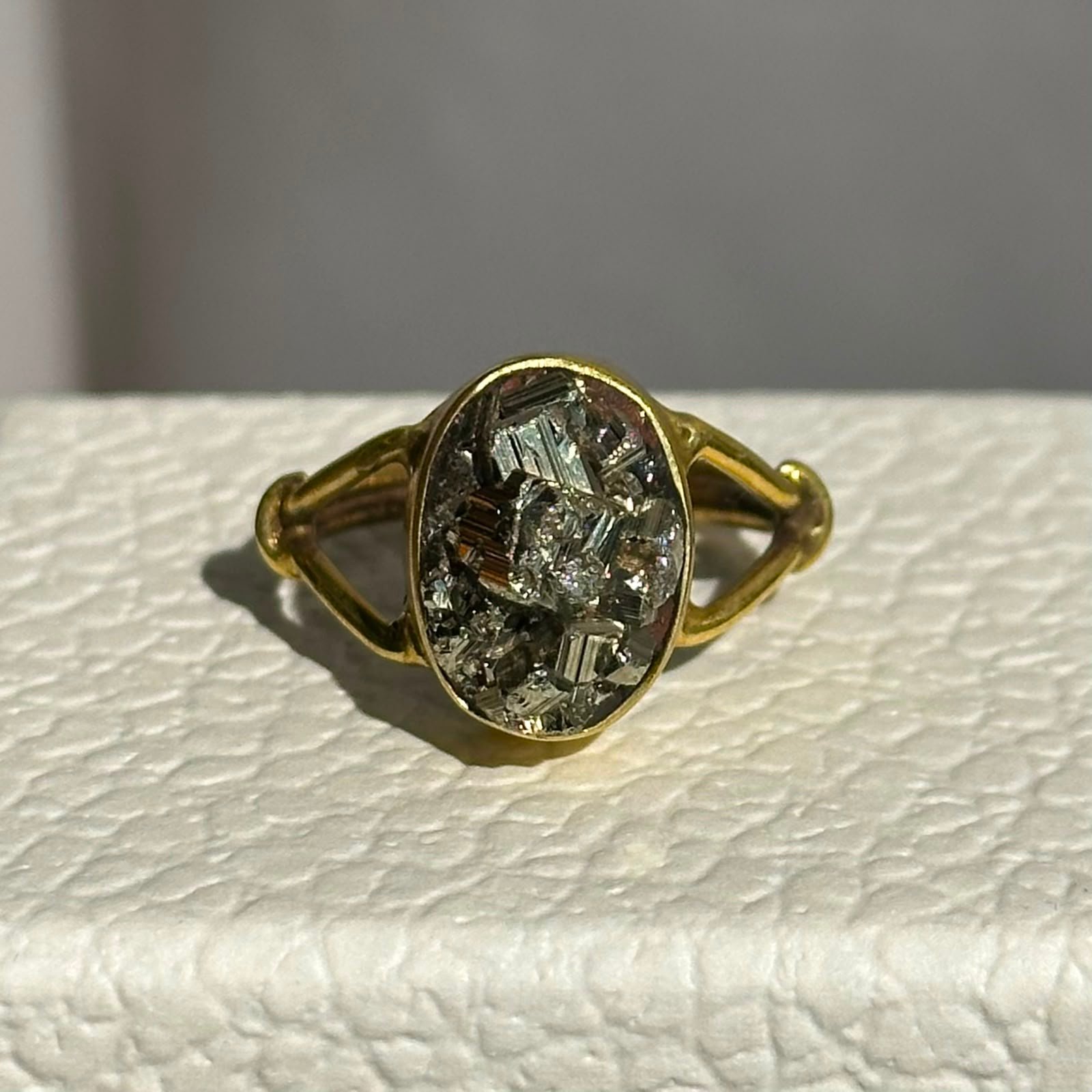
A pyrite ring is a striking, unusual choice. Our handmade pyrite ring is set in a traditional panch loha (five-metal) setting from Nepal, which combines two traditions in one piece. Our guide to choosing a crystal ring covers sizing and care.
As a raw desk or shelf stone
Raw pyrite is one of the most striking display minerals there is. Keep a piece on your office desk, at your shop counter or on a home-office shelf, somewhere dry and away from windows that catch condensation. Our top 10 raw crystals for the UAE includes more ideas for display stones.
In a wallet or bag
A small tumbled piece in a wallet or purse is a traditional good-luck practice. Keep it in a small pouch so it doesn't scratch cards or rub against moisture.
Caring for Pyrite: Keep It Dry
Pyrite is hard, but chemically it's sensitive. When it's exposed to moisture and air over time, it can slowly oxidise: it tarnishes, develops a white or yellowish powder, and in bad cases crumbles. Collectors call this pyrite decay. The UAE's humid coastal air makes this especially important.
- Never soak it or cleanse it in water, salt water or moon water, and never make crystal-infused drinks with it.
- Clean it dry: wipe with a soft, dry cloth or brush dust off with a soft brush.
- Dry it immediately if it gets wet, using a soft cloth.
- Avoid humid rooms: don't keep raw pyrite in bathrooms, kitchens or on windowsills that get condensation from air-conditioning.
- Store it with a silica gel sachet in a closed box or pouch, especially during the humid summer months.
- Watch for powder or a sulfur smell: these are signs of decay. Separate the piece from other stones, brush off the powder, keep it very dry, and wash your hands after handling it.
- Bracelets: remove before washing hands, swimming, the gym or applying lotion and perfume; sweat and moisture shorten its life.
- Heat: never heat pyrite. Heating iron sulfide releases harmful sulfur gases. Normal handling is completely safe.
- Spiritual cleansing: if you follow these practices, choose dry methods such as smoke, sound or moonlight on a dry windowsill. See how to charge crystals in moonlight.
For more on protecting stones from UAE conditions, see our crystals in UAE heat guide.
Pyrite at Alpine Crystals

- Raw pyrite: the Natural Raw Pyrite Crystal Stone (about 50g, 5cm) and the Natural Raw Pyrite Specimen (84.7g), ideal for desks and shelves.
- Bracelets: the Natural Pyrite Bead Bracelet 8mm and the Natural Pyrite Bracelet with 10mm Beads.
- Ring: the Pyrite Panch Loha Ring, handmade in Nepal.
- Combination bracelets: pyrite with citrine and other stones in our Growth and Success Bracelet and Success and Protection Bracelet.
Browse more in our raw crystals collection and crystal bracelets. Stock changes, so check each product page for availability. Orders over AED 150 ship free within the UAE, usually in 1–2 days.
Choosing pyrite for an office or a gift?
Tell us where it's going, a desk, a shop counter or a new business, and we'll help you pick the right piece and size.
Is Pyrite Right for You?
Pyrite may be fool's gold, but there's nothing foolish about choosing it. It's a genuinely remarkable mineral that grows into natural cubes, sparks fire and has fooled prospectors for centuries. In crystal traditions, its meaning centres on abundance, confidence, willpower and protection, and the pyrite stone benefits people describe make it a favourite reminder of goals for entrepreneurs, professionals and students. To tell it from gold, use the streak test: greenish-black means pyrite. To keep it shining for years, remember the one rule that matters most in the UAE: keep it dry.
Questions People Ask
What is pyrite stone good for?
In crystal traditions, pyrite is associated with abundance, confidence, willpower, focus and protection, and it's popular as a desk or wallet stone for work and money goals. These are traditional beliefs, not proven effects.
Why is pyrite called fool's gold?
Because its bright, brassy metallic shine has fooled many people, including gold-rush prospectors, into thinking they'd found gold.
How can I tell pyrite from real gold?
Rub it on the unglazed back of a white tile: pyrite leaves a greenish-black streak, gold a gold one. Pyrite is also harder, brittle, paler, much lighter, and often forms sharp cubes, while gold is soft, dents rather than breaking, and is nearly four times heavier.
Can pyrite get wet?
It's best kept dry. Moisture and humidity can make pyrite tarnish and slowly break down. Clean it with a dry cloth, never soak it, and store it with a silica gel sachet in humid weather.
Is pyrite safe to wear and handle?
Yes, normal handling and wearing is safe. Don't heat pyrite, put it in drinking water, or use it in elixirs, and wash your hands after handling pieces that have started to decay and form powder.
Does pyrite contain real gold?
Some pyrite contains microscopic amounts of gold, and in certain mines it's processed as gold ore. But the amount in a typical specimen is invisible and of no practical value.
Where should I place pyrite?
Popular places are an office desk, a shop counter, a home office or the "wealth corner" in feng shui-inspired practice. Choose a dry spot away from bathrooms, kitchens and windows with condensation.
Which zodiac sign is pyrite good for?
In Western crystal astrology it's most often linked with Leo. Traditions vary, so follow the system you trust.